The new superintendent stood before the faculty of “Oakmont High,” a large, diverse public school, and spoke a cold truth about American education. He described seeing the vibrant mix of students in the school’s hallways disperse into racially segregated classrooms when the bell rang. The fact was that students were sorted into tracks—supposedly race-neutral, “ability-based” pathways—that led to sharply unequal experiences and opportunities throughout high school and often their whole lives. “Why is it fair for white kids to have a better education than Black kids?” the superintendent asked his faculty. “It’s racism pure and simple, and it’s going to stop!”
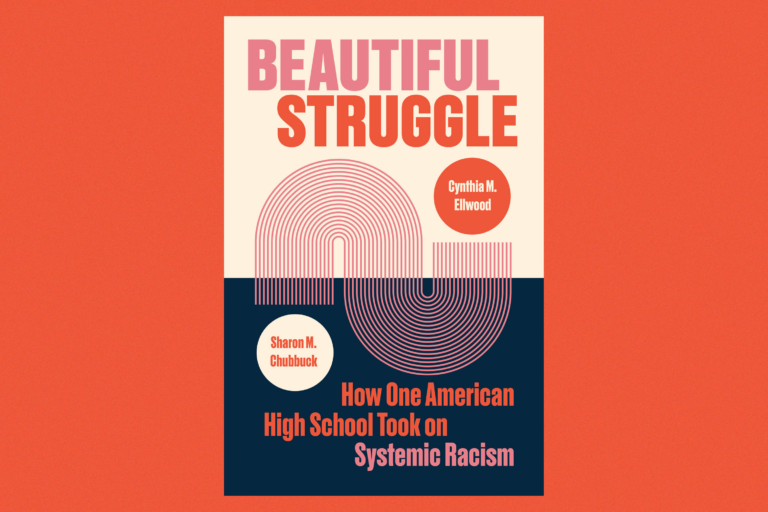
Racial inequality persists because racism is systemic, baked into countless interlacing beliefs, practices, and structures that make up the way we do school. Tracking is one of many such practices. In “Beautiful Struggle,” Sharon M. Chubbuck and Cynthia M. Ellwood examine 11 years of transformation by administrators, teachers, students and others as they tackled systemic racism head-on.
Learn more or purchase this book at University of Chicago Press
Drs. Chubbuck and Ellwood answered some questions about their new book, including where the idea for the book came from, their favorite part of the writing process and how the book complements their teaching and research.
How would you describe the book in one sentence?
Beautiful Struggle offers a rare story of hope as it examines one large public high school’s deep and sustained progress as administrators, teachers, and students transformed inequitable beliefs, practices, and policies across the school—with extraordinary results.
Where did the idea for this book come from?
Racial disparity in American education is glaring—in outcomes like test scores and future opportunity—but even more, in the kind of education children receive every day. It is indefensible. Educators, both in preparation and in the field, are frustrated that there are very few accounts of schools that have made deep, enduring progress in offering Black and brown students the kind of rich, rigorous, caring education typically accorded to affluent white students. When we learned of the transformative work of educators and students at Oakmont High School, we jumped at the chance to examine what they were doing and the meaning they made of it. And though their process was demanding, imperfect, and sometimes conflictual, we have never seen any change as penetrating, substantive, broad and sustained as what we observed in Oakmont. Their work continues today, continuing over 20 years.
Is this your first book? What is your publishing history?
This is the first book-length publication for each of us.
What was your favorite part of the writing/editing process?
We both enjoyed seeing how the data we collected aligned with theories of systemic racism and expanded thinking on how it can be disrupted (see Bonilla-Silva and Victor Ray). Similarly, we enjoyed wrestling with mountains of interview, observational, and document data, distilling, turning, rearranging, reinterpreting, and finally identifying an opening where the reader (and we ourselves) can step in to “taste and see” anti-racist work being done in vibrant real life.
What do you hope to accomplish with this book?
We hope our readers absorb—and act upon—the hope and possibility this case presents. The struggle for racial justice has never been easy, and some people may be tempted to step back from equity work in the current climate, but stepping up, as the people of Oakmont have and continue to do, could not be more imperative. Black and brown kids see the attempts to erase their history, distort their reality, and reverse hard-won freedoms. They know that they and their families are being targeted. We must not fail them. We can make change, and we must.
How does this book advance or complement your research and/or teaching?
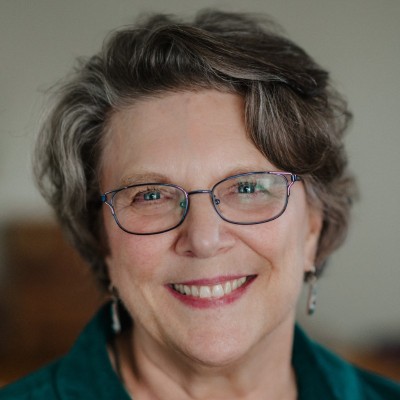
Sharon loved teaching in Illinois public schools for 19 years. She then enjoyed teaching and mentoring undergraduate, master’s and doctoral education students for 21 years at Marquette. Doing research on racial justice during those years, along with learning from her students as they taught in Milwaukee schools, makes the hope and possibility of Beautiful Struggle that much more meaningful.
Cynthia spent 29 intensely rewarding years as a teacher, principal, and district leader in the Milwaukee Public Schools. She went on to coordinate the Educational Leadership master’s program at Marquette for 13-plus years. Building on her own experience working to transform schools in concert with educators, parents, and young people, the study deepened her understanding of what is possible and what it takes to advance justice and opportunity for our kids.
If you have recently published a book, or if you have one coming out, we would like to feature your publication in an upcoming Marquette Bookshelf feature. More information on the submission process is available online.
Book Details
- Publisher: University of Chicago Press (Nov. 10, 2026)
- Language: English
- Print Length: 360 pages
- ISBN-10: 0226852660
- ISBN-13: 978-0226852669