Anticipation is swirling around the release of what’s bound to be one of the summer’s biggest blockbusters. Following the box office and award success of his 2023 film “Oppenheimer,” director Christopher Nolan has adapted Homer’s “The Odyssey” into what some say could be his biggest success yet. The film is chock full of A-list actors including Matt Damon, Zendaya, Robert Pattinson and Anne Hathaway and is set to hit theatres on July 17.

For the past 16 years, Dr. Leah Culligan Flack, professor of English, has been teaching epics like “The Odyssey” and researching classical reception studies — how Ancient Greece and Rome culture have been interpreted and adapted across history.
“I think it’s about time we get a film like this,” Culligan Flack says. “It’s surprising that there is no contemporary film version of ‘The Odyssey’ given its ongoing appeal. Christopher Nolan seems like the perfect person to direct it, and he’s assembled a cast that’s exciting and likely to bring Homer’s story to life as it was meant to be — an exciting, entertaining story.”
In a Q&A, Culligan Flack takes us into the ancient Greek world where “The Odyssey” takes place, encourages the audience to see the story through modern eyes and explains why it’s still relevant today.
For people who may have not read Homer’s ancient Greek epic the Odyssey, can you give a synopsis of what it’s about?
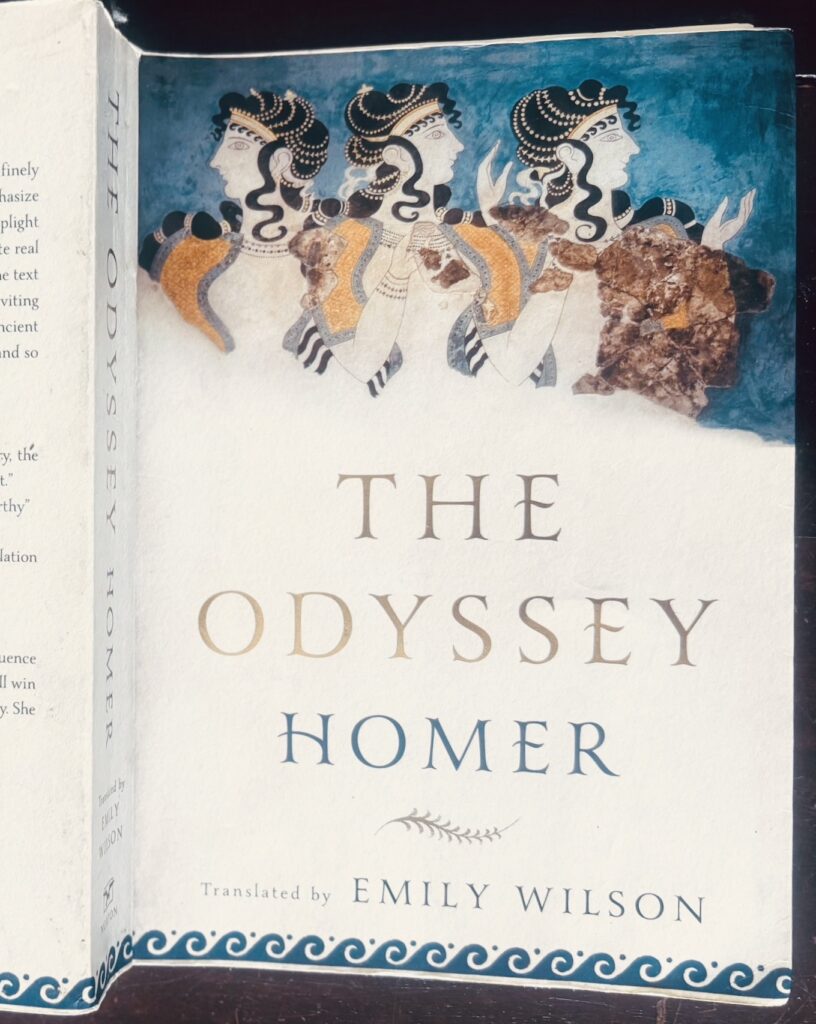
Homer’s “Odyssey” is one of the oldest surviving stories of the Western literary tradition. It emerged from a pre-literate Greek civilization in the seventh or eighth century B.C. Parts of it were performed as a form of after-dinner entertainment for Greek nobility.
“The Odyssey” is kind of a sequel to the Iliad, which tells a story of the end of the Trojan War. The Odyssey depicts the arduous, long homecoming of the Greek king Odysseus to his home in Ithaca, where his wife, the incredibly clever queen Penelope, and his son Telemachus are trying to defend his palace from suitors who want to marry Penelope and become king. Odysseus has been gone for 20 years — he spent 10 fighting in the war and another 10 trying to get home, navigating treacherous seas filled with gods and monsters such as the Cyclops and the Sirens.
Why do you think people are still interested in this story/movie today? What makes it relevant?
Odysseus is a fully recognizable character who feels modern. He’s not like Achilles, a superhuman warrior who seems more like a god than a man. When we first see him, he is sitting alone by the shore on a remote island weeping because he longs to see Ithaca, his home. Three thousand years later, we all know what that feels like. We might not have to outsmart actual giants or monsters, but we all have to confront our versions of them on our journeys through life. The Sirens, for example, destroy men by making them crash on the rocks and lose their desire to return home. They do so by singing to them about their own past achievements and by promising them they can know everything. We might not hear actual Siren songs in our lives, but we all have moments when spending too much time looking back at our pasts might jeopardize our capacity to move into the future we want.
Who are some of the characters in the story and give me a brief description of their personalities and role in the narrative. Can you match some of the characters with people we might be familiar with in popular culture today?
Odysseus is a character who feels very modern — he’s defined by his cunning and intelligence. I think of Tyrion Lannister from Game of Thrones or even Tony Stark/Iron Man — he’s a very resourceful character who survives on his intelligence, but who is also deeply flawed and sometimes undone by arrogance. Because Matt Damon is playing Odysseus, we could also see Jason Bourne as a kind of modern-day Odysseus. We end up rooting for this character as he takes on rivals who are much stronger than he is.
Penelope is Odysseus’s wife, and it’s hard to think of a character who is quite a modern equivalent to her. She’s a genius in her own right and an artist who uses all resources at her command to control her destiny. She’s also often very sly — she manages to orchestrate events without getting caught. She’s a bit like Hermione Granger in that way.
Why is it important for students to learn about the classics today?
Homer’s epics offer incredible wisdom that’s endured for more than 3,000 years about what it means to be human. The questions students ask today about who they want to be in the world, where they might feel most at home, how to live in a world where we all have to navigate suffering and grief are central to these stories that Homer sang for enchanted audiences three millennia ago.
Final thoughts?
Fun fact: it takes Odysseus 10 years to get from Troy to Ithaca. The actual journey is about 550 nautical miles. It should have taken him six days! Next time you get delayed, just remember: it could have been so much worse!
About the expert:
Dr. Leah Culligan Flack, professor of English in the Klingler College of Arts and Sciences, has been teaching epics like “The Odyssey” for 16 years and researching classical reception studies — how Ancient Greece and Rome culture have been interpreted and adapted across history. She works as the campus director for N4@MU, part of the global nonprofit Narrative 4, which brings together communities across lines of difference to create empathy, hope and understanding.