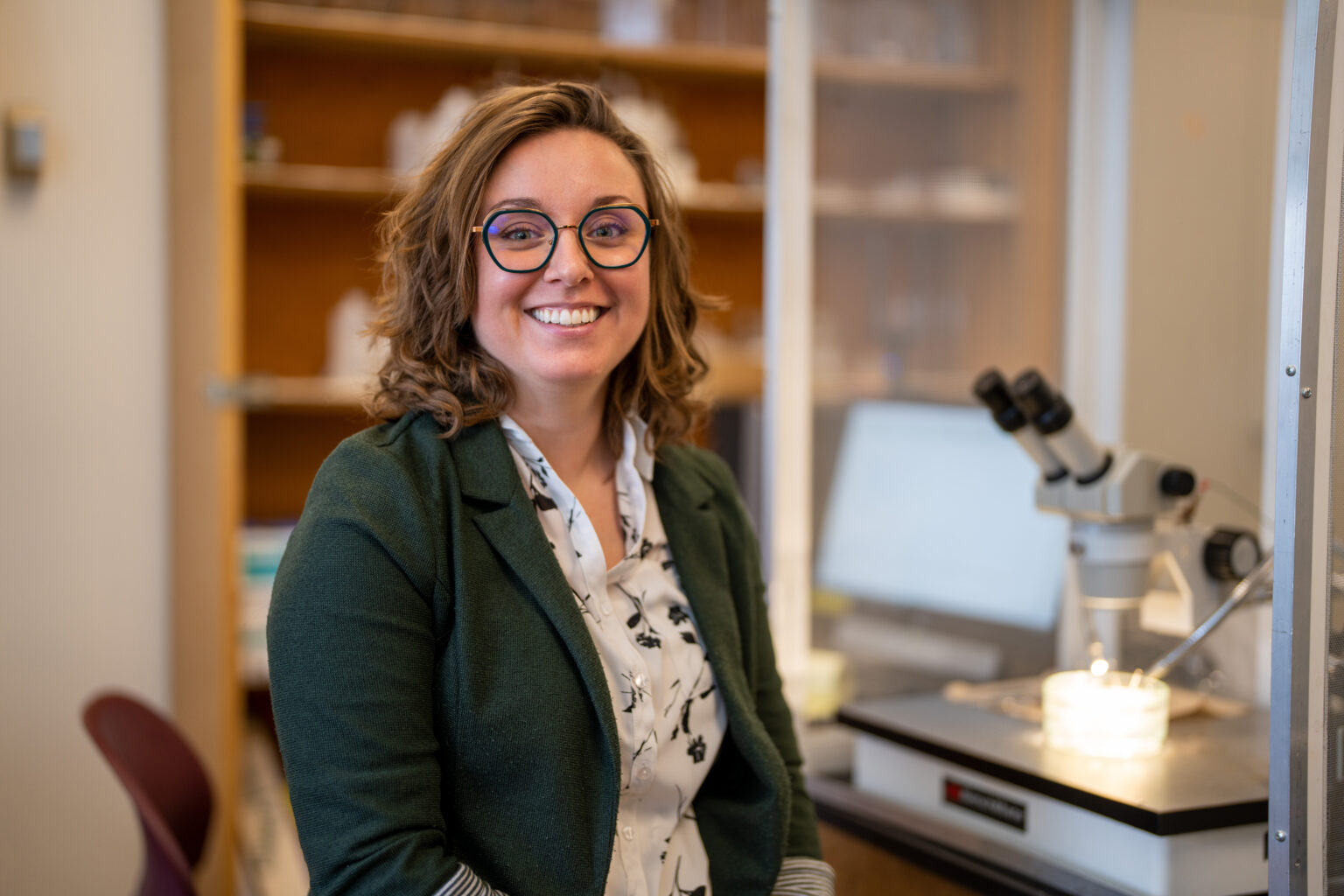
Dr. Chelsea Cook, assistant professor of biological sciences in the Klingler College of Arts and Sciences, is part of an interdisciplinary research team that has received a 2026 Scialog Collaborative Innovation Award from the Research Corporation for Science Advancement’s Scialog: Neurobiology and Changing Ecosystems initiative.
Cook and her collaborators, Dr. Ioana Carcea of Rutgers University and Dr. Elizabeth Heath-Heckman of Michigan State University, were recognized for their project, “Identifying Mechanisms of Social Resiliency to Heat Stress.” The award will support research exploring how social organisms respond and adapt to environmental stressors driven by a changing climate.
The Scialog: Neurobiology and Changing Ecosystems initiative was created to spur innovative, cross-disciplinary research into how neural systems adapt to rapid environmental change, including exposure to pollution, toxins and increasingly unpredictable conditions. The program brings together early-career scientists from diverse disciplines to develop collaborative research ideas that address complex global challenges.
Cook was among approximately 50 early-career researchers who participated in the March 2026 Scialog conference in Tucson, Arizona. Following three days of intensive discussions and team-building activities, researchers formed new collaborations and competed for seed funding to pursue novel research projects.
The 2026 awards support six collaborative projects involving 15 researchers from institutions across the United States and Canada. Each award provides $60,000 in direct research funding.
Established in 2010, Scialog, short for “science + dialog,” is designed to accelerate scientific discovery by fostering interdisciplinary partnerships and encouraging researchers from different fields to tackle pressing scientific questions together.