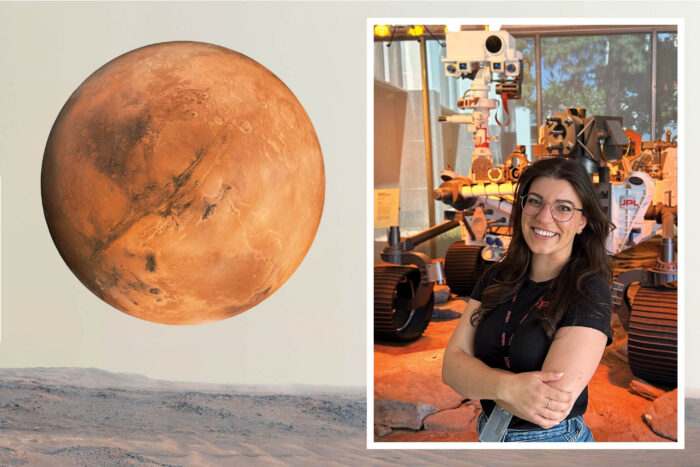
Like Elise Rimsa, Eng ’16, these Marquette graduates are advancing space missions through work at NASA and its partners.
Adventures in microgravity
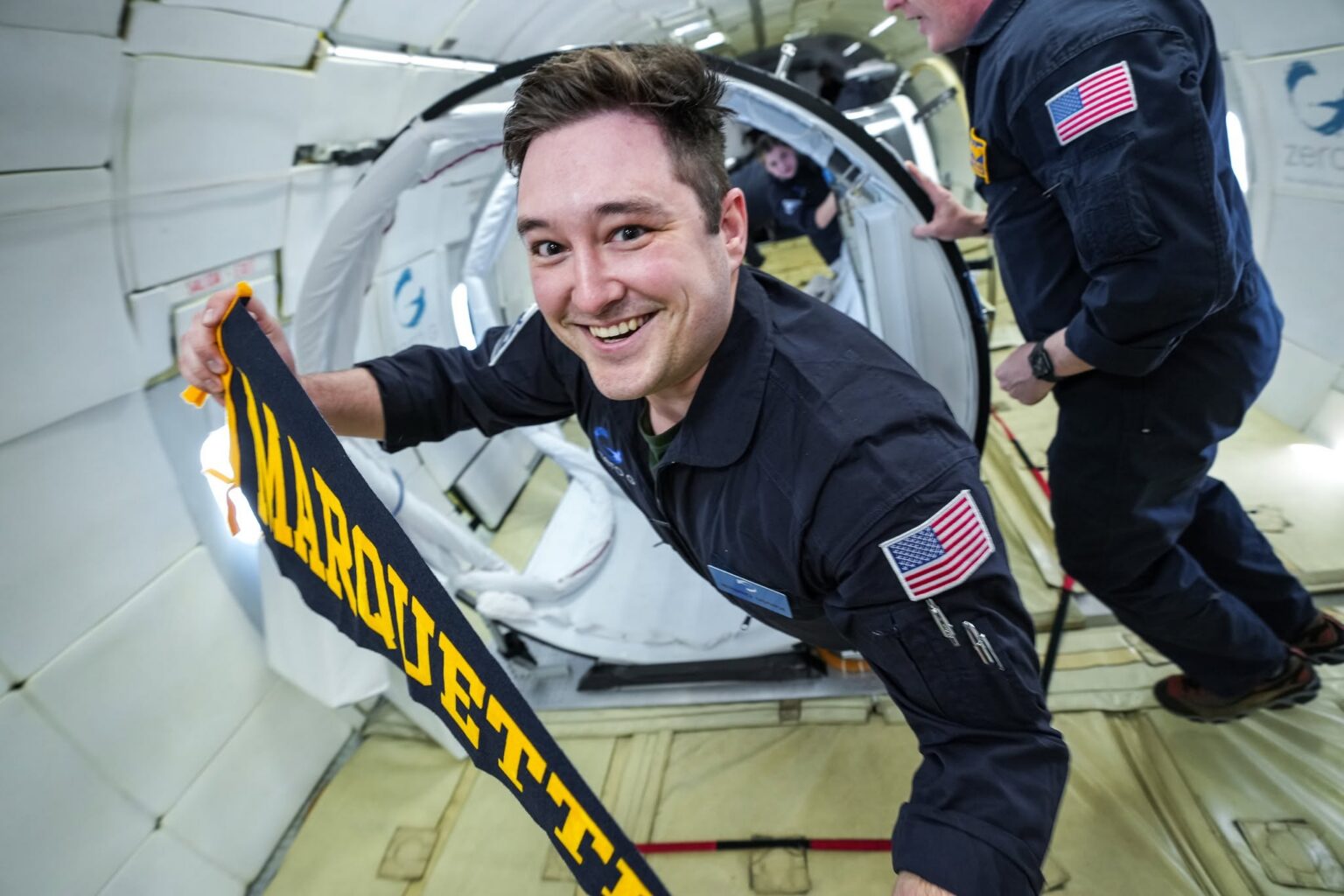
Dr. Francis Chiaramonte’s 42-year NASA career began with research into jet engine stalls but eventually encompassed everything from bubbles in space to cryogenics. Chiaramonte, Eng ’80, was the science lead for project teams that developed microgravity experiments conducted on the Space Shuttle and International Space Station, including on techniques to keep rocket fuels cold and stable. Results of the program enabled technologies ranging from ultra-fast EV charging and Febreze sprayable air freshener to capillary flow innovations enabling efficient collection of astronauts’ urine on the Artemis II mission. Today, this now-retired scientist’s leadership continues to underpin advances in space technology, including more efficient fuel tanks that might take humans to Mars and back someday.
Simulating the moon
In her work at NASA’s Johnson Space Center in Houston, one of the tools Katie Tooher, Arts ’22, actually relies on most is Unreal Engine, the advanced 3D animation tool behind blockbuster video games. As a computer graphics engineer and technical lead, Tooher helps create ultra-realistic simulations of lunar environments to train astronauts and stress-test mission scenarios. Thanks in part to her, future astronauts will step onto the Moon’s South Pole feeling like they’ve already been there.
Suiting up
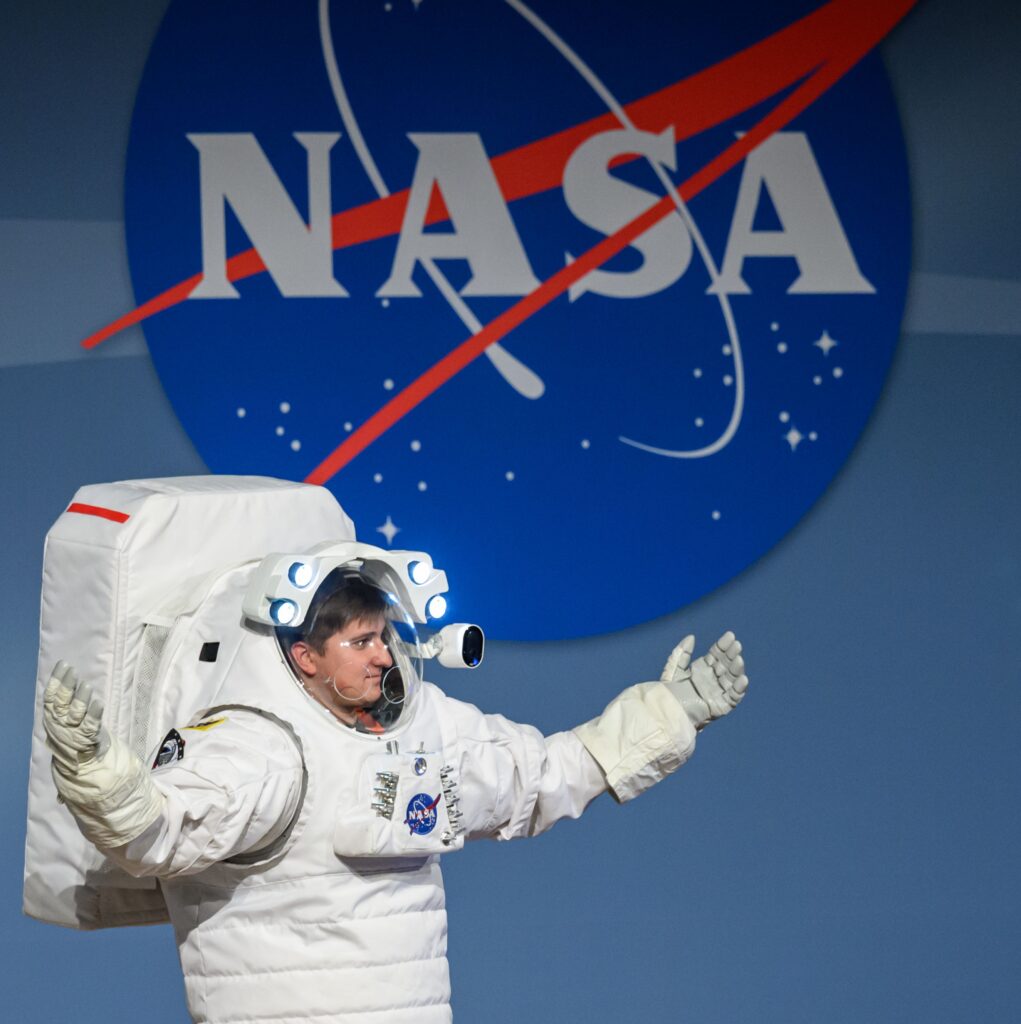
As senior human health and performance engineer at Collins Aerospace, Kevin Dolick, Eng ’19, helps design the spacesuits that serve as the only layer of protection between astronauts and the unforgiving vacuum of outer space. It’s his job to keep the humans inside the suits in mind as suits are updated, ensuring they’re intuitive to use and won’t injure astronauts using them. Though testing spacesuits on Earth brings many challenges, Dolick says seeing something he helped design operate in space is “incredibly rewarding.”
Powering up
As power systems test engineer at NASA’s Johnson Space Center in Houston, Alexander Blum, Eng ’23, designs spacesuit power supplies. He also designs and manages test systems to help develop lunar surface power grid structures and help certify hardware for lunar missions. “On an average day I meet with employees from across the agency to discuss different concerns, from lunar dust to power distribution,” he says. “These conversations lead to detailed discussions on how to best solve the problems involved in space travel.”
Blum has contributed to the development of test equipment for the International Space Station and for Orion missions, plus spacesuits for Orion, Artemis II and future Artemis missions. “It’s honestly an amazing feeling,” he says of his involvement with this work. “At points there are some nerves, because you never want your hardware to break or cause a mission delay. But after you see it work once or twice, the nerves start to fade, and you can just enjoy the pride that comes with a job well done.”
— Nate Scharping