When Don Hertz came to Marquette nine years ago to work as the manager of technical services for the J. William and Mary Diederich College of Communication, he had already spent decades working in the film and television industry.
Hertz’s career highlights included owning his own video production company and handling video needs for a wide range of clients including boat manufacturer Sea Ray and nonprofit United Way. Eventually, he worked as a certified trainer for software programs including Final Cut Pro and Adobe products. During his time as a trainer, he realized he had a passion for teaching and helping others: “I really loved that aspect of it, so I started to look around at jobs at universities,” Hertz says.
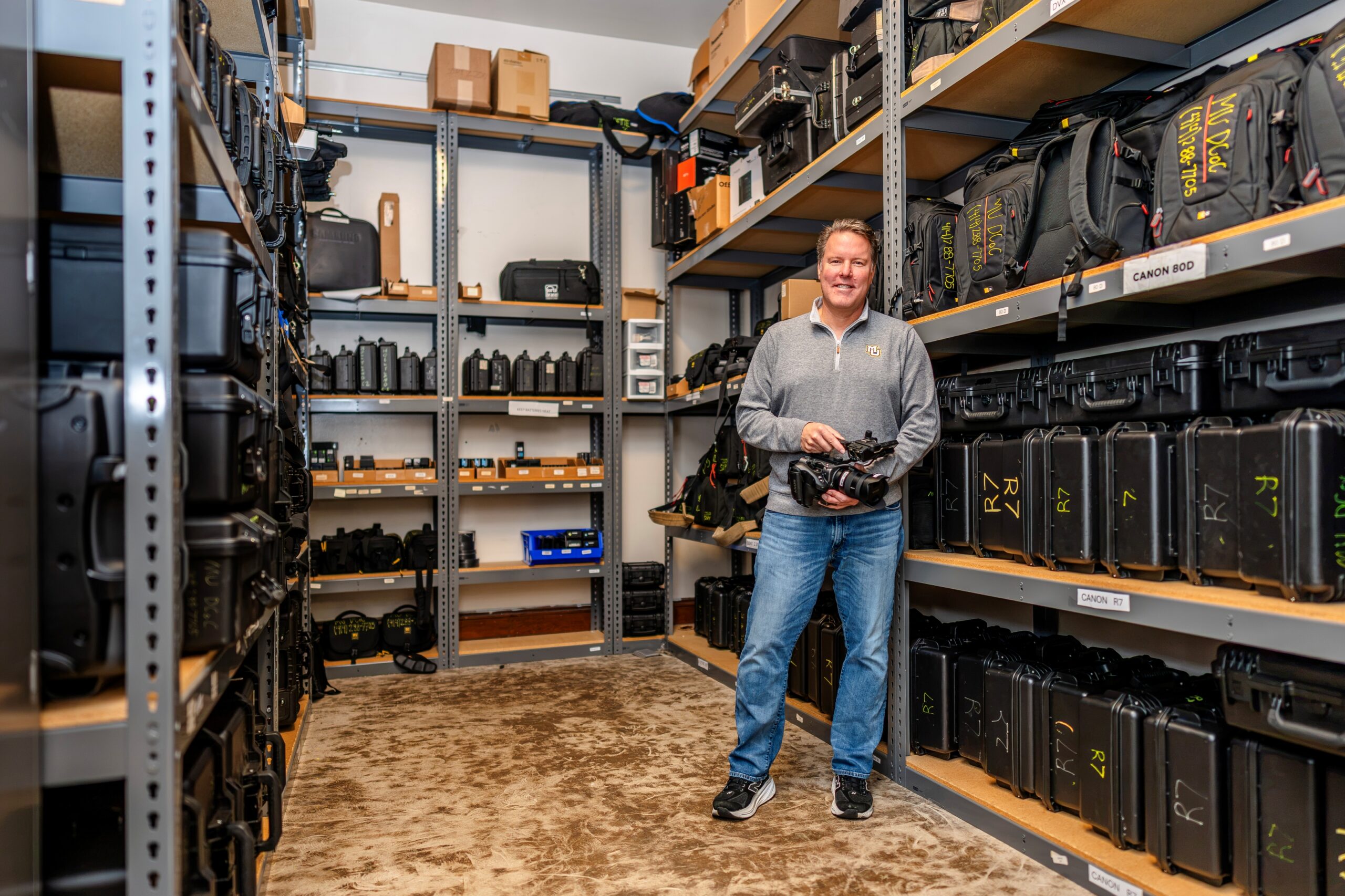
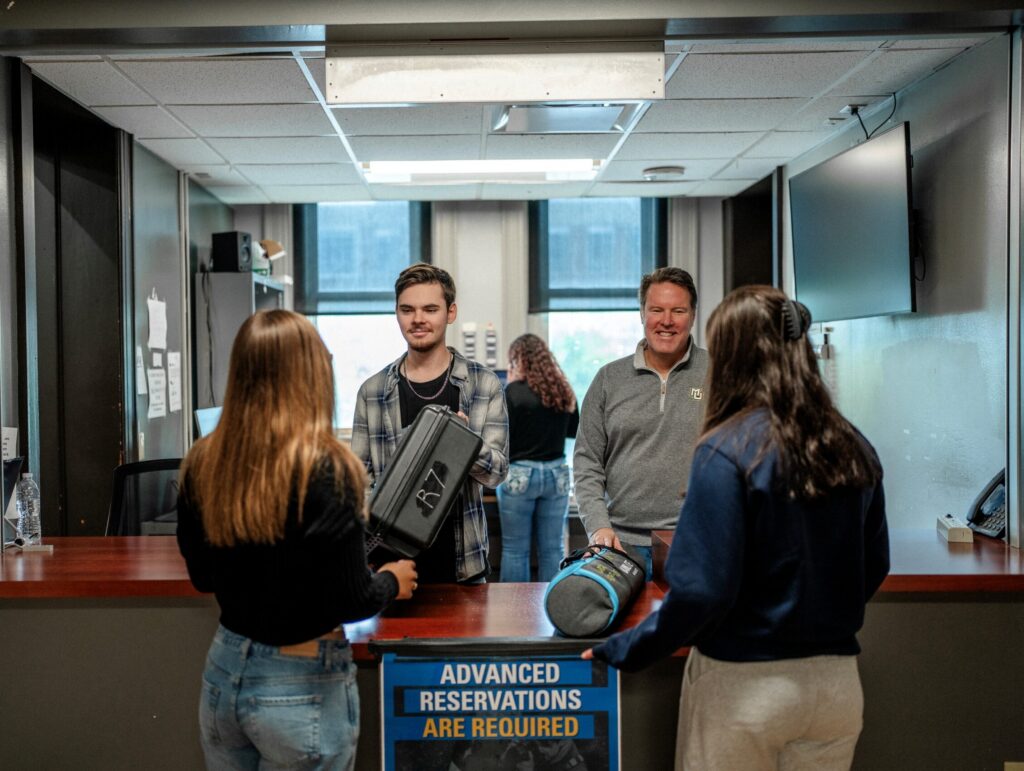
Hertz received a 2026 Staff Excellence Award for his contributions at Marquette, which extend far beyond the equipment checkout desk, where he manages about 3,500 items — including specialized cameras, microphones, lights, tripods and camera dollies — and oversees campus broadcast facilities. Hertz is also a cherished instructor of two courses in the digital media program and a trusted mentor to students, helping them learn the ropes of tools and software and link many with video production jobs.
Inside and outside of the college, Hertz is known as the go-to expert for help with video production and livestreaming. During the pandemic, as departments and colleges across campus scrambled to produce virtual events in lieu of in-person meetings, Hertz’s skills were especially in demand.
“I started gathering students who were interested in doing that kind of work and connecting them with offices and colleges that needed events to be livestreamed or filmed,” he says. “There was also a need on the athletics side to produce their games, which was a great opportunity for our students to create a sports broadcasting version of what we were doing elsewhere with events.”
At first, Hertz and his student team provided video support for just a few Marquette Athletics games. Within a few years, that commitment has grown to supporting more than 60 games a year and producing professional-quality livestreams and video assets that air on ESPN+ and meet the broadcast requirements of the Big East Conference.
Over time, Hertz’s cohort of student workers has grown into its own production venture, 12th Street Media. Today, Hertz and his colleagues — Kevin O’Connor, instructor of practice in digital media, and Steve Krause, broadcast engineer — continue to connect students to paid, on-campus video production gigs while also training them on the job. O’Connor now runs athletic video production while Hertz continues to oversee other projects across campus.
“His kindness and patience have helped me develop the right mindset when I’m working.”
Theo Geovanis-Schwartz
“A lot of students come in without the full knowledge of how to do this kind of work, so we tutor them through the process,” Hertz says. “If it’s the first time they’ve covered an event or livestream, they have hands-on opportunities, and either myself, Steve, Kevin or another student who knows what they’re doing will be there next to them, showing them the process.”
Hertz’s natural ability as a mentor and helper is one reason colleagues nominated Hertz for the Staff Excellence Award. “All of the events that he supports with video production are beyond his college role, and yet he consistently says yes,” says Dr. Sarah Feldner, dean of the Diederich College. “He shows up with a smile and a team of students to make sure needs are met.”
Theo Geovanis-Schwartz, a junior digital media major, works at the equipment checkout desk with Hertz. He was also part of the student group Hertz first assembled to assist with video production and broadcasting for Marquette Athletics.
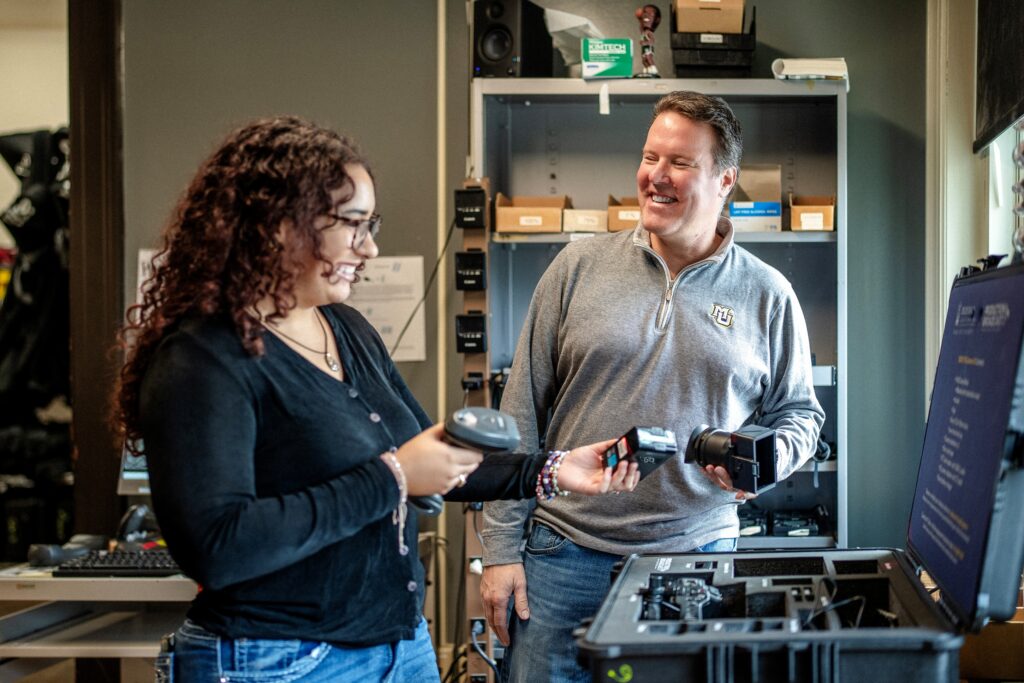
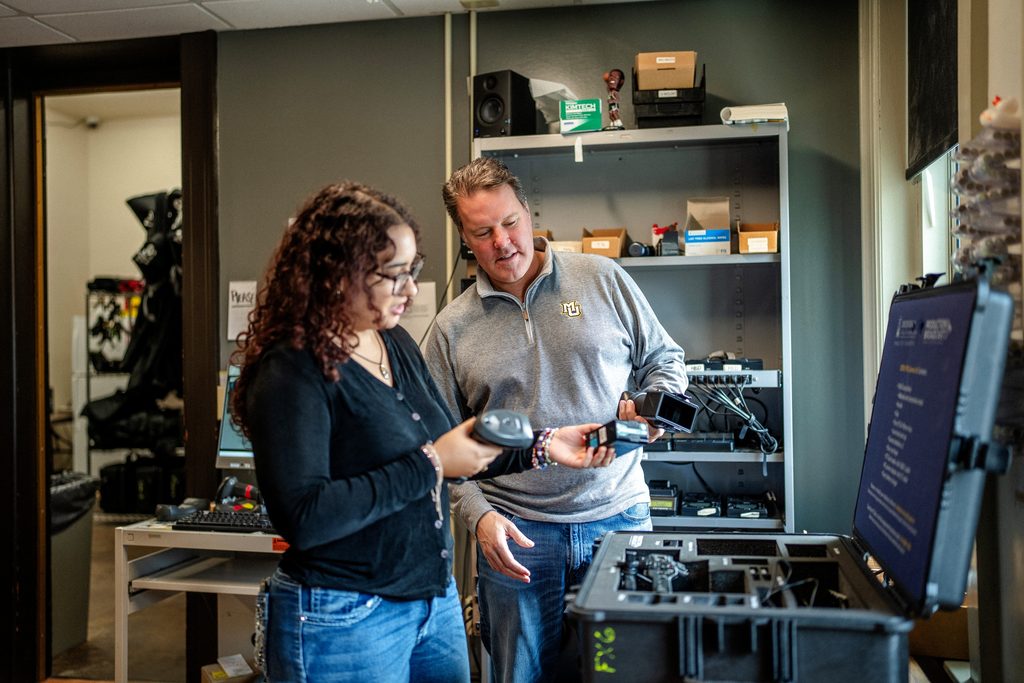
“He sets a fantastic example,” Geovanis-Schwartz says. “Very kind, very calm in stressful situations, very pragmatic. His kindness and patience have helped me develop the right mindset when I’m working.”
For Hertz, helping students conquer the technical aspects of video production is a rewarding process. By mastering the basics of operating a camera or using production tools, students can tackle bigger creative questions without getting lost in the weeds of the equipment or software, Hertz says.
“The only way you’re going to get good at any form of production is to get hands-on and get used to using the equipment,” Hertz says. “It’s a creative field, so it’s helpful for students to overcome any fear they have of the technology in order to better focus on the creative aspects of the job. It’s like riding a bike: The more they can do it, the more they stop worrying about the technical aspects.”
Hertz’s colleagues say that he brings more than technical prowess to his role at Marquette.
“He comes with a spirit of service,” Feldner says. “He comes asking how he can help with a warm, open attitude. He is a calming presence even when the task seems impossible.”
Geovanis-Schwartz agrees: “I’m very grateful to have been able to have him as a trusted adult on campus,” he says. “I know I speak for a lot of students when I say that.”