Illustrations by Taj Francis
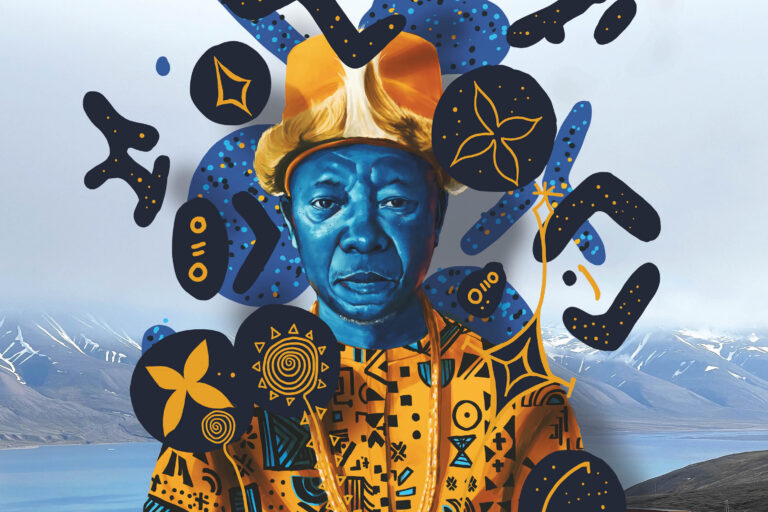
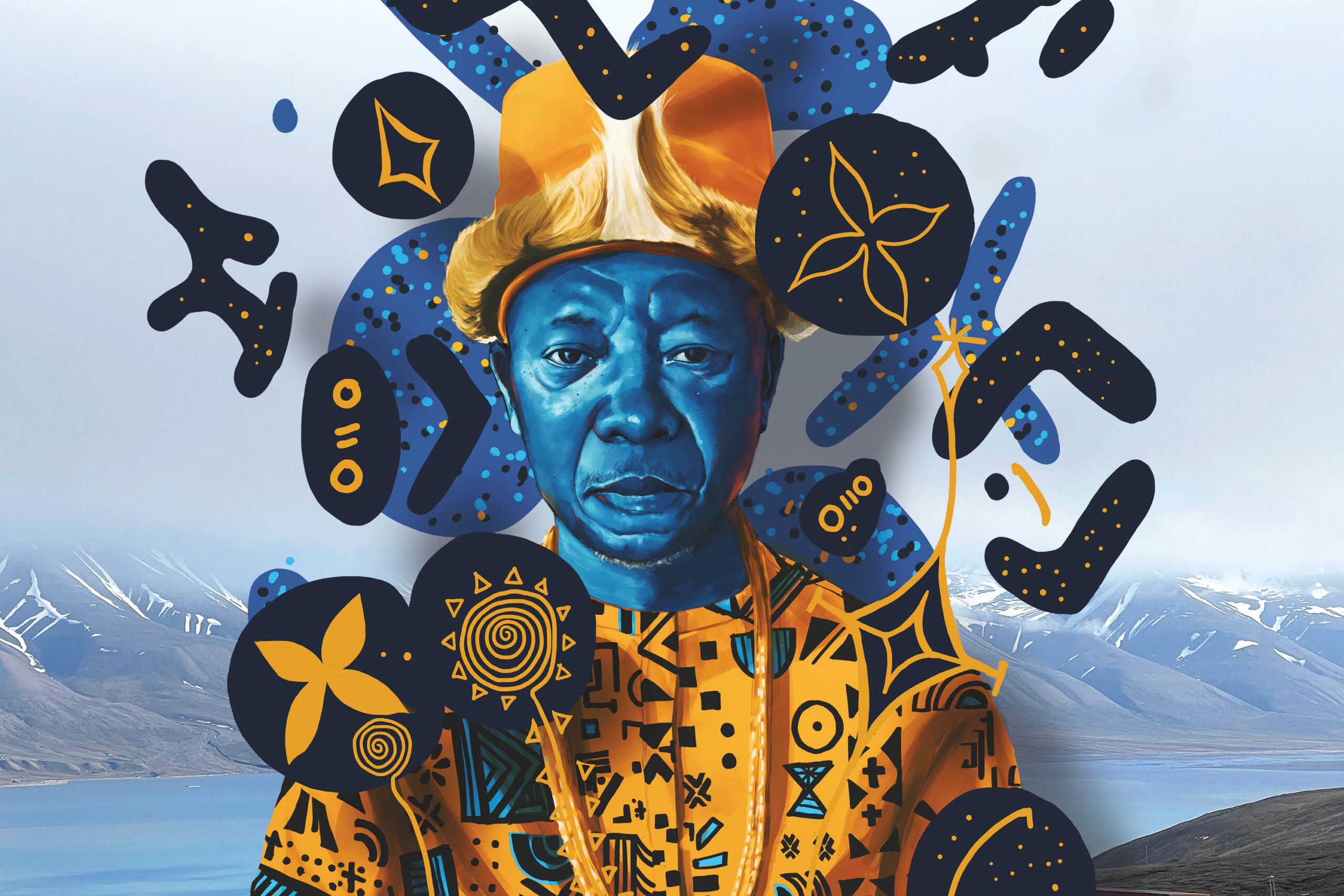
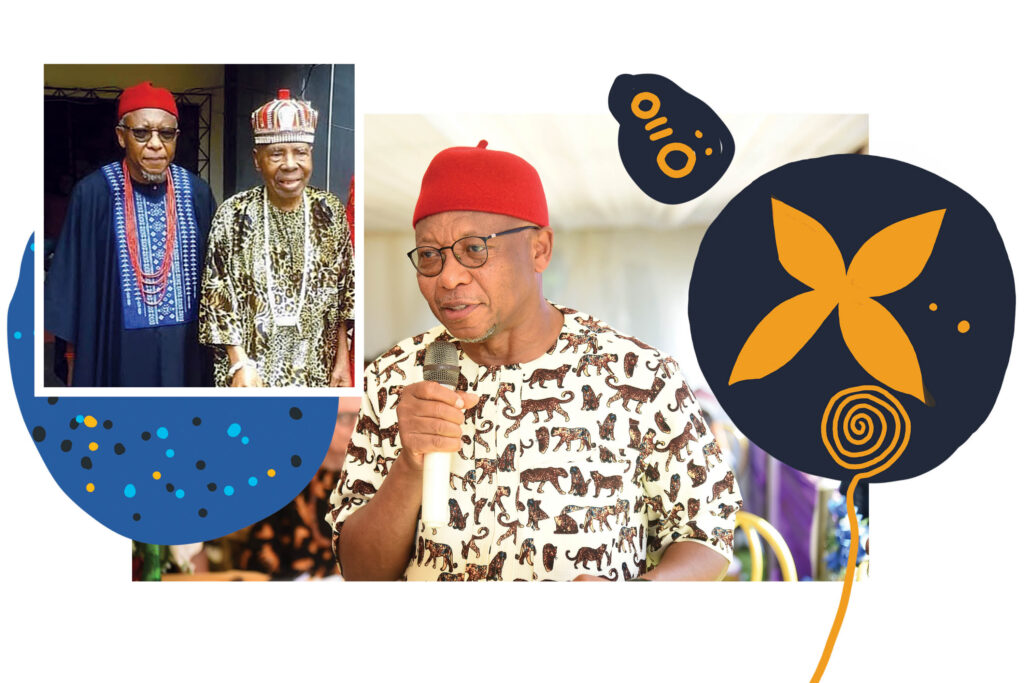
Dr. Chima Korieh is a humble man for being an acting king.
As he speaks from his home in Milwaukee — and later his hometown in southeastern Nigeria — that reserved nature cannot tame the swell of pride he feels recalling the lengthy, turbulent and triumphant history of the Umuchieze clan that he was born into and now serves as advisory ruler. It’s a people’s history that is personal and communal, scholarly and ancestral — and incredibly precious to him.
Korieh spends his days as a longtime professor of colonial African history at Marquette, where he teaches courses but also juggles advising students, editing journals and authoring books on West African societies and economies. His expertise even earned him a role in the 2024 documentary Giannis: The Marvelous Journey, in which he provided historical context for the emigration journey of basketball great Giannis Antetokounmpo’s family.
During his free time and especially over the summer, Korieh is called back home to Mbaise in the Imo State of Nigeria to fulfill his duties in leadership. Over 20 years of in-person and remote service in local governance led to his appointment as acting king of the Umuchieze last December.
As king, he’s been leading the conversation to convince his clan to make up for lost time — to invest in preserving their history and customs before it’s too late. Historical papers have been disintegrating in front of his very eyes, wearing away without proper preservation measures in place. A weak electrical grid and a shortage of resources have stymied Nigeria’s regional archives. National leadership has been reluctant to digitize files through international grants that stoke colonialism-steeped fears of losing control and ownership of these records.
Yet there is awe — optimism, even — in Korieh’s voice and upturned corners of his smile. It reveals his excitement as a historian getting the chance to preserve his family’s history alongside his community’s.
Capturing the story of Igbo perseverance is a through line in Korieh’s career. The Umuchieze and the larger 35-million-strong Igbo ethnic group are a proud people, who evolved with different norms than the more centralized groups that dominate Nigeria’s north and west. The Igbo proudly cling to their democratic forms of governance, with their clan kings as facilitators. In its consensus-driven way, the Igbo nation struggled and revolted against occupation and British colonial rule, enslavement and wars. To this day, the Igbo challenge administrative corruption and embattled infrastructure plaguing Nigeria.
It is no surprise, then, that Korieh is determined to find a way to ensure their history’s survival after fighting so hard and so long for their own.
As acting king, Korieh has made progress rallying the Umuchieze to safeguard as much material as possible.
He’s started by securing pieces of their history in the Arctic Circle.
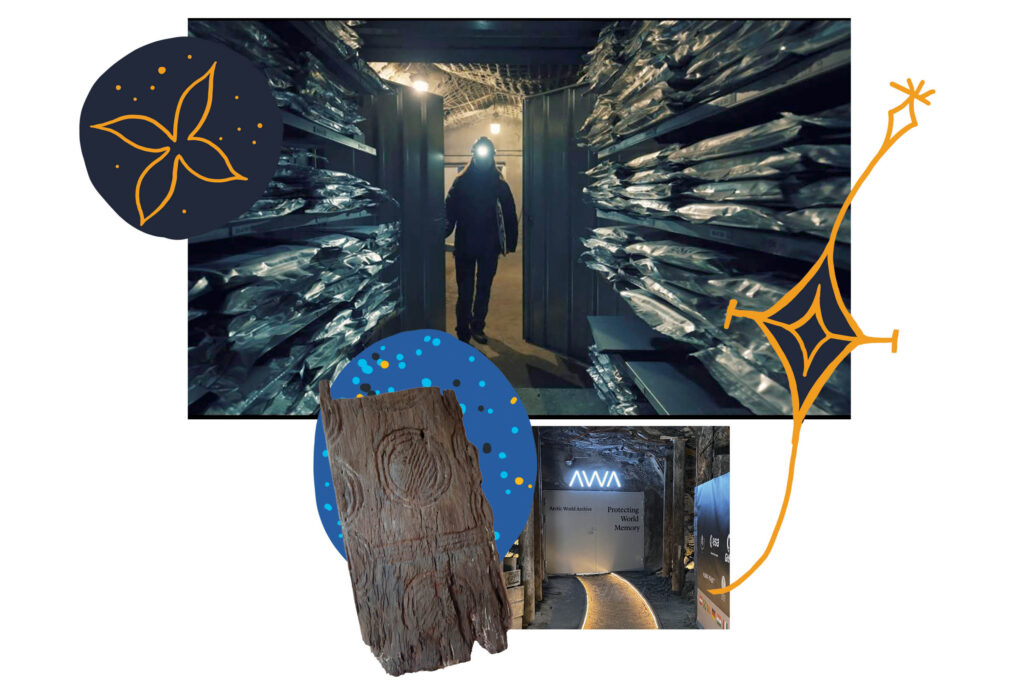
The Arctic World Archive, or AWA, lies on a remote island in an ice-covered archipelago.
It sits roughly halfway between the Norwegian mainland and the North Pole — 5,000 miles from Korieh’s hometown. Korieh will visit the archive for the first time this month to deposit the Umuchieze’s second batch of archival records.
Through his guidance, the Umuchieze clan decided to use the AWA much as other international partners do — as the best insurance policy for storing culturally important items such as documents and images on indestructible film. Like the global seed vault down the road, the AWA is run by a nonprofit that aims to use the stable conditions of an underground mine to preserve history by protecting the materials from global threats, including nuclear war, or the ravages of time.
Korieh learned of this opportunity after being recommended to sit on an inaugural African history preservation board because of his vast knowledge of preservation as a scholar. He then encouraged the Umuchieze to pursue a relationship with the archive. That took hosting many community meetings and presentations to reach a consensus. “I’m trying to guarantee our endangered data is fully protected with this choice,” Korieh says. “This is our fail-safe.”
A particular AWA selling point to preservationists like Korieh is its use of proprietary piqlFilm, which has also been deployed in Hollywood’s epic battle with the disintegrating master reel. For archival purposes, the film technology uses a binary code to convert documents and images into intricate gray patterns similar to QR codes, packed with up to 8 million data points per frame. Tests have projected the film will last up to 1,000 years.
Korieh admits this setup sounds rather sci-fi or even dystopian yet also incredibly practical. The film is a first-of-its-kind invention that withstands radiation. And it’s all stored well below the Arctic permafrost, where conditions are dark, dry and cool.
And secure. Free from tumult in West Africa and other global hot spots, the Svalbard island is one of the most geopolitically secure places in the world. Not only is it demilitarized and free from regime change, unlike Nigeria, but also it’s surprisingly tech-friendly with strong internet and satellite connectivity.
In this serene subterranean archive, the history of the Umuchieze joins works from the Vatican Library and the national libraries and archives of Mexico, Hungary and Norway. Their story resides near invaluable works such as Chopin’s compositions, a 3D scan of the Taj Mahal and much more.
Because the Igbo traditionally relied on oral storytelling, there was no paper trail of Igbo history until the British came along. Korieh especially wanted to digitize hundreds of colonial-era documents. “The first time I saw the British intelligence report on my clan, I was fascinated,” he says.
“Of course, all history is political, but this trove of detailed reports by Oxford and Cambridge anthropologists in the 1930s sought to understand Nigerian societies — and they’re unmatched,” he offers.
The British recorded Igbo political economies, judiciaries, gender relations, agricultural practices — down to the most particular detail, in a bid to understand the “stubborn” Igbo and gain greater control. “We were considered trouble,” says Korieh with a laugh.
The intelligence reports are important when Korieh as king is called to weigh in on disputes regarding land ownership and community leadership roles.
Beyond the role of these records in conflict resolution, researchers rely on them to track cultural practices of the Igbo that survived Westernization. One of those researchers is Dr. James Robinson, a friend of Korieh’s and Nobel laureate in economics at the University of Chicago. “James was as interested as I was in digitizing the intelligence reports. He called me up and said, ‘Chima, can I come to Marquette and see you?’ And so for the last seven years, we’ve been collecting the intelligence reports and digitizing the Igbo ethnographic reports collected (thanks to the Institute of African Studies at the University of Nigeria) that should be available for descendants and researchers all over the world,” says Korieh.
Korieh plans to next document artifacts on film, such as a handmade Igbo door in the famous design style called uli. “You do not find this traditional architecture any longer, due to Nigeria’s adaptation of Western architecture,” Korieh explains. “We’ll also deposit a documentary we’re finishing on the cultural ceremony that admits young men into adulthood in our society, called Iwa Akwa.” This is a ritual or rite of passage initiating young men, who otherwise could not speak at community meetings, Korieh says. “Even if you’re 70 years old, you cannot come to the assembly and talk unless initiated; it’s that important.”
The AWA is not Korieh’s only goal. A hub that can serve as a local center, museum and library is also taking shape in his hometown. “We need more funding, but our Eze (king) donated the land,” he says.
It will be a cultural center where everyone, young and old, can stop by and see these artifacts and access the AWA online to hear audio recordings of the Iwa Akwa.
“Preserving this heritage is critical for African societies today,” emphasizes Korieh. “Some people in my village have no idea, no knowledge of our past and our origin — and no knowledge about our original leadership systems.”
“We must reimagine this. We’re making sure the new generation knows this history and the past,” he says.
Korieh and the Umuchieze continue to explore preservation options and to fundraise. Their momentum is strong and continues to grow — to Korieh, they’re just getting started. As acting king, Marquette professor and Nigerian historian headed soon for the Arctic Circle, he’s made sure they’re in a position to succeed.

From the fall 2026 issue of Marquette Magazine
This and other stories from the fall edition of Marquette Magazine are now available online. Print copies are available on campus at the Zilber Hall security desk, AMU Information Center and outside Zilber Hall 235.