
The Haggerty Museum of Art’s newest exhibition, “Life Lines,” brings together abstract works of art from the museum’s collection in a way that’s meant to encourage contemplation and reflection.
Curated by Lynne Shumow, curator for academic engagement, the exhibition is part of a new series of “Object Labs” supported by a grant from the Lilly Endowment. The grant asks that projects have a religious or spiritual dimension, but Shumow said she wanted to create something that wasn’t overtly religious.

“I decided to create an exhibition featuring work comprised of diverse representations of lines,” she says. “A line is hard to describe; a life is hard to describe. All the work in the exhibition is abstract, but each has a story to tell.”
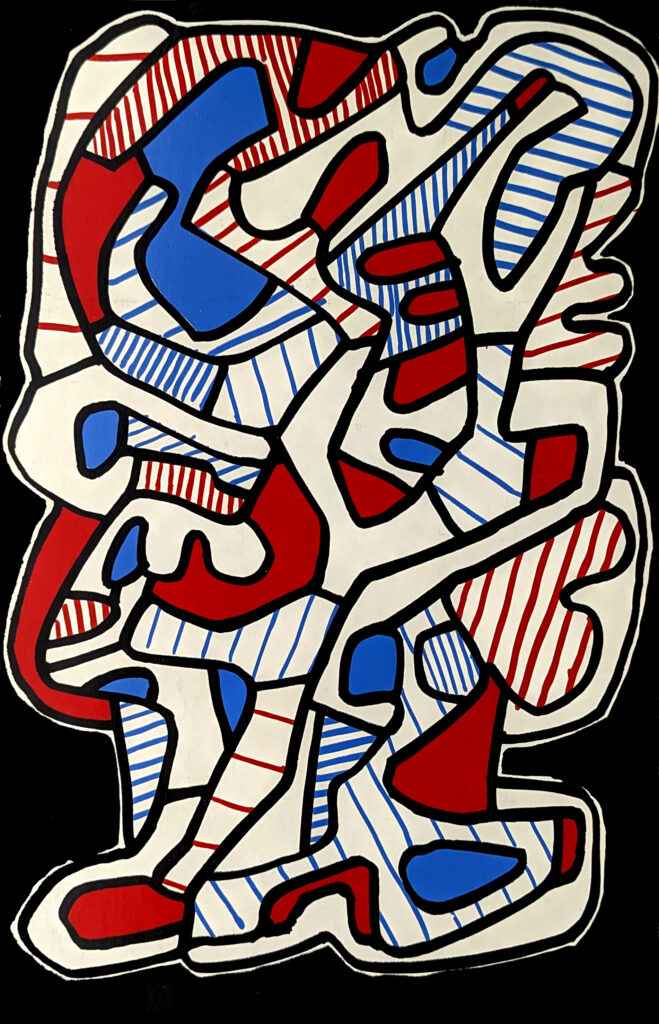
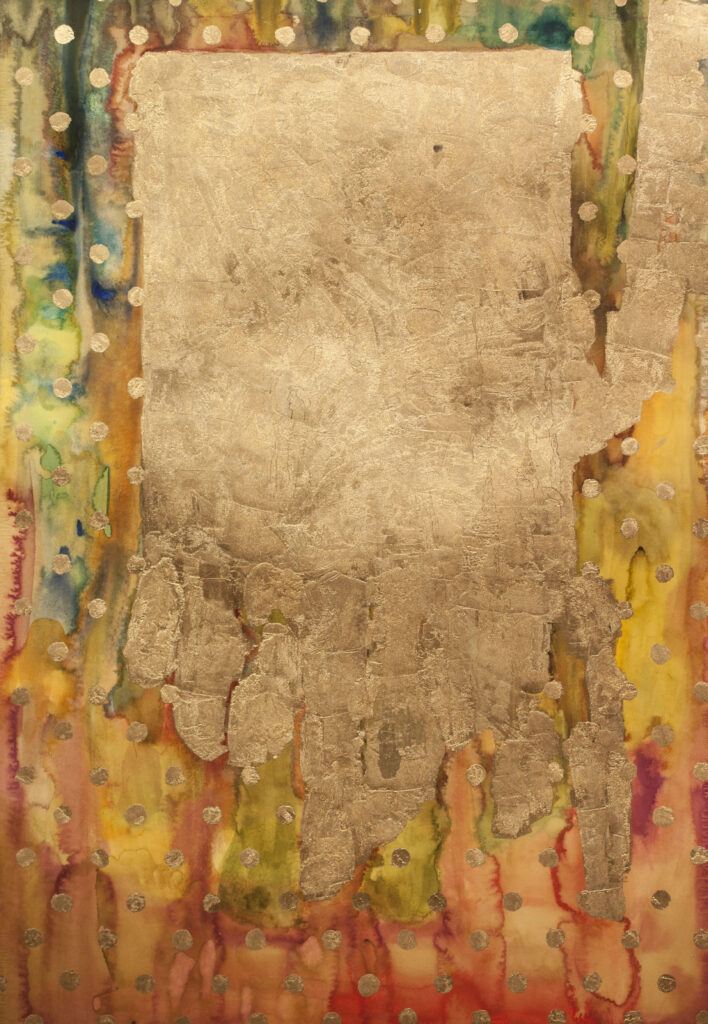
The exhibition includes works by artists including Jean Dubuffet, Sol LeWitt, Victor Vasarley and local artist Jill Sebastian. Sebastian’s piece had not been displayed for years, partly because of the condition of its frame. With support from the Lilly grant, the work was reframed and able to be put in the exhibition for visitors to see.
Rev. Ryan Duns, S.J., chair and associate professor of theology, has integrated the exhibition into his courses, using it as a foundation for Ignatian contemplative practice. Students in his class select one piece of art to return to throughout the semester, writing reflections on it week after week. The process, he says, often leads to transformation.
“This exhibit, and the Haggerty in general, provides a space where students are allowed to step back from the busyness of their lives,” Father Duns says. “The exhibit invites and challenges students to slow down, to become centered and aware and to welcome the ways art can reveal itself.
For many students, the assignment can be difficult.
“In general, students begin with nervous excitement,” Father Duns says. “After a few weeks, students will register feeling ‘burned out’ and irritated with the project. They have spent a lot of time imposing their interpretations on the art, but they run out of juice. They then plateau but because they have to complete the assignments, they continue to behold and then, unexpectedly, a shift takes place. The art begins to reveal itself to the beholder on its own terms, and the students discover that they are empowered to welcome this revelation.”
Father Duns described this change as a moment of grace.
“I remember one student who, by weeks six and seven, reported feeling like a failure because he could no longer ‘make sense’ of his chosen painting,” he says. “Then, when he was least expecting it, he was jolted out of his doldrums by the realization that he didn’t have to do anything else or anything more than receive what the art was trying to give him. That, to me, is an event of grace. You can’t earn it, you can’t force it, you can only let yourself receive what is being offered.”
Shumow says this type of engagement was central to her curatorial choices. She designed the exhibition with layers of accessibility, writing labels for each piece so visitors unfamiliar with abstract art would have a way into the works.
“I wanted visitors to have some guidance, not just see something abstract with no context,” she says. “The labels provide information about the art and the artists visitors may otherwise not know.”
The variety of pieces reflects the many meanings of the exhibition’s title. For Shumow, this range was deliberate.
“Life Lines can mean so many things,” she says. “Some pieces are rigid, some organic, some quasi-representational. Others have words, though not discernible. I wanted that variety. It was also a challenge to assemble a cohesive show from abstract works, but after many changes, I think it feels whole and aesthetically pleasing.”
Ultimately, both Shumow and Father Duns hope visitors leave with an experience that lingers.
“I hope students leave with a new understanding of abstract art, and also just enjoy being in the museum,” Shumow says. “Even if they don’t see a direct connection to classroom curriculum, they will hopefully leave with an image in mind that resonates in some way.”
Father Duns agrees.
“I really hope they learn that they can enter into new, foreign and uncomfortable situations without freaking out,” he says. “Being able to find a sense of equanimity in life’s chaos. We are developing good habits that will help them throughout their lives.”
The Life Lines exhibit will be on display at the Haggerty Museum of Art until Dec. 20.