Near West Side Partners formed 10 years ago out of neighborhood safety concerns after a bullet went through a conference room window at Harley-Davidson where a meeting was taking place. That event in 2014, thankfully, resulted in no physical injuries; yet it became a catalyst for change that helped form the nonprofit organization that includes five anchor institutions: Advocate Aurora Health, Harley-Davidson, Marquette University, Molson Coors and Potawatomi Ventures.
Today, Milwaukee’s Near West Side neighborhood, which stretches from Marquette’s campus in Avenues West past Harley-Davidson’s headquarters at North 38th Street and West Juneau Avenue in the Martin Drive neighborhood, is not just surviving, but also thriving as a collaborative community.
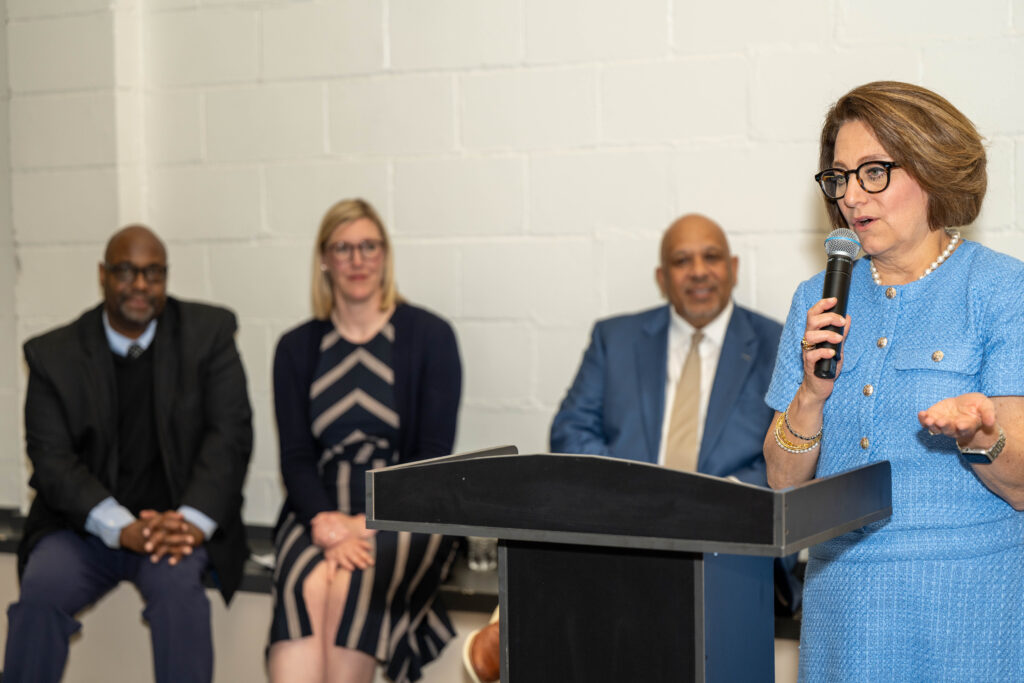
Rana Altenburg, associate vice president for public affairs at Marquette, has been a partner and champion for change in this neighborhood since the Near West Side Partners’ inception. She has consistently advocated for community well-being, collaboration, inclusivity and social progress.
“As an organization, it came together in a moment of crisis to address neighborhood safety, but it is successful because of its focus on innovative economic development programs with intentional resident and business engagement that have consistently yielded a positive return on investment,” Altenburg says. “Simply stated, Near West Side Partners is a multi-anchor partnership that is a national model for sustainable economic development rooted in community engagement.”
Lindsey St. Arnold Bell has been the Near West Side Partners’ executive director for the past two years and says the secret to the organization’s success is simple: the people.
“From the leaders of our anchor institutions to our neighbors, local businesses and community organizations, the Near West Side is full of passionate people who care deeply about their neighborhood and are willing to do the hard work to make it better,” St. Arnold Bell says. “What sets Near West Side Partners apart is our ability to bring these voices together, center them in decision-making and follow through on what we say we’ll do. We’re not interested in just talking about change, we are here to create it collaboratively and intentionally.”
Kelsey Otero, senior director of community engagement at Marquette, has been involved with Near West Side Partners since its inception. She agrees with St. Arnold Bell and says the organization’s success is all about partnerships.
“Partnerships matter and make this work possible to expand and sustain,” Otero says. “For Near West Side Partners, relationships are at the center of delivering collaborative impact, engaging in cross-sector work and listening to the voices of the community. As an organization, NWSP has created a shared vision and clarity of purpose. This allows for focus in four key areas: safety, housing, commercial corridor development, and community health and well-being.”
Below in a Q&A, St. Arnold Bell and Otero take us through ways Near West Side Partners has grown over the past decade, its successes, and their hopes for the organization’s future.

___________________________________________________________________________________________
When you look back over the past decade, what is the greatest accomplishment and the biggest takeaway from the partnership?
St. Arnold Bell:
Our greatest accomplishment has been building authentic relationships with neighbors, businesses, anchor institutions and stakeholders across the seven neighborhoods. That kind of partnership doesn’t happen overnight — it takes time, consistency and the creation of a shared vision for a neighborhood that is safe, welcoming and full of opportunity. Real sustainable change happens when the people who live and work in a place are actively involved in leading and shaping its future.
How has Near West Side Partners grown since 2015? What are some new projects, initiatives or buildings?
St. Arnold Bell:
Since our founding, Near West Side Partners has expanded our programming significantly, using data to help drive our initiatives. This includes traffic calming measures, addressing illegal dumping and blighted properties, and grant programs that support repairs to commercial and residential properties.
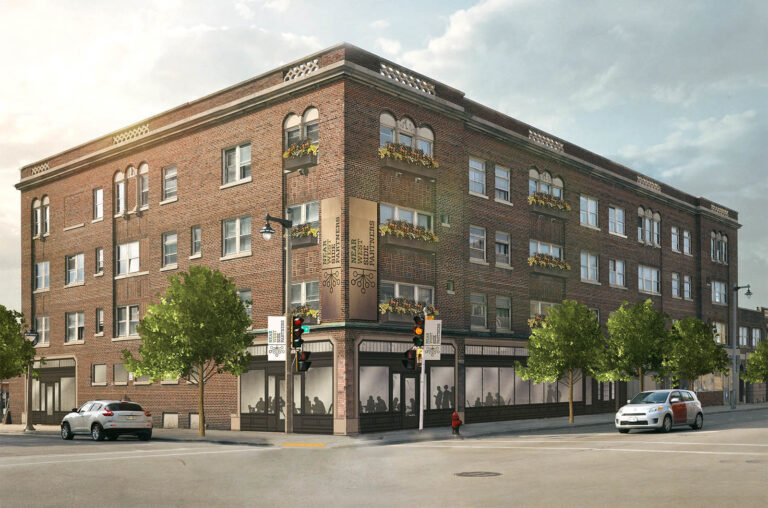
Some of our most visible work is seen in our support for entrepreneurs and the activation of key commercial corridors. Through programs like Rev-Up MKE, we helped to launch 50-plus businesses and continue to provide one-on-one mentorship to ensure these businesses have the tools they need to succeed and grow. The new Concordia 27 development is a great example of how we’ve supported the reimagining of historic properties into vibrant community assets.
Over the past several years, Milwaukee has seen many mixed-use developments pop up in certain areas, like the Sherman Phoenix located in the Sherman Park neighborhood. The Near West Side now has Concordia 27. Tell me about how this mixed-use development is fulfilling the needs of its community. What do mixed-use developments bring to a neighborhood that’s different from a regular business?
Otero:
Concordia 27 is more than a building — it’s a community hub. By combining affordable housing with locally owned businesses and shared community space and resources, Concordia 27 is a development that responds directly to what the community shared as priorities for a healthy neighborhood. Concordia 27 serves as a catalyst for other developments along 27th street, which is emerging as a health and wellness corridor in Milwaukee.
Mixed use refers to buildings that have a first-floor space with commercial businesses and upper floors with housing. Retail businesses or services on the first floor create activity on the street, which keeps a neighborhood safe, vibrant and inviting. With Concordia 27, the first floor houses the offices for NWSP, Scaling Wellness in Milwaukee, CFI’s kitchens, and Fruition, a café and co-working space. The upper floors include 33 units of affordable housing and residents will have access to the services and amenities in the building.
How has this partnership helped cultivate communication between businesses and reduce crime in the seven-neighborhood area? Would you recommend this kind of partnership to other areas of Milwaukee?
Otero:
Safety was our first priority, and it remains a cornerstone of our work. Through the Promoting Assets and Reducing Crime initiative, Near West Side Partners created a unique bridge between residents, businesses and law enforcement. By focusing on data-driven strategies and regular communication — like business safety meetings and NWSP Safety Ambassador check-ins at businesses — we’ve seen real reductions in nuisance activity and an increase in community trust and perceptions of safety. When we launched our program, Near West Side Partners was inspired by other neighborhoods’ safety ambassador programs; as a result, we try to share what we have learned with others.
Where do you see this partnership 10 years down the road?
St. Arnold Bell:
Ten years from now, I see a Near West Side that’s known citywide and beyond as a model for community development and transformation. We’ll have stronger commercial corridors full of thriving local businesses, more quality affordable housing options, neighbors who are deeply connected and partnerships that extend across the city.
But most importantly, I see a community where our neighbors, employees and business leaders feel valued, heard and hopeful about the future. That’s our North Star. The work continues, but the foundation we’ve built over the last decade gives me every reason to believe the next 10 years will be even more impactful.