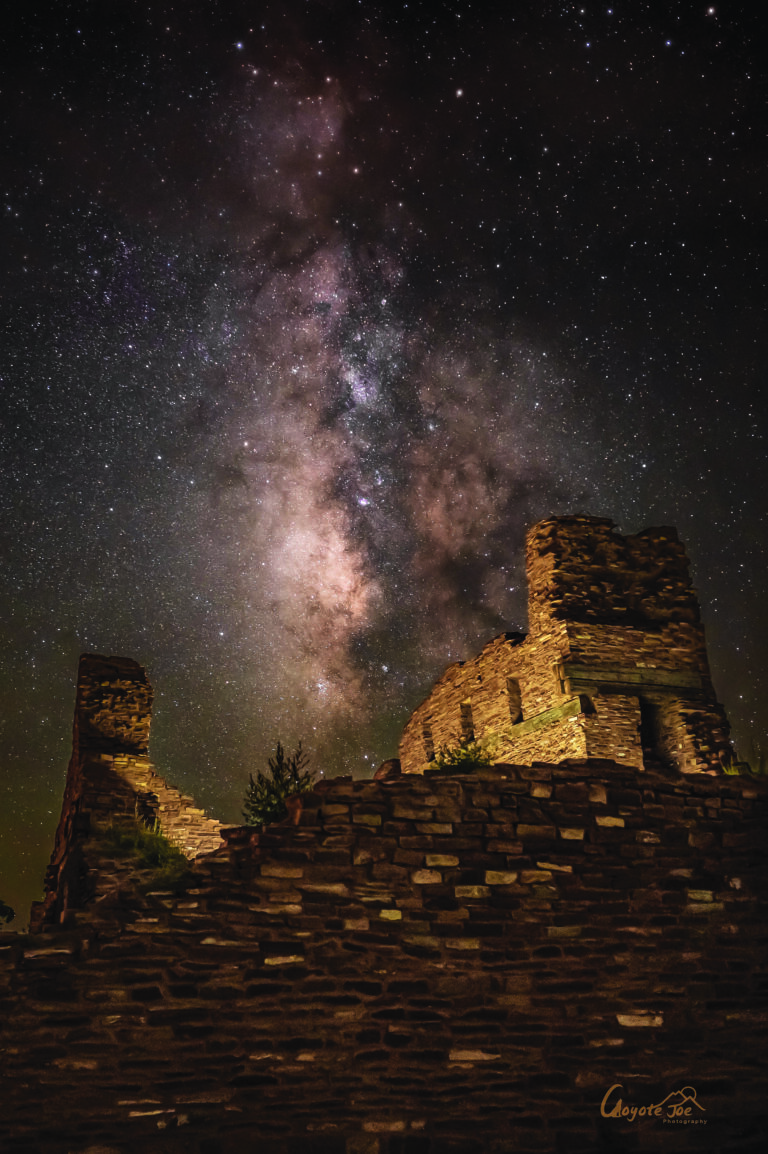
Photo by Joe Davis (Starry Sky Over Salinas Pueblo)
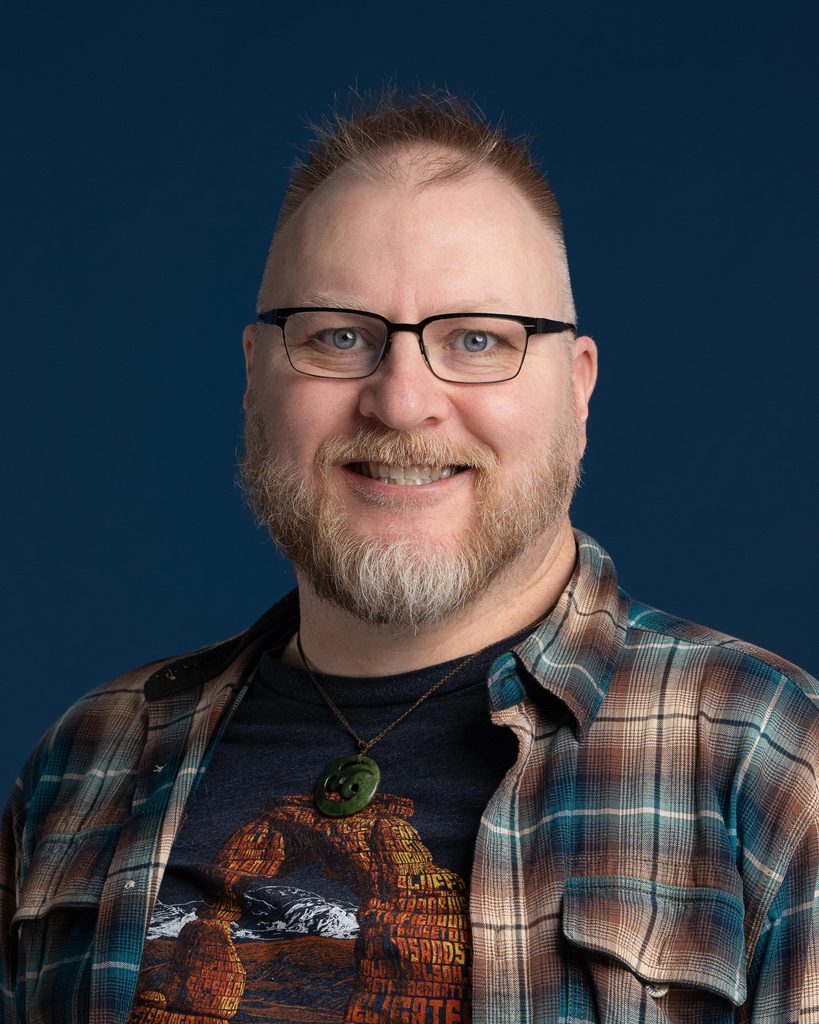
As a researcher of supernovas and teacher of Marquette’s main astronomy course, Dr. Christopher Stockdale, associate professor of physics, has had many trips to the Southwest to consult with partners at facilities such as the Very Large Array, a radio telescope in New Mexico comprising 27 antennae, each miles apart.
Then, last summer, Stockdale returned to this familiar landscape to look skyward with a different lens. Supported by a grant from the Wisconsin Space Grant Consortium, he visited sites in New Mexico and Arizona to gather knowledge for a course that will immerse students in how Indigenous tribes and other cultures interact with the heavens. “We all look at the same sky,” Stockdale says, “but we have different constellations and different understandings of what we see.”
What he found left him eager to start teaching the course in 2027–28. Near Tularosa, New Mexico, he saw evidence that the Mogollon civilization practiced astronomy as early as A.D. 680. There, an ancient ceremonial amphitheater, or kiva, has entrances that align with the rising sun on the summer and winter solstices. In Arizona, a historic pueblo had four holes dug into a wall where shadows fall on solstices, equinoxes and another day perhaps tied to spring corn planting, according to one theory.
Work on the course comes at a time of rising awareness among academic astronomers that they share the land and skies with diverse people. “Whenever we build a telescope, it’s almost always in a remote place, on land that is sacred to an Indigenous community,” Stockdale says. “In the past, there’s been a lack of consultation with these communities, but as we move forward, we can do better.”

From the fall 2026 issue of Marquette Magazine
This and other stories from the fall edition of Marquette Magazine are now available online. Print copies are available on campus at the Zilber Hall security desk, AMU Information Center and outside Zilber Hall 235.