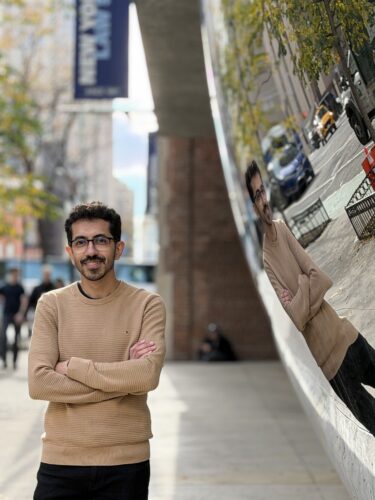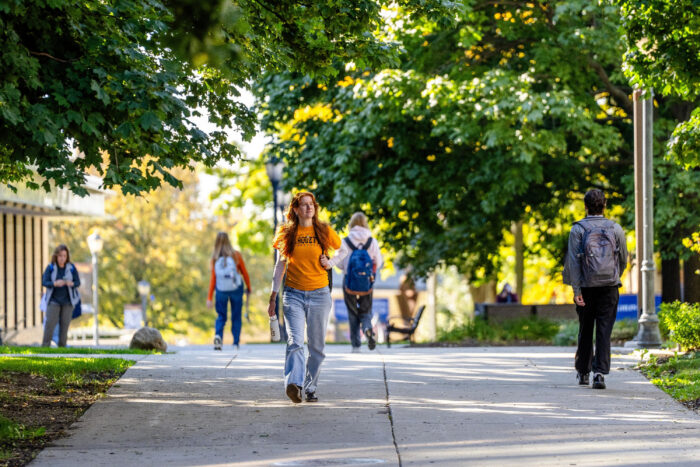
From the vast wheat fields of a small farming village in China’s Anhui Province to the research labs of Marquette University, Haoyou “Ethan” Zhang’s journey has been shaped by curiosity, discipline and a desire to help others. Today, more than 7,000 miles from home, Zhang is pursuing a Ph.D. in civil engineering, combining artificial intelligence and innovative construction technologies to help develop safer and more affordable housing. His story is a testament to the power of education, the importance of community and the pursuit of knowledge that can make a meaningful difference in people’s lives.
From the wheat fields of Linquan
Growing up in Linquan County in China’s Anhui Province, Zhang experienced a childhood shaped by a strong sense of community. Linquan County has more than 2 million registered residents, a little more than four times Milwaukee’s population, making it one of the most populous counties in China. Zhang grew up in a small farming village in Yangqiao Town, which has approximately 110,000 residents, roughly the size of Green Bay. According to Zhang, a town of this size would be considered a city in the United States, but in China, it is a small town.
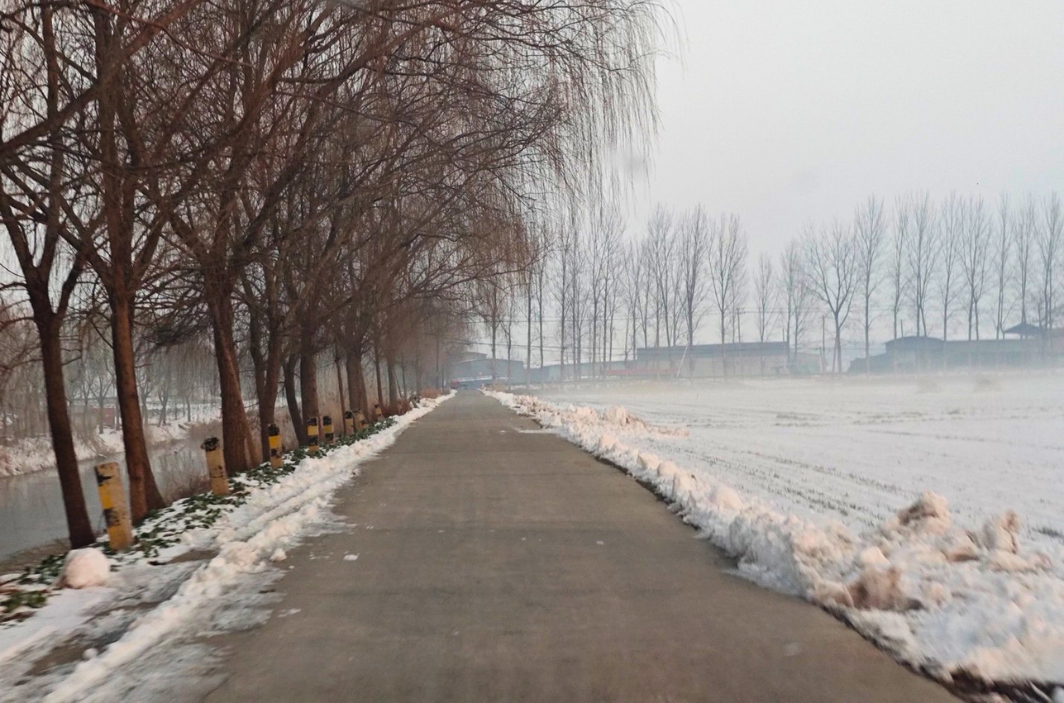
Zhang’s village is about four hours west of Shanghai by high-speed train and is characterized by its flat, wheat-farming countryside. For Zhang, the flat wheat fields extend in every direction, and as he lightheartedly puts it, there is “a lot more wheat than people.” He describes the region as China’s version of the Midwest.
Zhang recalls his hometown’s main street, lined with steamed-bun shops, lamb soup restaurants and small stores selling farm tools and hardware. Among Zhang’s fondest childhood memories are market days, when hundreds of stalls seem to spring up out of nowhere and the quiet town suddenly fills with the sounds of loudspeakers, shouting vendors and the ringing bells of three-wheeled carts. Even when he wasn’t looking to shop, he would walk the street from end to end, watching candied-fruit sellers, fortune tellers and street-medicine vendors as though it were a traveling show.
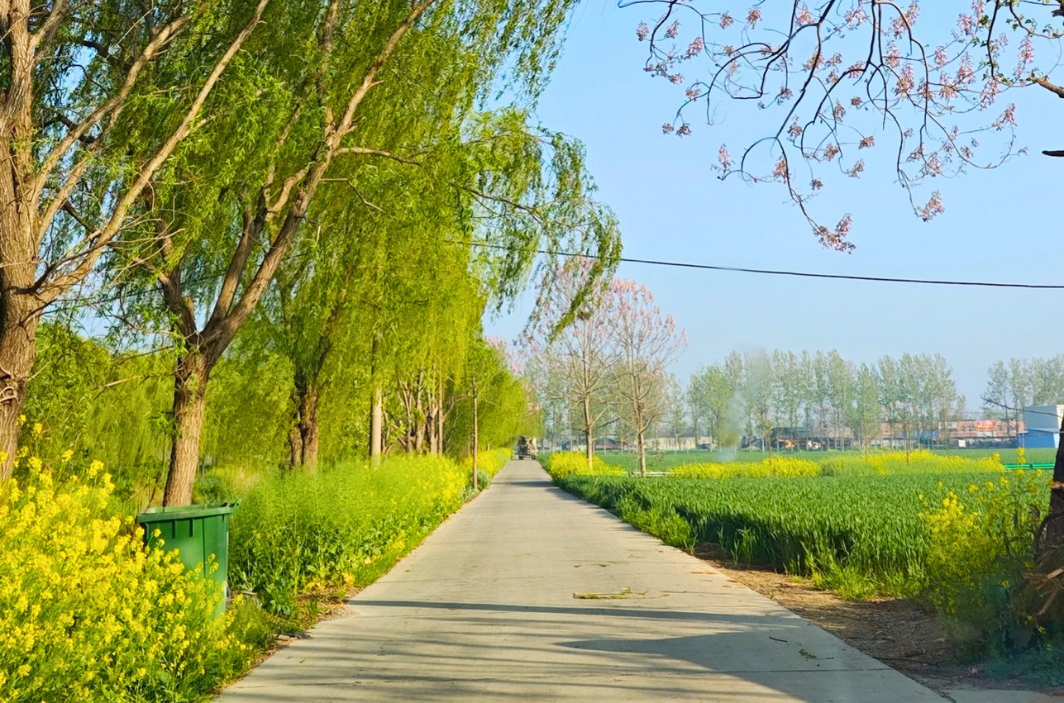
Past the edge of town, the wheat fields begin, changing with the seasons: green in spring, golden during the early summer harvest and wide open in winter. Here, the wind sweeps across a plain so flat it feels endless.
“Life moves slowly there, with kitchen smoke rising at dinnertime and whole afternoons spent sitting under a tree,” Zhang recalled.
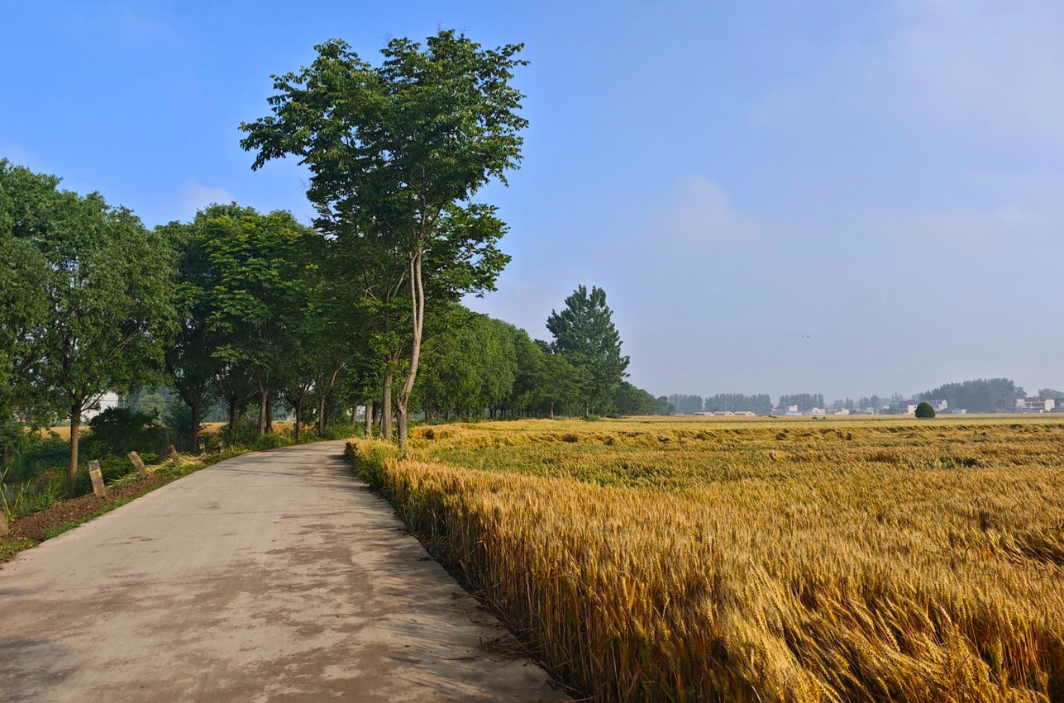 Ripe wheat along a village road, just before the early-summer harvest: more wheat than people.


A childhood surrounded by history and tradition
Beyond its quiet countryside and lively market days, Linquan is also home to a rich cultural heritage that spans millennia. About 3,000 years ago, the area was the ancient State of Shen, and today, it prides itself on being the hometown of Jiang Ziya, a legendary strategist whom Zhang says is China’s version of Merlin.
Linquan is traditionally renowned as China’s “Hometown of Acrobatics,” with an acrobatic tradition included on the national cultural heritage list. A Han dynasty pottery model of a stage unearthed in Linquan depicts a performer doing a handstand. Zhang reminisces about his childhood trips to fairs, where he watched performers execute flips, balance bowls and walk tightropes. He recalls, “Fairs meant acrobats and suona, a Chinese horn loud enough to take on a marching band.”
With his childhood friends, he often played marbles, ring toss and card-flipping games like pogs, sometimes until his hands swelled. During the summer, they would run around the river levee, and in the winter, they wrote traditional New Year couplets on red paper for their doors. Zhang also recalls helping his family husk corn and dry wheat, until the adults told him he was creating more work than he was saving.
Family also played an important role in Zhang’s upbringing. He was raised primarily by his mother and two older sisters. When he left home to attend boarding school, his mother moved to the county seat for part of that time to help take care of him. His father, like many other fathers from the village, worked in larger cities far from home to support their families.
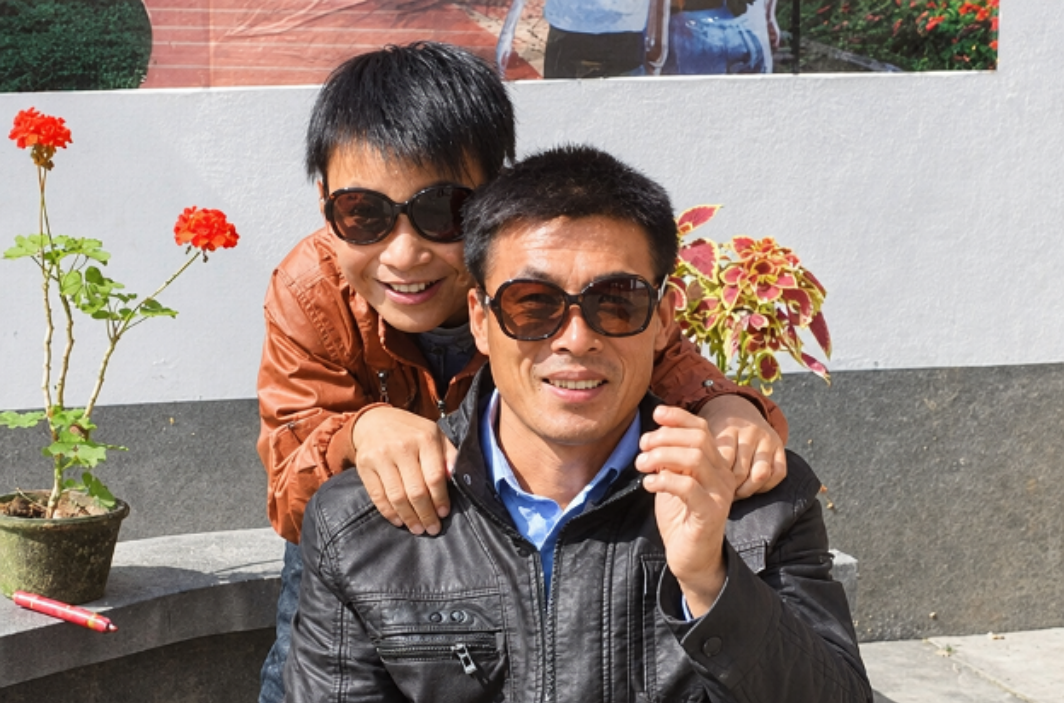 Zhang and Father

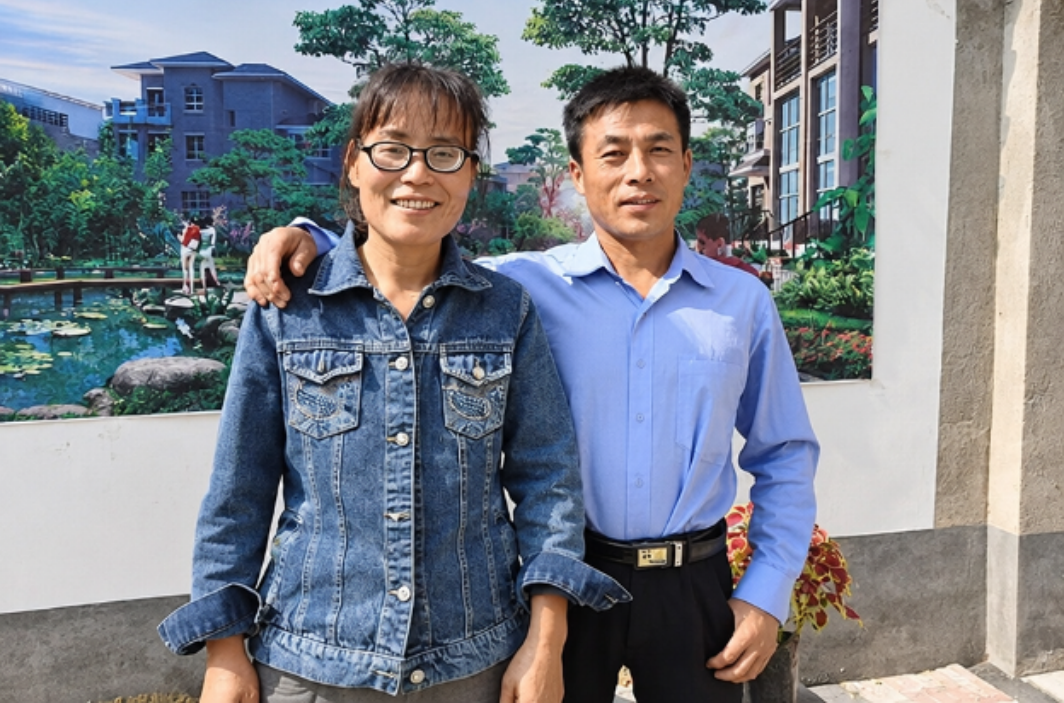
Every Chinese New Year, his father returned home, bringing the whole family together again. These celebrations were characterized by a full, noisy house, where everyone gathered to steam buns, make sanzi, a deep-fried noodle snack, and wrap dumplings together. For Zhang, these traditions represent more than the food itself. As he remarks, “Where I’m from, people don’t say, ‘I love you.’ They say ‘Have some more.’”

Beyond these family traditions, Linquan is also known for its distinctive cuisine, including, gelatiao, a thick sesame noodle dish, and pillow buns, oversized loaves of steamed bread that, according to legend, soldiers ate when hungry and slept on when tired. Among the dishes Zhang misses most are his family’s steamed noodles, prepared using a special method in which green beans, pork belly and noodles are steamed together, allowing the noodles to soak up the rich flavors of the pork and vegetable juices. A close second favorite is sweet potato porridge, made by simmering sun-dried sweet potato slices with rice, giving the entire pot a slightly sweet flavor. Last, but certainly not least, are battered and pan-fried green chilies, crispy on the outside and spicy on the inside. Zhang compares them to a farmhouse cousin of the American jalapeño popper.

The foundations of discipline and perseverance
Zhang’s schooling taught him discipline from an early age. He describes the experience as “early, loud, and strict.” Zhang attended elementary school in town and later went to boarding school for middle and high school. He recalls a rigid schedule that always began with morning reading sessions, with “the whole class reciting texts at the top of our lungs, loud enough to lift the roof.” Between classes, the entire school would perform synchronized exercises to music playing over loudspeakers, even during winter, when the cold left their hands red.
Teachers were especially strict, sometimes catching a sleepy student with a piece of chalk thrown from across the room, with an impressive aim that, in Zhang’s words, “a Brewers pitcher would envy.” Lessons in discipline: From the classroom to the research lab
Zhang’s schooling taught him discipline from an early age. He describes the experience as “early, loud, and strict.” Zhang attended elementary school in town and later went to boarding school for middle and high school.
He recalls a rigid schedule that always began with morning reading sessions, with “the whole class reciting texts at the top of our lungs, loud enough to lift the roof.” Between classes, the entire school would perform synchronized exercises to music playing over loudspeakers, even during winter, when the cold left their hands red.
Teachers were especially strict, sometimes catching a sleepy student with a piece of chalk thrown from across the room, with an impressive aim that, in Zhang’s words, “a Brewers pitcher would envy.” From his childhood education, Zhang developed three simple skills: sitting still, memorizing a lot and finding fun under pressure. “All three turned out to be useful for a Ph.D.,” he said.
Engineering innovation with a purpose
Before embarking on the journey that brought Zhang 7,000 miles from home to Marquette, Zhang completed a bachelor’s degree at Anhui Agricultural University (2016–2020) in Hefei, the capital of his home province. During his undergraduate studies, Zhang explored how mining waste could serve as a partial replacement for cement in concrete. He then continued his education at Beijing University of Technology (2020–2023), where he earned a master’s degree and studied how concrete buildings behave during earthquakes. He also began experimenting with machine learning to predict structural damage.
This research eventually led him to Marquette after his master’s advisor nudged him toward pursuing a Ph.D. Zhang was initially drawn to Marquette’s Jesuit mission and its emphasis on research that serves people. He learned that within Dr. Baolin Wan’s research group, he could apply his knowledge of machine learning and concrete toward a real-world purpose: researching 3D-printed concrete for affordable housing.
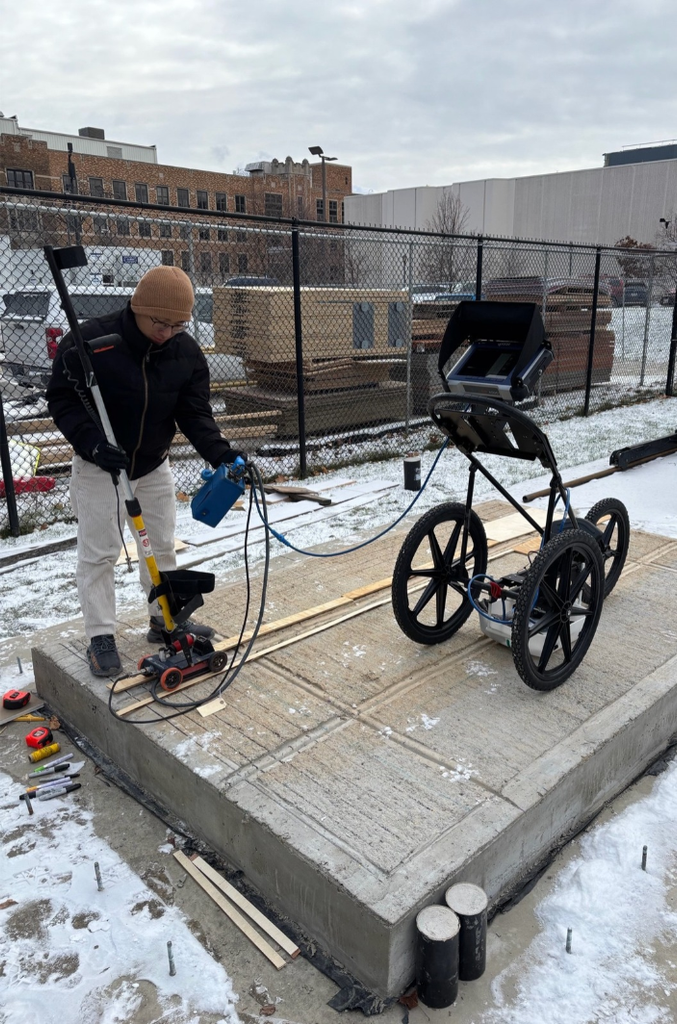
Today, Zhang is a Ph.D. candidate in civil engineering, studying 3D-printed concrete, a process in which large robotic printers build walls layer by layer. He describes the process as “piping frosting onto a cake, only with a much bigger piping bag.” One of the challenges of this construction method is the seam between printed layers, which can affect the structure’s strength and durability. Zhang’s work focuses on developing AI models that help predict how these structures respond to weight and stress.
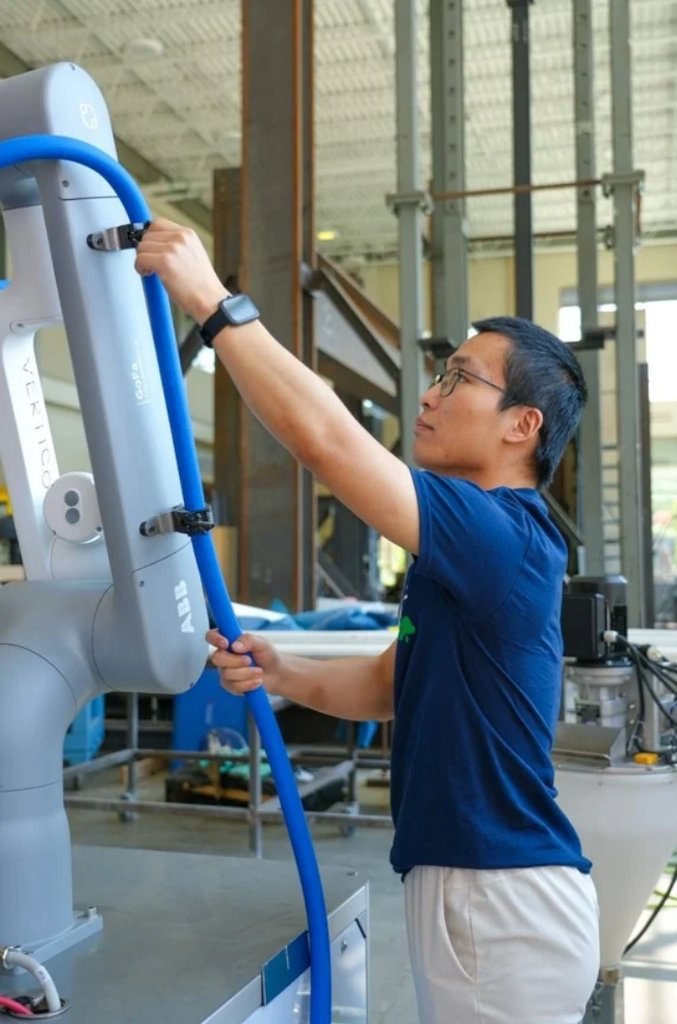
His current research is part of a Marquette project funded by the U.S. Department of Housing and Urban Development, which aims to make 3D-printed housing durable and affordable. One of Zhang’s main contributions is developing AI models that can predict, in a matter of seconds, how 3D-printed concrete columns and walls carry weight, crack or fail. Traditional computer simulations used to perform these calculations can take several hours.
His research has also reached an international audience, with his earlier papers cited by researchers in more than 50 countries. Zhang has also contributed to building an open database on simulated Moon soil for researchers studying how buildings might someday be printed in space.
Finding community thousands of miles from home
Since arriving at Marquette, Zhang has found that the university doesn’t just welcome students from around the world; it invests in them, from funded research positions to the Graduate School’s support for students far from home.
“For someone who grew up 7,000 miles away, that made Milwaukee feel a lot closer”
Haoyou “Ethan” Zhang
Zhang found community at Marquette through senior graduate students from China and a Chinese Christian fellowship group, whose members welcomed him and helped him navigate life in Milwaukee. He also credits the Office of International Education and the Graduate School for creating programs such as the International Student Peer Support Program, the Graduate Student Career Development Bootcamp and the International Education Week Thanksgiving dinner.
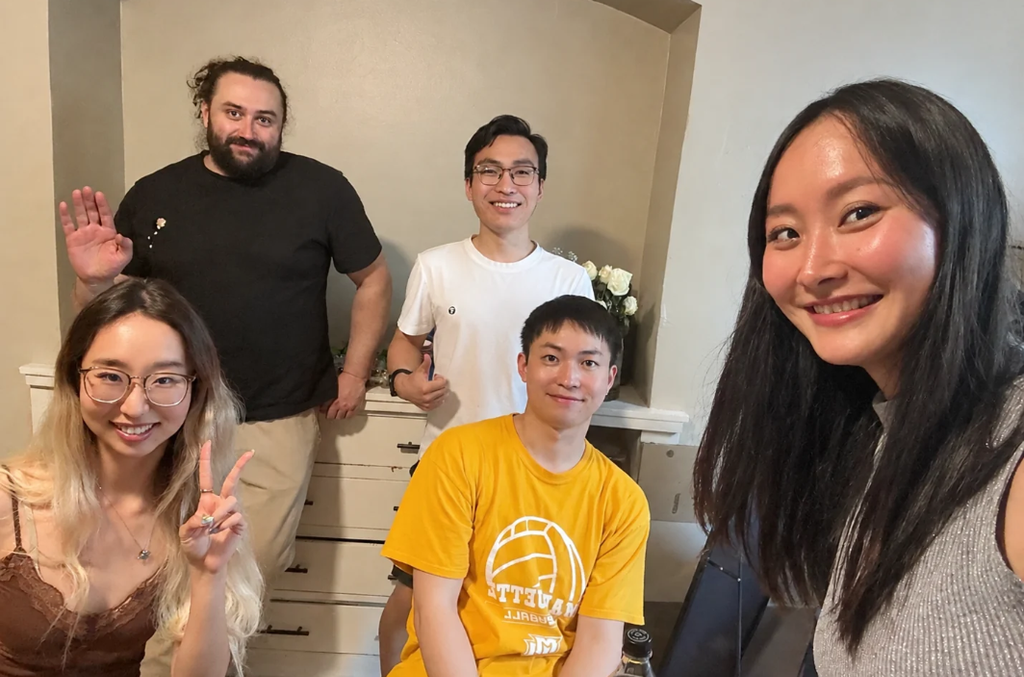
Through these events, Zhang has had the opportunity to meet students from around the world and realize that every international student has a version of his own story. On campus, he spends most of his time between his shared research office in Olin Engineering Center, the gym at Wellness + Helfaer Recreation and Raynor Library. In his own words, his daily routine is “Research, workout, reading, repeat.”
As Zhang continues to adjust to American culture while pursuing his academic interests, he has also discovered some differences in everyday interactions. Despite his accomplishments, Zhang remains modest, a value deeply rooted in his upbringing. He recalls learning that the polite response to a compliment was “No, no, not good enough” a sentiment reflected in an old Chinese saying: “Being full of yourself invites loss; modesty brings gain.” Now, Zhang is learning to embrace the traditional response from the United States by simply saying: Thank you.
As he continues his academic journey, Zhang expresses his gratitude to the Graduate School and the Office of International Education for “making a kid from a wheat-farming village feel at home in Milwaukee, and for the chance to share a bit of my story during International Education Week.”
Want to read similar stories or have a success story to share? Visit Stories of Graduate Student Success to learn more.