For many students, research can feel like something reserved for experts: faculty members managing sophisticated labs, graduate students conducting experiments and discoveries happening far beyond the undergraduate classroom.
But in BIOL 1101H: Foundations in Biological Inquiry, a semester-long research experience course for both Honors and non-Honors students led by Dr. Mike Hennessey-Wesen, teaching assistant professor in the University Honors Program, the Marquette Core Curriculum and the Department of Biological Sciences, students are immersed in the realities of scientific discovery.
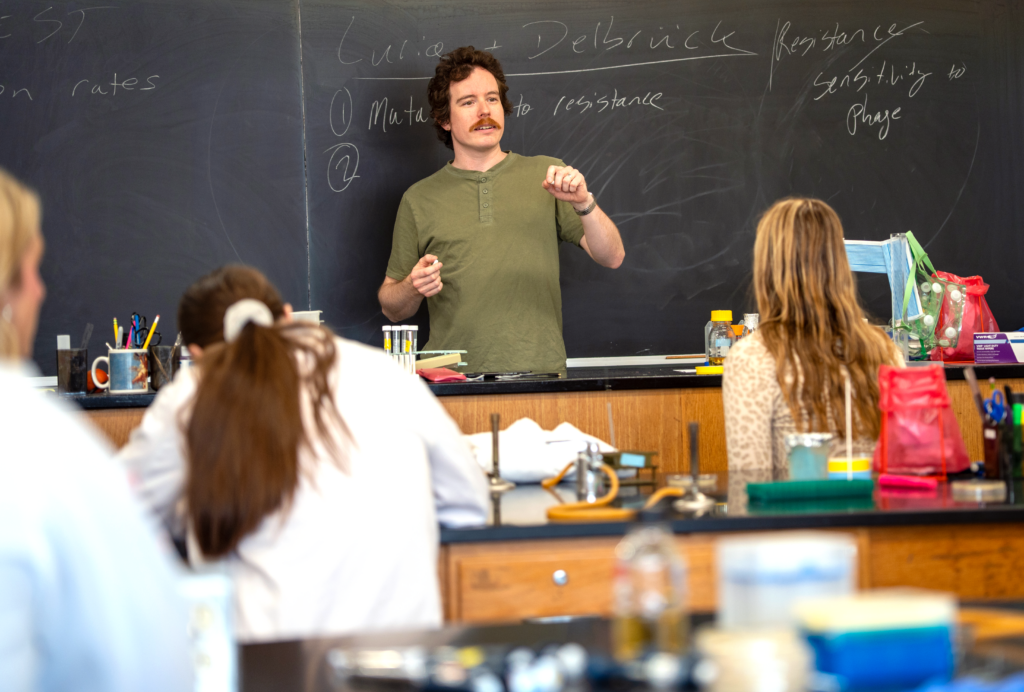
The course represents a new chapter in Marquette’s long-standing commitment to undergraduate research. While earlier iterations of BIOL 1101 introduced students to authentic inquiry, Hennessey-Wesen was given the opportunity to redesign BIOL 1101H from the ground up as a course-based undergraduate research experience, or CURE, centered on student ownership, creativity and exploration.
“A big part of the philosophy of this course is that I want the students to see themselves not simply as students learning science but as scientific collaborators and colleagues in research,” Hennessey-Wesen says.
“The antithesis of what we want to do is the cookbook lab,” continues Hennessey-Wesen. “You go in, you’re given a protocol, you do the protocol to reproduce expected results, and you get graded on how well you followed it. While procedural courses like that have value in science education, that’s not how research works.”
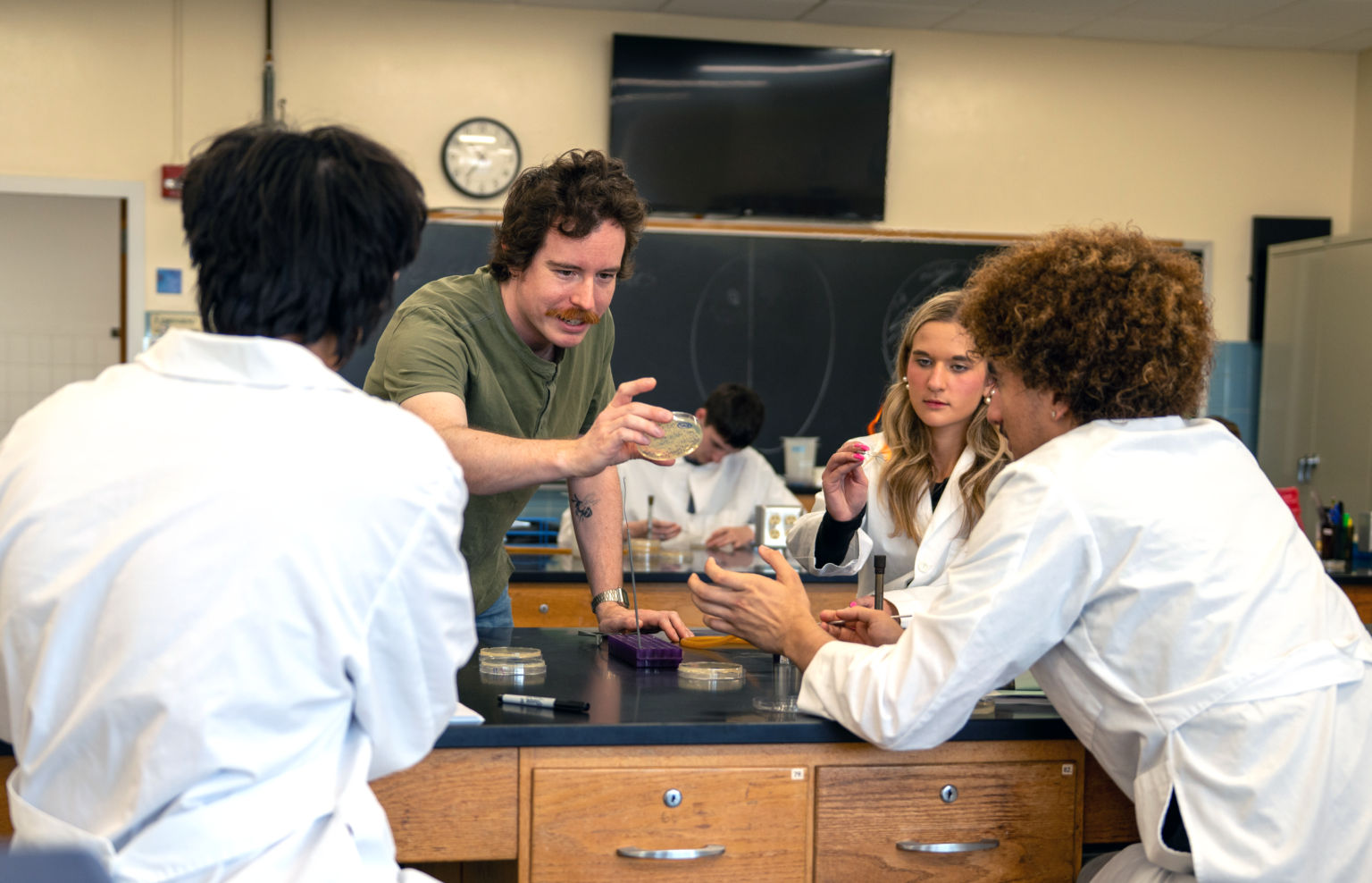
Instead, students begin by learning essential laboratory techniques, including pipetting, sterile technique, bacterial culturing and genetic manipulation. As their confidence and mastery over foundational skills grow, so does their independence. Eventually, students move from following protocols to creating them with open-ended investigations that require them to determine which tools, materials and methods they need to answer their own scientific question.
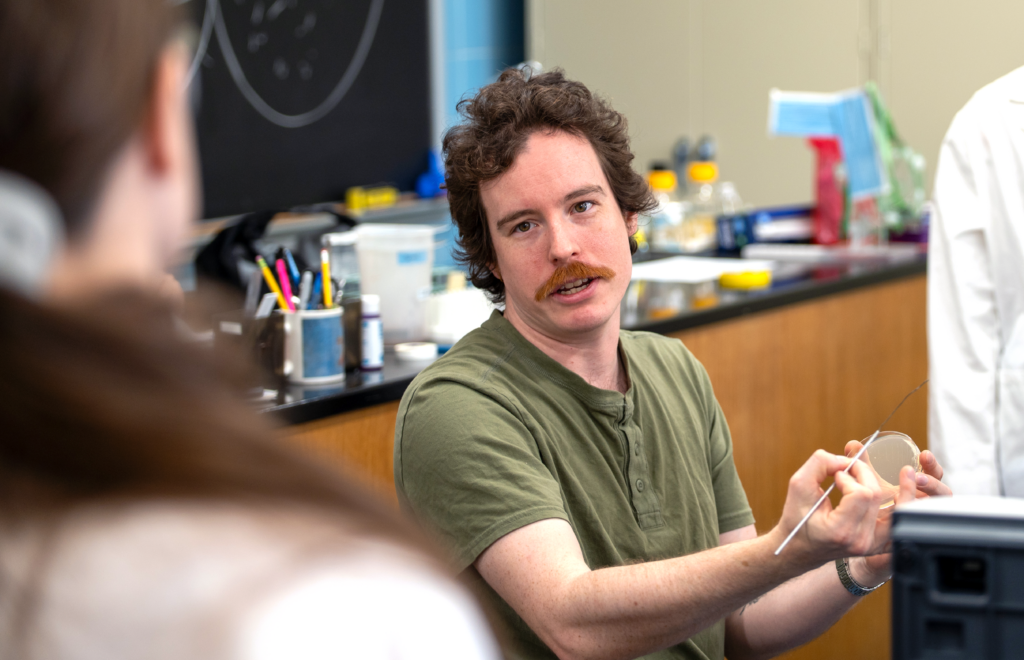
“There are no wrong questions,” Hennessey-Wesen says. “If something is interesting to you, that’s worth exploring.”
The course also challenges traditional ideas about assessment. Rather than relying solely on rubric-based grading, Hennessey-Wesen uses narrative evaluations and iterative feedback to emphasize growth, reflection and scientific thinking.
“Science doesn’t work where somebody tells you that you got a bad grade this week,” he says. “You learn what you can do better and then you try to do that better.”
Research with real-world implications
This semester’s students are investigating bacterial mutation rates using E. coli, one of biology’s most widely used model organisms.
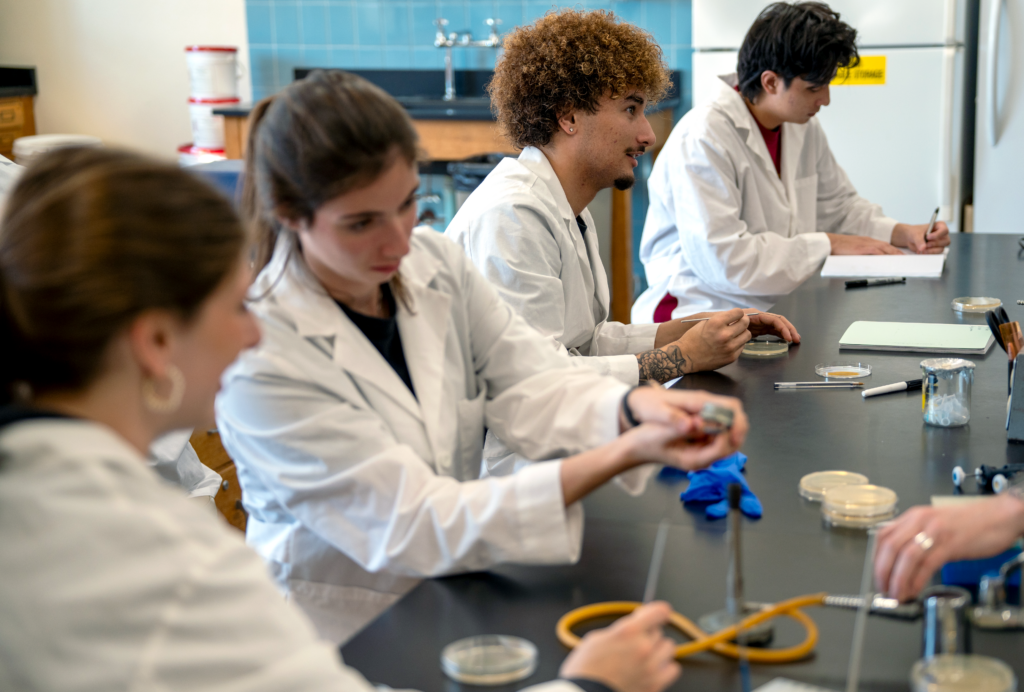
Working in small teams, students explore questions related to DNA replication fidelity and the factors that influence how often mutations occur. The work builds on research themes Hennessey-Wesen has pursued throughout his academic career, creating opportunities for students to contribute to ongoing scientific conversations.
“We’re asking open questions about how different things within the cellular environment affect DNA replication and the frequency with which mutations happen,” Hennessey-Wesen says.
While the techniques are intentionally accessible, the questions are genuine. By the end of the semester, each research group will present its findings through a scientific poster session modeled after professional conferences.
The possibility of generating publishable results is not the primary goal, but it remains within reach.
“If we get to the point where we do actually have a result that is publishable, that would be amazing,” Hennessey-Wesen says. “The idea is that students can make a legitimate scientific contribution to this body of knowledge.”
Creating a different pathway into research
One of the course’s defining features is its accessibility. Students do not need extensive laboratory experience to participate. Curiosity, persistence and a willingness to engage with uncertainty matter far more than prior technical knowledge.
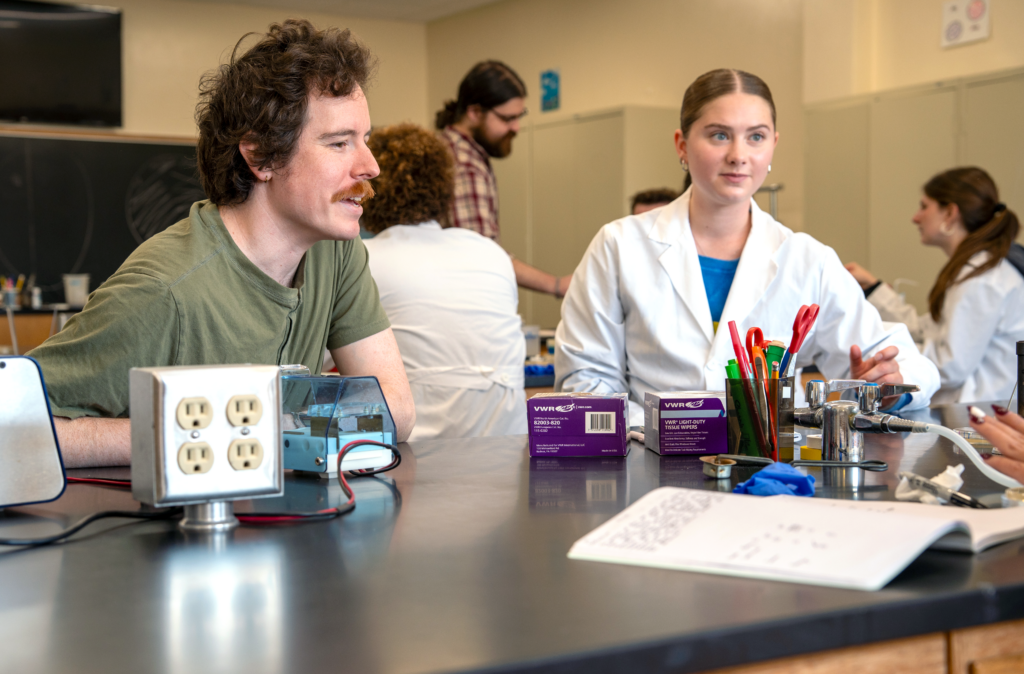
“The only requirement that I would have for joining this class is that you’re curious and motivated to show up and work in the lab,” Hennessey-Wesen says. “It doesn’t matter what your background is. We’ll work with that.”
The current cohort reflects that philosophy. Most are sophomores, though students come from a variety of academic and personal backgrounds. Some envision careers in medicine, dentistry or the pharmaceutical industry. Others are still discerning their future paths. What unites them, Hennessey-Wesen says, is a desire to do meaningful work.
“They want to have something worthwhile come out of their education,” he says. “They want to do something good.”
That spirit aligns closely with Marquette’s broader educational mission. Students are encouraged to embrace ambiguity, think creatively and develop the confidence to pursue answers that are not already known.
Hennessey-Wesen believes those skills often go underdeveloped in traditional educational settings, where students become accustomed to looking for the single correct answer.
“Our students are very creative and very intelligent,” he says. “Sometimes they just haven’t had many opportunities to ask their own questions and explore them.”
For now, Hennessey-Wesen is focused on helping students experience one of science’s greatest rewards: the excitement of uncovering something unknown.
“Fun is good,” he says. “The reason people get into science is because they enjoy discovering new things. Science is very cool. If we can have fun doing it, all the better.”
***
Curious? That’s all you need to get started.
This spring 2027, BIOL 1101H is open to freshman and sophomore honors students who have completed BIOL 1001 and want to ask their own questions, design experiments and experience authentic scientific research. The class is also open to non-honors students by application. Connect with your introductory biology instructor for the application.