In Spring 2026, nearly 5,000 visitors viewed the Haggerty Museum of Art’s exhibitions, engaged in classroom conversations and discussed cross-cultural issues inspired by the semester’s focus on the political power of print. In collaboration with partners like Marquette University’s Departments of History and Political Science, the exhibitions and programs invited audiences from Marquette, Milwaukee and beyond to explore the richness of American history and meaningful civic engagement during the 250th anniversary of the United States.
Print media has long served as a vital instrument of political agency, democratizing information and giving voice to grassroots movements. The Haggerty Museum of Art’s programming highlighted this legacy, demonstrating how accessible printmaking, DIY publishing and visual art continue to drive modern social change and public discourse.
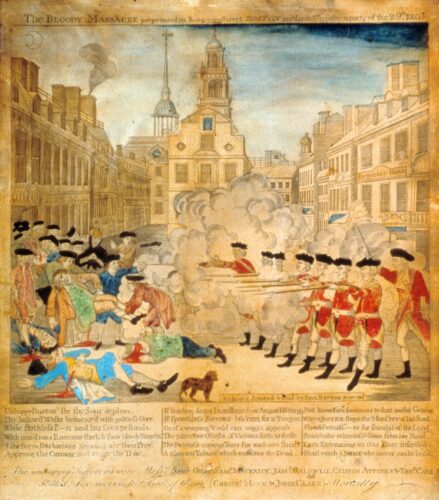
The exhibition “Defying Empire” illustrated how 18th-century revolutionary prints functioned much like today’s mass media, shaping public opinion and granting political influence to marginalized groups. Fast forward 250 years to the “Declaration of ____” exhibition that showcased contemporary change agents who use the power of print to amplify their voices with art. These exhibitions were activated through customized gallery sessions designed for interdisciplinary courses in literature, science, nursing, theology, engineering and more.
Participation extended well past traditional lectures. Inspired by the “Declaration of ____” exhibition, students created DIY zines during interactive workshops. The medium sparked widespread enthusiasm and was quickly adopted by campus partners including an English writing symposium, CURTO’s Justice in Action and Raynor Library.
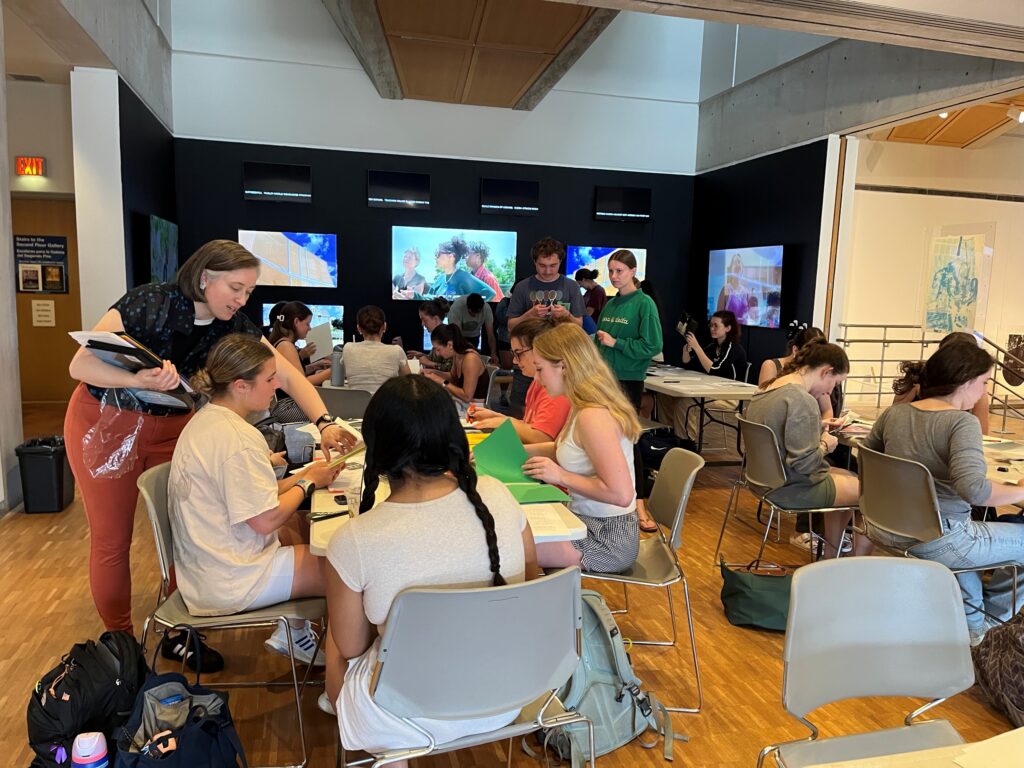
For audiences on campus and beyond, the “Declarations in Print”: Community Zine Day and the “Making Zines, Making Change” panel showcased self-publishing as a direct, hands-on medium for political imagination, dialogue and self-expression. By combining historical print culture with modern DIY zine-making, these events demonstrated how physical media still provides a platform for everyday people to convert personal perspectives into public declarations.
‘Declarations in Print’: Community Zine Day
The highlight of Spring programing was “Declarations in Print”: Community Zine Day, the Haggerty’s gift to the community. The event focused on print history, contemporary zines, and youth civic engagement. “Declarations in Print”: Community Zine Day asked a direct question: What do we need to declare right now?
The program opened with “Revolutions in Print,” a panel discussion featuring Marquette University professors Dr. Sumana Chattopadhyay and Dr. J. Patrick Mullins; Milo Miller of the Queer Zine Archive Project; Melissa Mursch-Rodriguez from Moody the Zine; and protest artist Susan Simensky Bietila. The speakers traced a direct line from colonial pamphlets to underground zines, showing how print has consistently served as a tool for political organizing and community building.
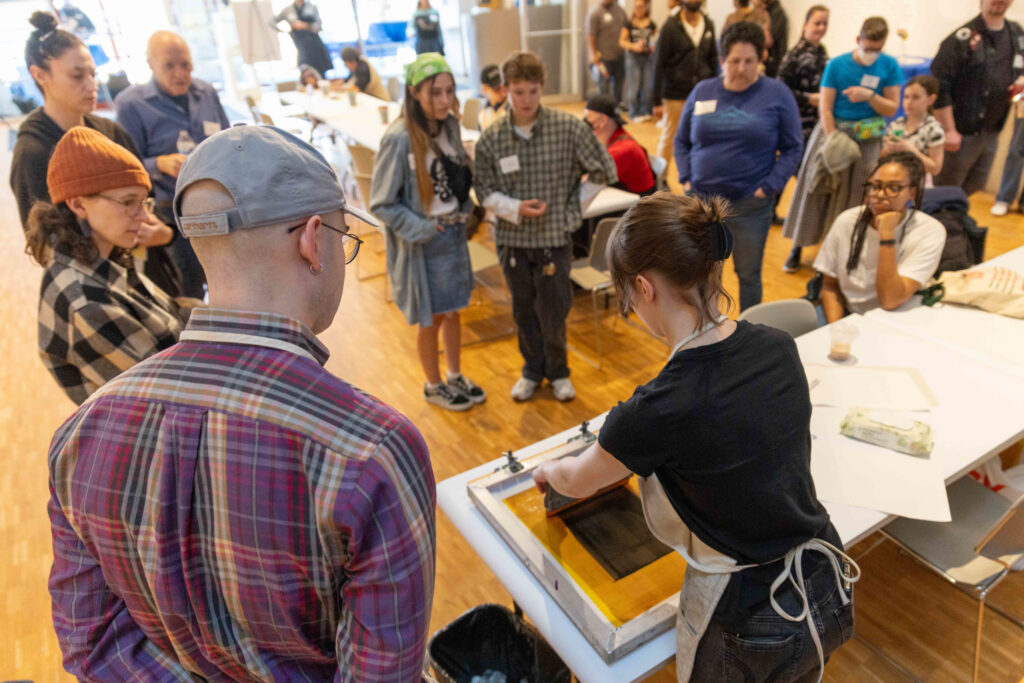
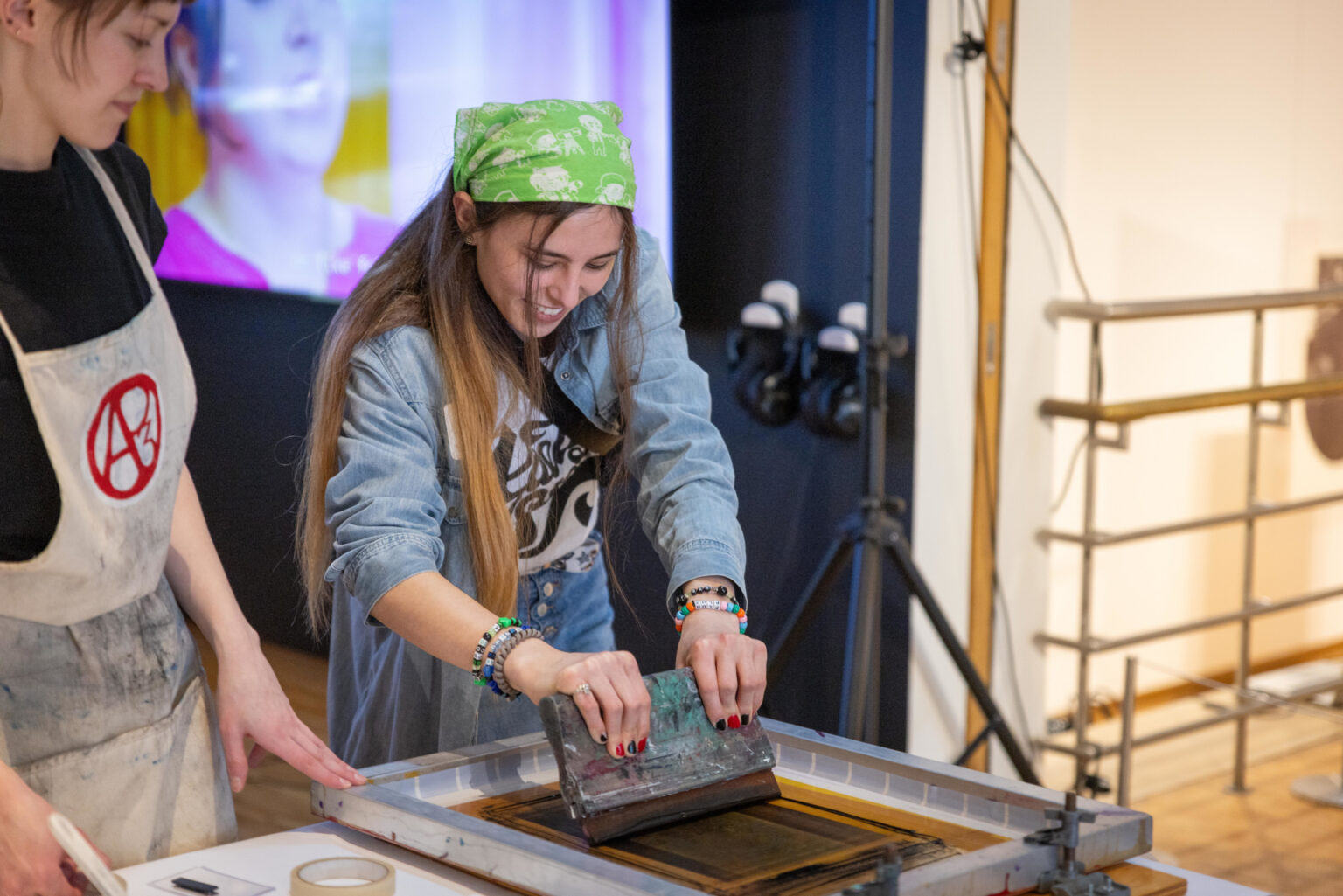
Following the panel, participants moved directly into interactive art sessions. Teddy Lepley and Julia Scheckel from Anchor Press, Paper & Print taught screenprinting basics, helping attendees produce original “Declaration of ____” pages. Though most participants had no prior printing experience, they quickly got to work. Rather than taking their finished prints home, attendees hung them on the gallery walls to be compiled into “HMA Community Zine #1.” One facilitator commented, “I always love showing people how to print for the first time, and almost everyone there had never screenprinted before, so that was a very fun day!”
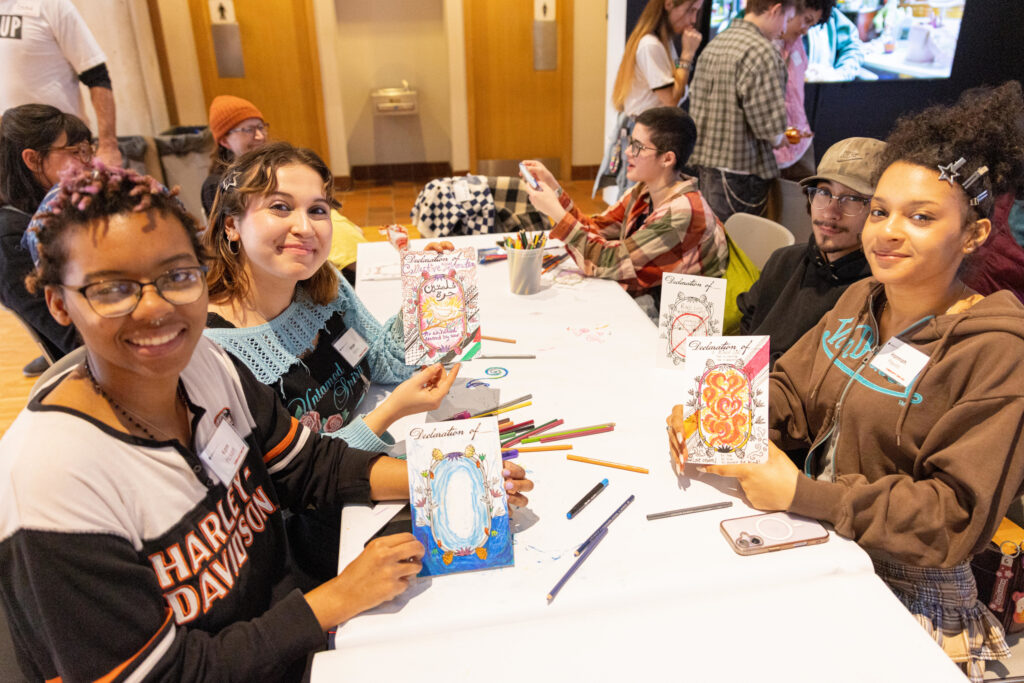
In adjacent spaces, other forms of making took shape. Facilitator Valerie Xanos led a banner-making session centered on the prompts “Rage, Grieve, Heal, Protest,” providing space for unfiltered political and personal expression. Meanwhile, Galina Shevchenko assisted participants in expanding zine concepts into digital formats. Xanos remarked, “People worked on the banners in various ways. Some were quiet and focused. Others chatted with each other about their responses and ideas. It was exciting to see people of different ages interacting and discussing what they wrote/drew.”
Young teaching artists Iman Fatmi, Kam Pickett and Hannah Plevin played a central role throughout the day by leading the event talkback and assisting participants at the workstations. Their leadership built directly on “Let the Real World In,” an ongoing initiative focused on youth civic participation. One attendee noted that the atmosphere felt empowering and approachable, serving as a space where genuine conversations were encouraged and art was treated with respect. “I’m glad that we could be there and attend the event. It was really cool to be a part of it from a collaborating artist perspective… (and) it was nice to have community art making at the end. I think it helped people connect and make new friends.”
Organized with leadership from “Declaration of ____” curator Rose Camara, alongside the host artists and panelists, the event demonstrated how simple materials — paper, ink and basic printmaking tools — can offer a practical, accessible platform for self-expression and connection. Mullins, curator of “Defying Empire” and Community Day panelist, stated in The Marquette Tribune that the Haggerty’s zine day “encouraged people to pay attention to how they can build communities and make change.”
One participant remarked “The Haggerty provided an event that promoted the arts to empower our voices. Everything that happened — the exhibits, the artist panel/discussion, the young artist talk, the videos and the creative workshops — contributed to this empowerment. These became a perfect storm of positivity and expression.”