What makes a place a home? This question opens itself to many answers: familiarity, nostalgia, memory, history – just to name a few. Whether it’s an iconic building down the street, a familiar smell, or a favorite knick-knack, there is an unspoken feeling that makes a place seem right. Finding that feeling somewhere new can seem overwhelming at first, but gradually a place that once seemed unfamiliar can become a new home.
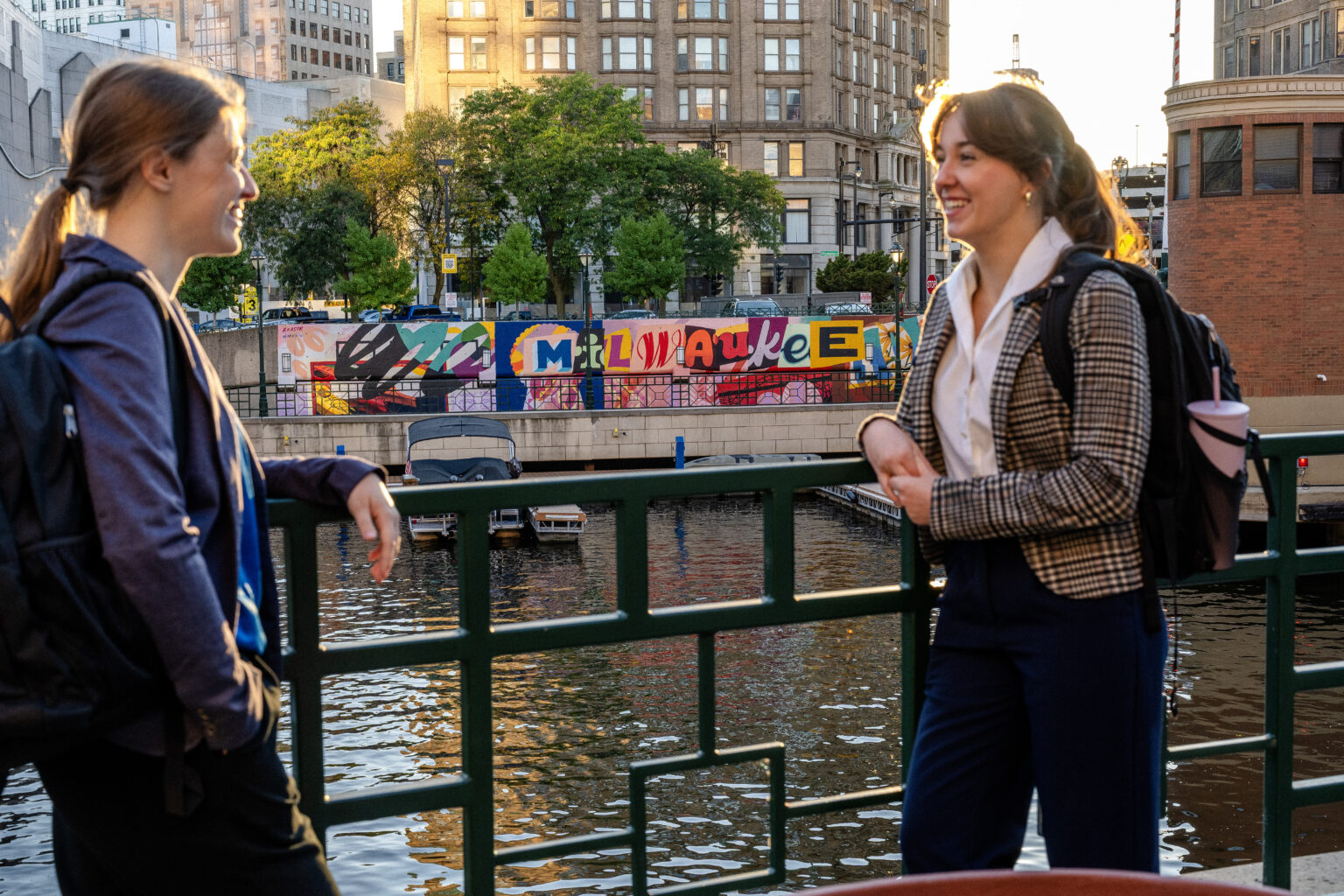
Regardless of if they’ve grown up in the Greater Milwaukee Area or have never set foot in the city, Marquette University students find themselves in a bustling downtown with nostalgia around every corner. Exploring and engaging with this space can help students find connections to the past that make sense of the present, but just how does living in the city come to feel like a new home? For Dr. Amy Blair, professor of English, that answer is found in storytelling.
“History is narrative,” Blair says. “The story you tell of a place becomes the memories you hold, and those stories shape the way you live and the attitudes you hold for that place.”
In ENGL 4765: Material Cultures of the Midwest, Blair sends students out into the city, not only to uncover the narratives that shape the way they think about Milwaukee, but to discover for themselves what makes a place a home.
Building narratives
A few blocks any direction off of Marquette’s campus is a building full of history and the narratives associated with Milwaukee. Heading west takes you to the Pabst Mansion, a beautiful restoration of the home of Captain Frederick Pabst, namesake of the Pabst Brewing Company and a reminder of Milwaukee’s narrative legacy as the “Brew City.” There have been many successful companies that emerged from Milwaukee, but the story of beer brewing remains one of the most popular associations with the city.
“Oftentimes the stories you tell about a place will make that place make sense to you,” Blair says. “At the same time, having only one perspective blocks out the other narratives.”
Beyond the industries that built Milwaukee, Blair has students study the streets that surround campus, and how they have changed. While Milwaukee’s German heritage lives on through the Old World 3rd Street Historic District, the street itself was renamed to Dr. Martin Luther King Jr. Drive in 2022 to better reflect the diverse communities that have called Milwaukee home. Students not only get to see the living history of the place they live, but find themselves and how they relate to these moments and monuments.
Material memories
Beyond the physical spaces that hold memories and build the cultural identity of a place, material objects can invoke that same nostalgia for home. Blair has students explore their own pasts by bringing in an artifact: a shoe, a piece of cloth, a trinket or anything that holds memories to the owner.
“These artifacts, and the memories we have of them, have the ability to make an unfamiliar place seem a little more familiar. Looking at the stories we tell of these things often intersects with culture and personal identity,” Blair says.
Sometimes these objects interact heavily with the senses – maybe a certain food that tastes like home, a unique scent that smells like home. Blair suggests that a home is the place that is most familiar between our artifacts and senses, with culture, identity and narrative shaping the way we think about the things we own or desire to own.
Blair also has students read stories that are uniquely tied to Midwestern culture, such as Frank Baum’s “The Wonderful Wizard of Oz” or Laura Ingalls Wilder’s “Little House on the Prairie.” Books like these tell stories centered around the question of “what makes a home,” and their narratives are a critique of the ever-changing world around them. In “The Wonderful Wizard of Oz,” crumbling yellow brick road infrastructure, hypocritical authority in Emerald City, and Dorothy’s insistence to return home all paint a picture of the nostalgia of Midwestern rural life contrasted with the fantasy of industrial city life.
Learning to live
Through going out to museums and historical sites, studying personal artifacts, and reading stories of midwestern culture, Blair hopes students learn to look at local history in a new and personal light. Whether that place is Milwaukee or another city, being able to look at the history, context and stories that shape a city’s identity helps anyone understand how their own identity – and future – aligns with a place’s past.
“This course teaches students to look around,” Blair says. “Look at the places and things that build their association and connection with home, and in discovering the narratives and memories of a place, students are seeking an understanding of themselves.”
Learning to live in a place through the stories and memories associated with it is an exercise that grows connection to the communities that make a place what it is. Being more connected with the place you live inspires a dedication to being an active participant in the discourses that shape the future of that place. For students, Blair knows that getting out to advocate and serve the world is so much more rewarding to a student when they are connected to the place they live. Taking the time to discern and appreciate the past, present and future of a community helps students become confident and impactful leaders and participants in the place they choose to call home.
Maybe that forever home is Milwaukee, a student’s hometown or somewhere altogether new. No matter the place, Blair encourages everyone to look closely at the stories in your community and reflect on just why “there’s no place like home.”