
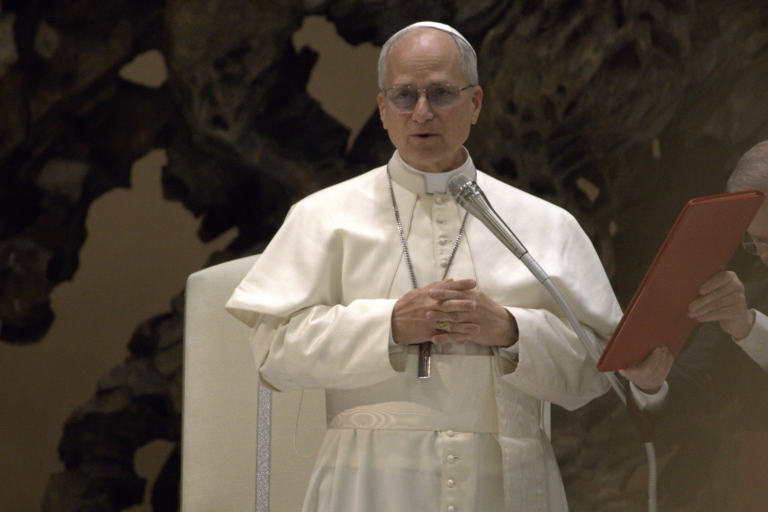
Yesterday, Pope Leo presented Magnifica Humanitas, his first encyclical, which sets out the Church’s social teaching for the age of artificial intelligence, appealing for the safeguarding of humanity, promotion of truth, dignity of work, social justice and peace.
In the document, he writes, “Humanity — in all its grandeur and woundedness — must never be replaced or surpassed. We can embrace the technological progress that alleviates suffering and unlocks new possibilities, provided that we do not abandon the very essence of our humanity, namely the capacity for relationship and love.”
Pope Leo’s comments are deeply consistent with Marquette’s Catholic, Jesuit mission and our work in responsible AI and Ignatian discernment in the age of AI.
A recently launched website serves as a central hub for AI-related resources, guidance and support, bringing together tools, policies and best practices for faculty, staff and students. The site emphasizes ethical, responsible and human-centered use of AI in ways that support teaching, research, operations and student success, while helping to reduce uncertainty and establish shared expectations across campus.
The university’s AI Task Force — composed of faculty and staff from across disciplines — is working to better understand how AI is being used today and where additional guidance is needed, with a focus on aligning innovation with Marquette’s mission.
Earlier this spring, the task force surveyed faculty and staff to gather insight on AI use across teaching, clinical education, research, operations and student success and wellness. Findings from that survey, along with other campus feedback, are informing a final report and set of recommendations that will be shared later this summer.
The College of Business Administration has also launched an Artificial Intelligence in Business major to prepare the next generation of leaders with the technical proficiency and ethical framework necessary to navigate an AI-driven global economy.
The work reflects a broader call among Jesuit institutions to lead with discernment, collaboration and a commitment to the common good. As the International Association of Jesuit Universities notes, “Jesuit universities have both a responsibility and a unique opportunity to lead … by cultivating ethical leadership, promoting digital literacy, innovating responsibly, centering education on the human person, and working as a global network.”
That emphasis on discernment was echoed at Marquette’s undergraduate Commencement ceremony, where alumnus Chris Duffey, best-selling author and leader in artificial intelligence, told graduates, “Innovation will reveal what can be done, but only you can decide what should be done.”