Ever wonder how coffee ends up in your mug?
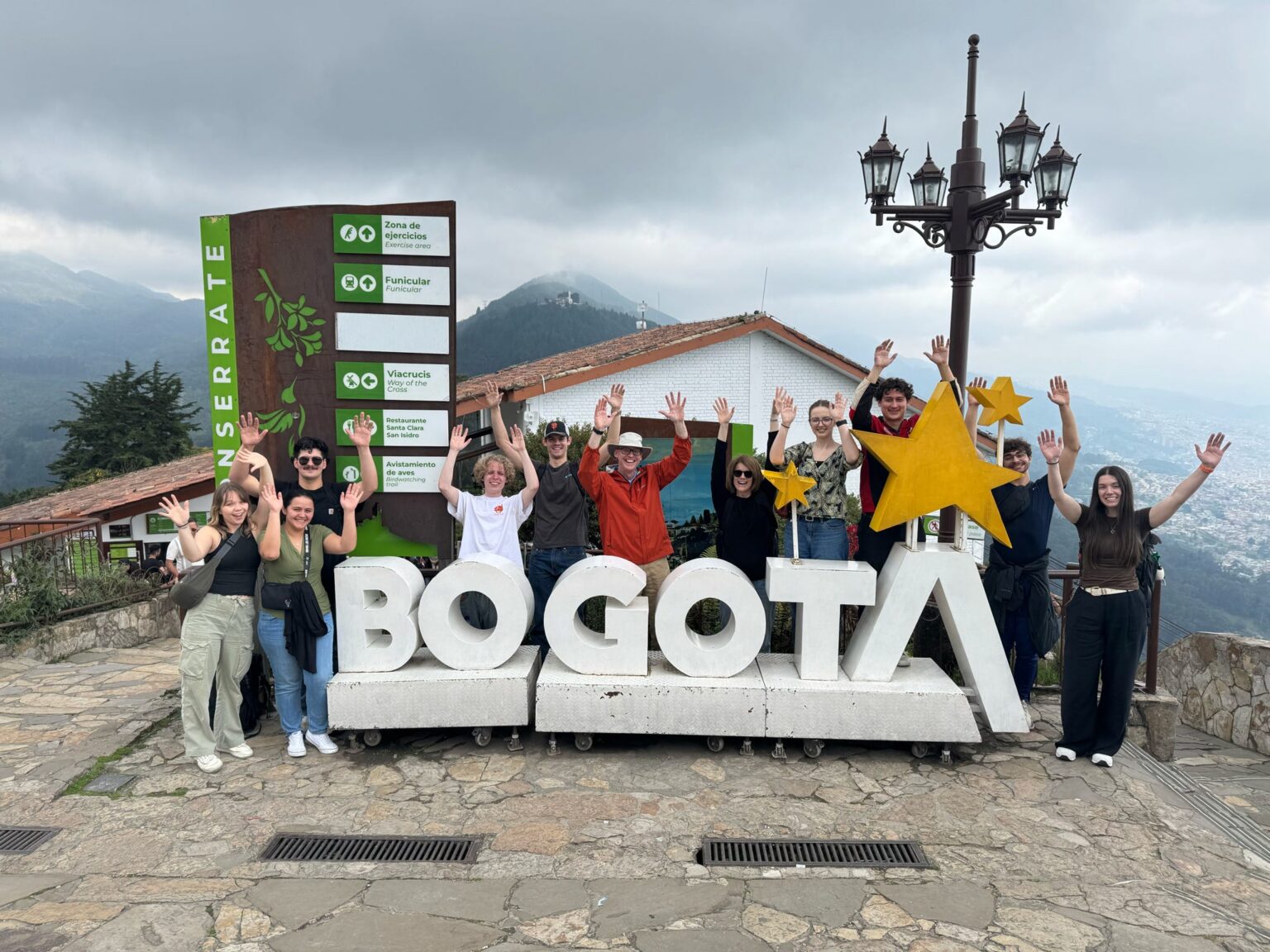
Nine students from Marquette’s College of Business Administration and the Opus College of Engineering spent a week in Bogotá, Colombia, exploring the intricacies of the country’s coffee supply chain. More than a memorable study abroad experience, this international trip offered real-world exposure to the interdisciplinary nature of industry. Students explored the deep collaboration between supply chain and engineering — an integration necessary to turn beans grown in Bogotá into the coffee brewed back home.
As the third largest coffee producer in the world, Colombia is home to 550,000 coffee-growing families with an average farm size of just 1.2 hectares. This booming and fragmented supply chain model offered a unique look at the many layers of supply chain, engineering and technology needed to support this high-demand product.
From picking coffee beans to viewing roasting techniques and tasting samples, students experienced the bean-to-cup process alongside the people whose livelihoods depend on the product’s ability to reach international consumers. Local growers, roasters and entrepreneurs took the place of professors, sharing their daily routines that double as necessary components of the Colombian coffee supply chain process.
“We truly immersed ourselves in the daily life of a coffee farmer and in local life in Bogotá,” says Maria Locher Perez, a senior studying operations and supply chain management. “Seeing firsthand how coffee is one of the country’s most influential industries, and how many Colombians — especially small farmers — are part of it, made the experience even more meaningful.”
The international nature of this supply chain means factors such as trade regulations, tariffs, interest rates and global demand constantly impact the coffee industry and the many families that rely on it. This travel experience allowed students to bridge the gap, seeing how trends and regulations at the global level impact much more than just the price tag at the store. Students gained a new lens through which to view business and its implications on the world around them.
“Traveling to a new country with students I barely knew, especially collaborating with people from different majors, was an incredible experience,” Perez says. “It pushed me outside my comfort zone in the best way.”
Students were accompanied by Dr. Marko Bastl, director of the Center for Supply Chain Management, assistant director Kelly Wesolowski, and Dr. Philip Voglewede, professor of mechanical engineering.
Further building upon the interdisciplinary connection of supply chain and engineering, Bastl and Voglewede are heading the new ASCEnT concentration slated to begin in spring 2027. Interested students can contact Kelly Wesolowski to express interest and be notified of the application posting in fall 2026.