Jaw pain and discomfort affects millions of Americans, but some conditions are more serious if left untreated. A collaborative event between Marquette’s School of Dentistry and the Medical College of Wisconsin teaches students how to detect and handle those conditions.
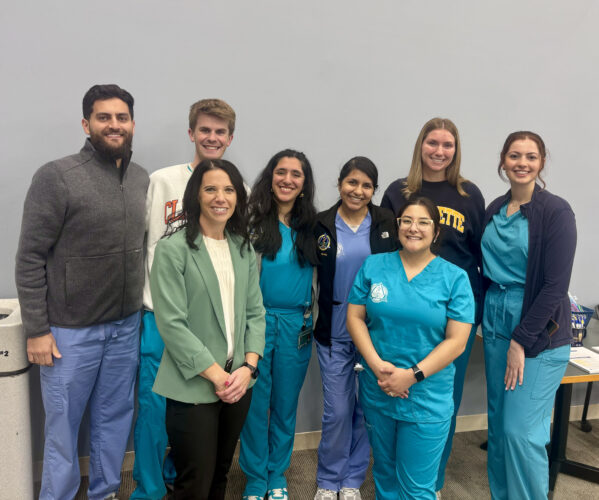
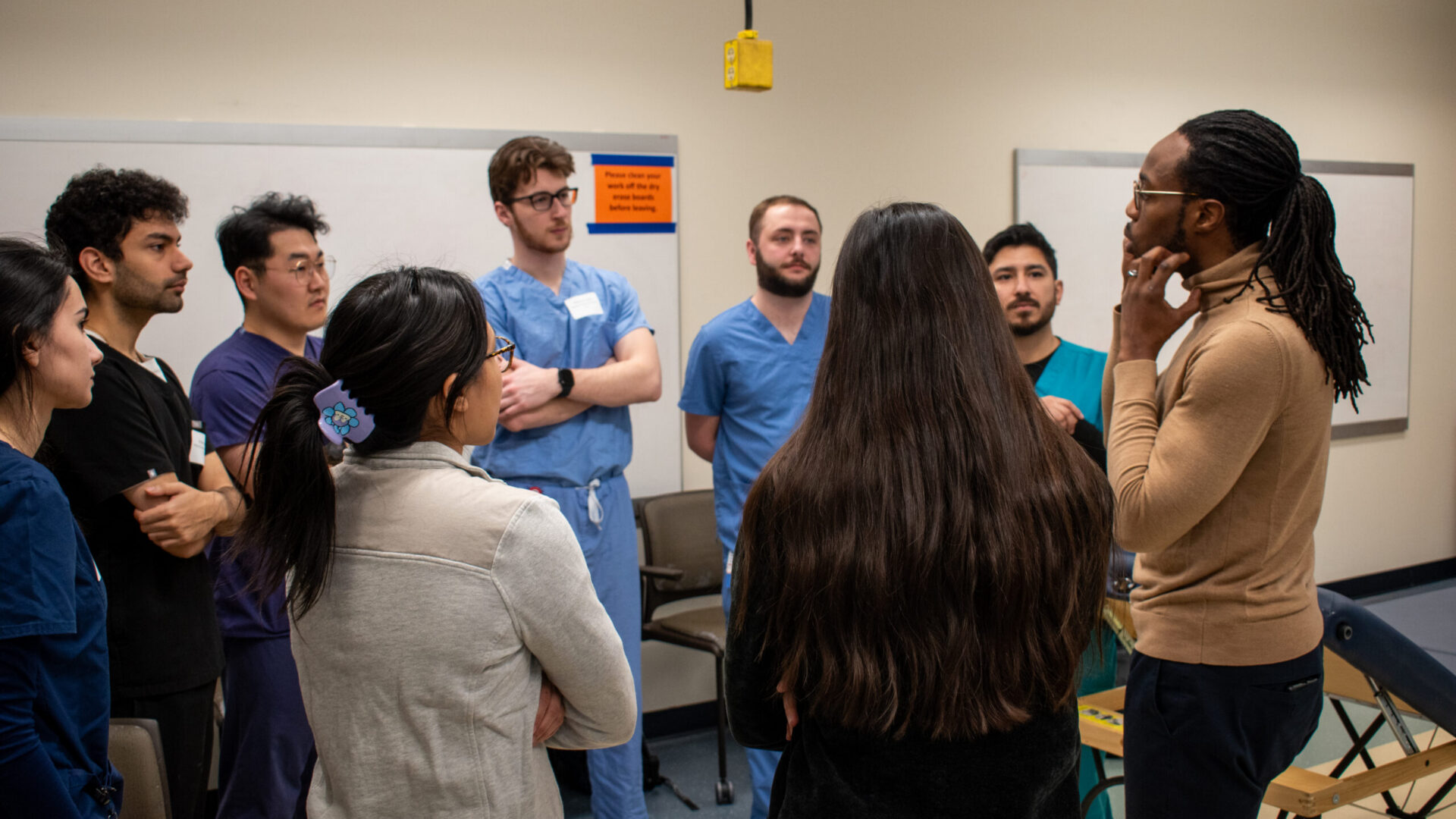
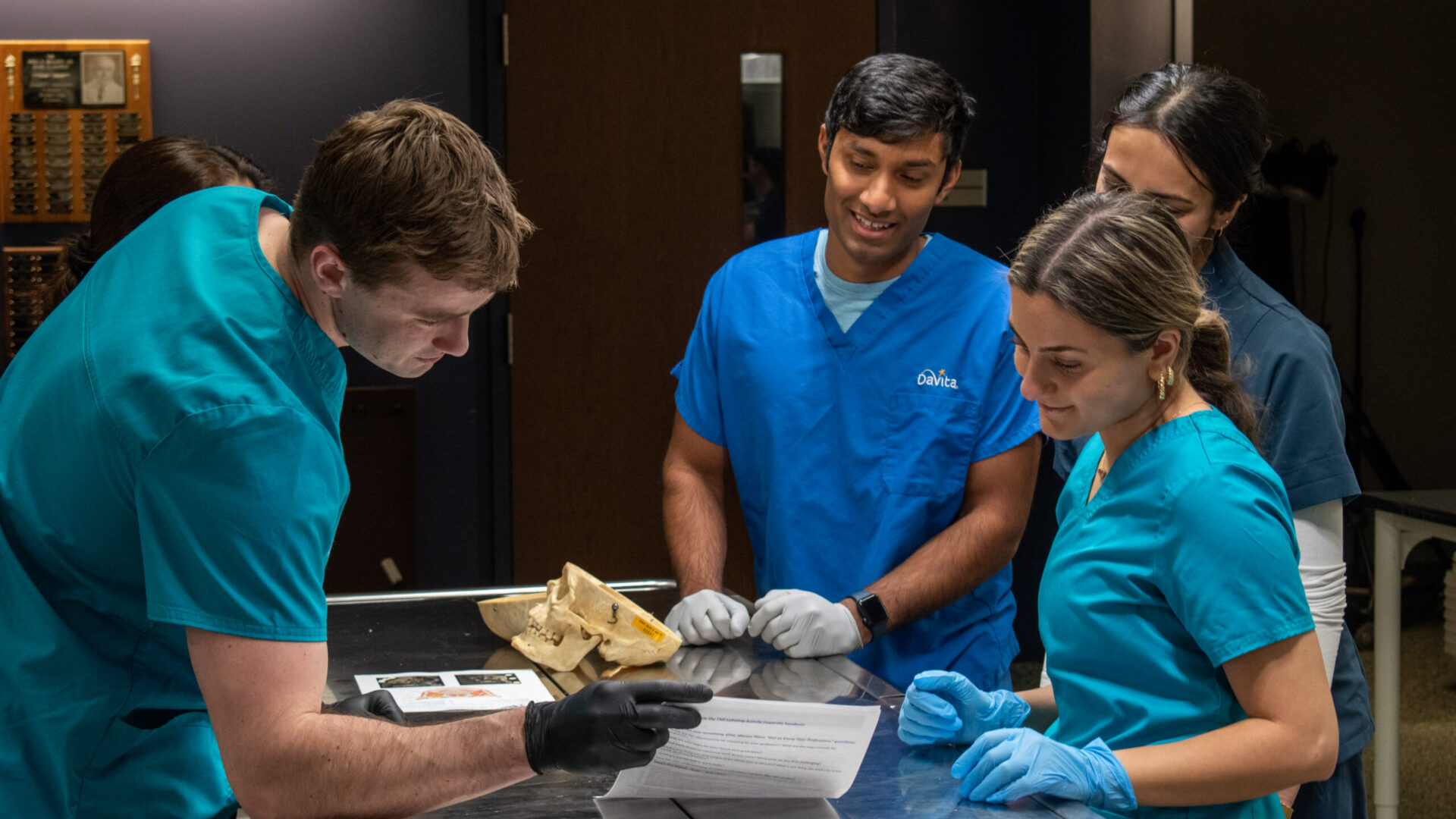
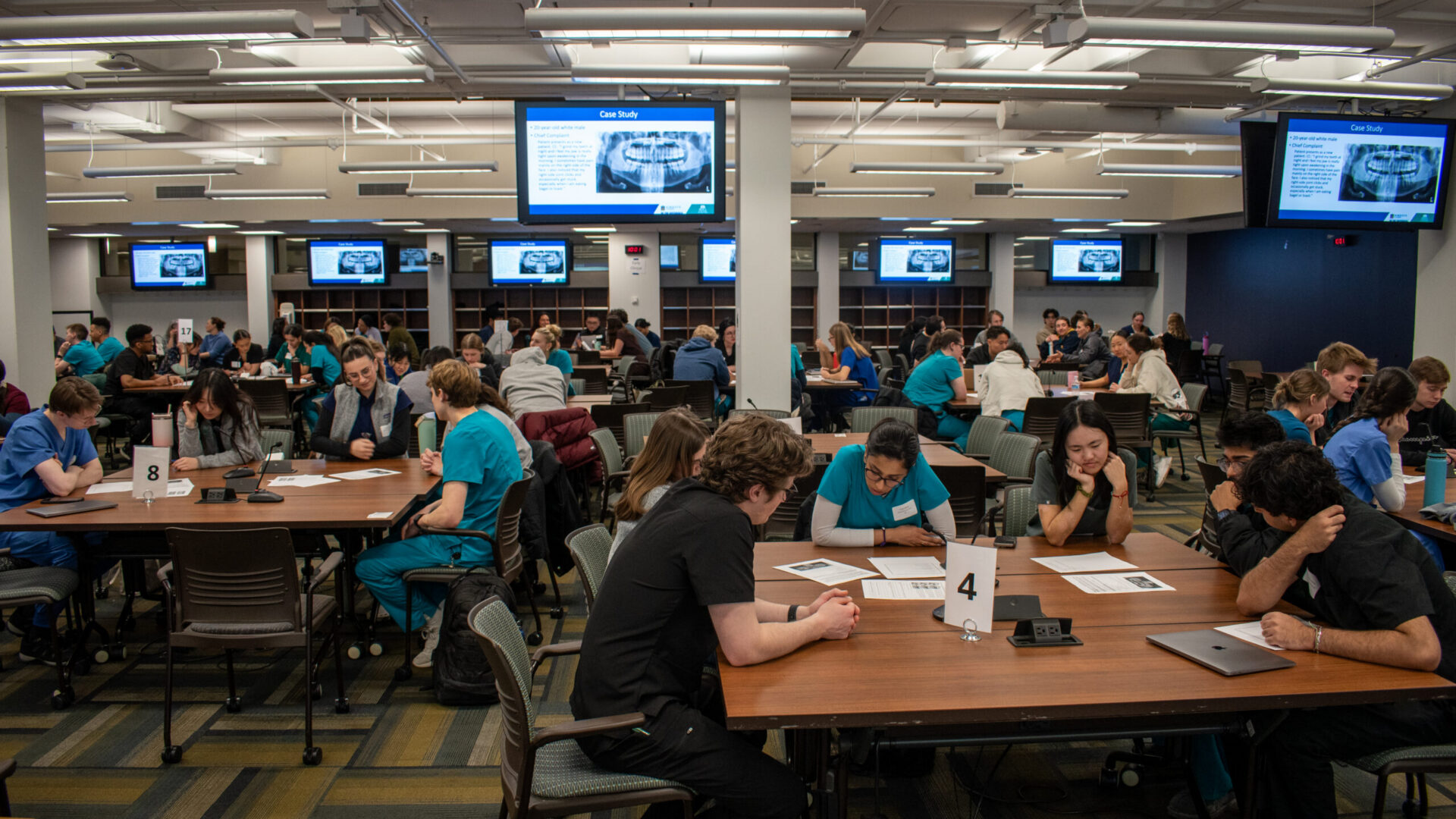
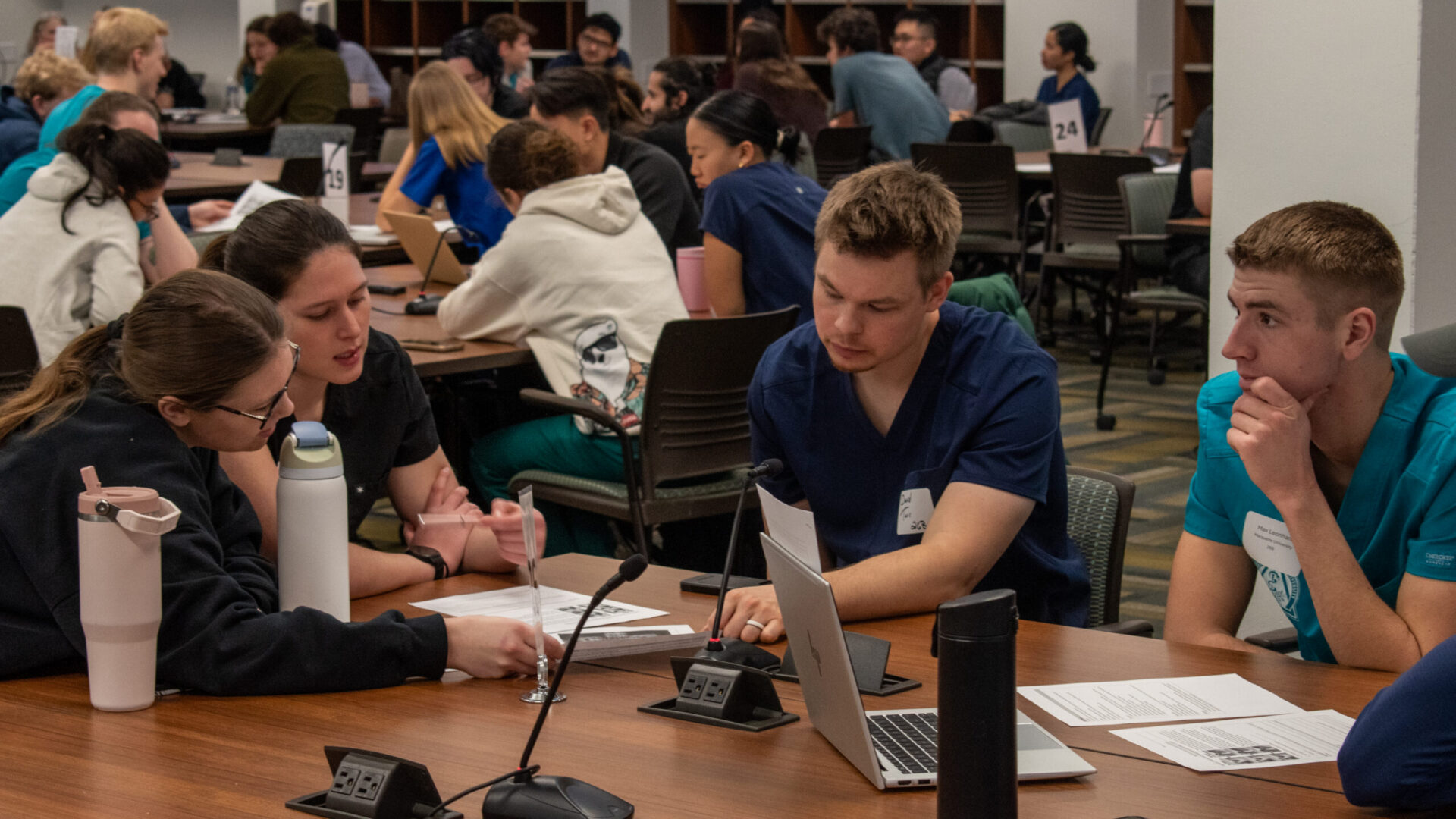
On Thursday, Feb. 5, second-year Marquette dental students and first-year medical students from MCW teamed up for a series of interprofessional learning sessions focused on temporomandibular disorder (TMD), which causes pain and dysfunction in the jaw joint and muscles controlling jaw movement. The program, now in its fourth year, included more than 200 students from both campuses who cycled through three different workshops.
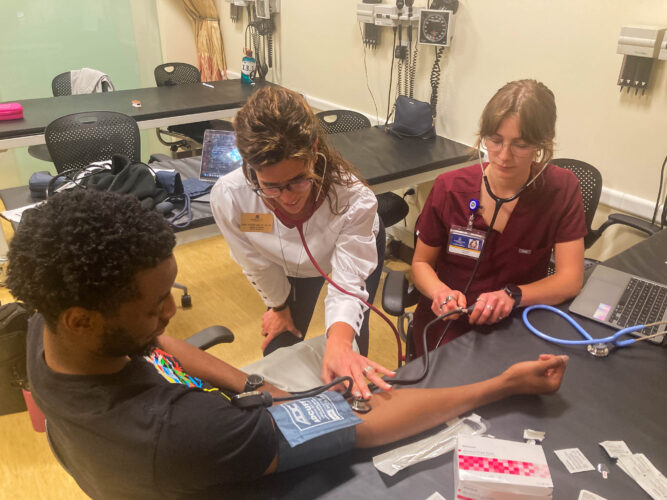
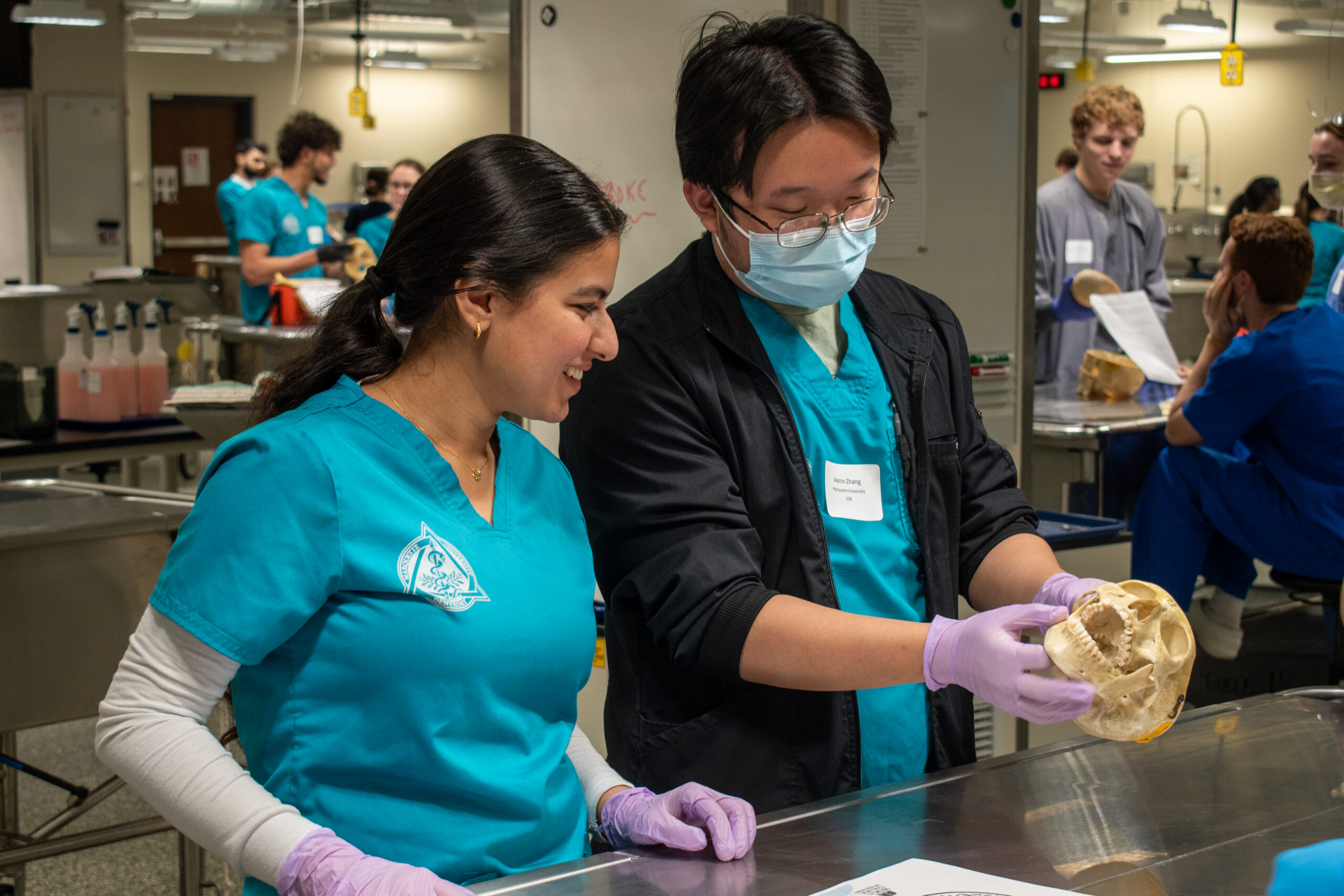
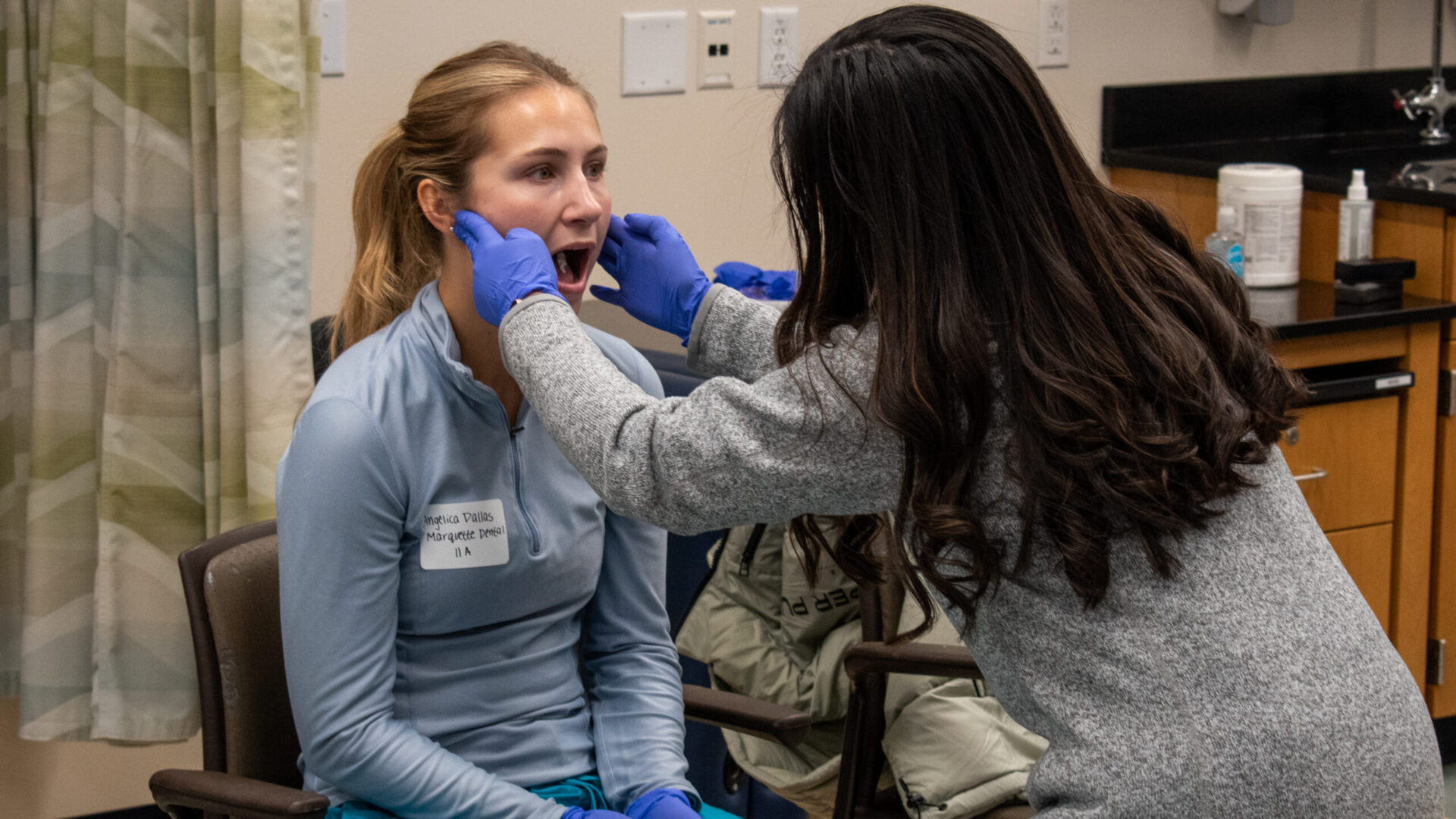
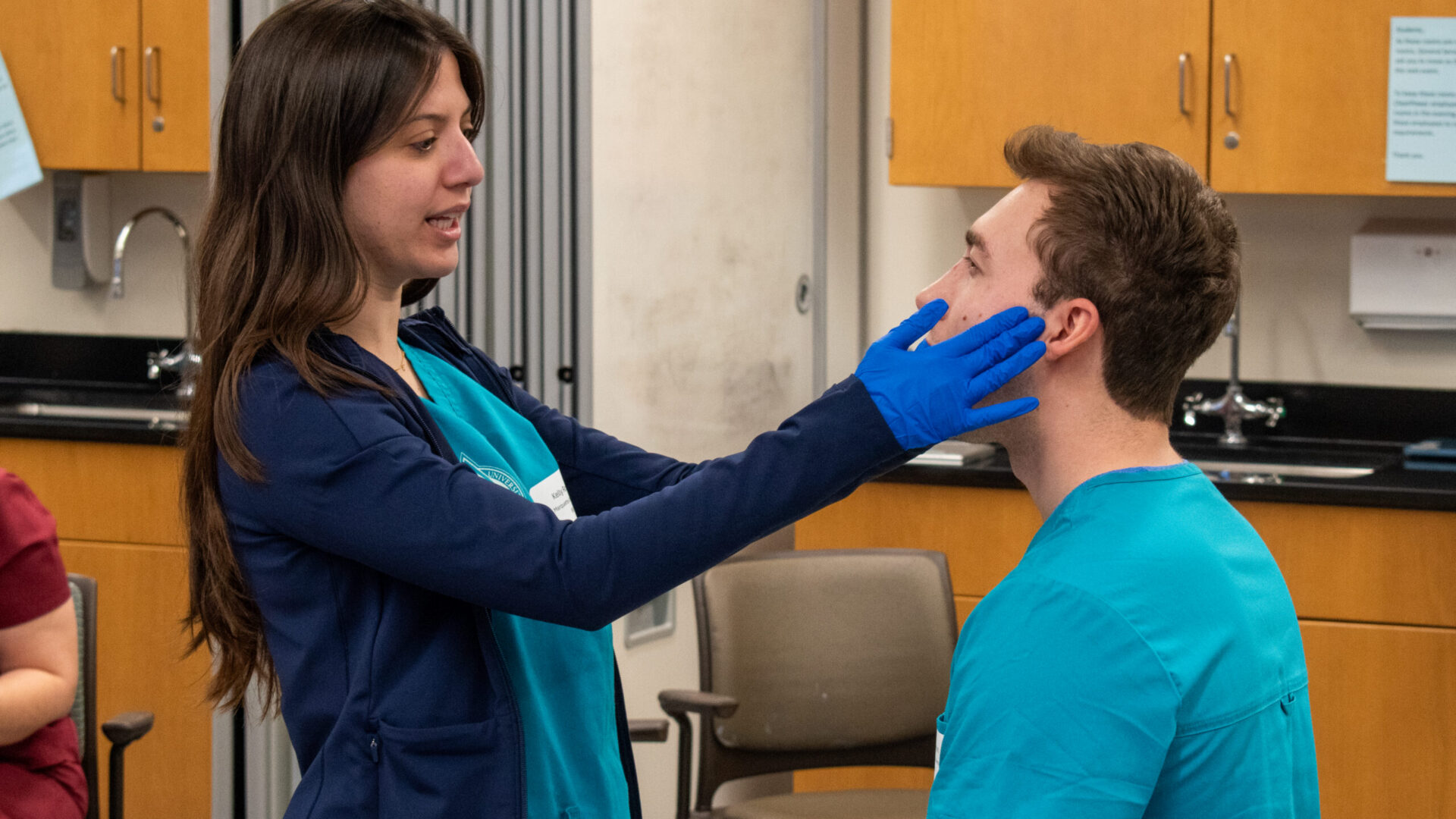
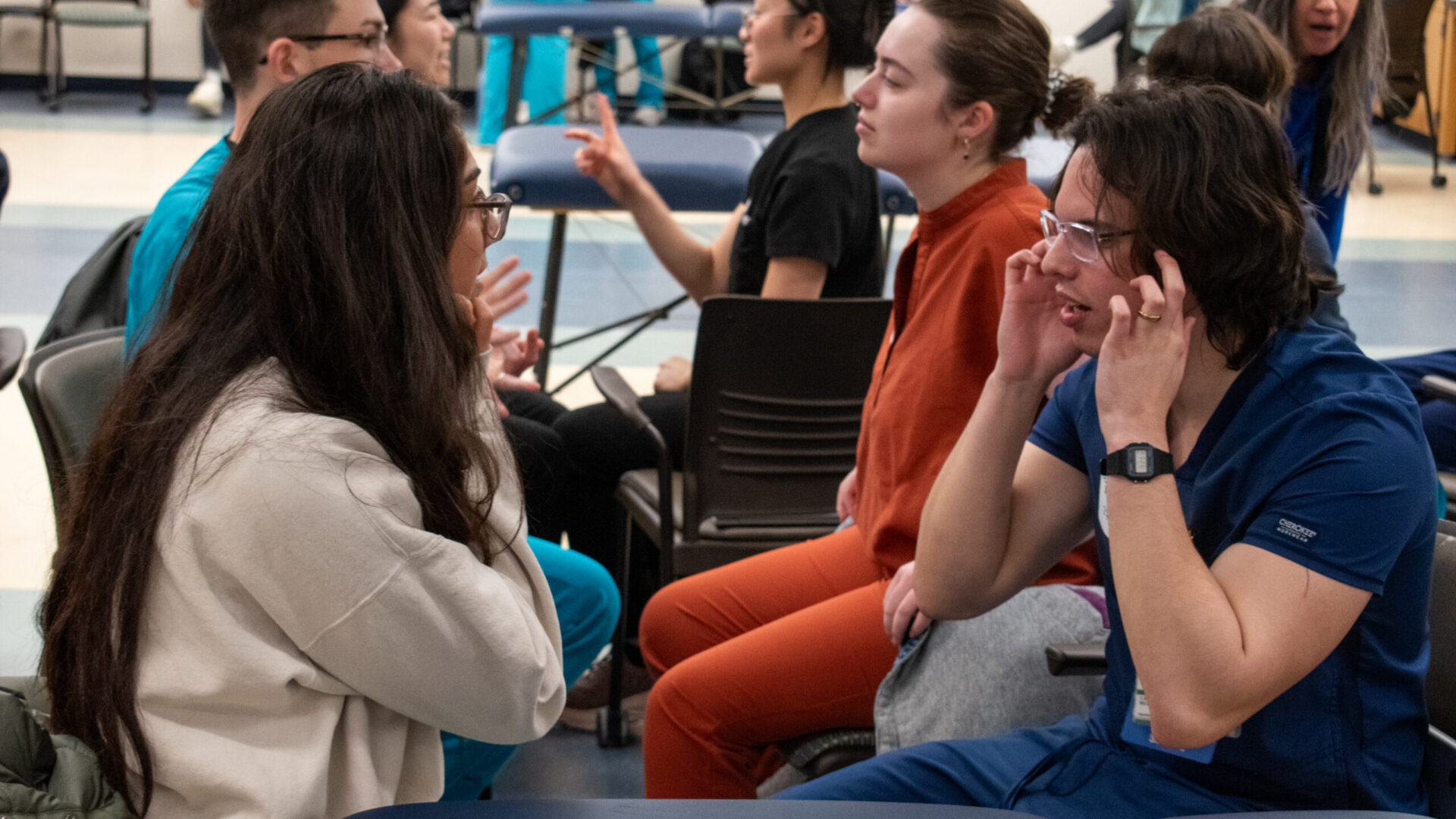
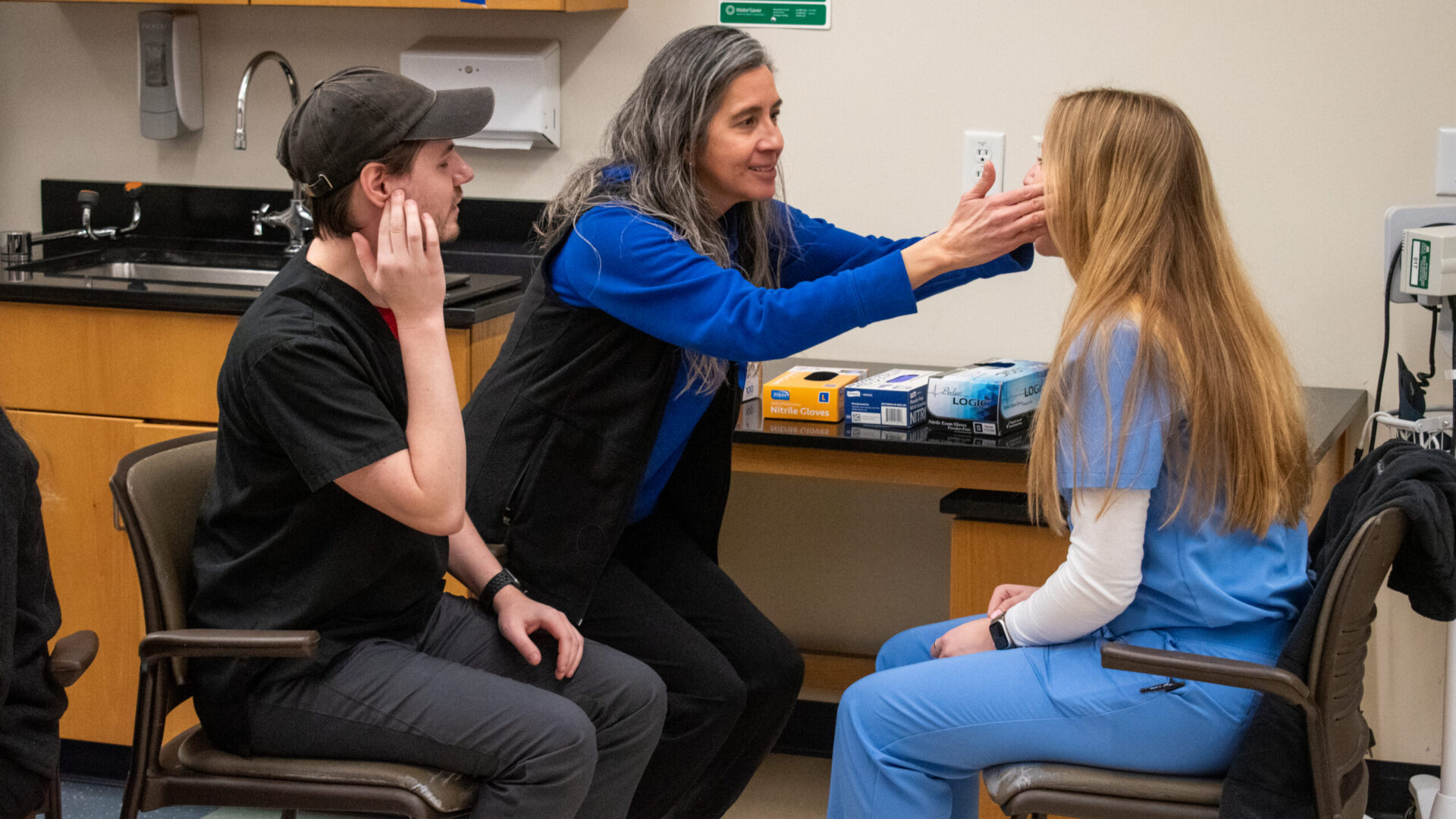
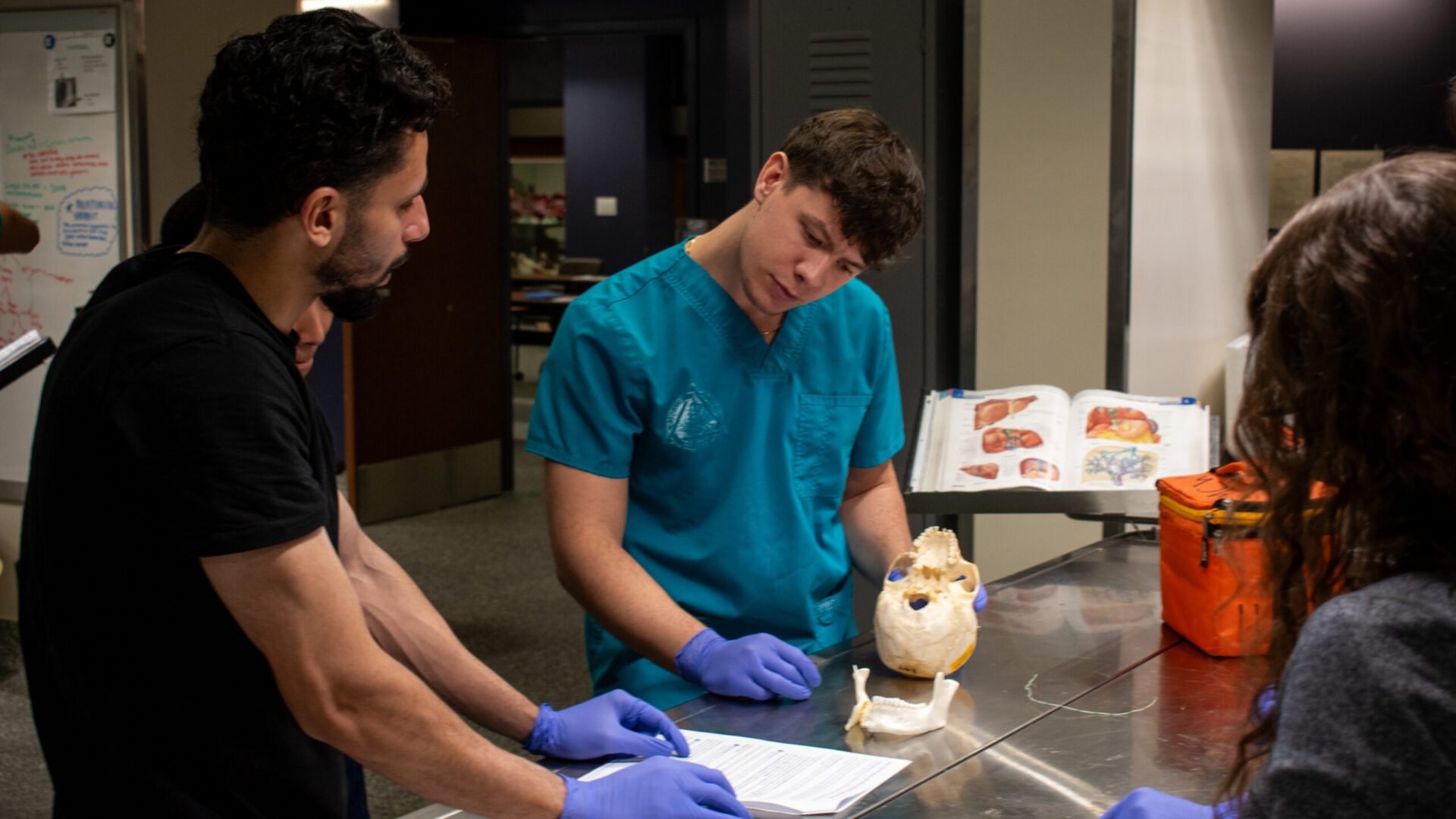
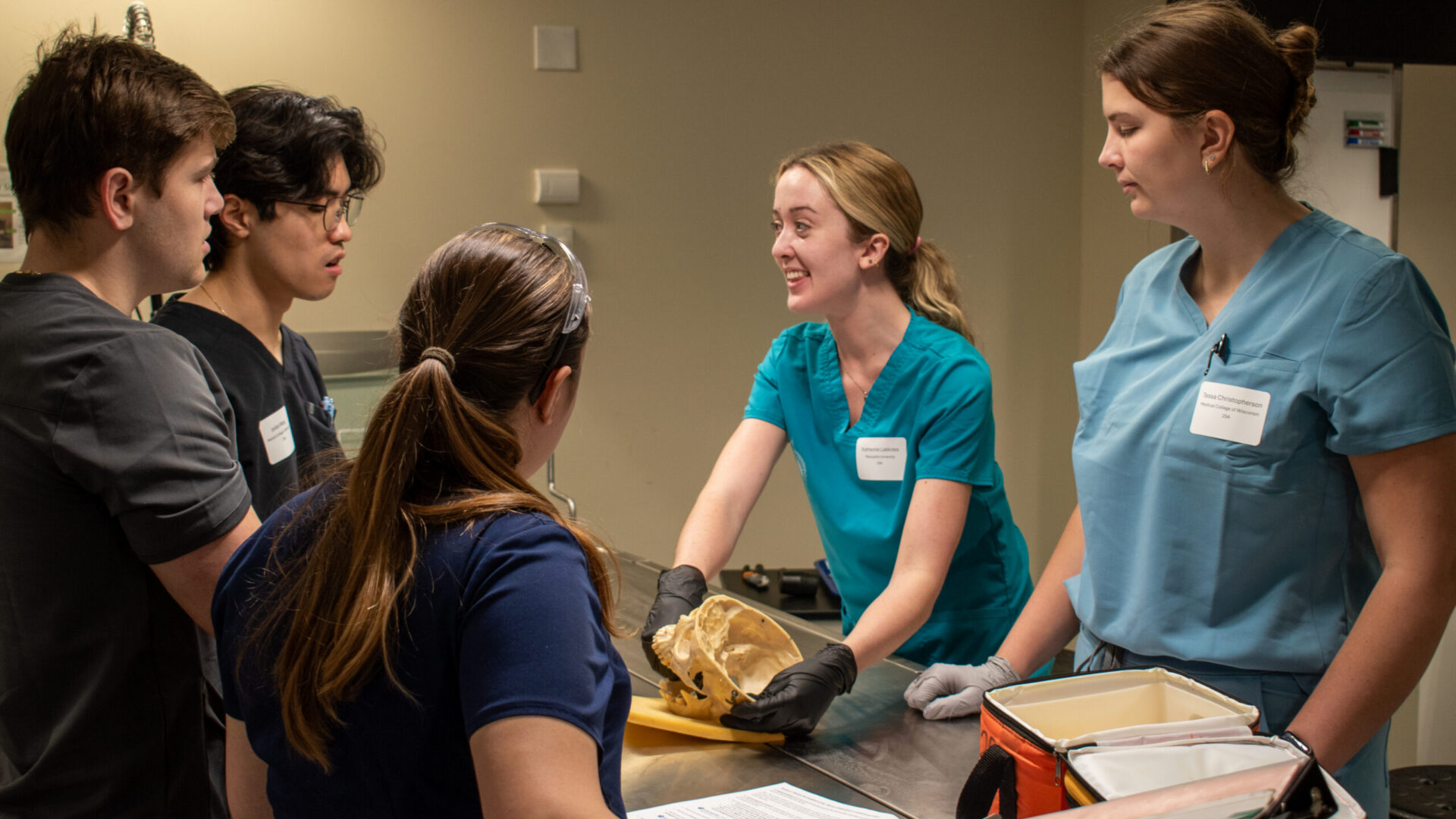
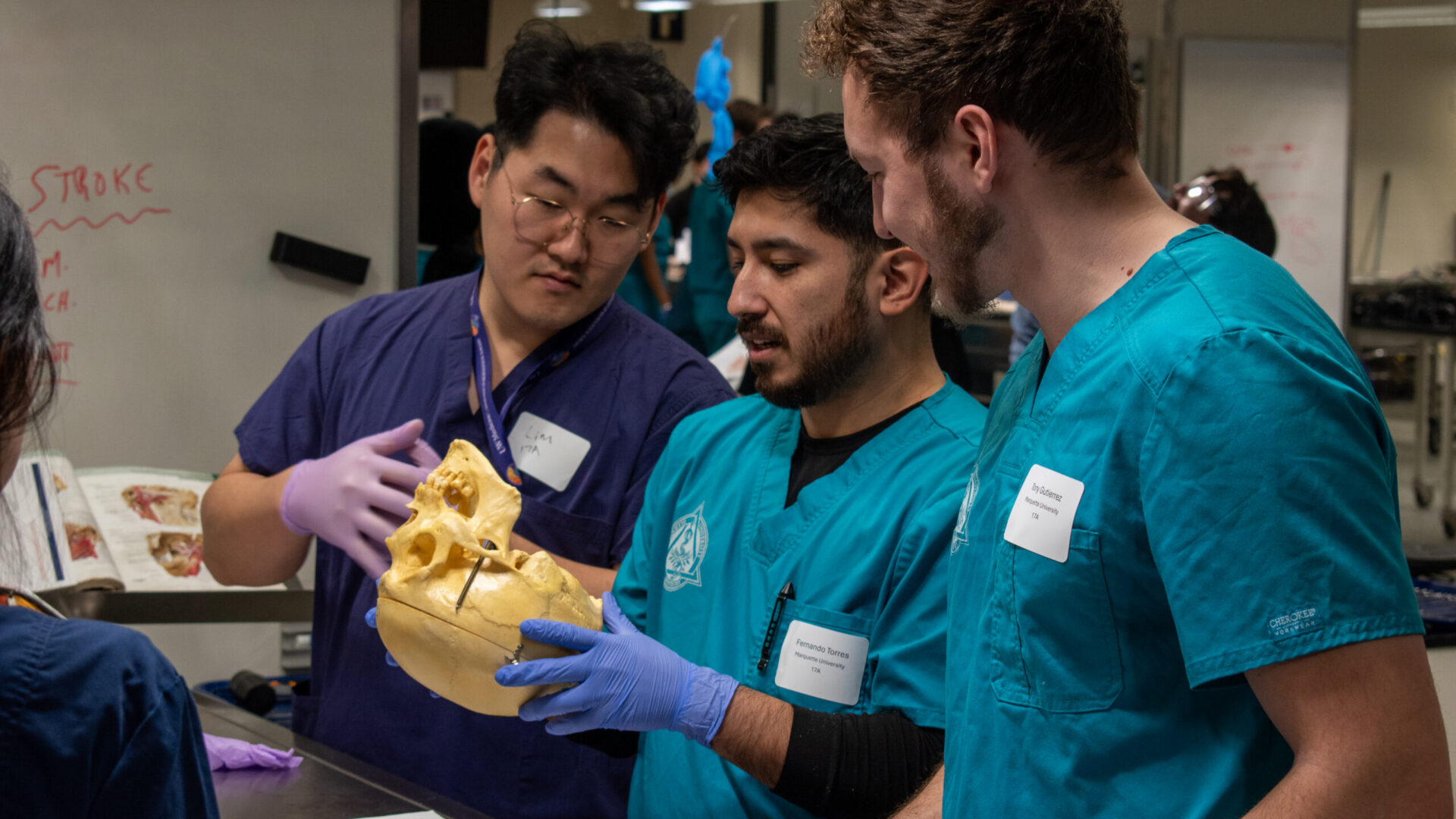
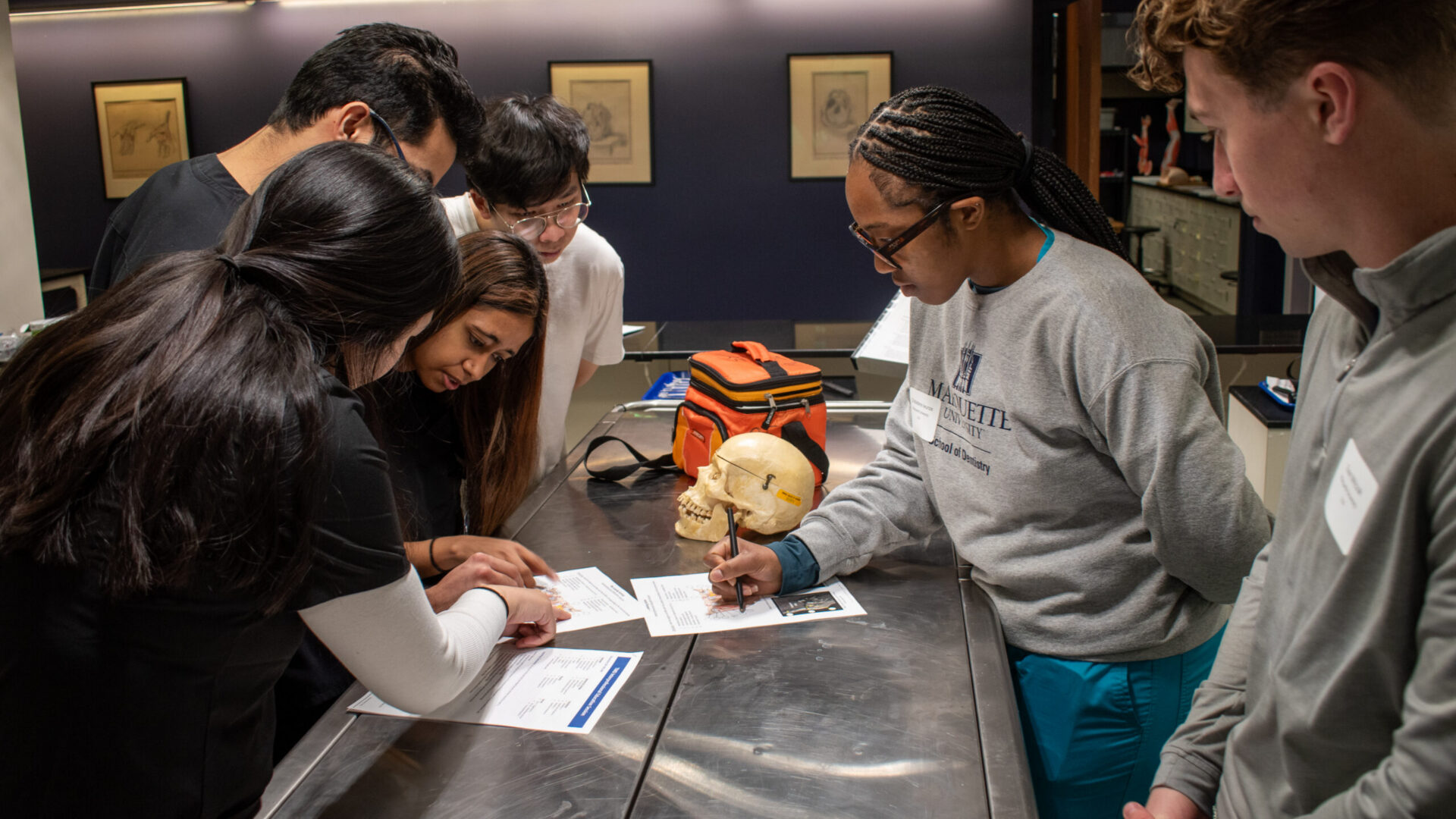
The first exercise placed students in groups in MCW’s Form and Function lab, where they worked together to explore the features of temporomandibular joint (TMJ) and muscles of mastication on real anatomical specimens. A second activity, instructed by Dr. Yasser Khaled, assistant professor and director of the predoctoral program in oral medicine and orofacial pain, asked students to analyze a TMD case study. The final rotation, led by instructors from Marquette’s physical therapy department, had students perform head and neck exams that can be used to diagnose TMD or other symptoms.
“It’s fun seeing the Marquette and MCW students share their experiences with each other,” said Dr. Teresa Patitucci, associate professor of cell biology, neurobiology and anatomy at MCW, who oversees the Form and Function lab. “Their training has a lot of overlap, and they are both developing skills to care for patients, almost all of whom will need support from both medical and dental professionals to maintain their health. Through this activity, we hope they see how they are partners in their patient’s journey.”
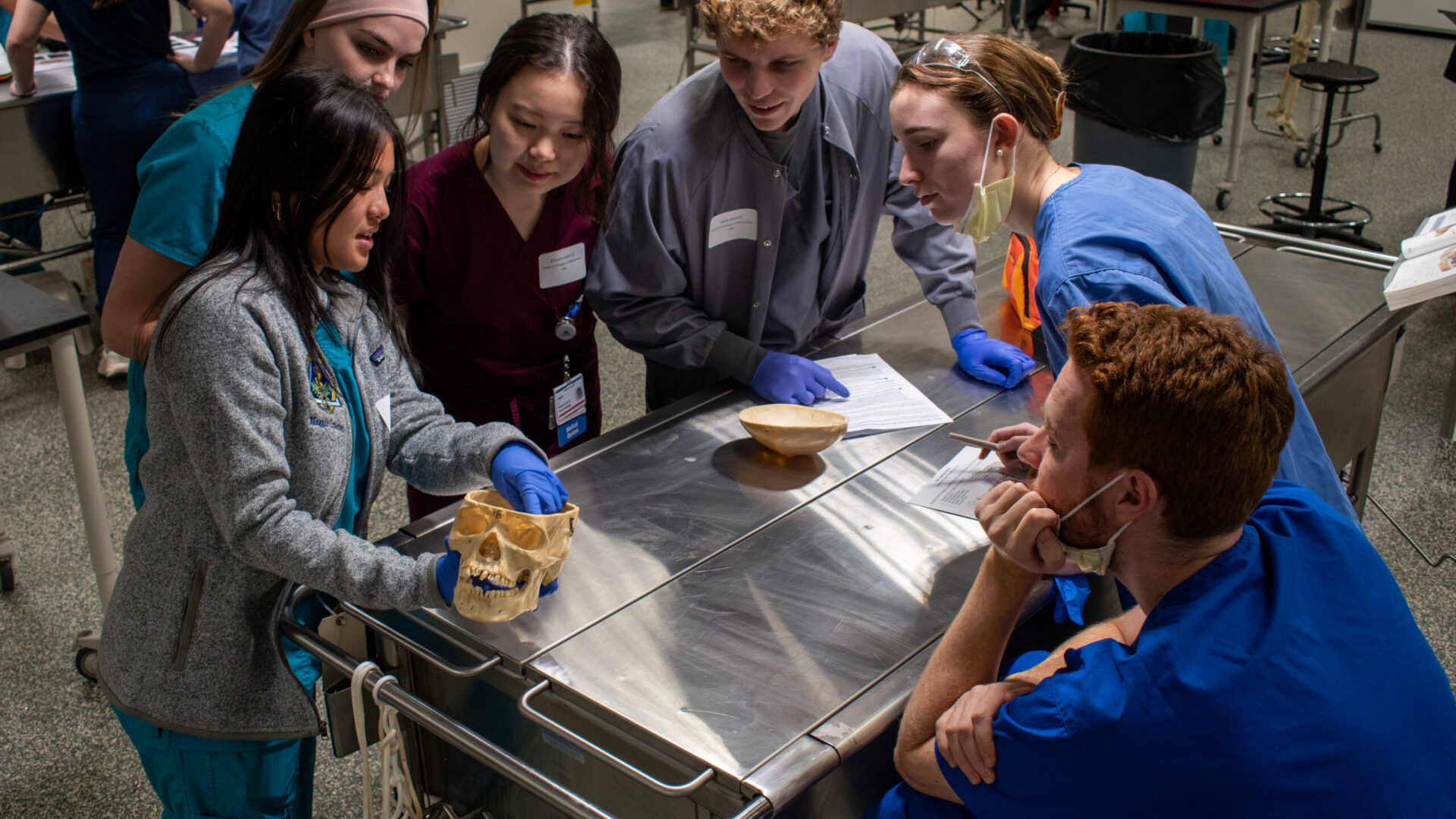
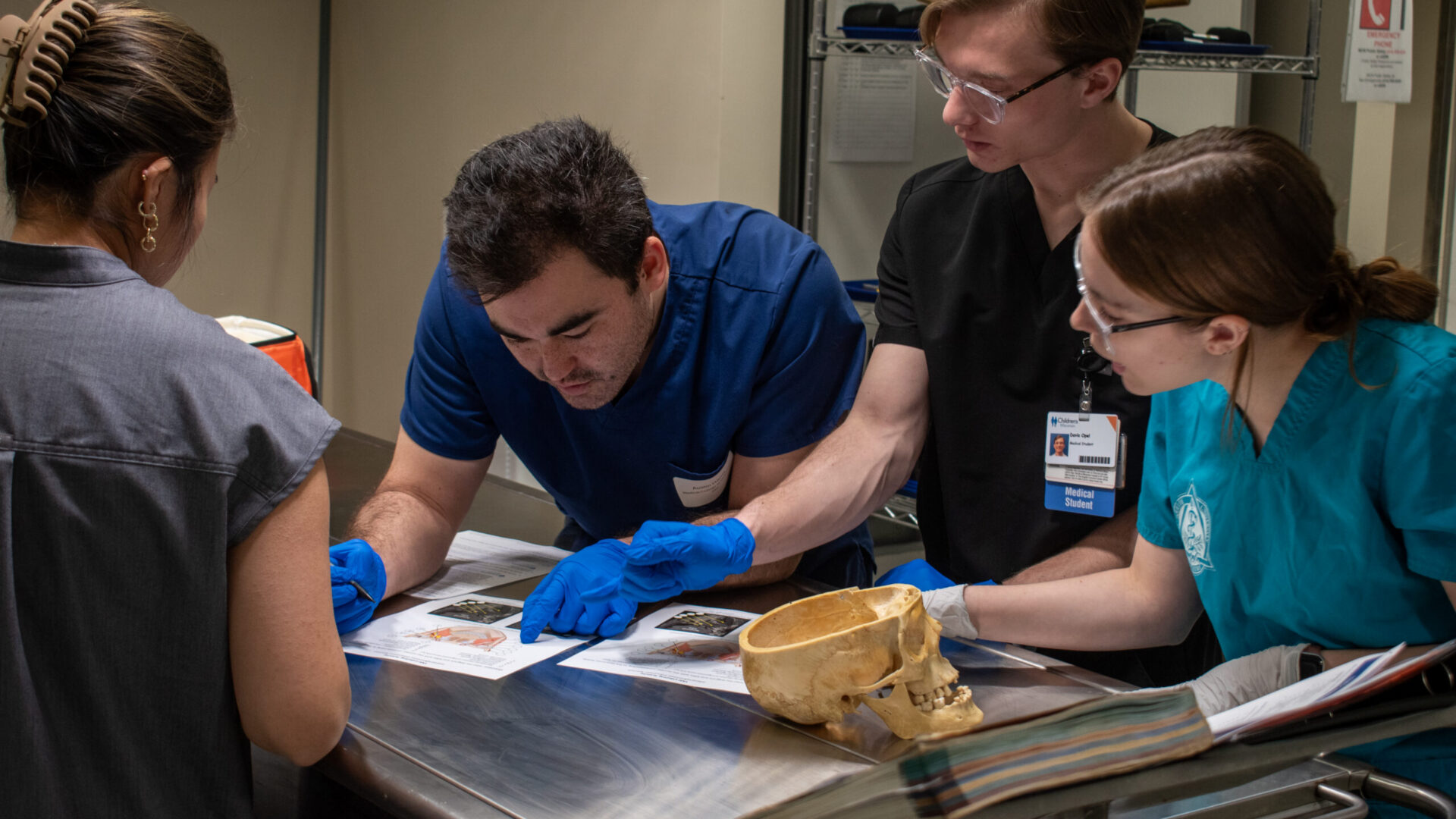
The inception of the program began when The TMJ Association, a patient advocacy group based in Milwaukee, reached out to the Medical College with the goal of promoting awareness among practitioners. The advocacy group, created by patients with TMD, is intimately aware of the impact on patients when there is limited evidenced-based training and a lack of standardized care. Patients who live with the orofacial pain associated with TMD can experience prolonged and debilitating effects. The condition can affect basic day-to-day functions like kissing a loved one, eating or sleeping and can have broader-reaching impacts on emotional and psychological health.
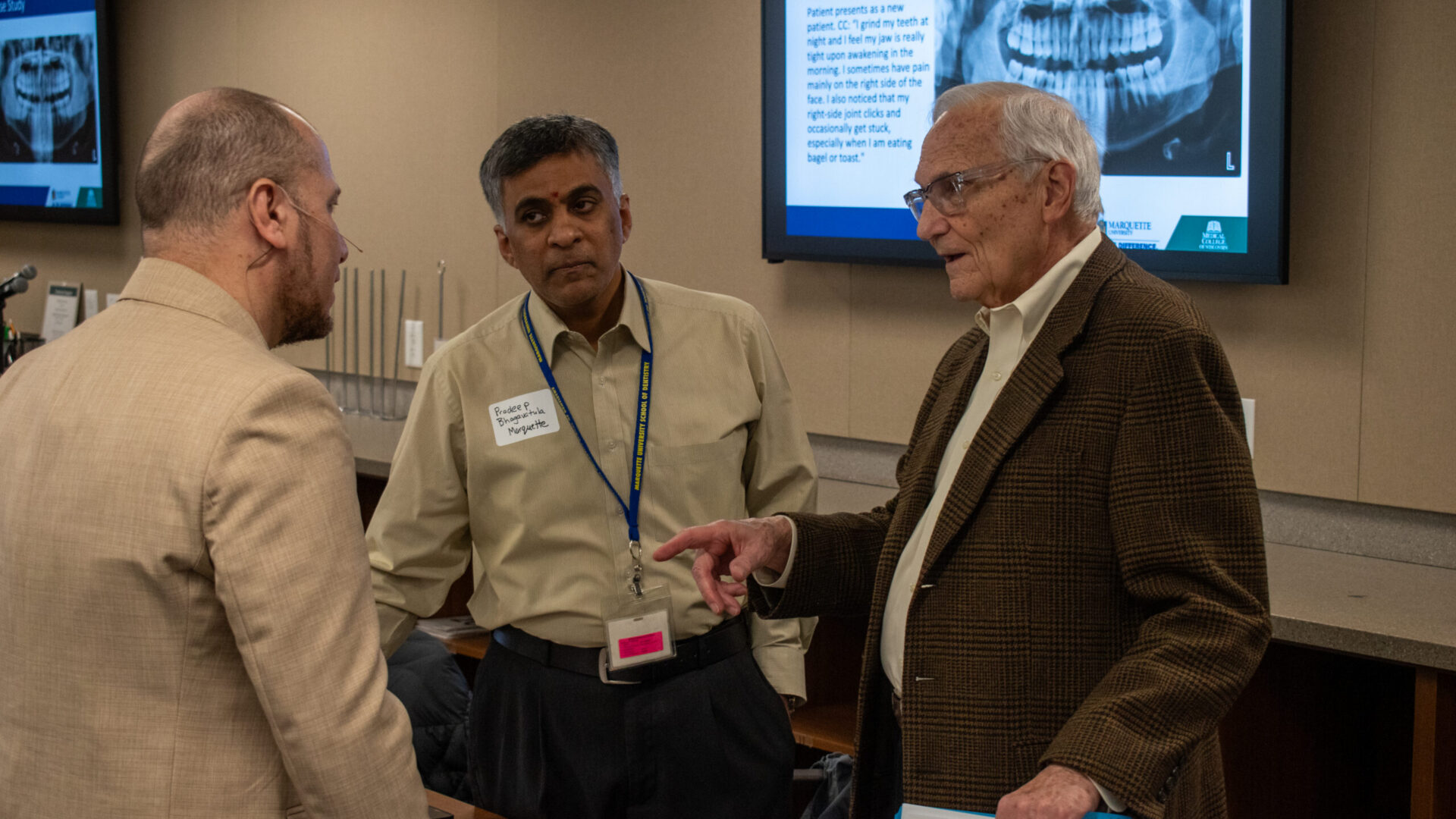
“TMD requires a multidisciplinary approach,” says Dr. Pradeep Bhagavatula, chair of the department of Community Dental Sciences. “This unique M.D. – D.D.S. IPE session tackles a shared problem and helps these students in future decision-making.”
Bhagavatula is a member of the Interprofessional Education and Collaborative Practice Committee (IPECPC), which includes Marquette and MCW faculty and staff who explore and implement cross-disciplinary events. Those such as the TMD workshop teach students the importance of providing coordinated team-based care and how crucial that is for our health care system as they embark on their careers as health professionals.