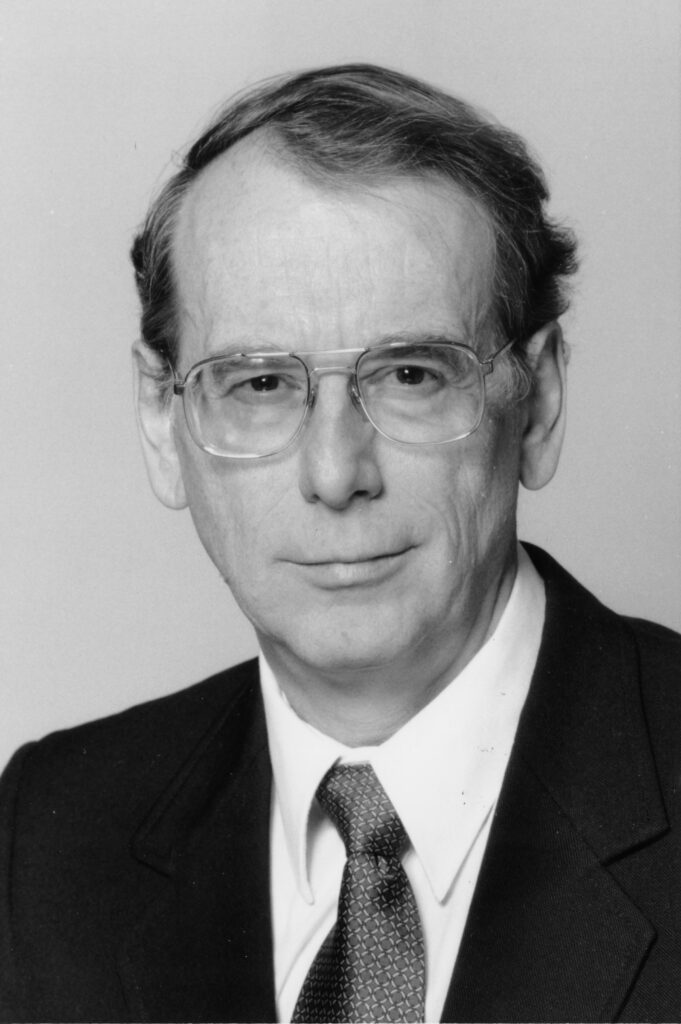
Marquette University mourns the loss of Dr. Jack C. Brooks, the inaugural dean of the College of Health Sciences, who died on Wednesday, Nov. 5, at the age of 84.
Brooks joined Marquette in 1974 as an assistant professor in the Department of Basic Sciences in the School of Dentistry. He was promoted to associate professor with tenure in 1980 and to full professor in 1991. In December 1995, he was named the first dean of the newly created College of Health Sciences.
The college officially launched on July 1, 1996, uniting the clinical programs in dental hygiene, medical laboratory technology and physical therapy with the departments of speech pathology and audiology and basic health sciences.
Brooks also spearheaded the creation of the physician assistant studies program in 1997, which has remained nationally ranked for more than 25 years.
“Jack was an incredible leader who envisioned what the College of Health Sciences could be at Marquette before all others,” said Dr. William E. Cullinan, current dean of the College of Health Sciences and Brooks’ successor. “He helped create a positive and entrepreneurial culture and laid the blueprint for the college to be successful in developing highly competent, caring, mission-driven students and leaders. His vision, dedication and leadership have left an enduring mark on Marquette University and on the countless students and colleagues who knew him. I’m grateful to have had him as a mentor and even more so as a friend.”
Brooks earned his bachelor’s degree in biology from Alfred University in 1963 and went on to complete his doctoral degree in zoology, biophysics and physiology at the University of Texas. He later conducted postdoctoral research at the University of Wisconsin–Madison before beginning his long and distinguished career at Marquette.
A gifted scientist, Brooks secured multiple research grants from the National Institutes of Health and the National Institute of Dental Research, focusing on phosphoproteins and their role in secretion in parotid cells. His discoveries in cell permeability provided foundational methods later adopted by neurophysiologists studying cellular exocytosis.
Please keep Dr. Brooks, his family and friends in your prayers.