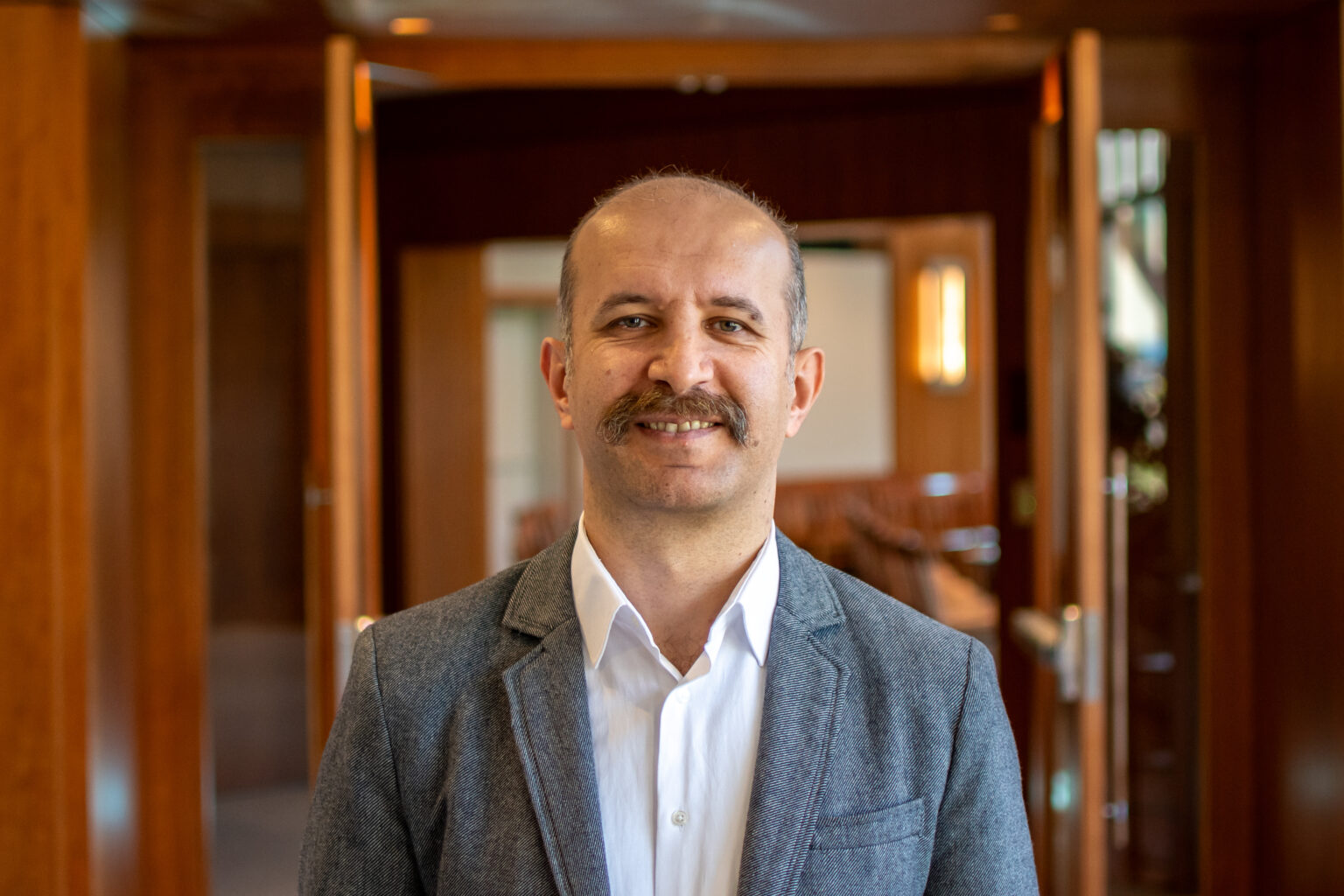
Dr. Fatih Harpci joined the Campus Ministry staff this summer as the office’s Muslim chaplain to walk with Muslim students during their faith journeys.
Harpci is an associate professor of religion at Carthage College. At Marquette, he will provide spiritual support to the Muslim student community while being mindful of a chaplain’s role of walking with students on their paths to “Be the Difference.”
In this Q&A with Marquette Today, Harpci outlines what his journey looked like and what he is looking forward to accomplishing in his role here at Marquette.
What is your undergraduate degree or focus in?
After finishing a religiously-oriented high school, I attended and graduated from Marmara University — the highest regarded university for religious studies in Turkey — with a Bachelor of Arts degree in Islamic theology. My concentration was on Fiqh (Islamic jurisprudence) and Hadith (teachings and sayings of the Prophet Muhammad).
As a kid, I always wanted to be a police officer. Later, becoming a physician and helping patients became my ultimate goal. Due to the political atmosphere in Turkey back then, the secular government did not want to see physicians, dentists, engineers or lawyers who were devoted to religion. If you chose any of those professions, you had to accept the fact that your GPA would be lowered during the nationwide college-entry exam. Ironically, if you choose any religion-related majors, as a religious high-school graduate, your GPA will go up. Long story short, I was coerced into choosing theology. Until my junior year in college, I didn’t really enjoy what I was studying. Later on, I accepted the journey I embarked on and embraced my calling.
What inspired you to follow this eclectic path?
My full-time job is teaching. I am an associate professor of religion at Carthage College in Kenosha, teaching courses on Islam and Christian-Muslim understandings. My command over a traditional body of Islamic learning has been augmented with substantial interfaith work at the Moravian Theological Seminary as the first Muslim seminarian in the school’s history. I earned a Ph. D. in Islamic studies at Temple University, where I examined the Hadith reports concerning Prophet Muhammad’s attitudes towards Jesus, especially statements concerning Jesus’ second coming and messianic roles toward the End. I am a public intellectual for the local and regional Muslim communities, as well. Since Islam has no ordained clergy, scholars have been the community’s primary religious authorities. I have been invited to deliver “sermons” and organize study circles by the local mosque.
What are you most looking forward to in your role?
I am here to listen to the needs, struggles and stories of Muslim students. I will be primarily responsible for providing spiritual support, programming, leadership, community engagement and outreach to students in the Marquette University Muslim community, including non-practicing individuals, while fostering healthy interfaith relationships on campus and beyond. Offering religious and spiritual guidance, organizing Iftar (fast breaking) meals during Ramadan, and supporting the observance of key Islamic holidays and events will be among my roles.
How do you anticipate working with students to accompany them on their faith journeys?
A chaplain is someone who is ready to listen to and try to understand students. My priority will be the peace and tranquility of our campus life, beginning with the Muslim students. First, I need to patiently listen to students and gain their trust so that my mentorship and guidance will have a positive impact on them. I am here to listen, understand and help students find their own path versus molding them into a certain personality. My broader aim is to contribute to a campus culture where curiosity, respect and compassion are at the heart of learning — where I prepare Muslim students not only for their faith journeys, but for meaningful engagement with the world, so that they can “Be the Difference.”
What has been your first impression of Marquette so far?
It has been only two months, but I can already see the welcoming and warm atmosphere both on campus and in the Campus Ministry.