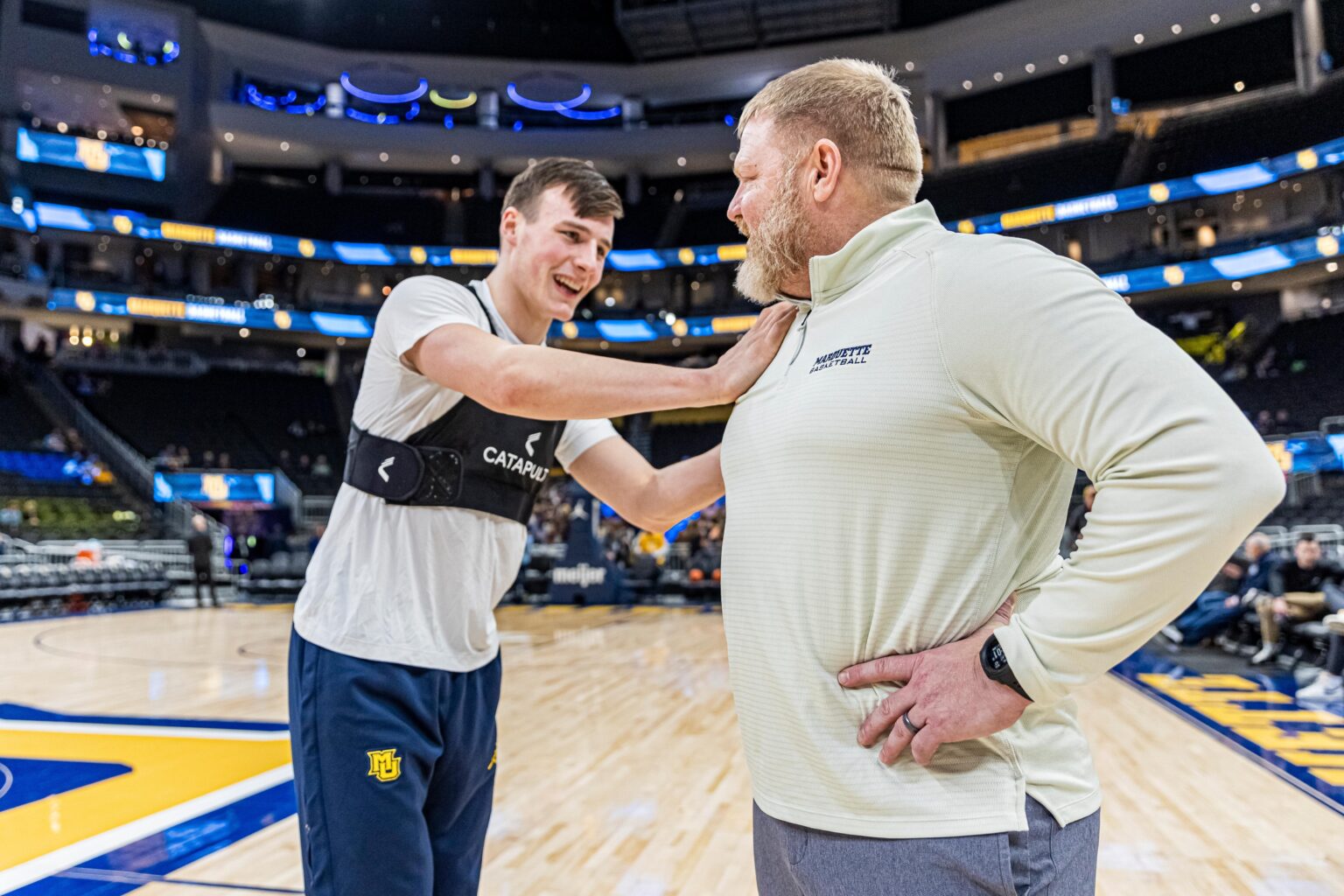
When each member of Marquette’s men’s basketball team shows up for his regularly scheduled performance team meeting, it’s more than a check-in on his jump shot or defensive rotations. Around the table sit many of the people who help shape his college experience — coaches, strength and conditioning staff, nutritionists, academic advisers — all working in sync toward a shared goal of helping this young man grow into the best version of himself.
These gatherings provide the opportunity for a holistic evaluation of each student-athlete. Are they getting enough water? How are they managing the academic load that comes with road trips? Are they sleeping enough to meet the demands of a long season? How are they handling the mental pressures that accompany Division I competition?
Each player has an active role in the conversation. For Head Coach Shaka Smart, entering his fifth season leading the Golden Eagles, the quarterly meetings are an invaluable forum for student-athletes to provide feedback on how the program can best support them — what’s working, what isn’t and where they feel they can grow. Together, players and staff chart a path forward, aligning individual goals with the team’s collective vision.
“Inevitably, we all look back on college and say, ‘I wish I would have been more serious about my growth in this area,” Smart says. “I wish I would have been more specific about what I needed to do. Our job as coaches is to help the guys with that in the moment.”
For those well versed in Marquette’s Catholic, Jesuit values, this support strategy rings familiar. Cura personalis — or “care for the whole person” — is a hallmark of Ignatian spirituality and central to the university’s holistic approach to developing the next generation of difference makers.
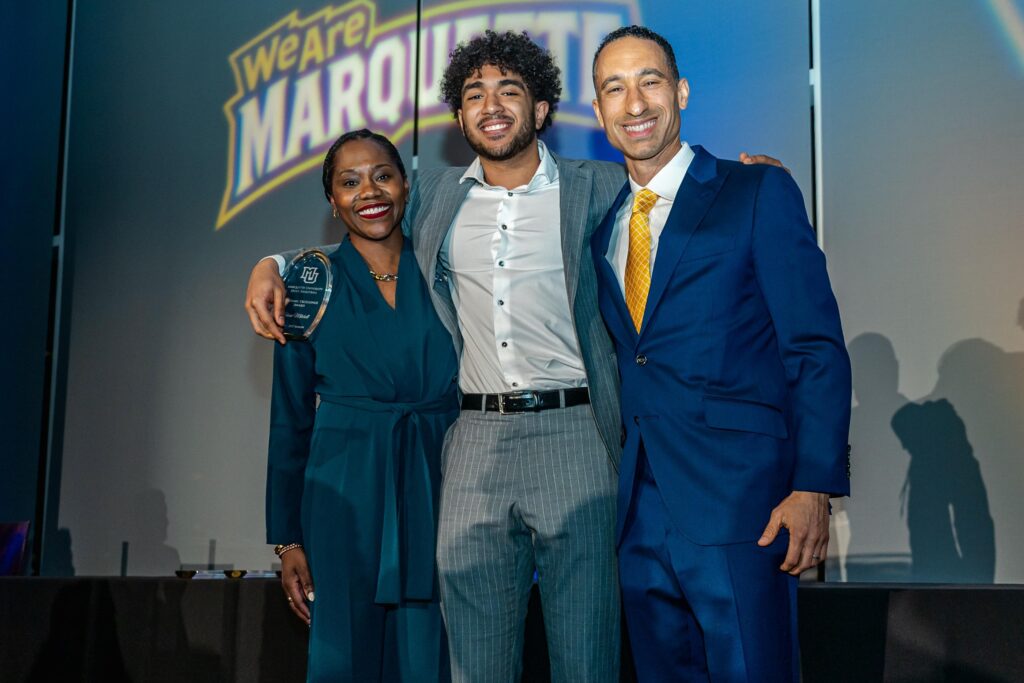
Dr. Adrienne Ridgeway, deputy athletic director for student-athlete well-being, has long served as head of academic support for the team. She appreciates how academics and well-being are fully integrated into Smart’s philosophy, not viewed as add-ons to basketball. This mission-aligned structure eliminates silos, she says, creating one, comprehensive path to success. “I think that alignment is what has made Shaka and his method really unique,” Ridgeway says.
“Can a person live up to their full potential in these four or five years without us addressing all of the aspects of who they are?” she continues. “I think our mission calls for that, and I think Shaka in the program has a done a great job of embracing that.”
You may also like:
Unshakable: How Marquette built a team culture unique in all of men’s college basketball
With intention and an unrelenting focus on relationships, growth and victory, Marquette and Head Coach Shaka Smart are going against the grain, shaping a transformative program experience in college basketball: Our Way.
From his first days in Milwaukee, Smart has used development meetings to reinforce a culture built on constant improvement — a growth mindset that has come to define Marquette basketball.
He traces the idea for the meetings back to the off time he spends connecting with fellow coaches at sports’ highest levels. In this case, it was a former colleague, Jerritt Elliott, who has led the University of Texas women’s volleyball program to multiple national championships.
The meetings became a fixture of Smart’s system over the past decade. Then, he built on that foundation with another concept shaped through his wide-ranging network: the introduction of formal personal growth plans for each player.
A trip to Washington, D.C., in early 2024 evolved into a mini coaching summit when Smart was invited to a Commanders practice, giving him the opportunity to compare notes with Washington head coach Dan Quinn and Utah Jazz head coach Will Hardy, who was also on hand. “On the flight home, it just kind of crystallized for me,” Smart says. “We need to take another step with our growth plans, formalizing everything.”

In Smart’s office, you can now find a binder detailing bulleted, personalized roadmaps for each member of the roster. One side of each plan, accented in Marquette’s signature gold, outlines the areas student-athletes agree to focus on to improve their on-court performance. The flip side, lined in championship blue, focuses on personal development, charting goals tied to leadership, relationships, academics and the habits that shape who players are off the court.
To ensure steady progress between quarterly meetings, players meet weekly with an assistant coach of their choice.
“We have a very unique environment,” says assistant coach Cody Hatt, who has worked alongside Smart since the pair’s days at Virginia Commonwealth University. “If you’re a kid who loves to play, who wants to become special, who wants to be held accountable in a very unique way that is centered through development as a person and a player, then you’d have to be crazy not to at least take a hard look at what we have here.”
Marquette’s panoramic view of support has helped Golden Eagles evolve from role players to stars – and be ready for the responsibility that comes with that transition. Take Tyler Kolek, now with the NBA’s New York Knicks, who arrived as an intriguing transfer from George Mason University and departed as an All-American.
His father, Kevin, had a front row view of his process. There were countless hours in the gym, of course, time to hit the weight room, participate in shooting drills and push his endurance level to the limit. But Tyler was also given mental and spiritual skills that have prepared him for a transition to the professional ranks and the hurdles he’ll face for years to come.
Meditation helps him stay grounded and resilient, whether the challenge is hearing his number called during a high-pressure game or enduring periods when his playing time is limited. “It made him a better person, a better man,” Kevin Kolek says.
“In the NBA, there’s ups and downs, cause there’s so many games,” he continued. “He has a great attitude, putting things in perspective from what he’s learned. Control the things you can control and work as hard as you can and things will work out for you.”
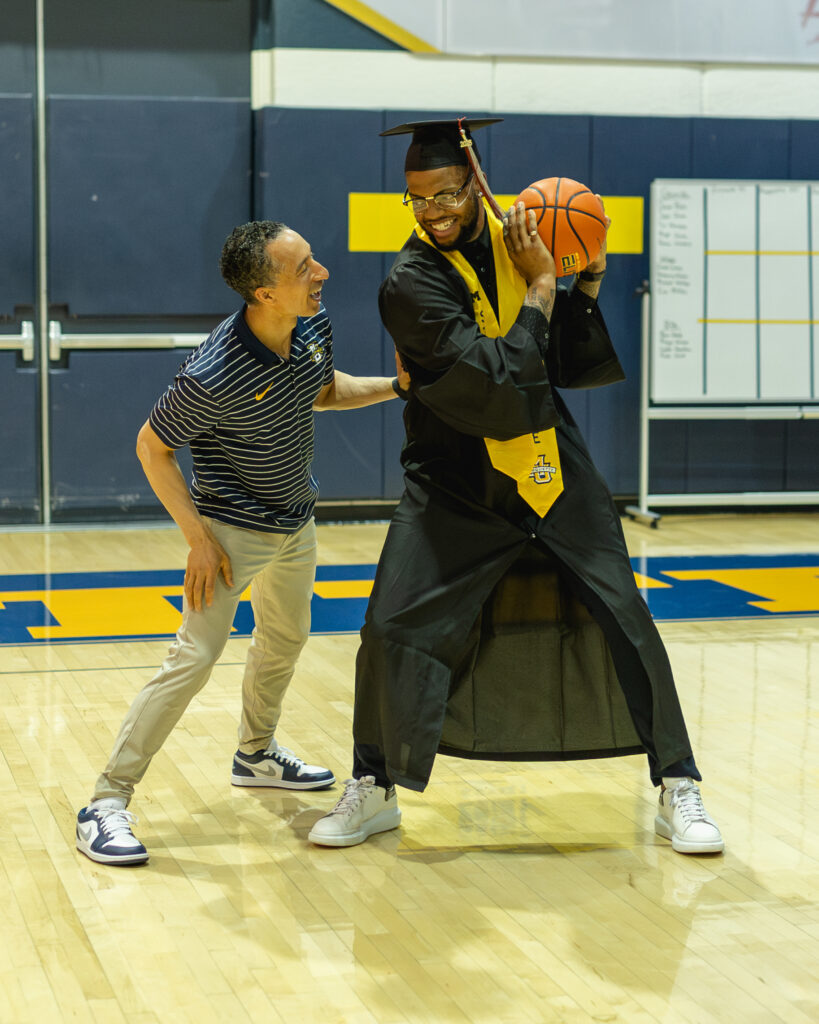
Kolek is far from the only success story. Oso Ighodaro went from a freshman who played just 38 minutes to a vocal leader bestowed Marquette Athletics’ highest honor, the Robert L. and William P. McCahill Award. Chase Ross, expected to lead the Golden Eagles on the court this season, has pushed through natural shy tendencies and initial doubts about his place in college basketball to become an aggressive disruptor on the hardwood and a supportive force for his teammates off it.
“If you look at how they grew here, you certainly could point to some basketball elements,” Smart says. “But they got mentally tougher. They got more resilient. Their communication skills improved. They became better teammates. They became more receptive to coaching.”
Now, the spotlight shifts to the next generation of Golden Eagles, each eager to make that leap. Thankfully, none will have to do it alone.
“We do more to grow together than any other staff or program I’ve ever had the chance to work with,” says Todd Smith, Marquette’s assistant athletics director for applied sports science and performance. “It makes it fun because everybody is supportive of everybody. Even though they’re competing for minutes, they’re so supportive of each other because they know how hard each other is working.”