That feeling when everyone is counting on you, and you don’t want to let them down. Most of us have been there, but most of us were not 12 years old at the time.
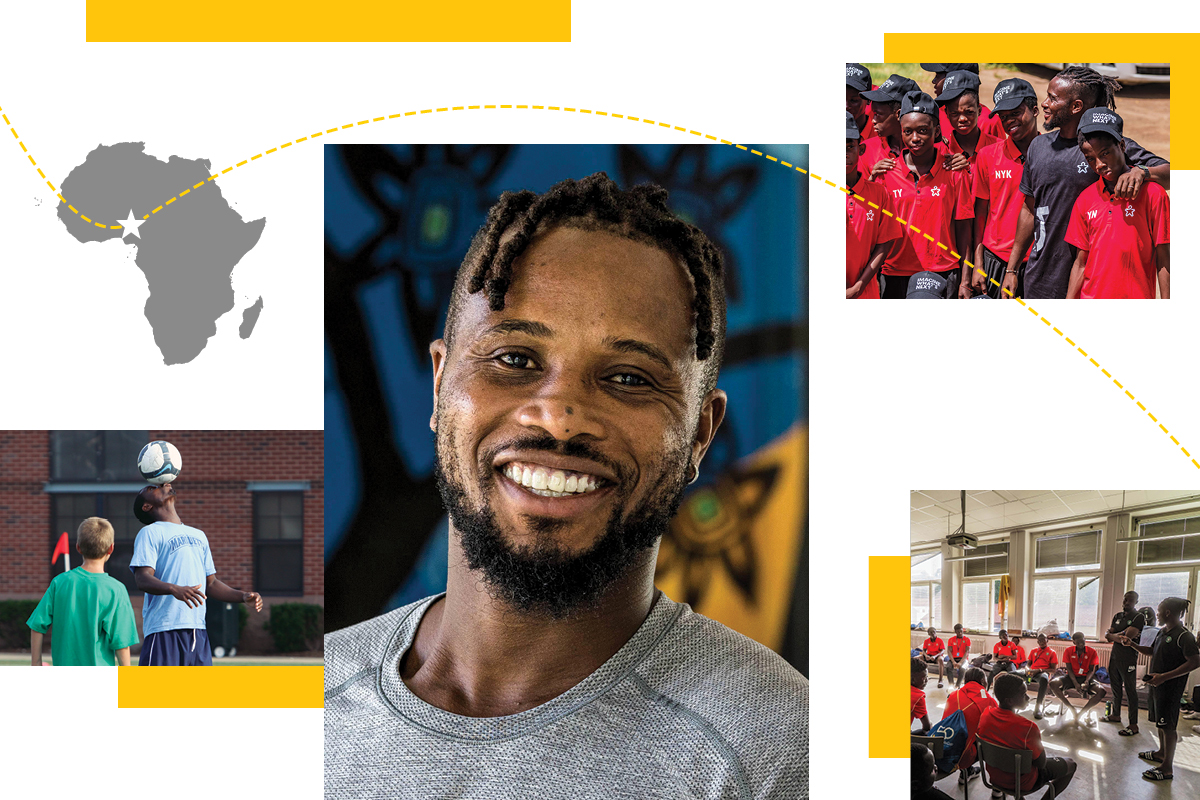
When James “C” Nortey, Arts ’15, sees one of his students struggling, he is quick to sit down with him or her, maybe under a shady tree on the campus of the Right to Dream Academy in the Accra region of Ghana. Nortey knows this exact feeling — because he, too, had all those fears and hopes, and more.
Long before he took his current role as director of care and culture at the academy, Nortey was a student there himself. And before that, Nortey was as young as 8 years old, selling fruit on the street, asking tourists at the local beach for their leftover food, or street-fighting for money to help his family. Even his first day at the academy was unusual, as Nortey showed up without a spot waiting for him in the final tryouts. When a highly regarded goalkeeper failed to show, Nortey pleaded for the missing player’s spot and got it.
He understands his young charge under the tree, and everything he is feeling.
That’s part of his unique job description at Right to Dream — an academy that blends elite football training (or soccer, in American terms) with rigorous education and the goal of developing leaders in their communities and beyond. Founded in 1999 by the chief African scout for Manchester United — the biggest football club in the world at the time, Beckham’s team — the academy is legendary in Ghana and beyond as a pipeline to international study and scholarship opportunities, and sometimes professional careers at the sport’s highest levels.
RTD was where Nortey landed at age 11, on a tip from a coach who thought he had the necessary talent. Whether he did or not wasn’t initially clear at the final tryouts he’d talked his way into, but he wound up clinging to one of 16 prized roster spots as the backup goalkeeper and gained admission to the academy. Just to be safe, he made himself extra useful during his first year, helping with dishes or serving meals on weekends when the staff was off. Working even harder on the field, he became starting goalkeeper the next season. He set his sights on being invited to an American boarding school and then playing soccer at a university there, an aspiration that led him in time to Marquette.
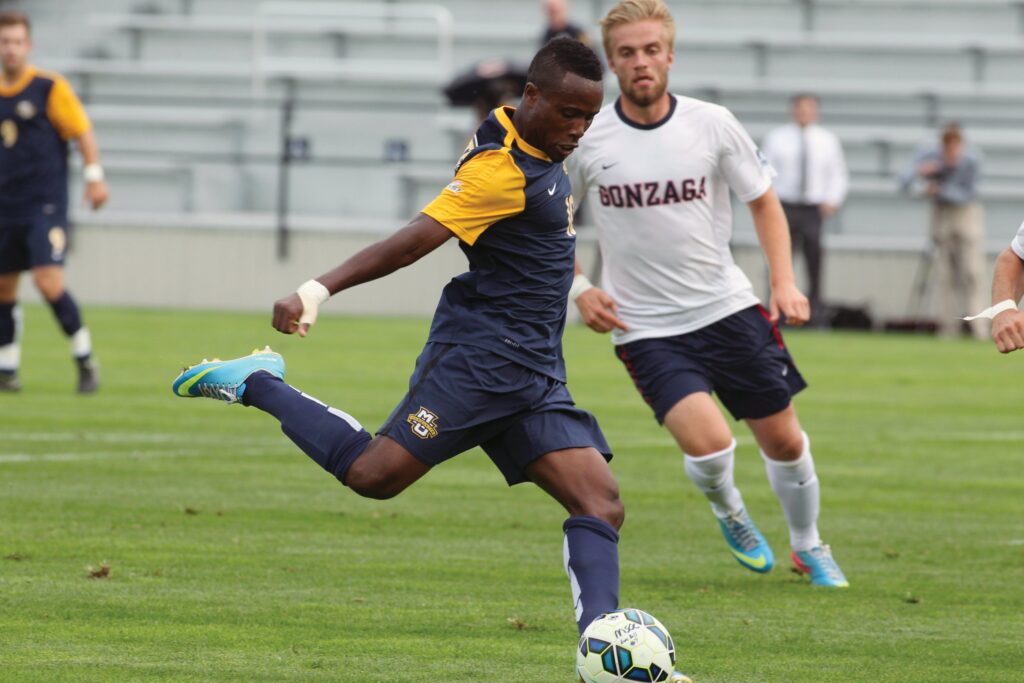
From his youngest days, Nortey recognized that a combination of talent, perseverance and education would change life for him and his family members — not what most youngsters are thinking of at the age of 8 or 12. What he did not know then was that he would return to Ghana and help other youngsters along similar journeys.
Nortey’s path back to Ghana was part of a circuitous yet directed journey. He battled through injury and recovery at Marquette. By then an attack-minded winger, he became a dynamic force on the field, graduating in 2015 as the sixth-highest goal scorer in program history. With dreams to play professional soccer, he worked out with teams but was not drafted.
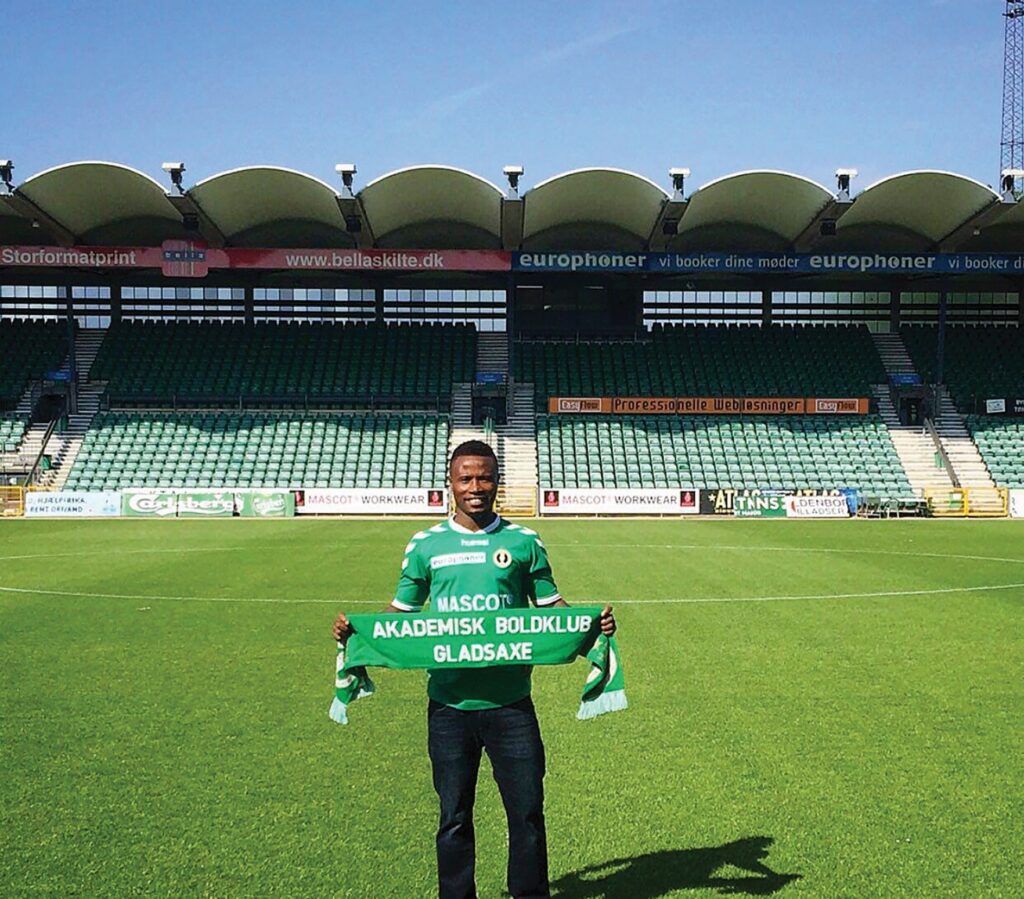
Seizing an opportunity to play with a professional team, Akademisk Boldklub, in Denmark’s top division, he found himself navigating new cultures there. The team’s dynamics were decidedly split, with the Scandinavian players grouped together and the others, mostly West Africans, forming their own groups. Nortey embraced the RTD ideals of sharing cultural practices, music, food, dances and celebrations. He offered his from Africa and invited others to contribute theirs in a way that honored all the teammates and brought them together.
Though his professional career lasted just two years, another door opened. Shortly after his arrival in Denmark, Right to Dream expanded its vision, purchasing the Danish pro football club FC Nordsjaelland, near Copenhagen. Nortey was soon offered a part-time role as character development lead, which later became full-time once he retired from playing.
Building on his Marquette education and additional course work in positive psychology at the University of Pennsylvania, he developed a holistic approach to youth development. “We create a platform where our boys and girls can rediscover themselves in the simplest way,” he explained in an interview for the club. “They have to understand their own values and what drives them. Only then can they play a bigger role in society.”
By 2022, Nortey felt a pull back home. Conversations with Right to Dream leadership led to the creation of a new role in Ghana: director of care and culture. For him, it was an opportunity to apply the Jesuit principle of cura personalis that he had encountered at Marquette — care for the whole person: mind, body and spirit.
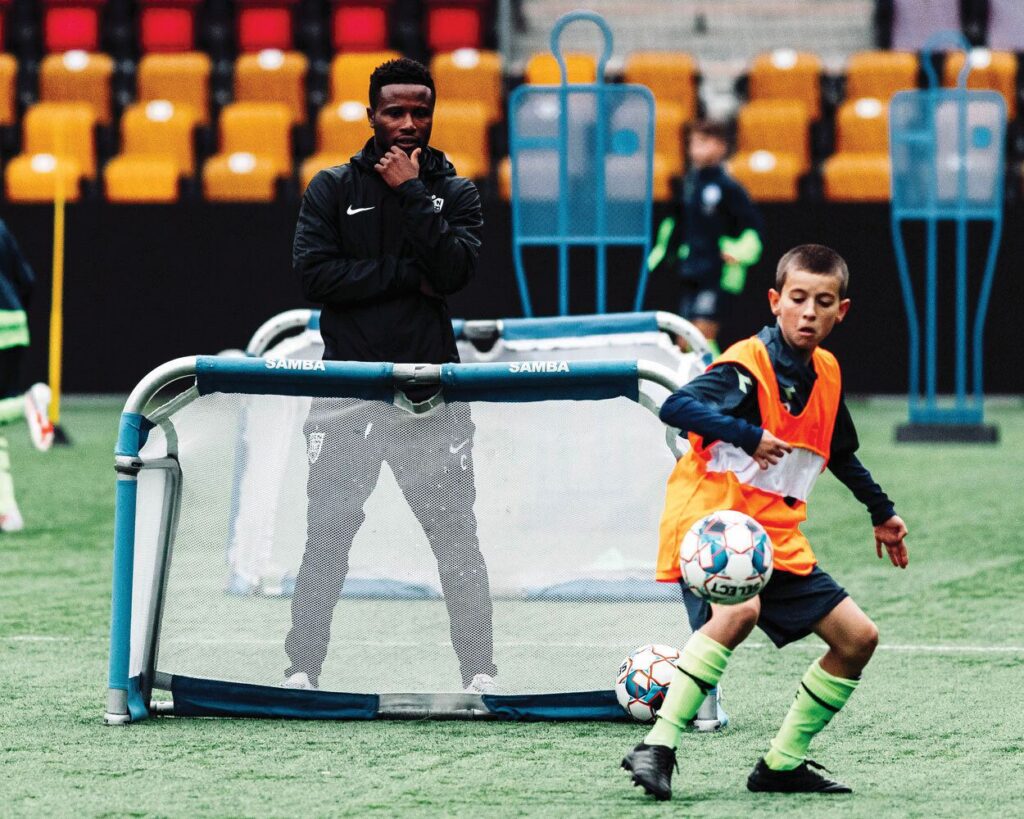
He saw the need for stronger family connections, more integration of Ghanaian culture into school life, and a greater emphasis on character alongside football. He knew from his own journey how vital it was to have adults who saw and supported him as more than just an athlete. Now, he could be that figure for others.
“Our entire setup is designed to make care a shared responsibility,” he says. “Sometimes our best players get their most meaningful advice from a security guard, or a cleaner, or one of our facility staff, or a pastoral (a dorm parent). Every staff member — no matter their role — is part of the care ecosystem. We all carry the culture.”
One day back on the RTD campus, sitting under a tree with a homesick student, Nortey shared his own memories of being far from home, adjusting to new food and struggling with change. He reminded the boy: While it is hard to be an African athlete, it is also a gift. “It should still be fun, even though it’s work,” he told him. “That passion will lead to success.” Then, smiling, he walked the boy back to class.
“That’s what care is to me,” Nortey explains. “It’s not soft — it’s transformational. It’s about presence, attention and truth. When young people feel seen, when they feel safe enough to be honest, and when they know someone genuinely cares, they grow. Not just as athletes, but as people. And I believe that’s the foundation for thriving.”
Dreaming, caring, thriving — Nortey embodies that ideal.