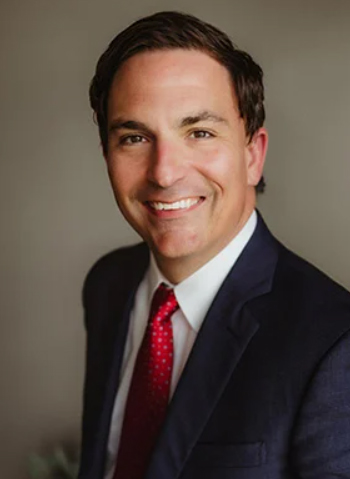
Ryan Graff, L’06, has a thriving legal practice, including interesting and big cases, opportunities for professional growth, and interaction with very capable lawyers. And there are appealing opportunities beyond work. This is how he finds life in Manitowoc, Wisconsin, on the shore of Lake Michigan, 80 miles north of Milwaukee. “I don’t think you lose anything by being in a small community,” he told about 20 Marquette law students at a gathering in Eckstein Hall on February 26, 2026.
Graff and a half dozen other lawyers with practices in rural areas or small to medium-sized cities were taking part in the Law School’s “Beyond Milwaukee” lunch program, part of a larger campaign by several legal organizations, including the State Bar of Wisconsin and Marquette Law School, to encourage law school graduates to choose careers in smaller communities in Wisconsin.
It’s not an easy sell. As is true more broadly, the pull of big urban areas such as Milwaukee and Madison is strong in the legal profession. Trends have not been running favorably when it comes to the availability of lawyers around Wisconsin. In particular, shortages of prosecutors and public defenders have made pursuit of criminal cases difficult and slow in some areas. “We need criminal defense attorneys up north like we need air,” said another participant in the program, Jessica Phelps, L’14, who practices in Wausau. “It’s dire.”
“The farther north you go, the happier they will be to have you show up.”
Jessica Phelps, L’14,
practicing in Wausau, Wis.
Many places offer good opportunities. “The farther north you go, the happier they will be to have you show up,” Phelps told the students. Steven Krueger, L’07, practices in Green Bay. He said that while some people in urban centers have comical ideas about what legal practice and life in general are like in less populous centers, he deals with sophisticated law firms, complicated legal issues, big businesses, and demand for his services. Plus, he said, “the earning potential is something people are often surprised by.”
And then there’s the lifestyle—panelists spoke of no-hassle commutes to work, lots of recreation opportunities, and access to more cultural offerings than many people realize. Seeking to dispel “a myth,” Scott Swid, L’96, said there are excellent cultural programs across the state. Swid practices in Mosinee, Wisconsin, south of Wausau.
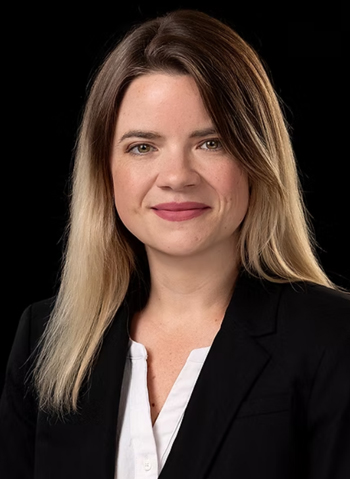
Erin Binns, the Law School’s assistant dean for career planning, noted “a wealth of legal opportunities—quality opportunities—beyond the immediate Milwaukee area.”
The Beyond Milwaukee event was part of an effort to promote “outstate” legal positions, Binns said, using the common Wisconsin term for areas at least outside the Milwaukee and Madison areas. This summer will be the third year of the State Bar of Wisconsin’s Rural Clerkship Program, which places students after their first or second year of law school in private law offices and state public defender locations outstate. The positions are paid, and the students have substantial involvement in legal work.
Another part of the effort was a program titled “Let’s Get Criminal” on February 16, 2026, in Eckstein Hall, in which eight representatives of district attorney’s offices and the state public defender’s locations across Wisconsin described their work, how to prepare for jobs such as theirs, and potential career trajectories. The program was supported by the Law School’s Nathan Fishbach Student Development Fund.
Binns said the Law School also hosted a recent luncheon for students, facilitated by the state bar, which included a virtual panel discussion with lawyers describing their practices in rural areas around Wisconsin. “We encourage students, and we’re working with employers to promote outstate legal careers,” Binns said.
Wisconsin Supreme Court Chief Justice Jill J. Karofsky pointed to the statewide needs in a “Get to Know” program at the Law School, hosted by Derek Mosley, director of the Lubar Center for Public Policy Research and Civic Education, on March 4, 2026. “We have a crisis here, for all you law students,” Karofsky said. She said lawyer shortages had slowed criminal proceedings in some areas. “We’re going to have to do everything we can to try to move the needle a little bit.”
The Law School’s efforts aim to help do that.
This article was first featured in the Summer 2026 issue of Marquette Lawyer Magazine.