Mutuku John grew up between two different rhythms of life in Kenya: the sound of the Athi River near his family’s rural home in Kitui and the busy streets of Nairobi. In one place, open spaces, farms and a close-knit community shaped his family-based values. In the other, a buzzing city with residential neighborhoods, crowded markets, businesses on every corner and a vibrant urban lifestyle provided energy and diversity.
Navigating those two worlds taught John how to adapt and connect with people from all walks of life — a skill he now brings to the classroom. Today, he is pursuing a Ph.D. in chemistry with a concentration in chemical education at Marquette University. Drawing on his background in East Africa’s pharmaceutical industry, he designs research aimed at showing students the real-world impact of chemistry while helping them develop the skills and confidence to pursue science. His goal is to make chemistry more engaging and accessible to students and contribute positively to science education.
In-Between Kitui and Nairobi
John was born in Kitui county, Kenya, and grew up in a lively household with his parents, four brothers and two sisters, splitting his time across the roughly 106-mile stretch between Athi in Kitui and Nairobi. While the exact travel distance depends on the route, navigating the two regions shaped his early years. Surrounded by a wider circle of aunts, uncles and cousins during annual family gatherings each December, they filled their time together with conversations and laughter. Those visits represented an opportunity for John to spend time with relatives while strengthening family bonds and experiencing the warmth of a close-knit family and community.
“Athi in Kitui was a smaller, quieter town, while Nairobi was a large, busy city full of activity and opportunities.” John says.
In Kitui, he remembers fishing along the Athi River and climbing Nzambani Rock, locally known as Ivia ya Nzambani. From the top, he could look out over the Yatta Plateau and Kitui town. The landscape remains part of how John remembers home; it provided him with a special appreciation for the natural beauty of his home region. Kitui is also home to important wildlife conservation areas that include South Kitui National Reserve and Mwingi National Reserve. John’s home in Kitui bordered Tsavo East National Park, so the family would often take walks in the park for ecotourism when visiting.
John’s home in Kitui bordered Tsavo East National Park, so the family would often take walks in the park for ecotourism when visiting.
In Nairobi, the landscapes and activities were completely different. The city is well known for its vibrant urban life, cultural diversity and unique blend of modern city living and African traditions. John’s favorite sites to visit were parks and recreational spaces such as Uhuru Gardens, Uhuru Park and Jeevanjee Gardens. John mentions that one of the most memorable features of Nairobi is Nairobi National Park, where wildlife can be seen against the backdrop of a modern city.
For John, growing up in both places — the rural and the urban — allowed him to appreciate both the peacefulness and natural beauty of rural life and the energy and diversity of city living.
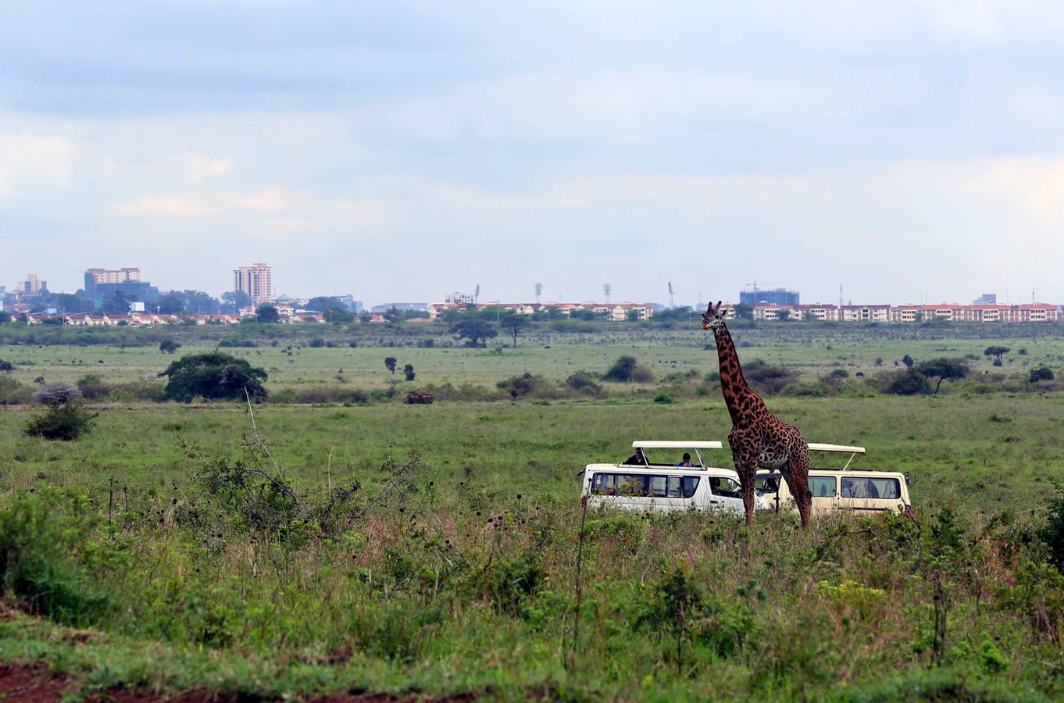 Nairobi National Park- A national wildlife park with all the big five wildlife within the city. Nairobi National Park, Kenya. Photo courtesy of Wild Race Africa.


Memories from a Kenyan childhood
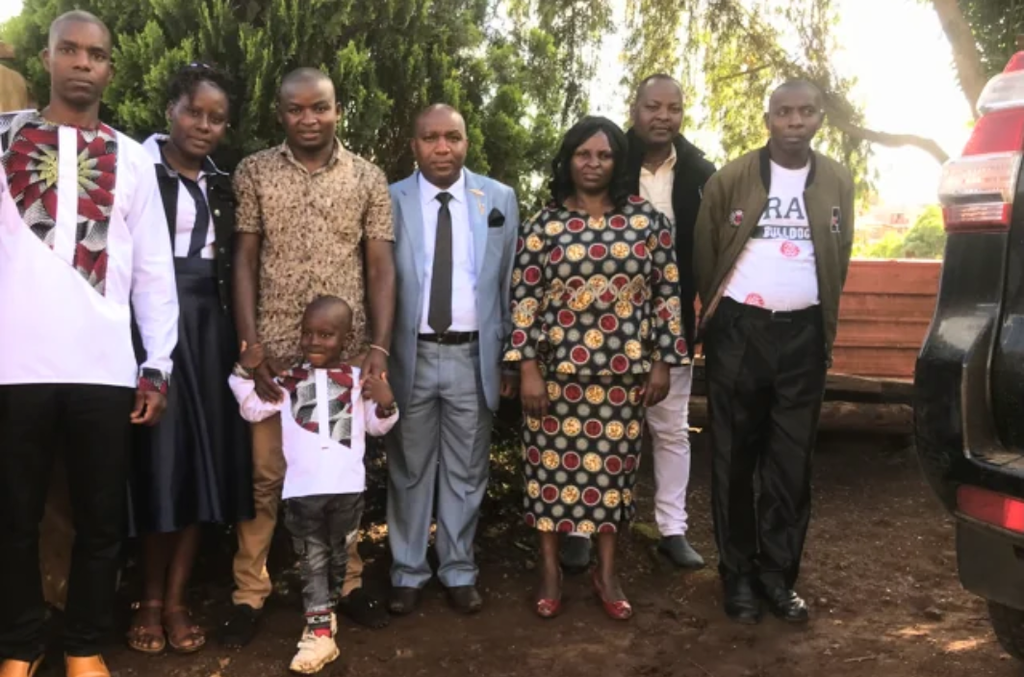
For John, holidays meant traveling to his rural home for annual family gatherings. From the time he was a child, John waited anxiously for these trips, often spending sleepless nights in anticipation of the gatherings. He reminisces about the time spent with his grandmother, aunts, uncles and cousins. During these trips, John recalls the conversations, laughter and time spent together that made these occasions special, creating long-term memories of family, connection and belonging he still treasures to this day. According to John, “These experiences remain an important part of how I remember my childhood and my roots in Kenya.” John’s childhood was also shaped by activities like soccer and badminton, sports that would remain part of his life in Milwaukee.
Food carries its own memories of home. Among John’s favorite Kenyan meals are ugali served with sukuma, a dish that features a thick dough made from cornmeal and boiling water alongside chopped collard greens sautéed with onions, tomatoes, fresh aromatics and warm spices. A second favorite is nyama choma, an iconic East African dish of slow-roasted or grilled meat — its name directly translated from Swahili is “grilled meat.” For John, these traditional dishes remind him of and connect him to his roots. The simplicity and rich flavors of these dishes hold a special place in Kenyan food culture and remind John of home. For him, they are more enjoyable when shared with family and friends. Although he has enjoyed trying different foods in the United States, he has yet to choose one American favorite.
“I still find myself drawn to Kenyan dishes, especially ugali and nyama choma, which remind me of home, family and the food culture I grew up with,” John says. “I guess some tastes are simply hard to replace.”
From healthcare to the chemistry classroom
John began school in Nairobi, where he studied through sixth grade, before moving to boarding school in Kitui for the remainder of his primary education and high school. The transition introduced him to different learning environments and helped him develop independence and discipline in his formative years.
That discipline carried him to Egerton University in Nakuru, Kenya, where he earned a Bachelor of Science degree in biochemistry and molecular biology, graduating with first-class honors. John entered the healthcare industry, working for Pfizer in Kenya and across East Africa. His career progressed from a medical representative to a strategic accounts manager.
Those roles gave John experience working with diverse stakeholders and building relationships, a part of his professional life he says he still values and misses. The connections he maintained from his university years also helped introduce him to the next stage of his education. One of his peers from Egerton, whom he studied alongside in the same course and year, at the time worked with the Versiti Blood Research Institute and told John about Marquette University — sparking the move that brought him to Wisconsin.
“It was wonderful to discover a university in Milwaukee through someone I already knew from my academic journey back home,” John says.
Helping students find confidence in science
At Marquette, John’s research focuses on developing and studying laboratory interventions that help students build scientific practices: the skills scientists use to investigate questions, analyze information and communicate evidence. He develops and studies laboratory interventions designed to make those practices part of students’ learning. His interest extends to how students feel about science and whether they can see a future for themselves in it. By designing laboratory experiences that spark curiosity and build confidence, he aims to reduce drop-off in STEM courses and keep more students on the path toward science careers.
Teaching at Marquette has strengthened that commitment. “My experience at Marquette University has contributed tremendously to my academic, professional and personal growth,” John says, crediting his mentor, Dr. Jacinta Mutambuki, assistant professor of chemistry, with providing encouragement and guidance as he develops as a researcher and educator.
Among the accomplishments he is most proud of, John has published two articles in American Chemical Society journals within his first three semesters at Marquette. He has also attended American Chemical Society meetings and educational conferences, learning from other researchers and educators while engaging with new approaches to science education.
Support from the Graduate Travel Award, the Career Center Professional Development Fund and the Department of Chemistry has helped him advance his research, pursue professional development and participate in the broader scientific community. For John, every conference, mentorship moment and research milestone feeds directly back into his classroom — equipping him to help the next generation of students see themselves as scientists.
I hope to use the knowledge and experience I have gained to make chemistry more engaging and accessible to students and to contribute positively to science education.
Building a community in Milwaukee
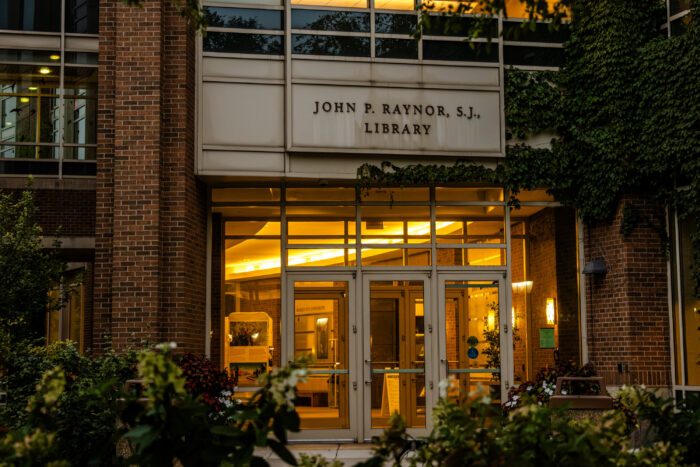
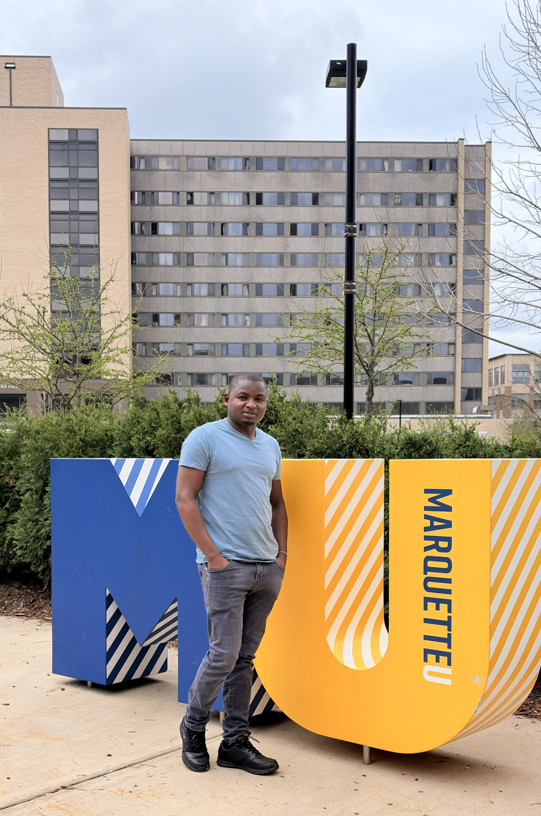
Much of John’s academic life takes place in the Chemistry Building and Raynor Library, his favorite places to study and work on research. Beyond those spaces, he has found community through his research lab, his church, Kenyans in Milwaukee and the international student community — connections that have helped him build friendships, stay active and feel at home during his Ph.D. studies.
Some familiar pastimes have traveled with him as well. He plays soccer with a team at Norris Park and joins badminton sessions at the Rec Plex, continuing sports he first picked up during his school years in Kenya.
The family gatherings in Kitui and friendships formed in Nairobi remain part of the foundation he carries into Milwaukee. Here, new relationships with faculty, graduate students and colleagues continue to shape him as an educator focused on the students who will follow.
“Each stage has shaped my professional interests and aspirations,” John says of his journey from the pharmaceutical industry in East Africa to chemistry education at Marquette.
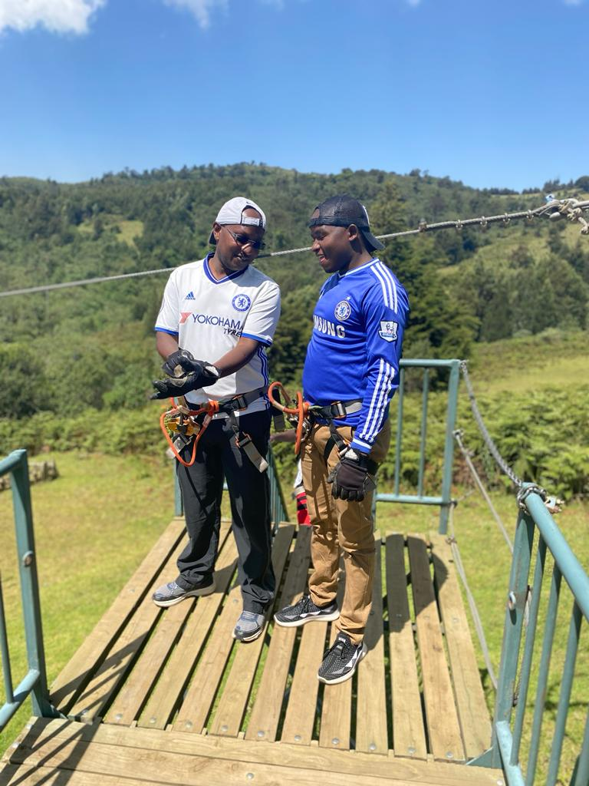 John ziplining at Kereita slopes, Limuru Kenya

Want to read similar stories or have a success story to share? Visit Stories of Graduate Student Success to learn more.