Applying to a postgraduate health program is an arduous process. Undergraduates have to juggle impressive grades, appropriate extracurricular activities, rounds of interviews, letters of recommendation, clinical experience and more just at the opportunity to pursue the career they want.
It can be an intimidating process for students in any major. But at Marquette, a state-of-the-art program is helping those students take the next steps in their education and future careers.
The Pre-health Advising Center was created to catch students who may be falling through the cracks on their way to a postgraduate health career. To do so, the center coaches students on how to assemble the best application for a health professions program. This includes academics, extracurricular activities, interviewing skills and cultivating strong letters of recommendation, to name a few.
The result is more confident applicants ready to make their mark in their field.
Setting the standard
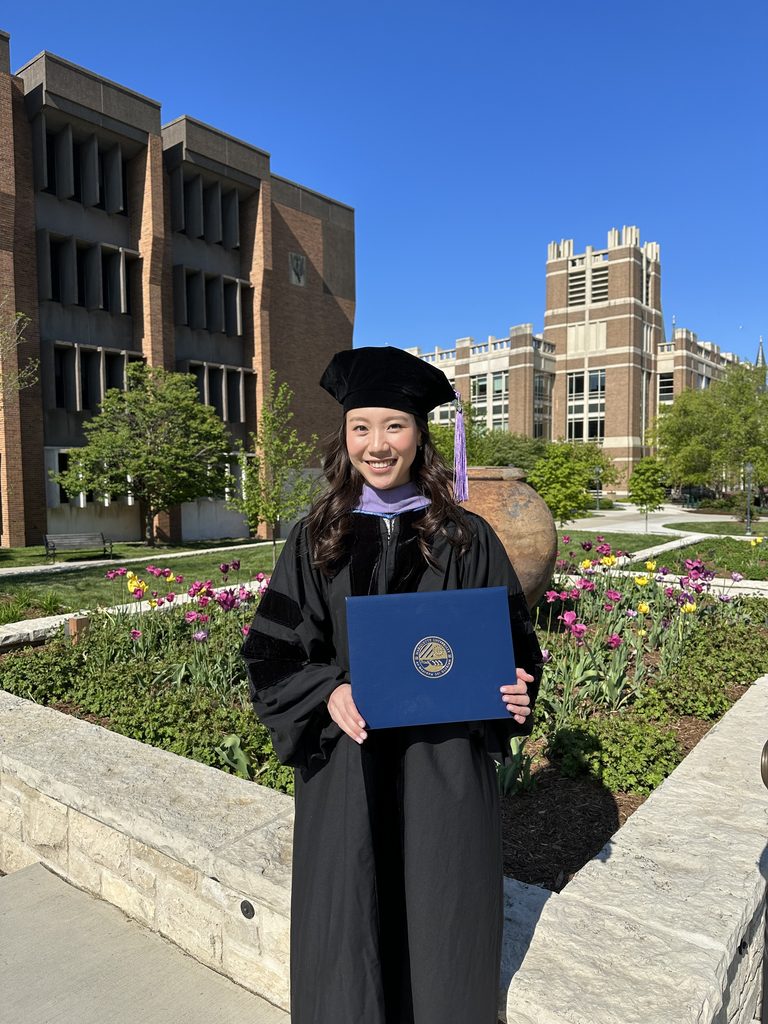
Nadiya Choi, D.D.S., H Sci ’19, Dent ’23, was a freshman when she walked on campus with dreams of pursuing a career in dentistry. But Choi didn’t have any family or friends in the field she could reliably ask for help about which classes to take or the eventual application process. So, one of the first people she reached out to as she began her freshman year was Laurie Goll, a pre-health professions adviser in the Pre-health Advising Center.
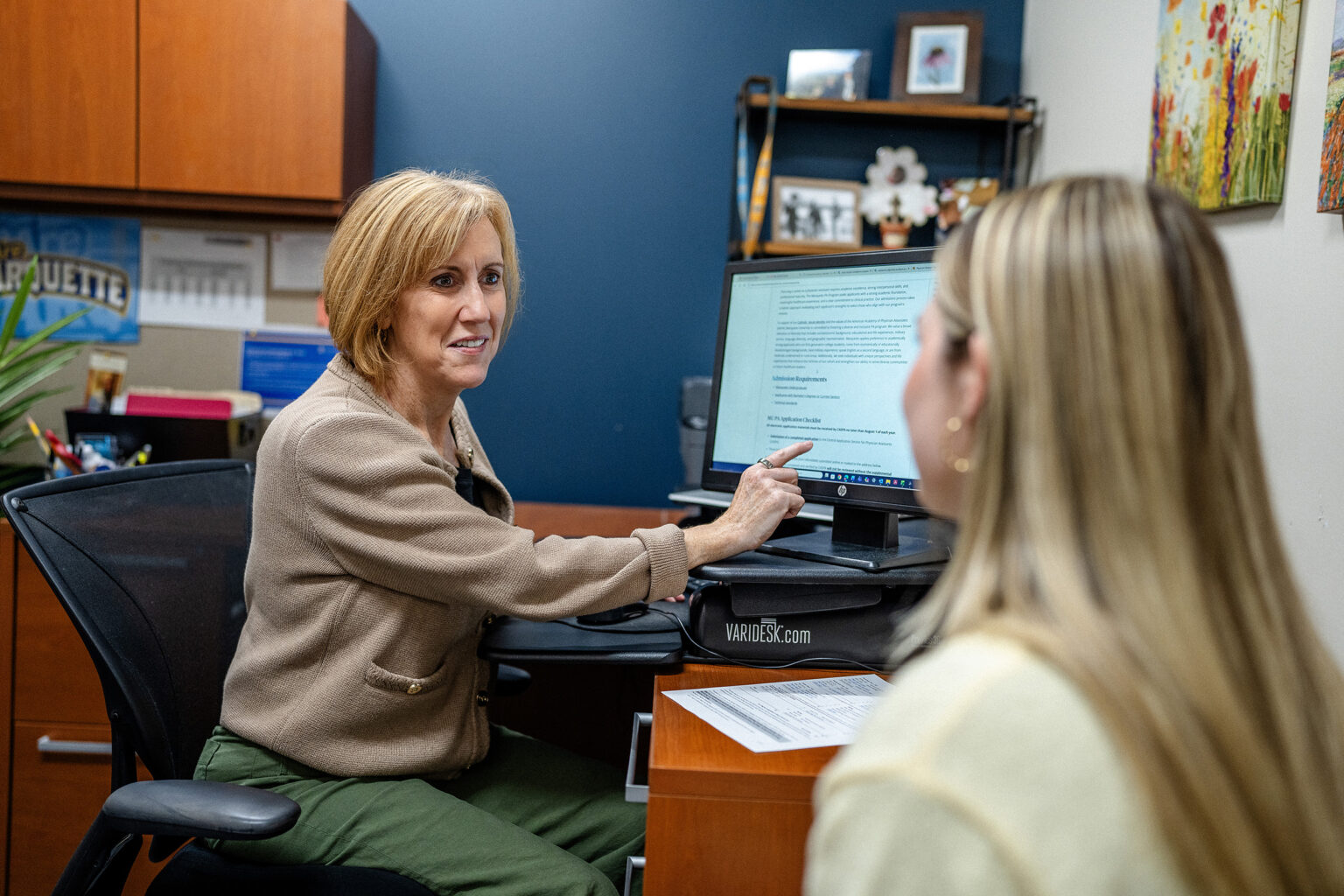
The difference in pre-health advising at Marquette compared to other universities is how the center approaches advising from all angles. The center itself is officially staffed by Goll and Julia Farley — Goll’s counterpart in the Klingler College of Arts and Sciences — but the tandem does tons of work educating faculty advisers across campus on the center’s purpose and role in a student’s career path.
Faculty members have enjoyed Goll’s instruction so much that they decided to offer a one-credit “application prep” seminar that walks students through the entire postgraduate application process from start to finish.
“We go through writing personal statements, picking the right school for them, how to apply and how to interview,” Goll explains. “It’s an informative experience for students that faculty and staff members came together to accomplish.”
To apply to any health professional program, students need more than great grades to enter: they need service experiences, a strong personal statement, letters of recommendation, shadowing hours, clinical experience and more as they try to bolster their applications.
The sheer volume of necessities to apply can be overwhelming for even the best of students.
“At Marquette, we focus on caring for the whole person,” Goll says. “We want them to get into professional programs like medical and dental school, but we don’t want them to lose their mind while they’re doing it.”
Choi appreciated that sentiment as a freshman, recalling that it’s difficult to have the foresight to look four years down the road when starting out as a new college student and wanting to stay organized with everything that needs to be done before applying.
“I definitely benefited from going to the Pre-health Advising Center as early as I did,” Choi says. “I think it’s an asset for any student to get in there as soon as they’re expressing an interest in a career in healthcare to establish a foundation, explore options and have more flexibility with your goals.”
Goll emphasizes the entire college’s effort is what makes this advising strategy succeed. Goll has her own role, but so many other members of the college chip in.
“In the College of Health Sciences, advising is interwoven with academics because we all help with pre-health advising,” Goll explains. “It’s at the core of what everyone does.”
Further, Goll’s work with students’ letters of recommendation is a pride point for both the center and the college.
Marquette’s approach is a hybrid model in which Goll coaches the students through who should write their letters of recommendation and how to properly ask faculty members or clinicians they’ve worked for if they would write one. And while all of this is happening, Goll is maintaining contact with the professional programs to stay on top of their expectations so that she knows precisely what they’re looking for in a student.
The letters, their transcript, their personal statement, a survey from the faculty member about the student, and Goll’s own summary of the student are compiled and sent to the professional programs.
“That’s how I spend most of my summer each year,” Goll laughs.
The feedback on the letters packet from professional programs has been great, Goll says, adding that whenever she goes to conferences, she is constantly talking to the programs to seek feedback on what has already been built.
“There’s been multiple iterations of how we’ve distributed letters over the years, but for the most part, we’ve landed where we are now based on recommendations we’ve received from the professional programs,” Goll says. “It’s a really unique service that works very well for students.”
Running, finishing the marathon
Biomedical sciences sophomore Omar Barrios was looking for that exact network of help when he was applying to colleges.
A first-generation college student, Barrios says he was unfamiliar with the undergraduate planning process and appreciates the center’s guidance. He explains what has helped him the most was the four-year plan Goll helped him develop.
“I’ve felt significantly more prepared and confident about my undergraduate education and future career goals,” Barrios says. “She took the information I already had and helped me organize it into a clear, realistic plan that I could follow throughout my undergraduate years.”
Choi echoes Barrios’ feelings on the impact the customized four-year plan had on her undergraduate experience.
“I didn’t notice the incremental progress at first, but it slowly built up my confidence when I reached the small goals over the semesters,” Choi says. “It made the ultimate goal of finishing the marathon and getting accepted into dental school much more tangible.”
Choi and Barrios’ made progress through their undergraduate careers by passing classes and checking off courses on their transcript, but Goll emphasizes the work she and students do in between the creation of the plan and graduation is arguably more important.
“We have a lot of very important conversations along the way as the students continue to check in,” she explains. “We’re determining if medical school, dental school or whichever path is the right fit. I’m guiding them as to what kinds of clinical experiences or meaningful extracurricular involvement they need to be successful.”
Barrios especially appreciated the center’s willingness to dive into less popular career paths he was exploring such as cardiovascular perfusion, a specialized profession.
“It’s not a health profession a lot of students are interested in — and she doesn’t advise for it often, she told me — but she took the time to research it with me and help determine which courses would best prepare me for that path,” Barrios says. “Whether it’s asking about course recommendations, discussing my career interests, or simply making sure I’m on the right track, the center has always been a welcoming and supportive resource.”
And even though both Barrios and Choi visited the center during their freshman year, Choi wanted to remind current and future students that the center is open and useful to any student, no matter where they are in their academic career.
“It’s not a requirement to know exactly what you are doing or how to get there. That’s exactly what the pre-health advising center can help with,” Choi says.
Choi expresses her gratitude to all the faculty and staff members for being available to her throughout her undergraduate experience.
“Marquette’s Pre-health Advising Center really should be the model for other universities,” Choi says. “Reflecting back on my journey, getting into dental school and now in my pediatric dentistry residency, it all started with the Pre-health Advising Center.”