If nothing else, children are sponges.
They mimic their parents’ mannerisms, facial expressions and most obviously their vocabulary — both good and bad. Their brains work overtime intaking and attempting to retain the constant information stimuli.
For some kids, the neural pathway from their brain to the tip of their tongue is clear. They pickup on words from others and slowly but surely start stringing them together — even if the annunciation takes some time.
But for others, particularly children on the autism spectrum, their pathway isn’t linear. There is significant variability in the language outcomes of children on the spectrum, with some developing language skills in line with their neurotypical peers, while others do not develop any spoken language. The precise mechanisms that underlie this vast heterogeneity remain an open question in the field of autism research.
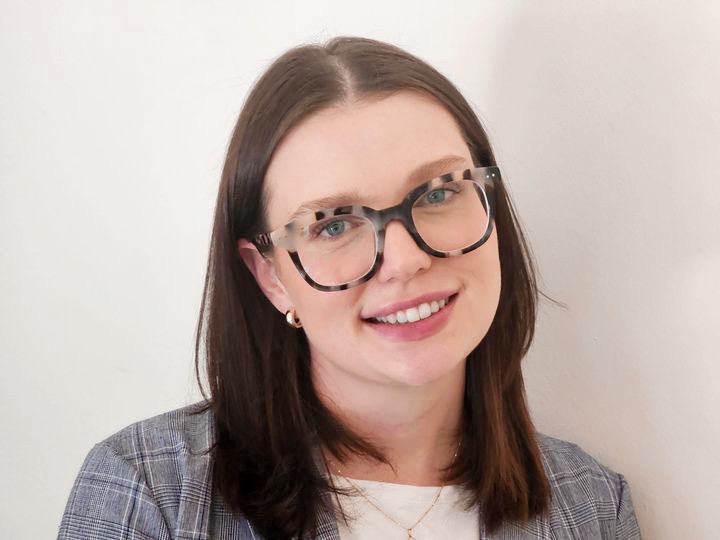
Janine Mathée-Scott, assistant professor of speech pathology and audiology, is researching this question to better understand which children are likely to need language intervention, and how caregivers and clinicians can best support their language development.
To understand how caregivers can best support language development in their children, we need to meet them where they are at and take a look at where they are searching for information.
Janine Mathée-Scott, assistant professor of speech pathology and audiology
Her research specifically aims to identify the innate and environmental factors contributing to language difficulties in children, including those on the spectrum.
“The goal of my research is to better understand why some children have difficulty learning language and how we can best support them in reaching their full communicative potential,” Mathée-Scott says. “This looks like understanding the child-level processes that contribute to their ability to learn new words, for example, but it also looks like better understanding how we can support their caregivers in fostering their language development.”
Mathée-Scott has family members and loved ones who are on the spectrum and always wondered about the underlying differences in language abilities that she observed. When she started studying speech language pathology, she realized the question was more complex than she imagined, a realization that also stuck with her during her time as a clinician.
“There are so many factors that influence language ability in all children, but those factors are especially diverse in children on the autism spectrum,” Mathée-Scott says. “Clinicians often use the phrase, ‘If you’ve met one autistic child, you’ve met one autistic child.’ The population is so incredibly diverse, and learning how to best support language development in autistic children is something we are still figuring out as a field.”
Mathée-Scott is a co-investigator on a new R21 grant from the National Institutes of Health that investigates information and practice needs for speech language pathologists (SLPs) and parents of children on the autism spectrum as it pertains to social media as an information source.
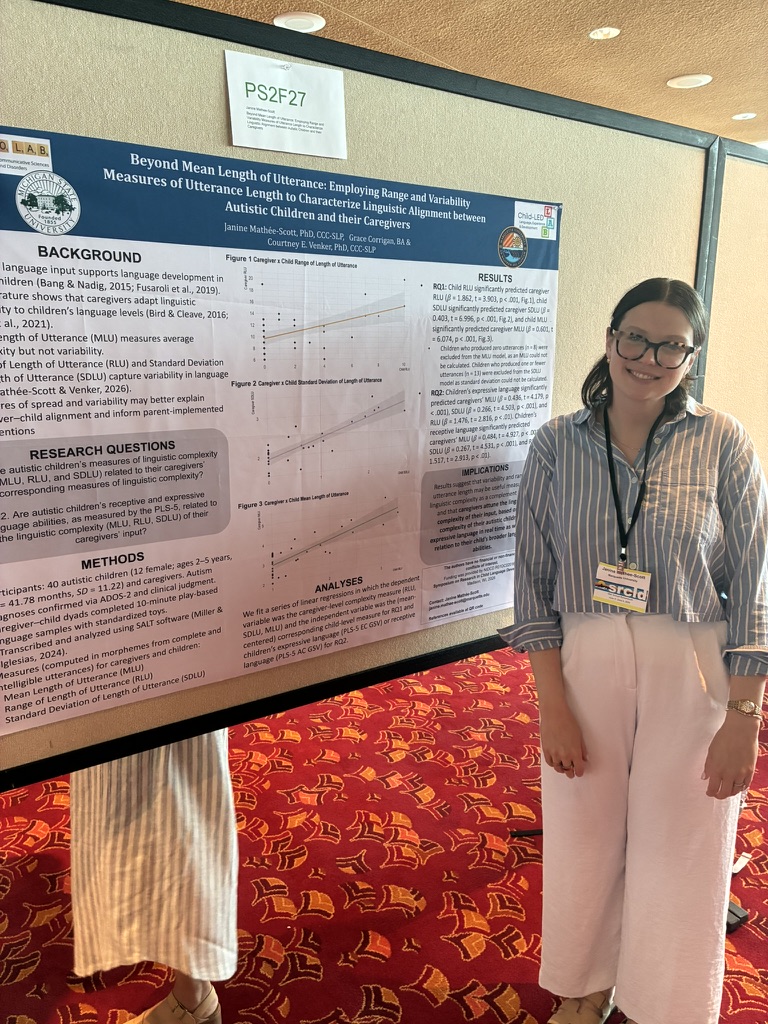
She and her research collaborators at Michigan State noticed an uptick in misinformation and popular — though unproven — methods for supporting language development.
“These topics particularly target parents of children who are vulnerable to language learning challenges, such as children on the autism spectrum, and circulate widely on social media,” Mathée-Scott says. “To understand how caregivers can best support language development in their children, we need to meet them where they are at and take a look at where they are searching for information.”
Parents have been coming to speech language pathologists more often with treatment options they saw on social media, she says.
“This can certainly be a good thing, but SLPs need to be equipped with counselling skills to help parents and caregivers evaluate the quality of information they are getting on social media,” she says. “That is one of the goals of this project — to learn the current state of the field with respect to the social media landscape to create curricula or continuing education materials for SLPs and SLP graduate students to better prepare them to navigate this new aspect of their careers.”
For more information on Janine Mathée-Scott and research, click here.