As the world tackles the growing implications of artificial intelligence, Marquette University researcher Karen Wurzel is exploring its potential to address one of medicine’s most pressing challenges: detecting cognitive decline before symptoms appear.
Wurzel, a doctoral student in electrical and computer engineering, is using artificial intelligence to analyze sleep study data and identify subtle patterns associated with future cognitive impairment, including conditions such as dementia and Alzheimer’s disease. By examining data collected during a single night of sleep, her research aims to predict cognitive decline one to six years before a diagnosis, potentially opening new possibilities for earlier detection.
“We are reading a night of sleep the way a forecaster reads the sky. We’re looking for early signs of a storm that is still years away.”
Karen Wurzel
The George B. Moody PhysioNet Challenge is an annual international research competition co-organized by PhysioNet and Computing in Cardiology (CinC). Established in 2000, the competition brings together researchers from different disciplines to develop computational solutions to important, unresolved medical challenges. Over the years, the challenge has become an established forum for evaluating emerging computational methods and sharing advances in biomedical research.
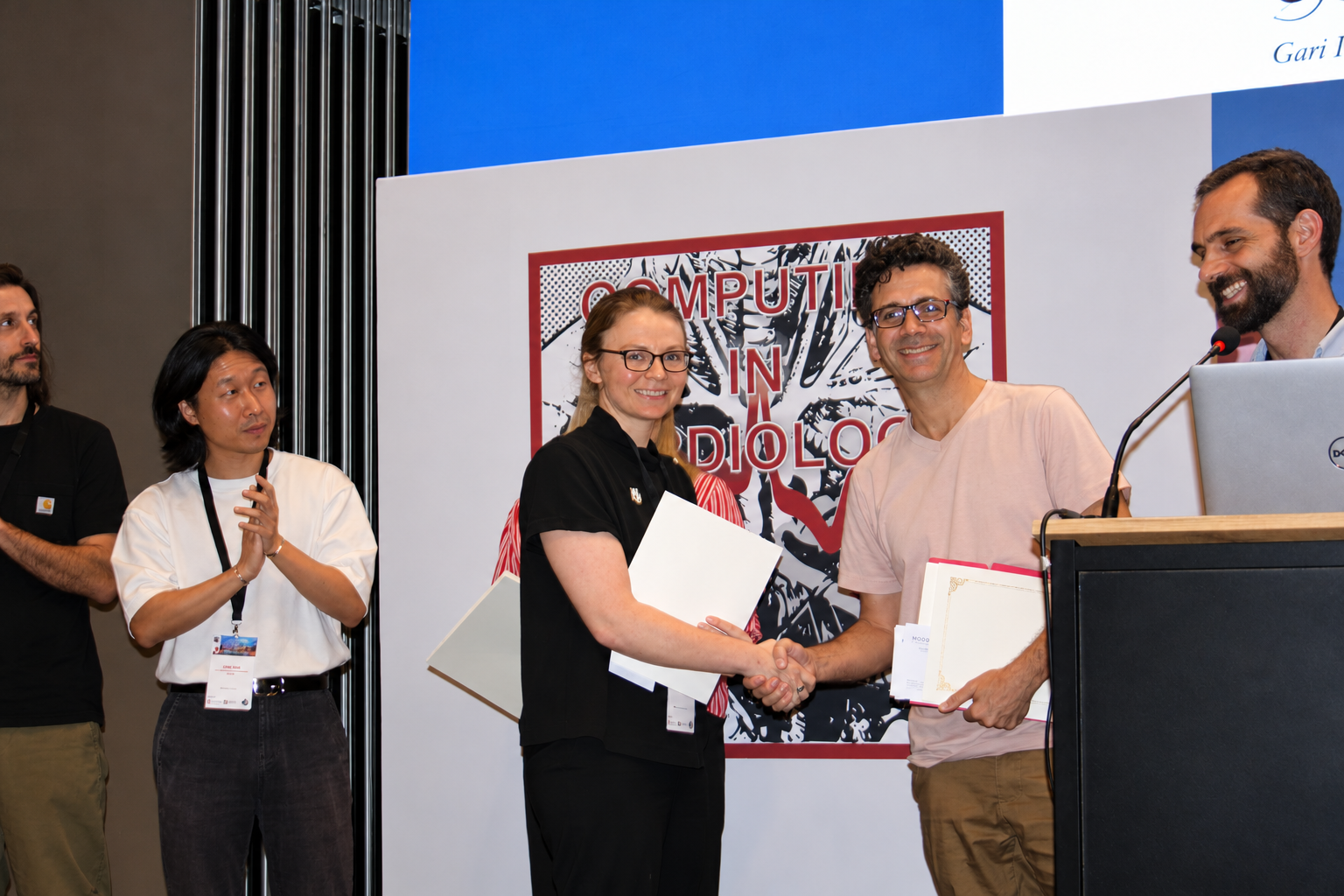
This year, Wurzel returned to Milwaukee with a new recognition: the Best PhysioNet Challenge Oral Presentation award, presented at the 53rd Computing in Cardiology Conference. This year’s competition focused on using data collected during sleep studies to predict future diagnoses of cognitive impairment, providing a platform for researchers to explore the potential of artificial intelligence in advancing medical research.
But beyond trophies and accolades, Wurzel has her sights set in the practical applications of future research. She hopes to find ways to protect brain health, not just predict its decline.
Supporting Wurzel in those ambitions is her research adviser, Dr. Richard Povinelli, who describes Karen as an “outstanding scientist” who brings both insight and rigor to her research. Beyond her scientific abilities, he adds that she brings “enthusiasm, curiosity, and a zest for discovery that enriches our entire research group.”
For Karen, receiving guidance from Dr. Povinelli has been paramount. In her words, “Richard is a fantastic advisor and mentor. He encourages me to choose projects that I am passionate about and is a fantastic sounding board when my research gets stuck.” She believes that having a good mentor is just as important as pursuing an interesting research topic.
During her time at Marquette, Karen’s academic and professional development has shone through her accomplishments. From distinguishing herself as a top student in Dr. Povinelli’s Introduction to Artificial Intelligence course in fall 2024 to conducting research in his lab as a first-year Ph.D. student, Wurzel has continued to develop her skills as a researcher.
Participating in rigorous academic challenges such as the George B. Moody PhysioNet Challenge has helped Karen build confidence as both a researcher and a communicator. In her words, “Presenting technical work clearly is a skill I’ve worked hard to develop. This award showed me that my effort is paying off.”
Beyond the recognition, the experience has increased the visibility of her research and opened doors to new professional connections. Conversations with fellow researchers and presenters at the Computing in Cardiology Conference have helped shape her thinking about future research projects and their potential applications.
Outside the lab, Wurzel finds opportunities to express her creativity through knitting, painting, and gardening. Whether exploring hobbies, patterns in sleep data or sharing her findings with fellow researchers, Wurzel brings a curiosity and enthusiasm that extend beyond the lab. For students hoping to follow a similar path, she offers one strong piece of advice: “When presenting, your mood is catching. If you are excited, your audience is more likely to be interested.”
Want to read similar stories or have a success story to share? Visit Stories of Graduate Student Success to learn more.