Guadalupe Arroyo was on a long, arduous search to find her son, Sebastian, the right care and therapy program to help alleviate the impact of his speech and language challenges.
Sebastian was nonverbal for a long time, and many frustrating searches for programs that fit his bilingual needs led to dead ends. That was until someone recommended Guadalupe and her son to the Bilingual English-Spanish (BIES) specialization in the Speech and Hearing Clinic at Marquette.
“It has been one of the best resources we have ever found, not only for my son, but also for my daughters,” Arroyo says. “It truly changed my family’s journey.”
The BIES specialization in the Department of Speech Pathology and Audiology was founded in 2001 by current Director of Clinical Education Wendy Krueger, Grad ’92, and former faculty members Kathy Erdman and Donna Kelly.
Krueger says the trio were keenly aware of the increase in the Latino population in the United States and more specifically in Milwaukee in the 90s and consequently the increase in the need for speech-language therapy for Spanish-speaking people.
At the time, there were no graduate-level speech-language programs in the Midwest offering specific training for bilingual English-Spanish speech-language pathologists, Krueger says.
“Many SLPs lacked proficiency in Spanish and/or knowledge and sensitivity of how best to work with Spanish-speaking individuals, but had them on their caseload,” Krueger says. “This situation coupled with our strong desire to increase diversity and multicultural awareness and sensitivity within our program and our profession were the primary sparks igniting our drive to start the program.”
Even today, only 8.5% of speech pathologists and audiologists self-identify as bilingual, according to the American Speech-Language-Hearing Association.
Enter Stacy Ko, Comm ’92, who completed her graduate degree in San Diego, where she had training in bilingual speech-language pathology. She returned to Milwaukee and helped launch the program, eventually serving as its director.
“Our specialization hits home with students because it’s a cohort within a cohort,” Ko says. “It’s usually a dozen students who share a passion for language and language development who love Spanish and Latino culture.”
One of the first in Midwest, the BIES specialization sets itself apart from the 10 other programs in the region and the 75 others nationwide thanks to the quarter century of experience it has training students to enter a workforce prepared to provide speech-language services in both English and Spanish. That specialized student training includes rigorous coursework on bilingual assessment and intervention as well as extensive, guided clinical opportunities with Spanish speaking individuals.
In addition, Krueger notes, Marquette’s faculty are committed to the specialization’s success.
“The fact that Stacy has continued to be an integral part of the program since the beginning has made all the difference,” Krueger says. “She is not only the director, but the heart and soul of the program. She is always looking for ways to improve the experience of our students — not just through the courses and clinical practicum but helping them increase their confidence and sense of belonging.”
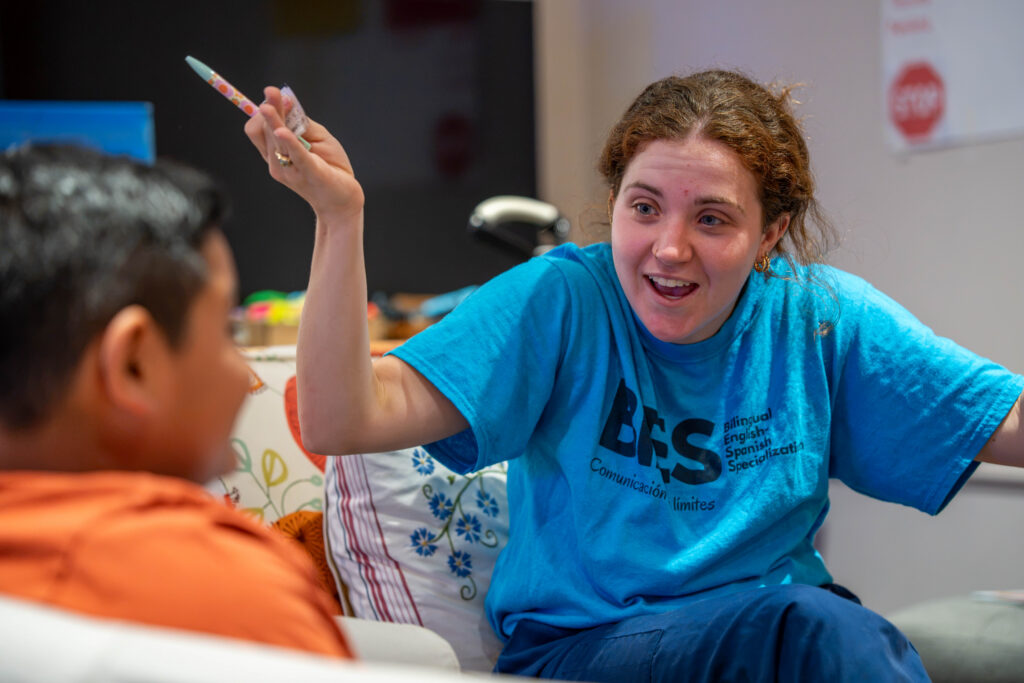
Highlighted by regular one-on-one faculty interaction, the specialization gives students the tools they need to apply their existing knowledge of speech-language therapy in Spanish — something easier said than done.
“I’ve had students whose first language was Spanish and were fluent, but recognized they had no idea how to talk to a parent about the results of an evaluation,” Ko says. “Those topics aren’t something you typically discuss around the dinner table. It’s a very different type of Spanish to use.”
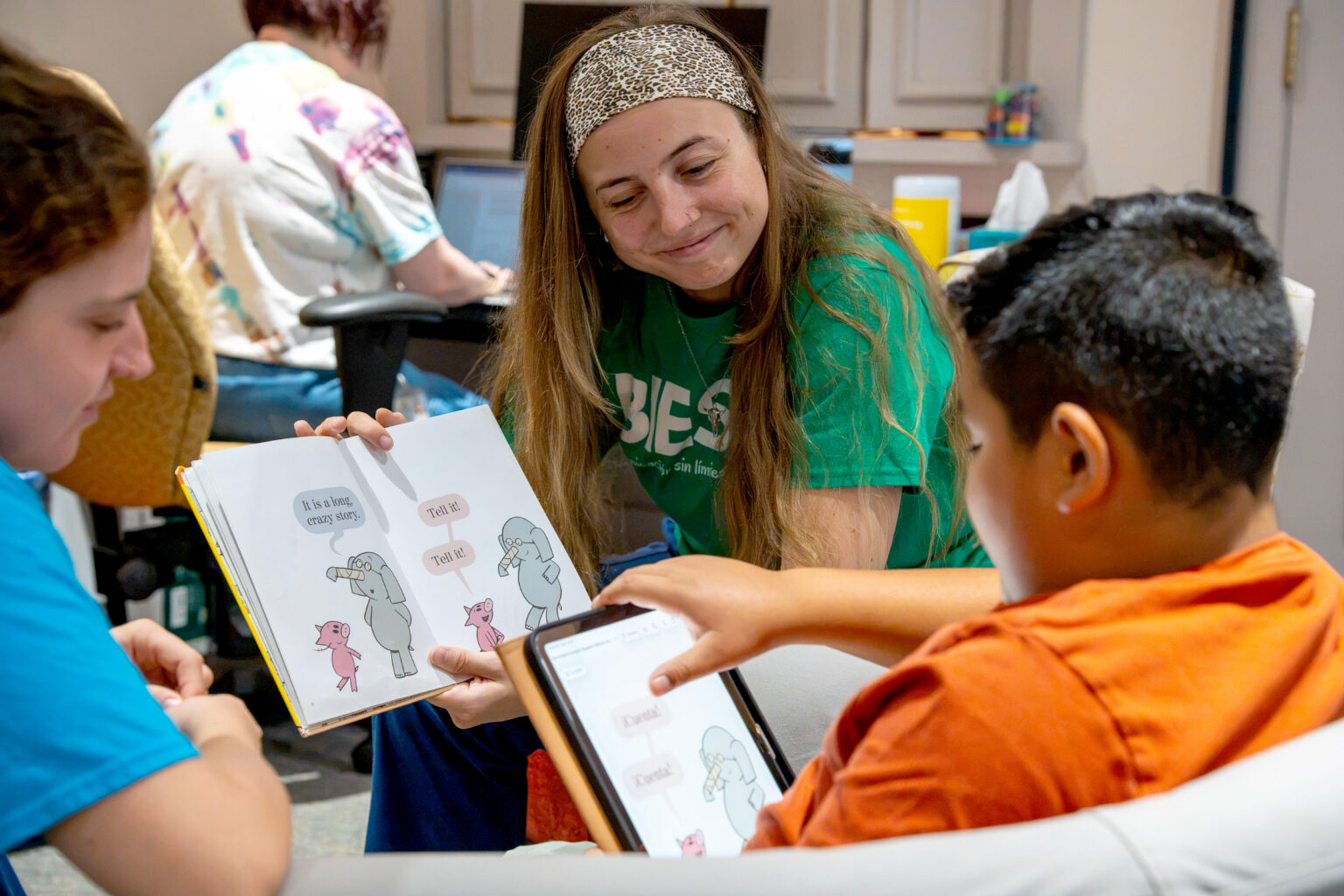
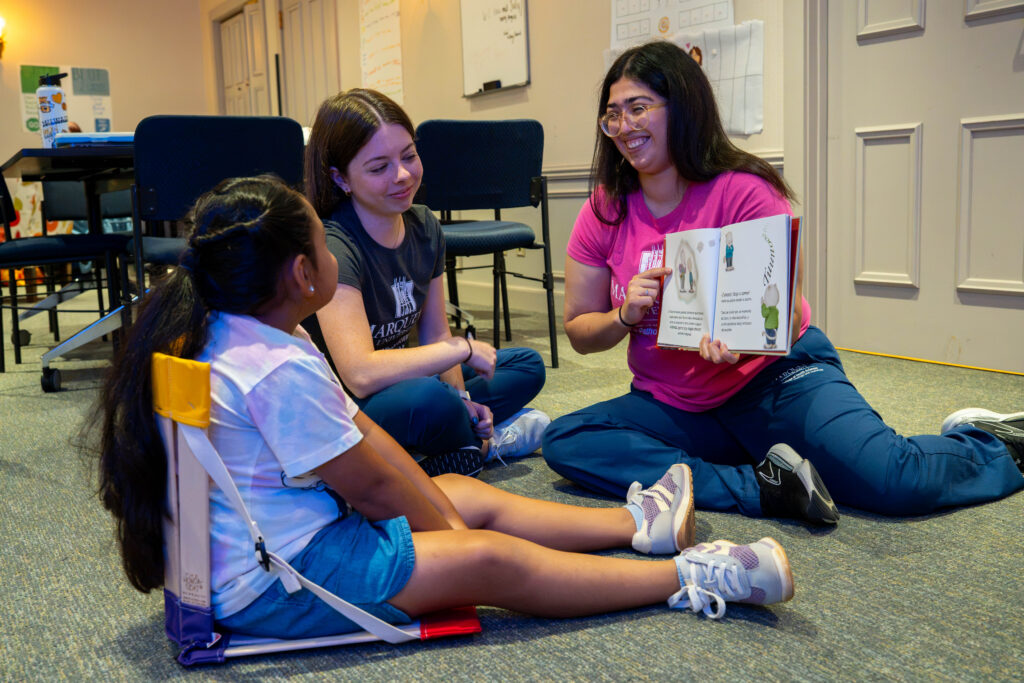
Further, in addition to guaranteed clinical placements with Spanish-speaking practitioners, students get experience utilizing their Spanish medical and educational vocabulary during their first year of graduate school administering therapy to adults and children, such as Arroyo’s.
“What really stands out to me is the passion of the students in the program,” Arroyo says. “They always make fun activities for my children and genuinely care about helping them learn and grow. You can tell they put their hearts into what they do, and that makes every visit feel special.”
Experiences like Arroyo’s aren’t by chance, either. The Speech and Hearing Clinic allows parents to be as involved as they want to be in their child’s therapy, Ko says.
“It’s so special that families come in and the students and supervisors speak Spanish,” she says. “Parents are intimately involved in the therapy and get to watch as much or as little as they like. I think they just truly appreciate a bilingual service like this available to them in them in the community.”
That sentiment rings true with Arroyo.
“Programs like BIES are incredibly important because they give families hope, guidance and resources when they need them most,” Arroyo says. “Many parents like me don’t know where to turn when their child needs extra support, and having a program like this can change a family’s life. Every time I meet a family that is struggling the way I once was, I always recommend this program because I know firsthand how much it can help.”
For more information on the Speech and Hearing Clinic and the BIES specialization, click here.