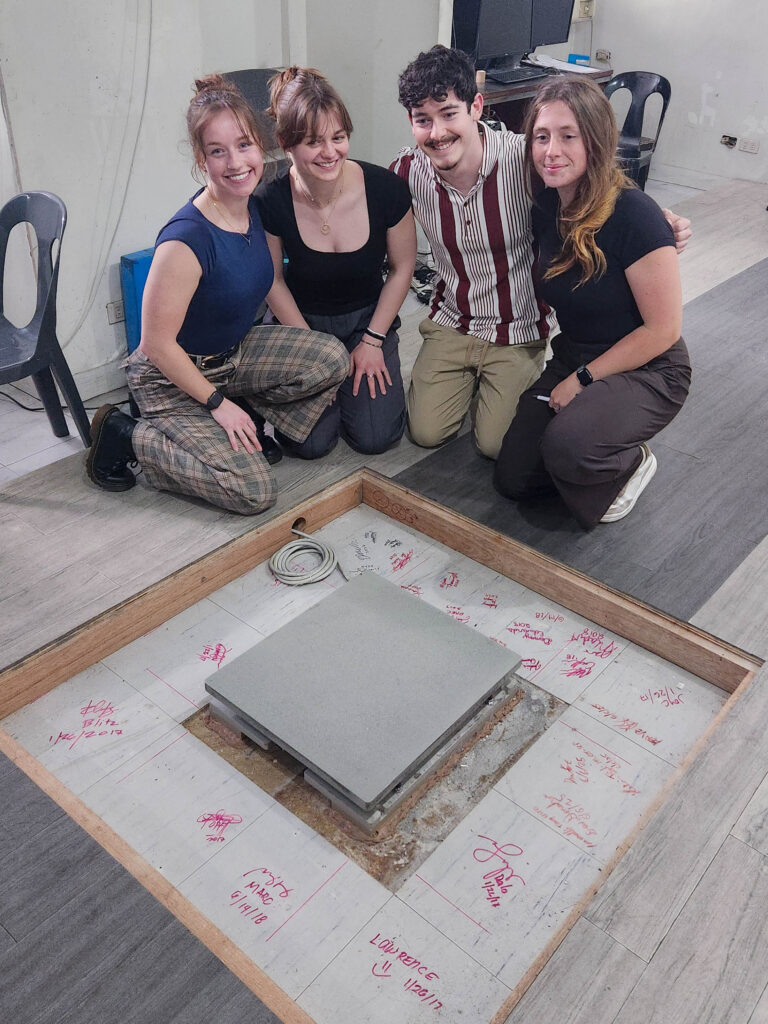
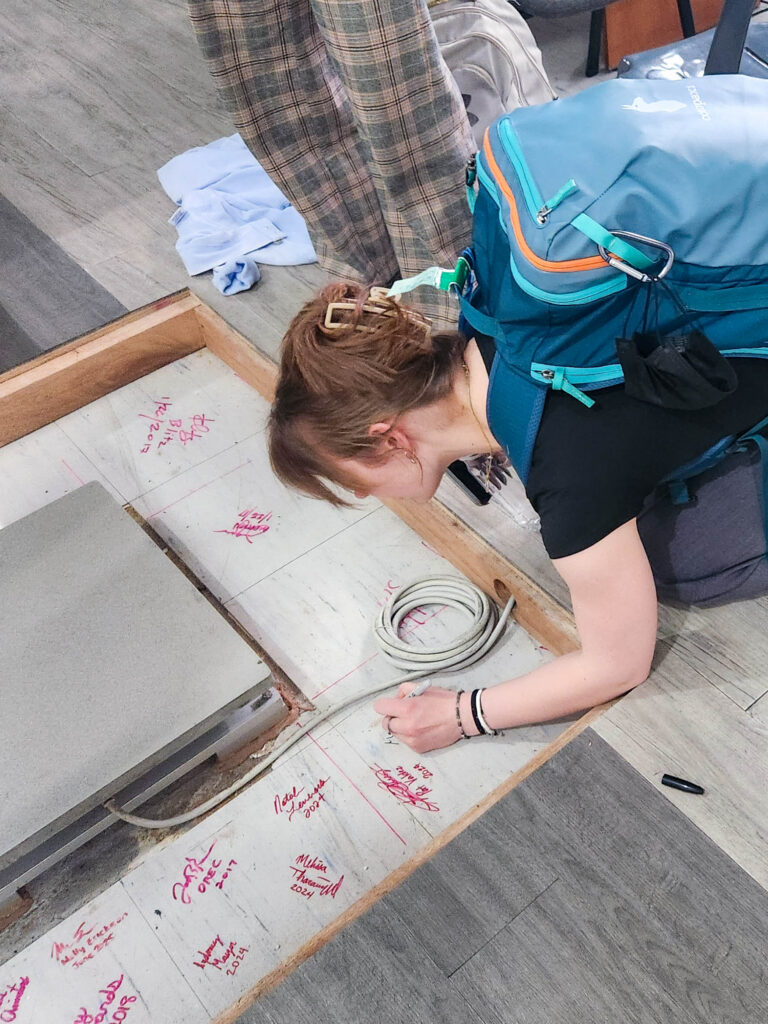
In a clinical gait lab in Manila’s Philippine General Hospital (PGH), 18 Marquette student signatures are marked permanently on the concrete slab base of a force plate used by hundreds of patients every year.
The force plate, which helps clinicians analyze patient gait and balance, is just one piece of the broader gait lab implemented in 2014 in partnership between PGH and the Orthopaedic and Rehabilitation Engineering Center (OREC) at Marquette University and the Medical College of Wisconsin.
The student signatures find their place in the lab through an ongoing partnership between PGH and Marquette to welcome student cohorts each summer to immerse themselves in a real clinical environment, working alongside physicians and observing biomedical technology in action around the world.
The partnership has been stewarded by Dr. Gerald Harris, professor emeritus of Biomedical Engineering and OREC co-director at Marquette University and the Medical College of Wisconsin. Guided by Harris’ commitment to collaboration and service, OREC has worked alongside clinical partners to establish gait laboratories at hospitals in five countries.

These partnerships have expanded access to clinical expertise and motion analysis technology, helping improve the care of patients worldwide.
For Harris, one of the greatest rewards has been seeing current students visit these international labs, where they learn firsthand the value of serving others through engineering, medicine and global collaboration.
“We establish these labs as part of our mission to expand high-quality care to as many patients as we can, and it has created a great network of experts to share knowledge and advance the field collaboratively,” Harris says. “Connecting the labs to our educational mission at Marquette has been an extraordinary extra layer, all made possible through generous partners who welcome students and expose them to truly transformational learning experiences.”
Clinical immersions in Manila for Marquette students
The opportunity to travel to Manila with Marquette is made available when students enroll in the university’s Global Mobility Outreach course, an elective course that focuses on concepts of human motion analysis and describes how technology can be applied to improve rehabilitative and orthopaedic care for children and young adults with disabilities. As they progress through the course, students can elect to join for a week-long trip to Manila to see the course topics in action.
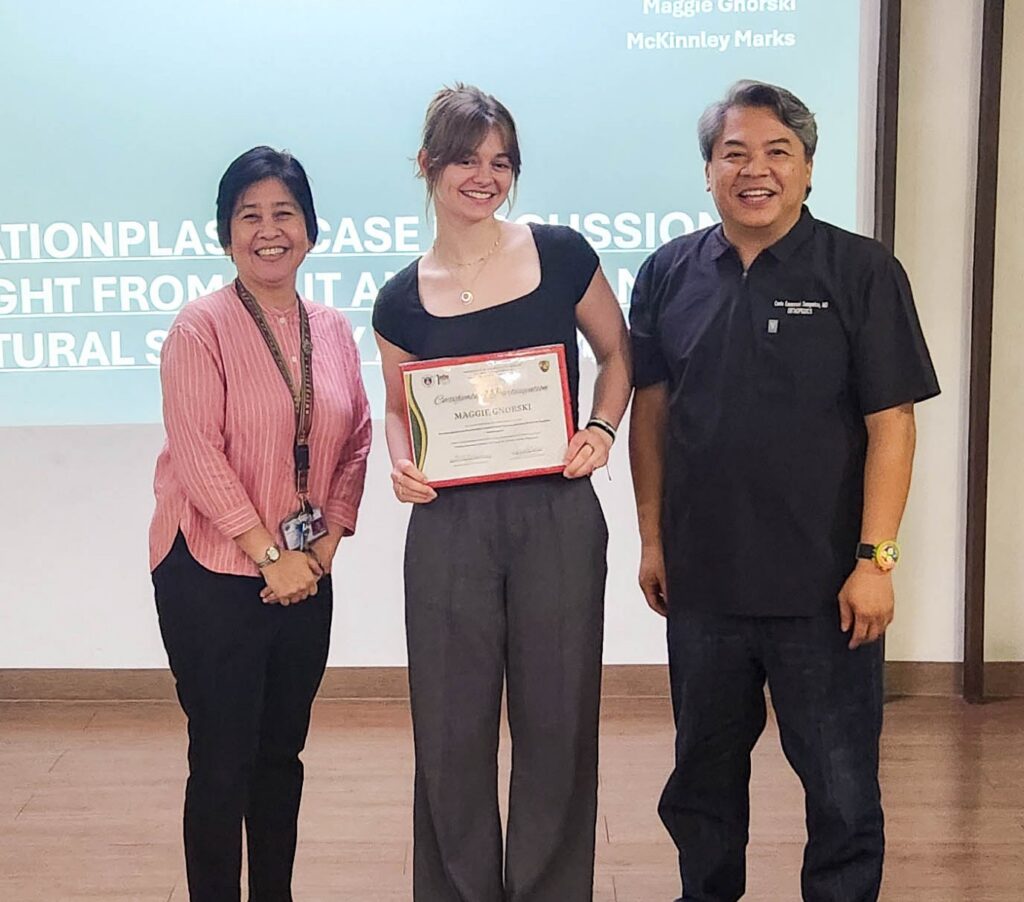
For Maggie Gnorski, Eng ’26, the trip was an immediate yes. As a biomedical engineering major, she was drawn to the opportunity to gain more clinical exposure while also expanding her worldview to observe international technology and culture. Now graduated and working as a product engineer at VistaApex Solutions, a dental clinic products company in Wisconsin, the trip serves as a significant capstone to her Marquette education.
“One of the most important things we are taught during our Marquette education is to care for the whole person, or ‘cura personalis,’ and this trip was an incredibly impactful example of that,” Gnorski says. “The clinicians in the Philippines and the Marquette staff who operate these global labs demonstrate some of the many ways we can use our strengths to serve others with compassion and support.”
The 2026 trip was facilitated by Molly Erickson, Eng ’18, research engineer in OREC and instructor for the Global Mobility Outreach course. Erickson’s own name is signed on the PGH gait lab’s force plate from a previous trip.
“These trips represent a lot about Marquette’s commitment to global service. We build meaningful relationships with our clinical partners and hosts, and the students are learning in action the whole time,” Erickson says. While in Manila, Marquette students participated in a variety of clinical and research activities across several pediatric rehabilitation conditions and connected with a range of clinicians to serve as mentors and role models. Each day, the students found themselves in different labs and clinics across PGH, taking in the scale of a hospital system that serves over half a million patients each year and operates as the national referral center for the Philippines.
For Gnorski, the clinical exposure offered learnings that she hopes to carry with her into her career.
“Experiencing what it was like to be on the clinical user end of medical devices showed me how important it is to design with the end users in mind,” she says. “As engineers, it is our responsibility to think beyond the technology itself and truly consider how we can help physicians and patients receive the best care.”
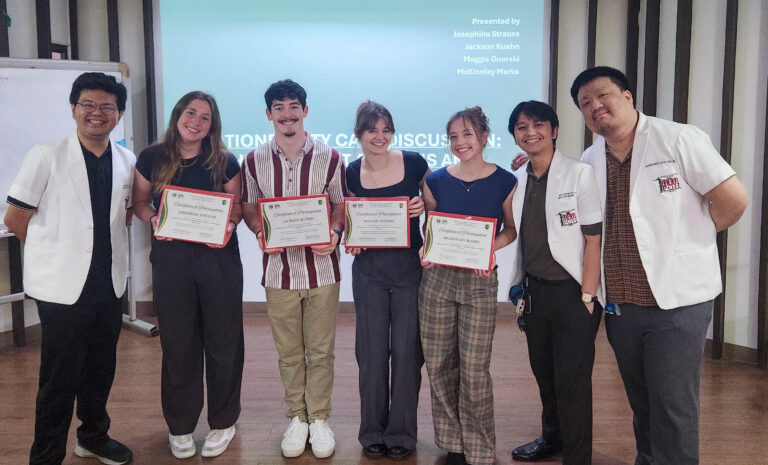
To cap off their visit, Gnorski and her peers presented a case study analysis related to rotationplasty assessments and procedures that they observed during their visits. Erickson explains that the presentation was one of the more in-depth capstones that she has seen students conduct on the annual trip.
“It was a testament to how seriously the students took their visit, and a nice credit to our hosts for offering such an immersive, valuable experience,” Erickson says.
And before they departed, Gnorski and her peers signed their names on the force plate to commemorate their participation in lasting international partnership.