As part of its Faculty Focus, Staff Spotlight and After Hours series, Marquette Today is sharing weekly features during Pride Month highlighting faculty and staff whose work supports and connects with members of the LGBTQ+ community. Recognizing the rich history and traditions of Marquette as a Catholic, Jesuit institution, these stories reflect a commitment to acknowledging and cherishing the dignity of each individual. “We would like before all else to reaffirm that every person, regardless of sexual orientation, ought to be respected in his or her dignity and treated with consideration, while ‘every sign of unjust discrimination’ is to be carefully avoided, particularly any form of aggression and violence.” — Pope Francis
Developed in collaboration with the LGBTQ+ Employee Resource Group — open to all members of the Marquette community — the series highlights how faculty and staff put this commitment into practice through their work, fostering spaces for dialogue, support and growth across the university community.
Lauren Instenes has observed the transformative impact of students seeing their identities and experiences reflected in their curricula.
Walking through Milwaukee’s Cathedral Square, Instenes, program manager for the MKE Roots Project, guided local high school students through the site’s history. It served as the endpoint for Milwaukee’s first gay pride march, honoring the anniversary of the Stonewall uprising in New York City. Milwaukee’s oldest gay bar, This Is It, was nestled on the square’s westside until its closure in 2025. Rainbows still line the crosswalks.
“We had a couple of queer-identifying students in that class that were just so excited about that,” Instenes says. “They were talking about Trixie Mattel, who used to own This Is It, who they know from ‘RuPaul’s Drag Race.’ They were taking so much pride in it. They know Giannis, and Trixie Mattel — those were the Milwaukee-related people they were so excited about.”
Moments like these are not uncommon with MKE Roots. The project, founded through the work of Drs. Melissa Gibson and Robert Smith at Marquette in 2023, is a place-based education initiative that engages local students with Milwaukee’s history through guided tours and curriculum. Housed in Marquette’s Center for Urban Research, Teaching and Outreach, its work emphasizes stories of Milwaukee’s communities, helping students recognize their own identities and experiences within the city’s past and present.
That impact is especially significant in Milwaukee Public Schools, where a majority identify as students of color and often see their own histories underrepresented in traditional schooling.
“They weren’t being taught curriculum about their community in Milwaukee; how their community came to be here, who were the big leaders and fighters for that community,” Instenes explains. “Our two essential questions are: ‘How should we tell the story of our Milwaukee?’ — the Milwaukee that you actually live and experience — and, ‘How should everyday citizens bring democracy to life in Milwaukee and beyond?’”
Just like for its other communities, Milwaukee and the broader Midwest provide a rich landscape for teaching LGBTQ+ history. Wisconsin became the first state in the nation to enact a civil rights law prohibiting discrimination based on sexual orientation in housing, employment and public accommodations — 38 years before protections were established at the federal level. Local movements have had national impact, a legacy that will be explored through an upcoming partnership between MKE Roots and local historian Vince Tripi, which will use Midwest queer court cases to teach the Bill of Rights.
“A lot of queer history focuses on the coasts, California and New York particularly,” Instenes says. “But the middle states have a lot of rich history too that doesn’t get talked about.”
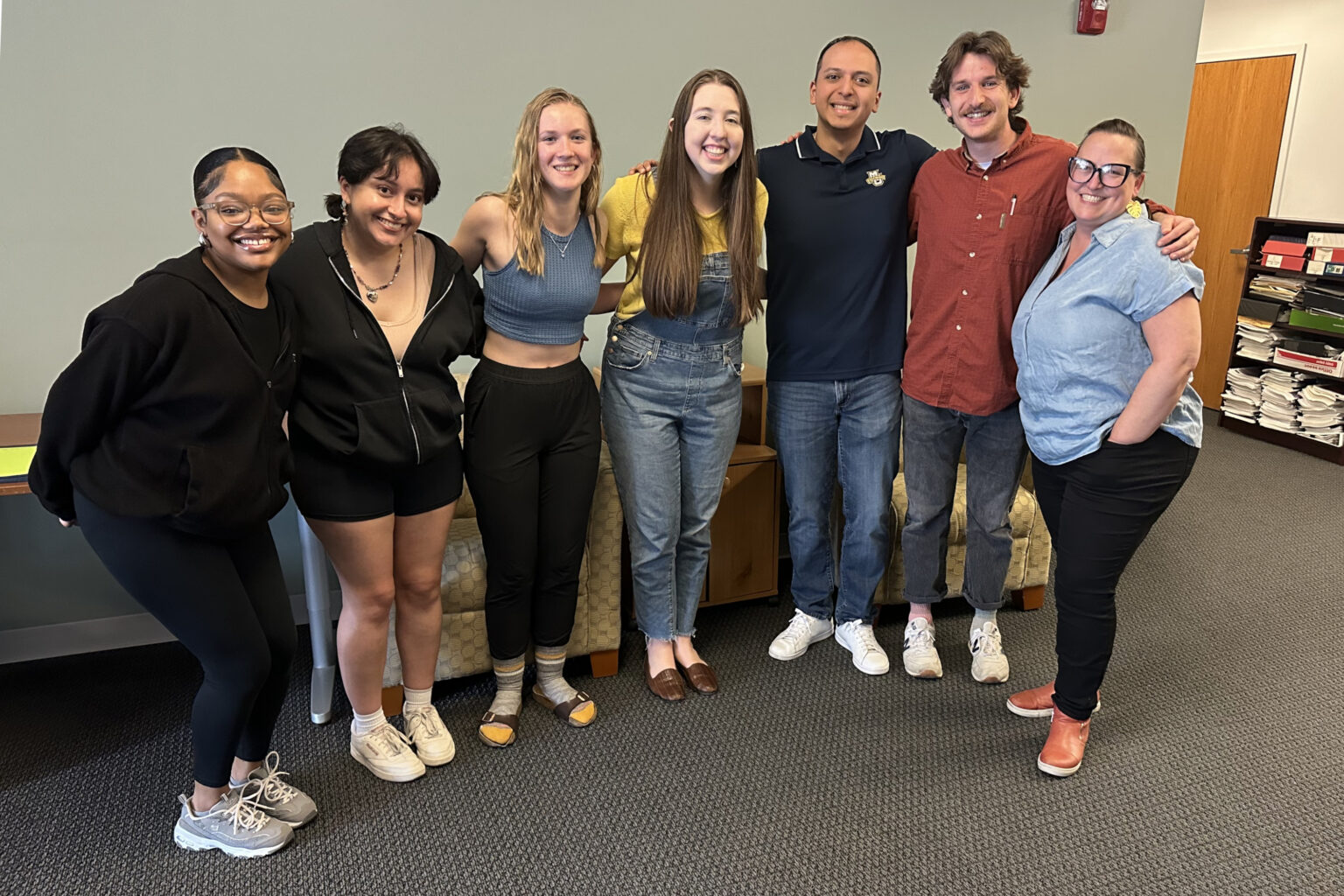
In her work, Instenes supports the creation of an online ecosystem to bring local histories of social change movements into Milwaukee K-12 classrooms. The MKE Roots website features an interactive map, allowing visitors to explore the history of different locations throughout the city, as well as a variety of teaching resources, including lesson plans, walking tours, field trip guides and classroom activities. These tools are supported by Marquette undergraduate students — many of whom are drawn to the work by their own personal identities and the same sense of recognition that sparks excitement in the students they serve.
For Instenes, that connection to the work is also personal, shaped by her own identity and academic focus.
“As a queer historian from Wisconsin I couldn’t have written myself a better job description,” Instenes says. “My master’s is in oral history, so local history is really my main interest. And my master’s degree thesis was on queer history in the Midwest. So, the fact that I get to continue researching and learning about that is really exciting to me. I get to help share that information with college and high school students, and that has been really fun.”