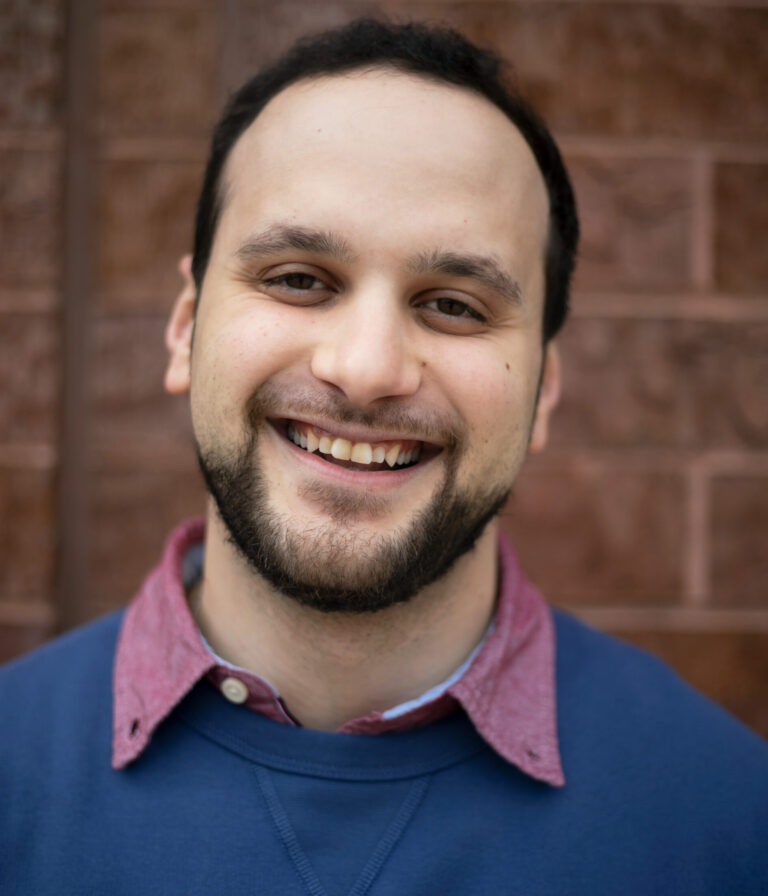
Ali Shana, a third-year doctoral student in Department of Educational Policy & Leadership, studies how students experience education systems that are meant to expand opportunity and where those systems fall short. Originally from Palestine and raised entirely in Milwaukee, Shana’s research focuses on dual enrollment programs, which allow high school students to take college courses and earn college credits while still in high school.
“These programs yield great postsecondary educational outcomes,” Shana says, “but inequitable outcomes.”
His research centers on listening directly to students. Using developmental and educational psychology, Shana studies why students choose to participate in dual enrollment, what challenges and supports they encounter, and how those experiences shape their identity, confidence, and understanding of college over time. Alongside his research team, he interviews thousands of students across Milwaukee-area high schools and universities and analyzes their responses using qualitative methods that look for shared patterns and meanings.
The goal of his work is to translate student experiences into concrete policy recommendations that improve dual enrollment programs at the local and state level. Shana explains that many of the challenges students face are both logistical and emotional. “Experiential problems may be reduced by ensuring school counselors are trained to handle such topics,” he notes, while also acknowledging that counselors are often overworked and underpaid.
Shana’s interest in education policy grew from his own experience with higher education. “College has been the absolute most transformative institution in my life,” he says, “and could be for everyone if policymakers and education stakeholders worked to make college cost less and worth more.” He became particularly interested in policy when he realized how the narrative around college was shifting from something worthwhile to something many people now see as regrettable. For Shana, understanding students’ perspectives is essential to strengthening school-to-college-to-career pipelines.
A key part of Shana’s academic journey has been his work with Dr. Gabriel Velez, associate professor in Marquette’s College of Education and faculty director of the Black and Latino Ecosystem and Support Transition (BLEST) Hub, housed within the Center for Urban Research, Teaching, and Outreach (CURTO). Shana currently serves as a CURTO Graduate Student Intern. That mentorship has supported his research with real-world impact. Together with Dr. Velez and other collaborators, Shana has contributed to CURTO’s policy-focused work that moved from academic inquiry to legislative conversations, including collaboration with the Wisconsin Association of Independent Colleges and Universities and participation in a policy workshop group that developed a proposed bill at the state level. Shana describes the precedent set by this work describes as being “from research to legislative action.”
More recently, Shana received the APA Division 15 Policy Research Grant for a project titled Bringing Development to Dual Enrollment: An Exploration of Students’ Growth and Experience to Inform Wisconsin State Policy. The competitive award supports research led by Shana alongside Dr. Velez and Dr. Jacqueline Nguyen of the University of Wisconsin–Milwaukee. For Shana, serving as a principal investigator for the first time was especially meaningful. “It’s allowed me to say, with no self doubt, that the path I’ve chosen will make a difference to the institutions of learning around me,” he shares.
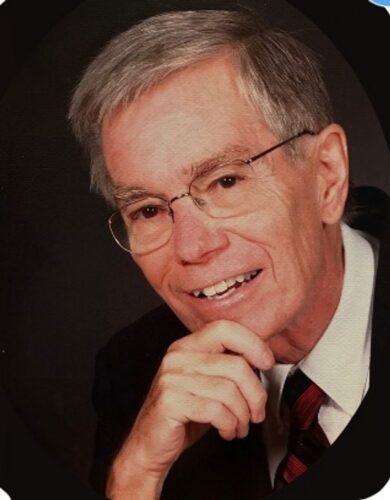
Shana was drawn to Marquette University for both personal and professional reasons. His father, Zack Shana, who passed away years ago, served as an adjunct associate professor at Marquette. “I knew from a young age instinctually that this was a place that really churns out careers for committed students,” he says. After completing his bachelor’s and master’s degrees at the University of Wisconsin–Milwaukee, he decided to pursue his doctorate at Marquette to experience a new academic environment.
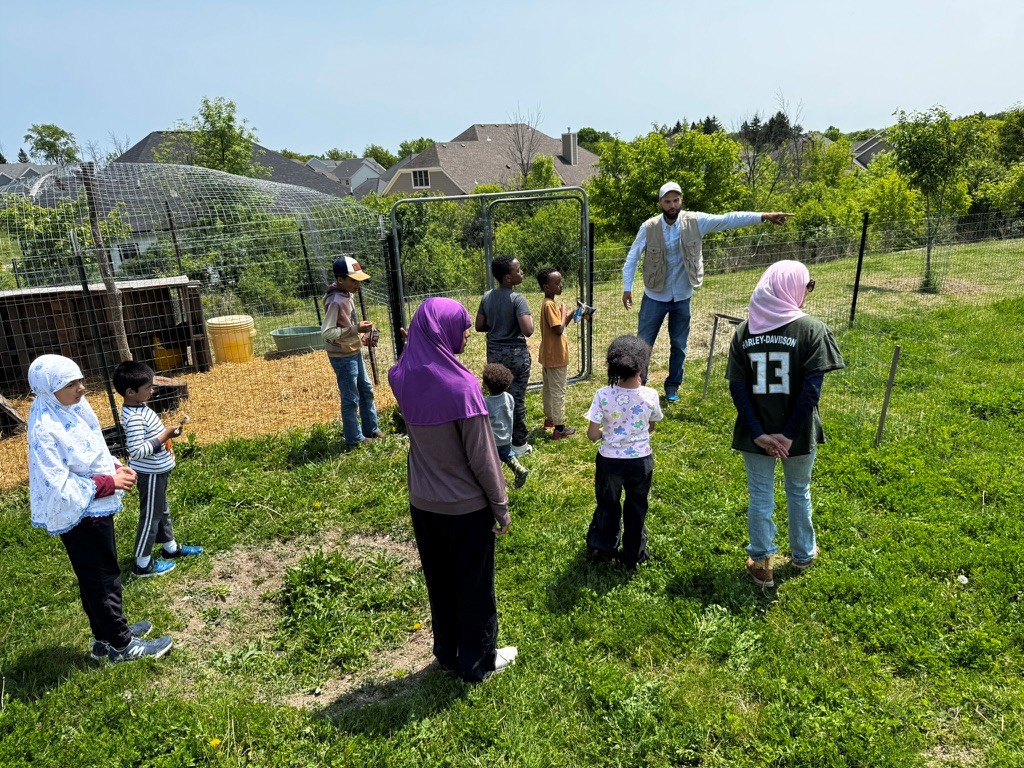
Outside of research, Shana’s passion for education continues in his community. At Masjid Al-Quran in Milwaukee, he and his wife spearhead a youth farm education program that combines experiential learning with sustainable agriculture. In his free time, he facilitates workshops and camps, creates music, and engages in multimedia projects.
For Shana, research is not just about producing knowledge. It is about listening to students, understanding their experiences, and shaping policies that ensure educational opportunities like dual enrollment truly serve those they are meant to support.
Want to read similar stories or have a success story to share? Visit Stories of Graduate Student Success to learn more.