
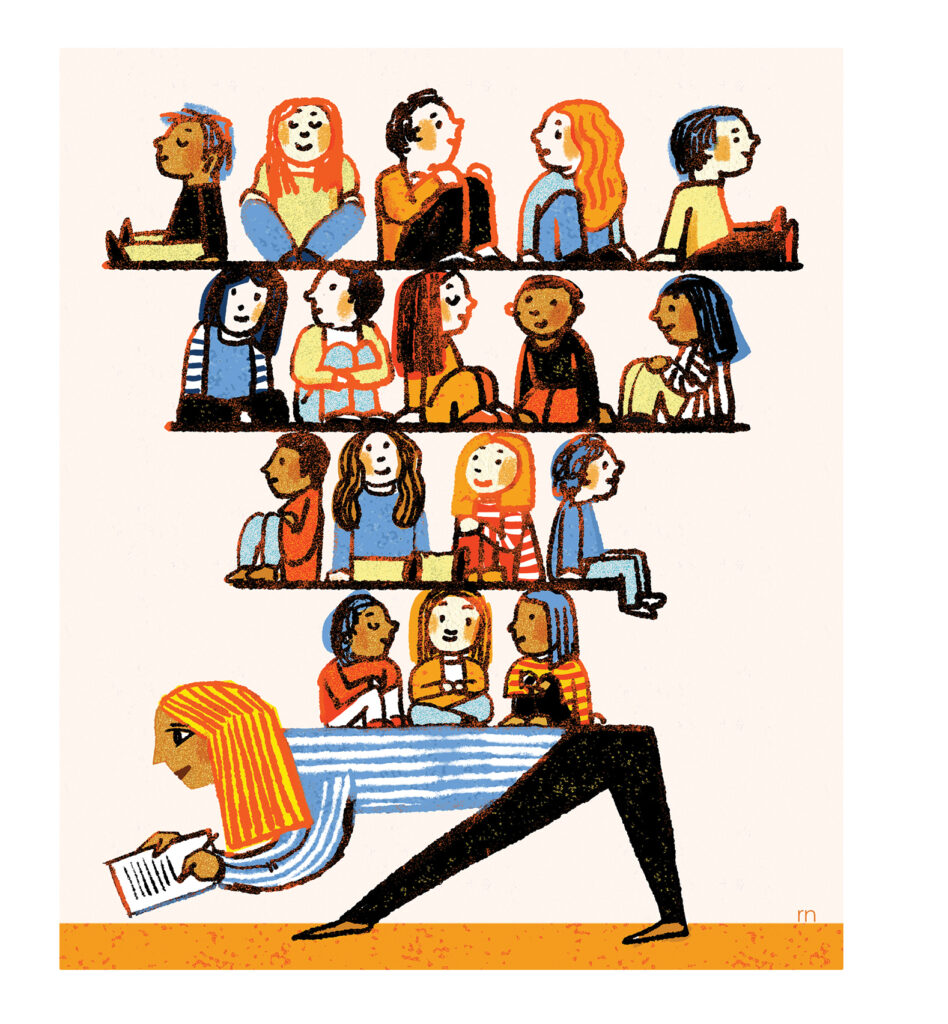
Illustrations by Robert Neubecker
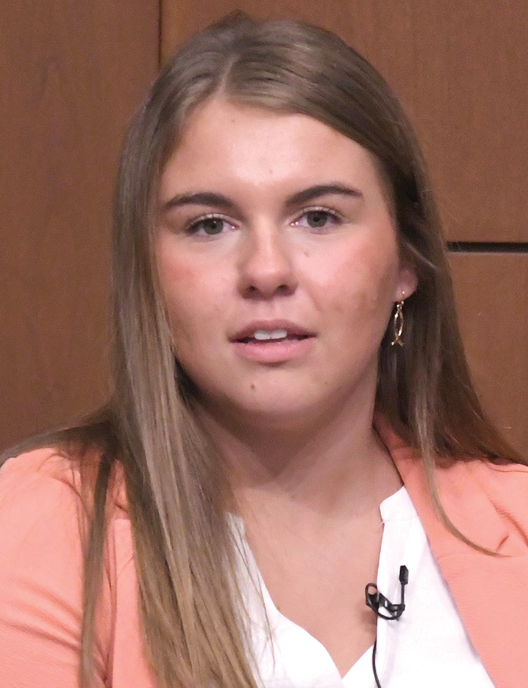
Taylor Thompson was concerned how things would go in her first year as a first-grade teacher in a public elementary school in Oshkosh, Wisconsin. And, in fact, she found teaching during that 2024–2025 school year to be hard work. “Each day is not rainbows and singing and dancing,” she said. But Thompson ended the school year feeling positive.
The reasons for Thompson’s experience speak to crucial needs in American education that get too little attention, at least in the public discourse: Improving what goes on in classrooms. Making teaching more doable and sustainable. Increasing teamwork among teachers. Turning the focus of education policy toward classrooms and away from large-scale reforms that have so often brought disappointing results. Better training. Better classroom materials. Effective steps to improve learning environments in classrooms. Easing the burdens of bureaucratic requirements.
A year ago (fall 2024), the Marquette Lawyer magazine offered an essay by me on how broad, top-down education reforms of many kinds had not brought substantially better outcomes for students or closed the gaps in education success. The problems of a generation ago remain much the same today. And the magazine included reaction essays by six education experts.
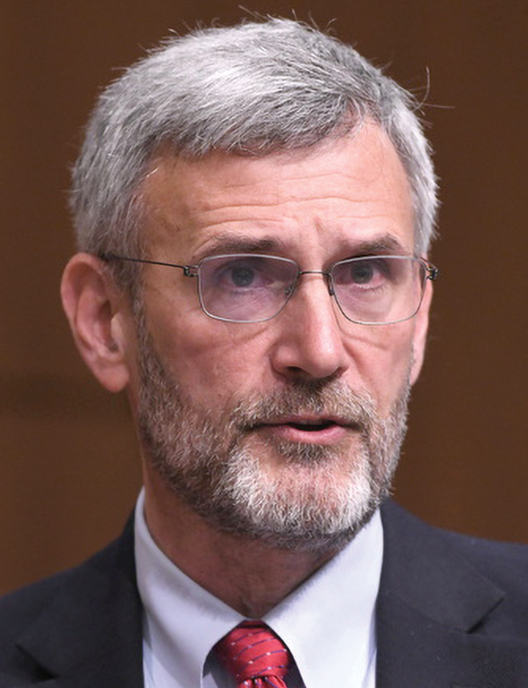
Among the thoughts in the responses that lingered with me was this statement by Robert Pondiscio: “Sustainable improvement in education requires a focus on practical, everyday realities of teaching and learning, coupled with policies that support and enhance these practices rather than simply mandate them.” Toward the end of his reaction essay, Pondiscio, a senior fellow at the American Enterprise Institute, sharpened it into a question: “What if, instead of exclusively pulling policy levers, we redirected the reform movement’s energy and enthusiasm toward improving classroom practice?”
So—what if? Trying to answer that question sparked an in-person forum convened by Marquette Law School and the Marquette College of Education. On May 8, 2025, at the Law School’s Lubar Center, educators, experts, policymakers, philanthropists, and interested citizens participated in a program considering what might help teachers be more successful in their classrooms.
Better classroom cultures, better outcomes
Thompson, the Oshkosh teacher, was part of a panel discussion. She made important points then and also in an earlier appearance before the Oshkosh Area School District board about her first year of teaching:
- “I fully expected to be way overwhelmed, especially by literacy and all the moving pieces with that,” Thompson told the school board on April 23, 2025. It has happened to so many teachers in widely varied circumstances. The work can just be too much. It’s a key to why so many teachers leave the job early in their careers. But it didn’t happen for Thompson. What helped?
- She had high-quality teaching tools. Oshkosh, a district some 75 miles northwest of Milwaukee with about 9,000 students, is among a growing number of school districts around the country moving toward wider use of prepared curriculum and lesson plans. Core Knowledge Language Arts was the program Oshkosh implemented in several schools. CKLA, as it is often called, doesn’t give teachers scripted lessons for what to teach, but it does give lesson plans that greatly ease the time-consuming demand of developing lesson plans. “CKLA has actually given me a clear, structured path that supports my teaching and my students’ learning,” Thompson said. “That structure has allowed me to focus on how we are teaching things, rather than spending hours worrying and figuring out what we are teaching.” She said she loved seeing how much her students took to literacy lessons and how they developed as readers.
- She was part of a team. Thompson was paired with a co-teacher in working with first graders. Teachers often feel isolated and unsupported when they work solo. Even without a co-teacher, teachers can be organized to make the work more of a team effort. Teaching can be unmanageable, Thompson said, but “it’s not if you are a collaborative person and you work with your peers and you have a community of a school and co-workers and principals who don’t allow you to silo into your own room and do your own thing.” She added, “If you’re able to use your teacher craft, it’s not impossible.”
This was music to the ears of Pondiscio. In keynote remarks at the Lubar Center conference, he said, “Improving students’ outcomes depends on improving what happens inside classrooms, where teachers and students meet every day. Yet for decades, reform efforts have rested, at least tacitly, on the assumptions that schools already know what to do and only need to be held accountable for doing it.”
And such assumptions, Pondiscio said, are simply not true. In fact, “[t]eachers often lack the training, support, and evidence-based tools, most specifically curriculum, to deliver effective instruction.”
In his estimation, too much emphasis has been placed on finding high-quality teachers, when the emphasis should be placed “not on teacher quality but on quality teaching, by making this a job doable by the teachers we have, not the teachers we wish we had.” Noting that the United States has about 3.7 million teachers, Pondiscio said that it is unrealistic to expect them all to be, as he put it, “saints and superstars.” The large majority are people who want to be good teachers but who would benefit from more help in making their work successful.
Teachers are often asked to do too much, as Pondiscio sees it. Instruction, he argued, often is undermined by all the other things teachers are asked to do: They have become frontline social workers, nurses, and personal and family therapists. They often help provide children with clothing or other basic necessities. They deal with too many bureaucratic requirements and get too little support, and they’ve been under pressure of many kinds from many politicians, administrators, parents, and others. “Why are we asking schools and teachers to take on this burden,” he asked, “when they’re already failing at their primary responsibility?”
Signs nationwide of more help for teachers
It’s not coming in a giant wave, but there is momentum around the country to do more to help teachers. Louisiana has launched an initiative called “Let Teachers Teach,” which offers ideas that have at least some appeal across the divisions in education-policy advocacy. Nationwide, there appears to be increasing use of “high-quality instructional materials,” the education-jargon term for curricula and lesson plans that both are effective and ease the demands on teachers related to preparing for each school day. And many states have adopted policies aimed at leading more students to be proficient readers.
If such steps are effective, they could pay off in increased student success in school more broadly and better engagement and behavior in classrooms. Support is building across the political spectrum—including among teachers—for reducing and even eliminating student access to smartphones and social media during the school day, particularly during class time. And the near-crisis-level problems in some school systems with attracting and retaining teachers appear generally to have leveled off and, in some areas, eased.
Changing the realities of teaching isn’t easy. There is much inertia in school systems, the lives of kids outside of the classroom often aren’t conducive to engagement in learning, financial realities impose major limits, and, too often, public opinion doesn’t really treat educational success as a priority. The list of reasons to be doubtful about improving the circumstances surrounding teachers is long. We’ll expand on this later in the essay.
Increasing quality while easing the workload?
Some experts, such as Pondiscio, advocate for more use of prepared curricula and lesson plans. Not everyone agrees. For one thing, the “high quality” aspect is crucial. Some curricula are not as conducive to success as others. For another, many teachers resist being told how to teach and say that flexibility and individualization in working with students are crucial.
Pondiscio, a former teacher who previously worked for the Core Knowledge Foundation, a leading provider of curriculum material, said at the May 2025 program in the Law School that a teacher who spends 10, 20, or more hours a week on lesson plans should think that that is time when “I’m not giving feedback to student work, developing relationships with my students, studying their work, or learning the material myself so I can more effectively communicate it.”
“Somebody else can write the curriculum,” he said. “Something’s got to come off the teacher’s plate. And the most obvious thing to me is curriculum.”
Core Knowledge is a major player in the “high-quality instructional materials” world. Based on the work of E. D. Hirsch, Jr., whose books on what people should know have been bestsellers in the past, it offers a range of curricula. In Wisconsin, for example, Core Knowledge Language Arts is one of the reading curricula recommended by a state advisory committee on early literacy. CKLA has been the most popular choice of Wisconsin school districts during the accelerating movement to use “science of reading” instruction, which is best known for its emphasis on teaching students to sound out letters in learning how to read.
Beth Battle Anderson, president and CEO of the Core Knowledge Foundation, based in Charlottesville, Va., said in an interview that teachers benefit from letting go of the idea that “I can do everything myself.” Anderson has a different view: “We need [teachers] to focus on how to teach and not on what to teach.” While high-quality instructional materials can’t solve all issues, she said, they can “empower teachers to empower students.”
Anderson said that use of such materials is on the rise nationwide, with encouragement from groups such as the Council of Chief State School Officers, the national organization of state school superintendents. Use of CKLA has grown to about five million students nationwide, she said. Core Knowledge has been criticized in the past for focusing too much on content rooted in white, European cultures, but it has changed to include a wider array of cultures and content that more students can relate to, Anderson said.
The difficulty of making changes in classroom realities
But even with momentum around curriculum such as CKLA, Anderson stated, “It’s really, really hard to affect classroom practice.”
Related reading
Louisiana’s ‘Let Teachers Teach’ Plan Strikes a Chord
Broadly speaking, educators—including Pondiscio—say that serious progress in improving the education environment in most classrooms requires more than better curriculum materials. Rashida Evans is a consulting partner with TNTP, an education consulting and research group formerly known as The New Teacher Project, which works with school districts nationwide. She says high-quality instructional materials can be “a godsend” for teachers, especially new ones.
But that’s not enough, as Evans sees it. There needs to be “a change management process” to improve many aspects of classroom life in many schools, she said, including strong school leadership, teacher training, and effective ways of dealing with the issues students have. Evans, a former teacher and principal, who is based in Milwaukee, said, “The more we can clear the noise that distracts from instruction, the more successful we can make the job.”
During the Law School program, I said to Pondiscio that a big reason teachers end up taking on so many roles going beyond academics is simply that teachers are the ones who work every day with the students—and so many kids have so many needs. “If we’re going to make a big difference in academic outcomes,” Pondiscio responded, “we have to ask those schools to do less.” Who will do the other things? “I don’t know what the answer is, but I know what the answer is not. It’s not asking Miss Jones to do it,” he said. “This is about making teaching easier and doable.”
The answer is indeed unclear at best. Especially since the COVID pandemic period, many states and schools have expanded their programs dealing with children’s nonacademic needs, including mental health. But the availability of such help falls far short of what will be required if the demands on teachers are to be meaningfully reduced.
Money, money, money
That points to a big issue hanging over efforts to shift the burdens on teachers: Money. Even as there have been widespread increases in school budgets, better classroom culture often comes only from the presence of more adults in classrooms and in a school as a whole—more teachers’ aides, more specialty teachers for art or music or physical education, more tutors, more counselors. But in some schools, such as those in the Milwaukee Public Schools system, class sizes are often large—an issue that can be not just expensive but complex to improve. Financial and other constraints on those fronts mean that classroom teachers face big demands.
An additional recent factor: Although the future is unclear, dramatic changes in federal spending during the new, second administration of President Donald Trump may lead to less money coming from the federal government to schools. And on state and local levels, there is widespread pressure to hold down taxes. For one bottom line or “big picture” view, it seems unlikely that there will be substantial increases in the number of adults in most schools.
Behavior and special education challenges
Teachers often say that if something effective could be done about a handful of students—sometimes even just one—in a classroom, the atmosphere in class would be much better, followed by improvement in the learning by the rest of the students. Some kids have chronic behavior problems, and many teachers and school leaders struggle to respond effectively.
For an additional—and often separate—matter, there has been a trend for years to include more students with special education needs in general classrooms, a trend that is supported by federal law and beneficial for many kids. But teachers often say that it has meant some children in mainstreamed classrooms who shouldn’t be there.
In all these instances, the problems that result can be long-term and difficult. Some school systems are aiming to do more to deal with students who are tough (or impossible) to manage. Houston has received national attention for a program that demands more success from students as a whole while pulling some students out of classes and assigning them to alternative programs, with the intention of giving those students help getting on track and the rest of the students better classroom experiences.
Strong principals and good leaders—or not
Pay and benefits are factors in the high rates of teachers who leave their jobs, often after short careers. But low job satisfaction and burnout are big reasons for quitting, and experts often have pointed to teachers’ dissatisfaction with support from above—principals or other supervisors—as a problem. Conversely, working for a good principal can keep teachers at a school and can build job satisfaction and teamwork among them. Evans, of TNTP, said consistency and clarity in running a school are important to teachers’ success. “There’s no way around it,” she said. “Too many schools are chaotic places. . . . It’s the chaos that is wearing out students, wearing out teachers, wearing out principals.”
One key to being a successful principal—and to building a good teaching staff—is setting a constructive tone for what conduct is allowed and not allowed in school. This includes both promoting positive steps that can build the atmosphere or spirit in a school atmosphere and fostering consistency in dealing with behavior problems.
During a panel discussion at the May 8 event, Maggy Olson, director of equity and instruction for schools in the Milwaukee suburb of Greendale, emphasized the importance of principals. She suggested that they help teachers by providing support, instructional materials, and leadership to boost teachers’ effectiveness. “Teachers don’t fail,” Olson said. “Principals fail.” She said that one of her own roles as an administrator is to be an umbrella protecting teachers from factors such as community pressures that could distract them.
Training and development
Preparing teachers for success in the classroom and giving them the tools they need are commonsense ideas. But for years, teachers in large numbers have said that they learned much of what they need to know to do their jobs while on the job, not in college or other training programs. That especially applies to ways to manage a classroom, despite a trend toward giving teachers better training, including more time practice teaching. At least anecdotally, professional development sessions that almost every school has in the course of school years don’t seem to be the solution. Large gatherings of teachers for one day of training are especially unpopular among many teachers, who often say such sessions provide little practical help. Advocacy for different approaches to on-the-job training, often focused close to classroom life and involving small groups of teachers with similar situations, is growing.
And then there are those big changes coming from above. At the Marquette conference this past May, Sarah Almy, chief of external affairs for the National Council on Teacher Quality, said, “So often, district and states are pushing things down to the classroom in this sort of one-off, piecemeal fashion—like ‘here’s the policy on science of reading,’ ‘here’s the policy on social emotional learning,’ ‘here’s the new policy on culturally responsive education’—and leaving it to the teachers or sometimes the principals to do all the sense-making around ‘how does this all fit together?’” She said this often means that things don’t change “because the classroom door closes, and the teacher does whatever the teacher’s going to do.”
Related reading
Principals Can Play Big Roles in Teacher Success
Suggestions from former Marquette Education Dean Bill Henk
Almy said there is a big need to connect anything done involving recruiting, hiring, retaining, and developing teachers to actual instruction. “A huge opportunity, which is a huge area of focus for us at the National Council on Teacher Quality, is that we need to stop putting all of the onus on training teachers on the districts and we need to ensure that we’re holding our teacher prep programs to really high expectations.”
Broader cultural influences
And then there are all the elements of students’ lives beyond the classroom—and sometimes in the classroom. Smartphones and social media have been the focus of attention nationwide. Many states and school districts have tightened rules on allowing phones in school, and especially in classrooms. Bans and restrictions are popular across the political spectrum and especially among teachers. The Marquette Law School Poll found in June that, among Wisconsin registered voters, 69 percent strongly supported banning cell phones during class time and an additional 20 percent somewhat favored it. As for banning phones during the entire school day, 37 percent strongly supported this, and another 35 percent somewhat supported it.
But the screen-time issue goes well beyond what happens in school. The social lives, interests, attitudes, and self-conceptions of millions of kids are shaped by the huge amounts of screen time in their lives—often with negative effects on school-based learning. Can anything, including phone bans in schools, reduce or improve the influence of technology on kids’ lives and values? That’s a tough but important question.
Then you have the changing dynamics of family lives across the nation and across social economic levels—looser family ties, less constructive family bonding and social development. The general entertainment culture around most kids, with such strong themes of violence and sexualized conduct, is another worry. Not to mention political and social climates that are long on polarization and hostility and short on sweeter-character development. What’s a teacher to do? It’s a huge question—and one that better lesson plans and even better teaching strategies struggle to overcome.
Cynthia Ellwood, a Marquette University College of Education faculty member, said at the May 2025 program, “It’s not just a matter of going out there and finding the perfect material. I don’t think it boils down to a single approach to curriculum” or other factors. She urged educators to take an optimistic approach to what they can accomplish. “We must know that every single one of our students is capable of high intellectual thought, that they are capable of seeing themselves as intellectuals,” she said. “What we’re doing right now is not building pathways so that every child is offered this incredible challenging curriculum and the appropriate supports that make it possible for them to succeed.”
Almy, from the National Council on Teacher Quality, said, “Nothing can happen in a
silo . . . . You can’t do just one thing to make things better, but there is hope overall.” And realizing the hope will require educators to connect together a lot of pieces.
Kanika Burks, chief schools officer for the Howard Fuller Collegiate Academy, a Milwaukee charter school, told the audience in the Law School’s Lubar Center that teachers need to understand their students—and to tell the students that they see them, they love them, and they want the best for them. “They deserve us to do all those great things,” Burks said. “If we do anything else, we are not being responsible adults.”
Thompson, the Oshkosh teacher, is certainly accurate in saying every day is not rainbows and singing and dancing. But can’t more days be more successful for more teachers and students? There are paths to make things better, especially if enough educators, leaders, and entire communities got behind the old phrase from Star Trek: Make it so.
This article was first featured in the Fall 2025 issue of Marquette Lawyer Magazine.