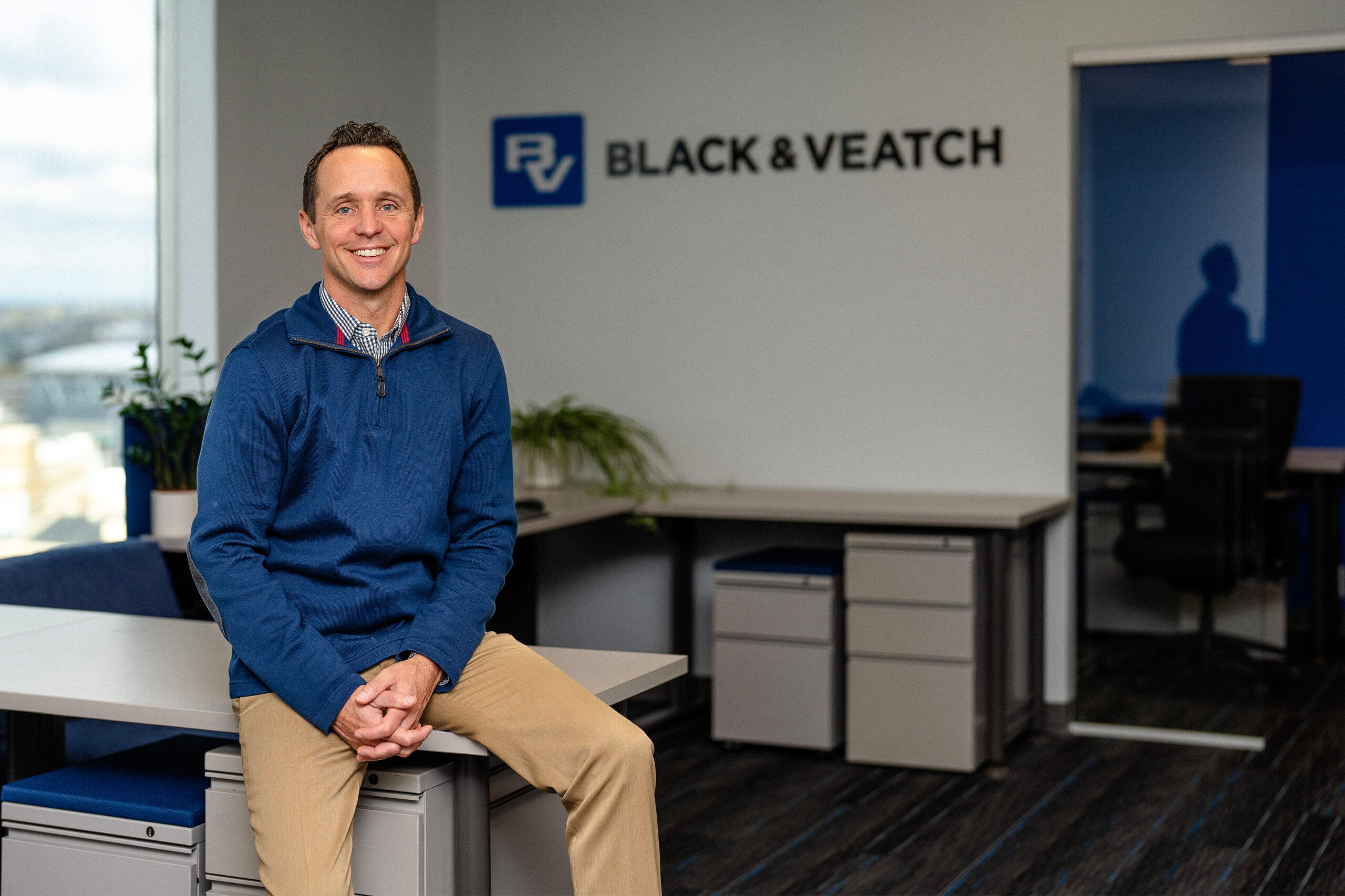
Dr. Patrick McNamara, Eng ’06, professor of civil, construction and environmental engineering, could have spent his yearlong sabbatical advancing his research on water treatment and microbial resistance or collaborating with colleagues in a lab at another university. Instead, McNamara took a temporary post at Black & Veatch, a global engineering, procurement, construction and consulting firm that is also active in the wastewater research community. Reenergized by the environment of collaborative problem-solving, he decided to stay on as a part-time wastewater process engineer and researcher even once his sabbatical was over.
“It’s been synergistic in the sense that the Black & Veatch work feeds into my teaching and research at Marquette, and the background I have from being a professor at Marquette has enabled me to help Black & Veatch clients, which include many of the nation’s wastewater treatment facilities,” he says. “It’s really just an exchange of knowledge, and ultimately it’s about helping our students grow, whether that means helping them get jobs or just helping them be better prepared for the work world because of the experience that wraps into the classroom.”
A sabbatical, with its etymological roots in the biblical term for a day for rest, is a break in teaching duties that faculty have traditionally used to concentrate on research, writing or travel to other universities. But now, with enthusiastic support from Opus College of Engineering leadership, some faculty spend their sabbaticals solving real-world problems in an industry setting. In return, faculty gain new insights into how to prepare Marquette students for today’s workplaces — from the types of engineering problems new graduates will encounter to expectations around communication, technology and interdisciplinary skills — along with fresh inspiration for their own research.
At Black & Veatch, which has a strong focus on discovery and innovation, McNamara contributed to the company’s research on how to mitigate per- and polyfluoroalkyl substances, or PFAS, commonly known as “forever chemicals.” Found in a plethora of everyday products, these chemicals end up in wastewater biosolids, posing a problem for municipal wastewater treatment plants as more states and countries move to limit PFAS. As the company’s new PFAS and residuals research leader, McNamara read up on the latest research on how to treat PFAS in biosolids, designed experiments to conduct with collaborators, and then published journal articles on the data he generated while working with the company. He also relished the opportunity to apply his expertise to clients’ challenges, including serving on a team that evaluated emerging biosolid treatment technologies for an Australian wastewater treatment plant that was running out of capacity.
McNamara later secured funding from the Water Research Foundation to advance his Black & Veatch research on technologies for treating PFAS in biosolids, and colleagues at Black & Veatch continue to come to him with questions about organic chemistry and other topics. “It’s kind of fun to be that resident expert,” he says.
McNamara’s students have also benefited. His recent industry experience gives him credibility with students as he emphasizes the importance of teamwork — or even the legibility of handwriting (experienced industry engineers still use engineering paper, he tells them).
Dr. Phil Voglewede, professor of mechanical engineering, was an early adopter of the industry sabbatical. With a background as a process engineer for Whirlpool, Voglewede was eager to return to the field to refresh his skills after 15 years in academia. So, in 2015, he joined Eaton Corp., a global power management company, in an entry-level role to learn more about what would be expected from new graduates. “If I’m educating students to work in the world, I need to understand how the world works,” Voglewede says.
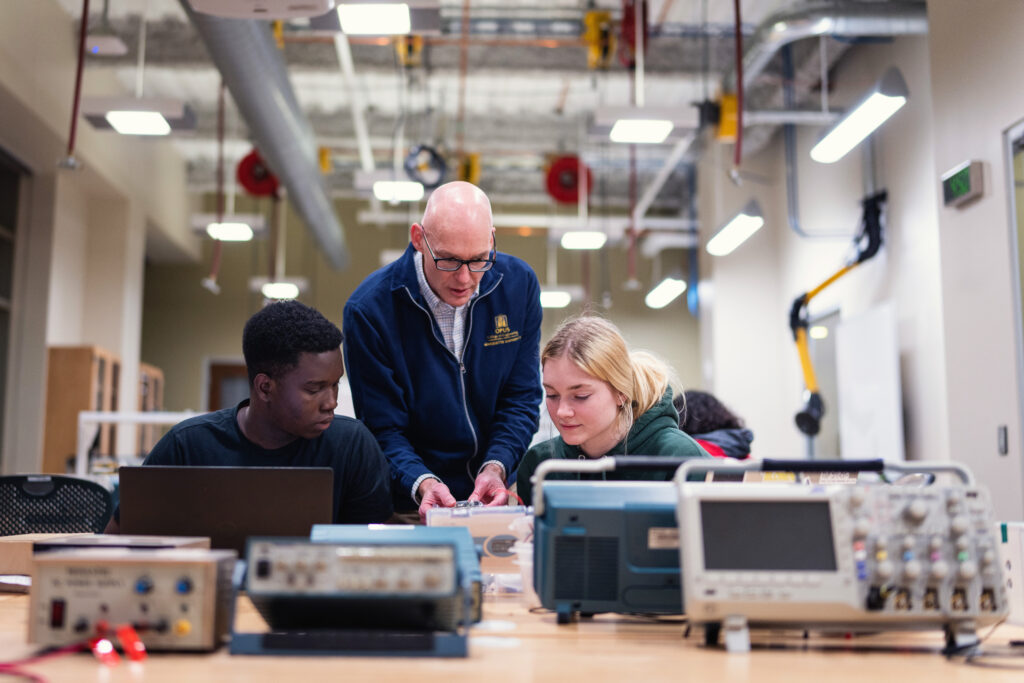
He stayed on as a part-time consultant and then returned full time during another sabbatical in 2022. For that experience, he used his modeling expertise to help Eaton advance its use of modeling for mapping future uses of technology.
After his first sabbatical, Voglewede scribbled down a long list of technical and soft skills he wanted to teach his students to ensure their workplace success. The list inspired him to incorporate those skills in a course that continues to evolve based on feedback from Marquette graduates. “It hopefully makes them a rock star on their first day of work,” he says.
Voglewede’s connection to industry continues to benefit his students, who recently got hands-on experience with Eaton equipment at an “Eaton Olympics” event.
Dr. Anthony Parolari, an associate professor of civil, construction and environmental engineering, spent the 2024-25 school year on sabbatical as a senior data scientist for Stantec, a global engineering consulting firm. A hydrologist, Parolari joined a work group focused on incorporating data science and AI into sustainable engineering projects. He loved the fast pace.
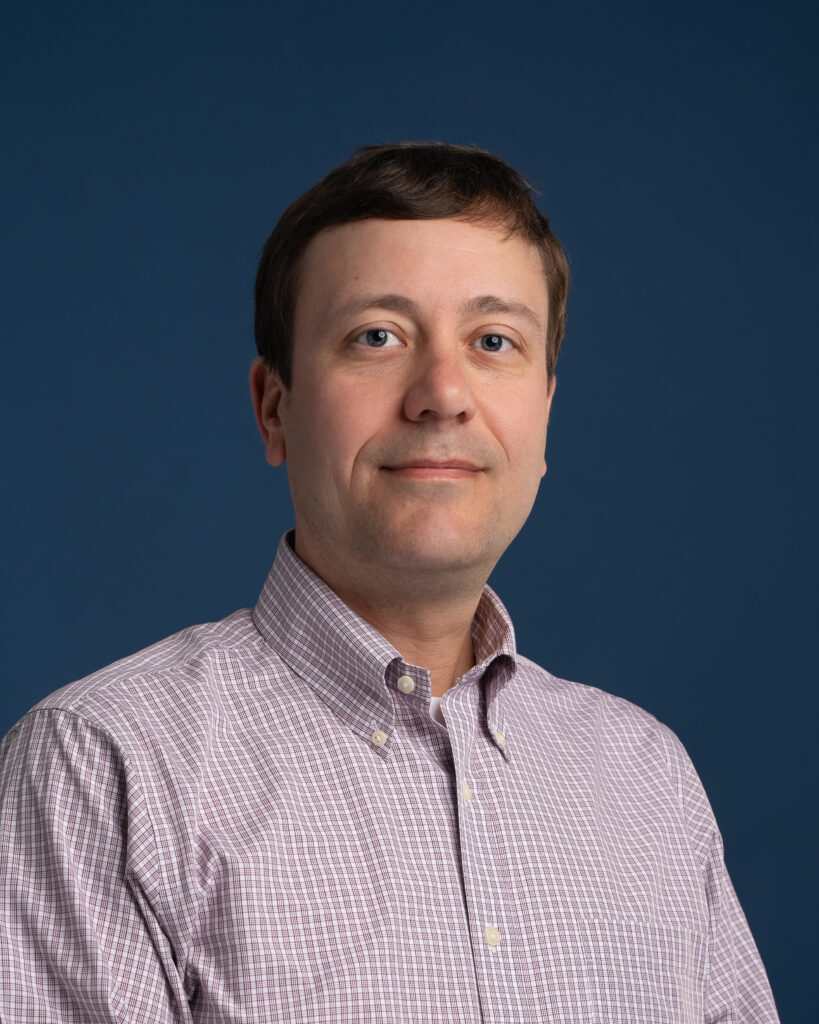
“At the university, we can take more risks and work on a project for 10 years and really dig deep, but in industry it’s like, ‘Well, the client has given you six months. What can you do?’” Parolari says.
Among the highlights of his experience: working on a machine learning-based flood prediction model for Auckland, New Zealand, and helping develop Stantec’s internal data and AI governance policies.
One of Parolari’s motivations for his sabbatical choice was to keep Marquette’s engineering curriculum current with the ever-changing uses of AI in the modern workplace. Since returning to campus, he is co-leading a “community of practice” focused on strengthening faculty’s AI skills and is working to integrate more computing, data, machine learning and AI skills into the civil engineering curriculum. He hopes to eventually develop engineering faculty training and course materials and modules on AI for faculty nationwide.
“The sabbatical is not just about reinvigorating the creativity of your research, but it’s also about what we can translate into the classroom,” he says. “Now I have a lot more material to draw on for teaching.”
For McNamara, the industry immersion exceeded his expectations, and he is thrilled to share that joy with students. “I think there’s sometimes this belief from students that the working world is drier or cookie-cutter, but I’ve learned firsthand that myth is not true,” he says. “There will always be emerging problems that require people to work through the unknown to find answers. This does not have to be scary, it can be exhilarating, and it’s a message I make sure to bring back to the classroom.”