

Eighty years ago, the United States dropped two atomic bombs on the Japanese cities of Hiroshima and Nagasaki to catastrophic effect, setting off a nuclear arms race that would be the cornerstone of the Cold War.
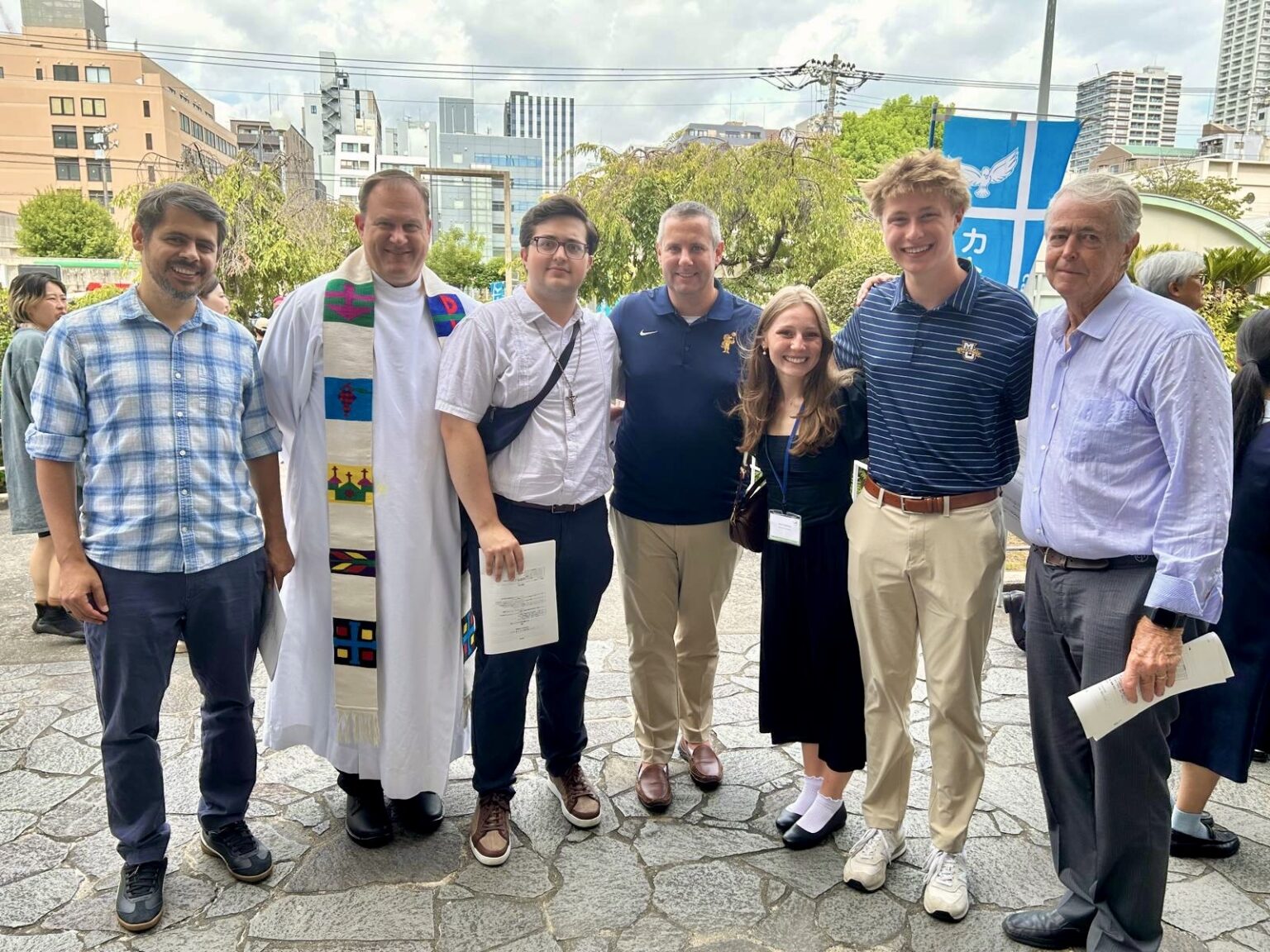
As part of a larger cohort of Catholic universities and four U.S. Catholic bishops, Vice President for Mission and Ministry Rev. John Thiede, S.J.; Center for Peacemaking Director Pat Kennelly; Center co-founder Dr. Terry Rynne; Theology Associate Professor Dr. Alexandre Martins; and Marquette students William deGuzman, Jane Oberlies and Brennan Wills, traveled to the cities to be pilgrims for hope.
The group spoke with the atomic bombing victims, known as hibakusha, who were awarded the Nobel Peace Prize for raising awareness about the catastrophic humanitarian consequences of using nuclear weapons, as well as for their work towards promoting nonviolence.
Martins says the trip was a “profoundly impactful experience,” with mixed feelings of anger, suffering and a sense of privilege to be visiting the cities.
“Talking with local residents, listening to reflections offered by bishops and scholars who accompanied us, and above all, hearing the testimonies of victims of the bombings offered a very different perspective on how to understand these events,” Martins says.
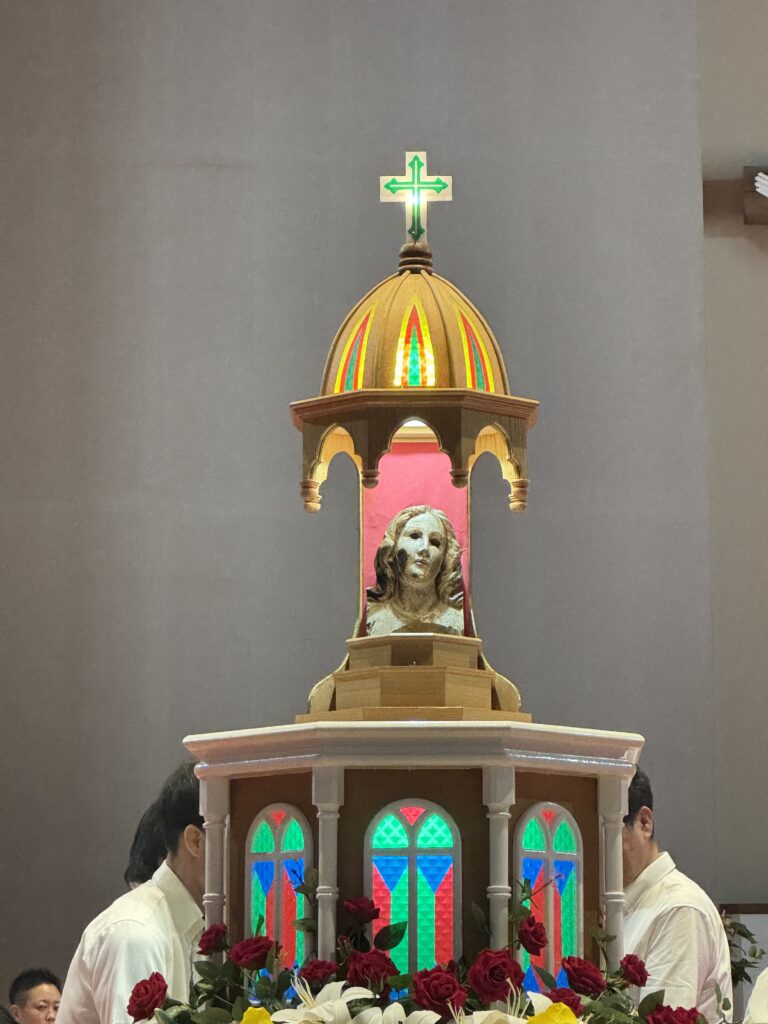
In the United States, the story of the bombings is one of putting an end to World War II, not of its horrors nor the “living hell,” as survivors would describe it.
“This was a part of the story I never learned growing up in the United States, and it was far more brutal than any textbook ever conveyed,” deGuzman says. “Slowly, my perspective shifted from having no responsibility for the tragedy to feeling an overwhelming responsibility to help ensure something like this doesn’t happen again.”
Father Thiede says the pilgrimage reaffirmed his gratitude for the Society of Jesus.
“This experience was a series of tough graces, but one that left me hopeful and re-energized to focus on our Jesuit Apostolic preferences going forward,” Father Thiede says.
Oberlies says she was emotional arriving in Japan, not because of the tragedy, but because of the overwhelming warmth she and the rest of the visitors received. Oberlies also says she tried to understand Japan’s forgiveness by connecting with locals and cried while reading and listening to the hibakusha’s stories.
“Although the sorrow and pain within the museums were consuming, I watched Japanese families use these opportunities to connect with their loved ones,” Oberlies says. “I realized the Japanese warmth and eagerness to forgive derived from immense faith and strength. This powerful faith is rare, and I will continue to study and practice this nonviolent and peaceful approach in the future.”
“Being friends means listening with both heart and mind open to learn. I connected with many people simply by listening to them and reading the stories of victims.”
Dr. Alexandre Martins, Associate Professor
Rynne was a featured scholar at the academic symposium in Hiroshima. His remarks focused on critically reassessing how the Catholic Church addresses nuclear issues and legacies in the United States and Japan, considering today’s geopolitical and religious context.
“Our students in dialogue with Japanese students developed beautiful prayers of the faithful for multiple Masses and aspirations for continued peacemaking,” Rynne says.
Kennelly noted that Catholic social teaching is moving from nuclear deterrence to nuclear abolition. Simultaneously, civil society, students, Catholic Church leaders and activists are recognizing the primacy of nonviolence for addressing conflict, living out the Gospel, and building people’s capacity to actively work for peace.
Calling each other friends
This year’s Ignatian theme, “I have called you friends,” was prevalent throughout the trip as the students from across the United States sat, talked and worked with students from Japan’s Sophia University and Nagasaki Junshin Catholic University.
“Throughout the pilgrimage, we had grown closer through shared meals, bus rides, and walks around memorials,” Oberlies says. “We spent our time together discussing our hobbies, schoolwork, favorite movies and families. We listened to these stories, helped one another to recall all the details, and held each other accountable to share these stories with our friends and family when we returned home.”
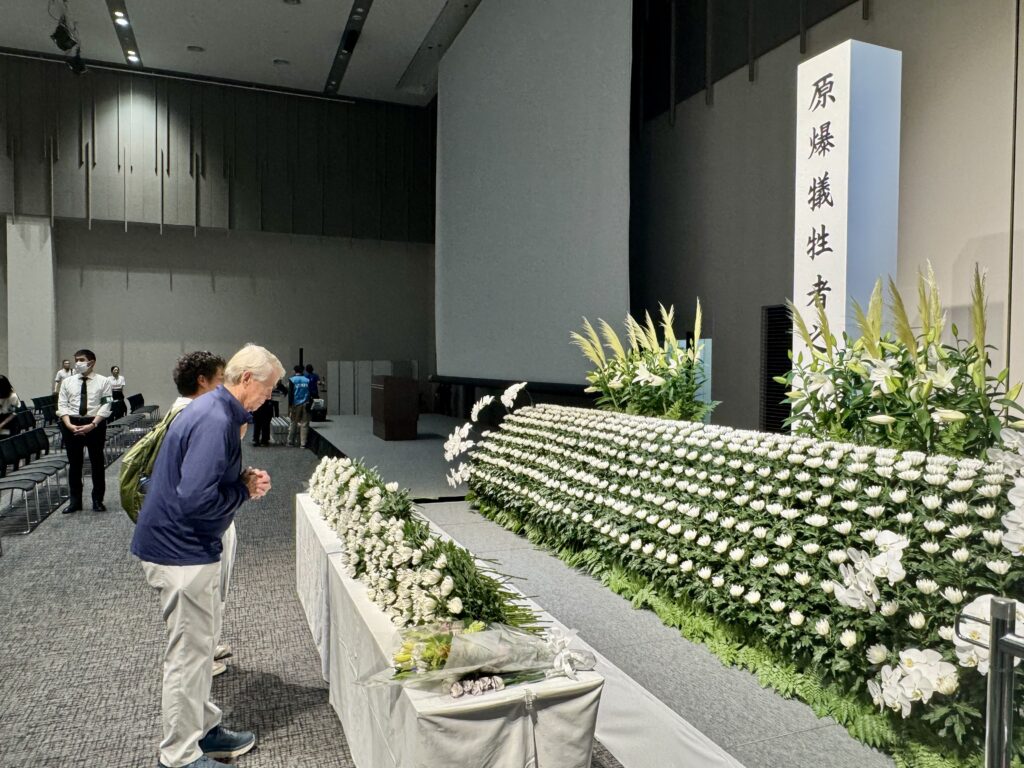
DeGuzman says what struck him the most was how quickly the conversations with the students went beyond the facts of the bombings to a space of shared humanity.
“We laughed together at small jokes, shared moments of silence and exchanged personal dreams for a peaceful future,” deGuzman says. “It became clear that being ‘friends’ in the Ignatian sense is about standing together in the pursuit of justice, reconciliation, and a shared hope for the world.”
In Martins’ eyes, being friends means committing to a just cause — in this case, to peacemaking and to a world without nuclear weapons.
“Being friends means listening with both heart and mind open to learn. I connected with many people simply by listening to them and reading the stories of victims,” Martins says. “Together, their voices told a story that will remain in my heart, creating a spiritual friendship that transcends geography and becomes real in the work for peace.”
The pilgrimage challenged deGuzman to practice virtue and holiness more than he has done already, but also to be humble and committed to justice in his daily life.
“Ultimately, what I brought home from Japan is a deeper conviction that peace is not a distant ideal. It is something we build together in the way we live, speak, and act,” deGuzman says. “At Marquette, I want to live and encourage a way of life that embodies the Gospel call to be peacemakers.”


