If you’re a parent, your experience introducing your baby to solid foods is probably not unique. Small curds of scrambled eggs here and mushed bites of chicken there — it’s trial and error.
That’s because guidance on when to introduce foods to infants typically lines up with pediatrician visits, with no standards to follow in between, says Dr. Amy Delaney, assistant professor of speech pathology and audiology in the College of Health Sciences.
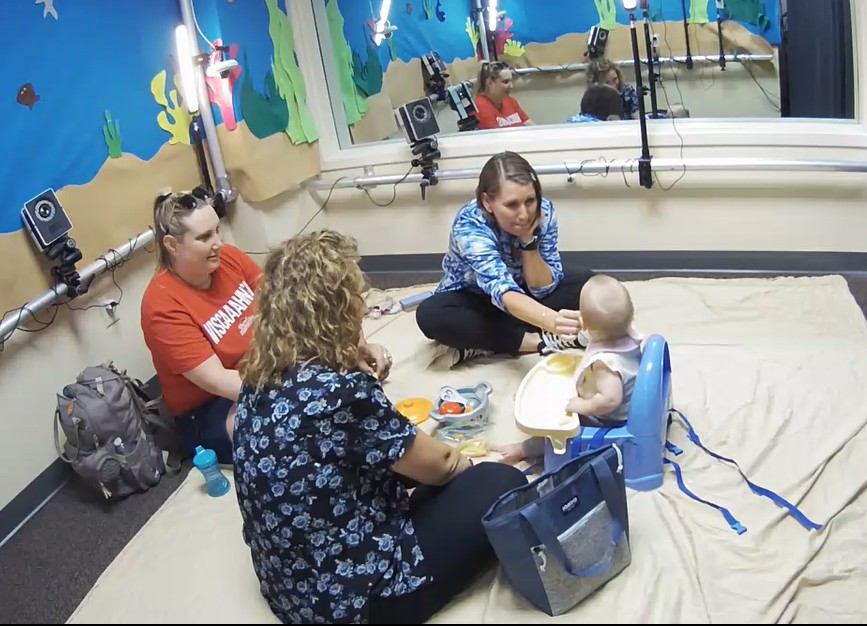
A child’s first 1,000 days of eating — from conception to their second birthday — are critical to their development.
“Healthy nutrition during the first 1,000 days supports positive neurodevelopmental outcomes, and poor nutrition can lead to irreversible developmental delays,” Delaney says. “Further, healthy nutrition requires the development of feeding skills which includes oral motor movements, sensory responses to foods, and how children learn to use new utensils. Developing these skills is important so an infant can safely and efficiently transition from liquids as a newborn to family table foods.”
Delaney states many people think about feeding progression and milestones arbitrarily:
“We have feeding stages that start with solid foods at six months, moving onto chewable foods at nine months, and transitioning to using a cup at 12 months.”
Delaney’s research lab is focused on those transitional times. She wants to better define feeding stages — particularly when transitions are occurring.
With the 1,000-day clock ticking down, it’s important to identify any delay in eating progression as soon as possible.
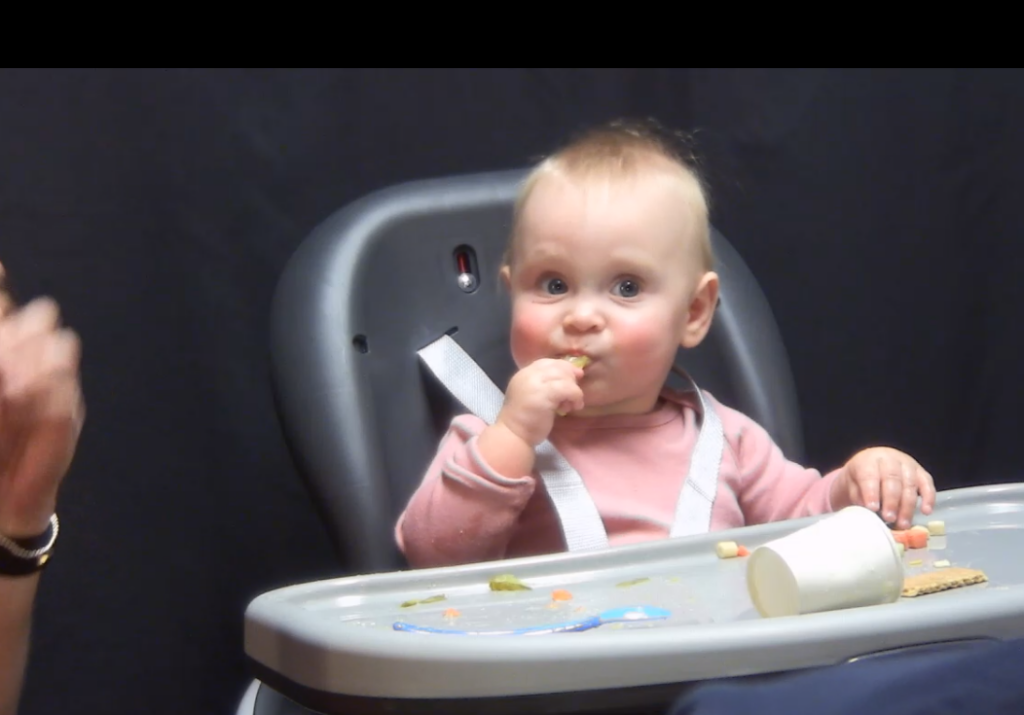
“When a child should have mastered a new skill or hit a milestone is a currently gray area, meaning there’s a lot of room to tell a parent, ‘Just keep trying, it’s typical to be slow at developing a skill,’” Delaney says. “That doesn’t give us solid criteria to say this is a problem until much later after the problems have been ingrained.”
Prior to the COVID-19 pandemic, Delaney’s lab would bring parents and children into her lab for in-person testing, which proved to be intensive and time-consuming for both the lab and caregivers. It’s also not conducive to including a diverse set of participants, feeding practices or parenting philosophies in her dataset.
In response to the pandemic, Delaney shifted from in-person to virtual data collection by developing a smartphone app with the help of Marquette’s Department of Computer Science in the Klingler College of Arts and Sciences.
“Our app allows caregivers to submit data on their own and at more natural times for the child and in more natural environments,” Delaney says.
Parents submit their child’s eating practices through the app, which is then sent to Delaney’s lab for review and analysis as they plot the eating habits to develop a standard and identify outliers.
“The app currently isn’t meant to be used as a diagnostic tool but perhaps in the future it can be used clinically and assist caregivers in receiving a referral for a specialist to assess the child,” Delaney says.
Delaney’s research goal is to garner a wide-ranging data set to achieve a nationally representative sample that indicates how a child should progress through their feeding transitions.
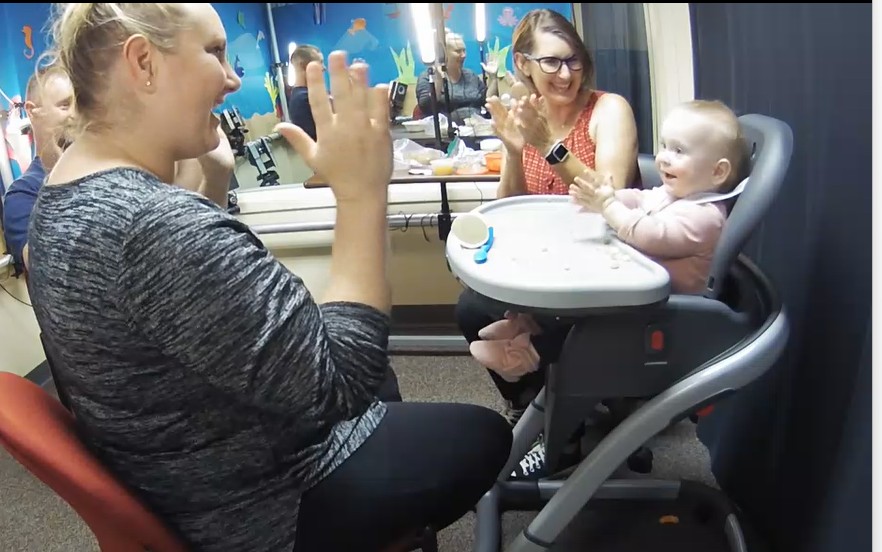
“The more data we collect the easier it is for us to suggest that a child is at risk for a pediatric feeding disorder and should be enrolled in therapy,” Delaney says. “The sooner within the critical period of the first 1,000 days that we’re able to identify an issue, the easier it is to help the child develop good habits and set them on the right feeding path for life.”
Delaney’s app is only available on iOS; she will need additional funding to develop it for Android. She also has specific plans for how she’d ultimately like the app to be used.
“In the future, it would be great for the app to have a variety of measurements caregivers could use to learn if their child is falling within the typical range or if they’re at risk of a feeding disorder,” Delaney says. “But in the meantime, we want to redefine what we know and ultimately change the field of speech-language pathology and pediatric feeding.”
If you’re interested in participating in Delaney’s research, email her lab at MU.feedinglab@gmail.com.