The transition from high school to college is important and challenging for most students. Personal support structures shift, social circles change, and students are required to be more independent and identify needs for themselves.
For students who are neurodiverse, have autism or have a learning difference, each of these aspects grows more important. As neurodivergent students look for the right school to match their personal and career goals, it is important to find or create an environment that meets their needs, as well. Jack Bartelt, director of the Office of Disability Services at Marquette University, and Emily Raclaw, director of Marquette’s On Your Marq program, answered some common questions about finding the right supports and programs to make the transition to college easier for neurodivergent students.
In this article:
- High school to college shift: How do college accommodations differ from high school individualized education plans (IEPs) or 504 plans, and what documentation is required?
- Academic and classroom support: What academic and executive functioning supports are available for neurodivergent college students?
- Housing and daily campus life: How do support programs assist with neurodivergent housing, sensory, and meal plan needs?
- Social belonging and community: What peer networks and specialized student groups exist for neurodivergent students?
- Beyond compliance and self-advocacy: What specialized programming or coaching exists beyond standard disability services to build long-term self-advocacy?
High school to college shift: How do college accommodations differ from high school individualized education plans (IEPs) or 504 plans, and what documentation is required?
“The biggest difference between college accommodations for neurodivergent students and those offered in high school is the shift from school-identified support to personal autonomy in the support you need,” Bartelt says. “Students who are neurodivergent, including students with autism, ADHD or learning differences, are more personally responsible for activating and engaging in the services and supports they need to thrive in college. The college is then responsible for responding to those requests.”
This shift in responsibility to the student can be hard for some. Here is what you need to know about navigating this transition:
- Parental access: When students begin classes in college, the Family Educational Rights and Privacy Act (FERPA) is activated, and colleges and universities are no longer allowed to share information about a student with others without the student’s permission. Parents will need to fill out a “Release of Information to Parents” form, like this one from Marquette University, to receive information on your student’s accommodation plan.
- IEPs and 504 plans: “By themselves, these forms represent a high school’s plan to meet a student’s needs,” Bartelt says. “Because they are developed under different parts of disability law that may not apply to higher education, or may apply in different ways, they are often not sufficient documentation by themselves.”
- Documentation: Every college and university approaches their documentation expectations differently. It is best to start with the Office of Disability Services, which often supports this transition to higher education. “Students and their families will need to check with individual schools about the documentation they might need to request accommodations,” Bartelt says. “Federal laws and regulations allow a school to develop its own understanding of the disability-related need for accommodation.”
Academic and classroom support: What academic and executive functioning supports are available for neurodivergent college students?
“Identifying and using supports at college is a very individualized process,” Bartelt says. “Academic and classroom supports for neurodivergent and autistic students vary considerably across colleges and universities. Some schools have very robust support programs, while others have more limited or no specialized supports.”
Bartelt offered tips on navigating the support ecosystem of your prospective school:
- Find supports: Offices like a Disability Services office may have a comprehensive list of specialized supports, it is important to ask. If you have supports that work for you, and do not see it listed, contact the office for guidance on availability of such supports or other support options that may address your needs.
- Specialized programs: Some schools have specialized programs, like Marquette’s On Your Marq. Bartelt says,“When looking at these programs, you want to get more information, such as: Are they fee-based, or free? Are they application-based, or can any qualified student use them? What services do those programs offer, and how are the services delivered?” Programs like On Your Marq provide wraparound support services for the student as an individual; programming includes executive functioning coaching, mental health support, social connection opportunities, career planning and more.
- No specialized supports: Even at a school with no specialized supports, resources exist for neurodivergent students. “At a school that has no specialized supports, neurodiverse students should make a point to gather information about the academic and classroom supports that are available to all students and make a plan for when they might use them,” says Bartelt. “For instance, at Marquette, we have a wide variety of supports through the Lemonis Center for Student Success that can be beneficial for neurodiverse students, such as the Academic Resource Center for brief intervention academic coaching and small group tutoring, as well as units like the Ott Writing Center, the Math Help Desk, the Ask-Me Desk, just to name a few.”
Housing and daily campus life: How do support programs assist with neurodivergent housing, sensory, and meal plan needs?
“Students, especially students with unique needs, should make understanding housing options and housing policies one of their priorities when choosing a school,” Bartelt says. “If you have accommodation, or other special needs, consult the university’s Office of Residence Life, or similar office. Questions about accommodations, or other disability related needs, should be asked as soon as possible, as waiting until housing assignments are made, or until move-in day could be too late.”
Raclaw agrees: “Students should work with their institution’s disability services office to explore disability-related housing accommodations, such as a single room, modified residential placement, or other supports. Specialized programs can help students better understand that process and, importantly, build the skills to communicate their own needs.
“Strong neurodiversity support programs recognize that life on campus — living with a roommate, navigating dining halls, managing sensory demands, maintaining routines, and handling the day-to-day responsibilities of independence — is intertwined with academic success. They may help students think through roommate concerns, develop morning and evening routines, identify quieter campus spaces, plan around sensory needs, navigate dining options, build healthy daily habits, and problem-solve when something in their living environment is not working.”
Housing options and policies are very different across institutions. Here are some things to consider:
- Housing types: Colleges and universities have a wide variety of housing options, including dorms/residence halls, university-owned apartments and off-campus rental properties catering to students. It is important to note that university-owned housing — such as residence halls and on-campus apartments — are very likely to be covered by disability laws, whether they are local, federal or both.
- Housing policies: Policies related to housing vary widely, as well. Some schools require students to live in residence halls for some or all of their time at the school. Other policies can include co-ed housing, very strict policies on behaviors and activities, and some schools will have very limited policies dictating what students can do in these living spaces.
Schools that have meal plans often have dedicated staff who are aware of the diverse dietary needs of students. Many students assume the school’s dining services can’t meet their needs, when in fact they can. Students should ask to speak to dining specialists who are responsible for meeting dietary, medical or other nutrition needs if it is important to their experience on campus.
Social belonging and community: What peer networks and specialized student groups exist for neurodivergent students?
“A comprehensive support program meets the need for a peer network and specialized student group for neurodivergent students, while providing a smaller and more predictable environment in which students develop confidence, practice social skills, meet peers and explore their interests,” Raclaw says. “From there, staff can help students identify campus organizations, leadership opportunities, volunteer experiences, employment, recreational activities and other communities that align with those interests.”
Colleges and universities are increasingly creating opportunities for neurodivergent students to connect through peer mentoring, student organizations, social programming, affinity spaces, group activities and specialized support programs.
“The strongest approaches do more than create a community specifically for neurodivergent students; they also help students build meaningful connections throughout the broader campus community,” Raclaw says. “With On Your Marq, we use this kind of bridge model. Students have opportunities to connect within the program while also being encouraged and supported in becoming active members of the broader university community.
“That balance is key. The goal is not simply for neurodivergent students to find one place on campus where they feel comfortable. It is for them to develop a broader sense that they belong within the university as a whole.”
Beyond compliance and self-Advocacy: What specialized programming or coaching exists beyond standard disability services to build long-term self-advocacy?
“On Your Marq is one example of comprehensive support programs being developed for neurodivergent students,” Raclaw says. “These programs offer students individualized support designed not only to help them navigate their current semester, but also to develop skills they can use throughout college, employment and adulthood.”
Raclaw warns that these programs are not intended to be the only support for all students. It is still important to identify resources offered by a university to round out a student’s ecosystem of supports.
“An important feature of effective programming is that support does not become a substitution for accommodations or skill development,” Raclaw says. “Students need opportunities to practice communicating directly with faculty and staff, asking questions, requesting assistance, managing priorities, understanding their strengths and challenges, and making increasingly independent decisions.”
Examples include:
- Having a coach help a student prepare an email rather than sending it for them.
- Practicing for a difficult conversation rather than having someone else conduct the conversation.
- Allowing a student to experience a manageable consequence and then helping them reflect on what happened, problem-solve and decide what they will do differently next time.
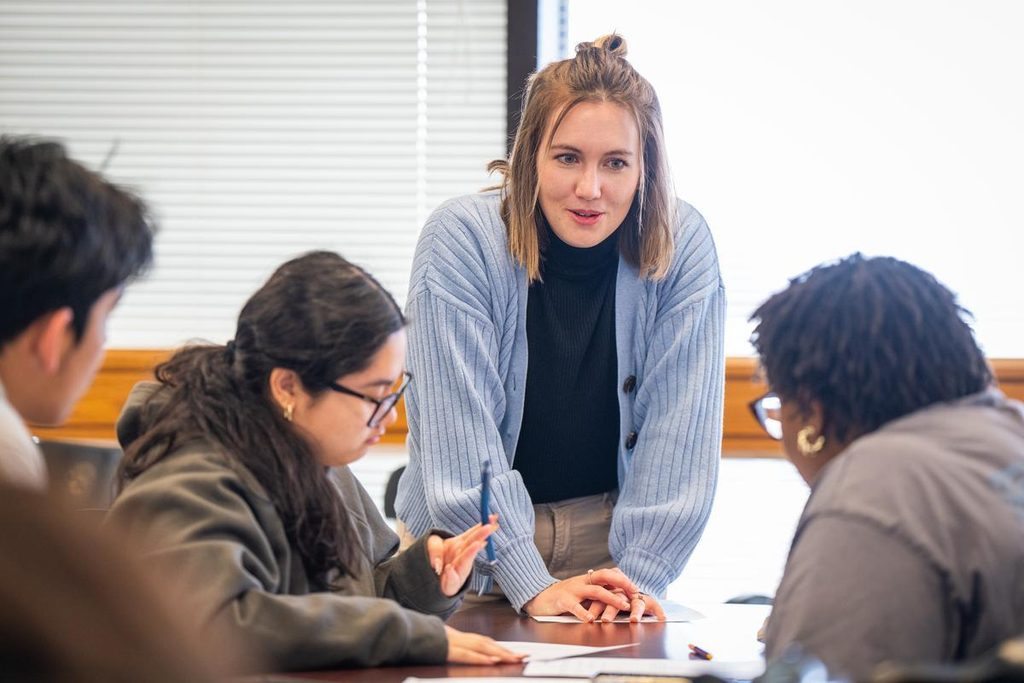
“By giving students the dignity of risk, we provide opportunities for meaningful growth,” Raclaw says.
Ultimately, the goal of neurodiversity support should extend beyond helping a student meet academic requirements or graduate from college. Effective programs help students develop a stronger understanding of themselves, greater confidence in advocating for what they need and the skills to navigate challenges with increasing independence.
About the experts
Jack Bartelt is the director of the Office of Disability Services at Marquette University. In nearly 15 years at Marquette, he has established himself as a leader in his field on evolving best practices and emerging legal guidance on university disability services.
Emily Raclaw is the founding director of Marquette University’s On Your Marq program, a college success program designed to assist neurodivergent students in navigating the college landscape. She is a Licensed Professional Counselor and Certified Rehabilitation Counselor, and previously taught high school special education and worked as a vocational rehabilitation counselor.