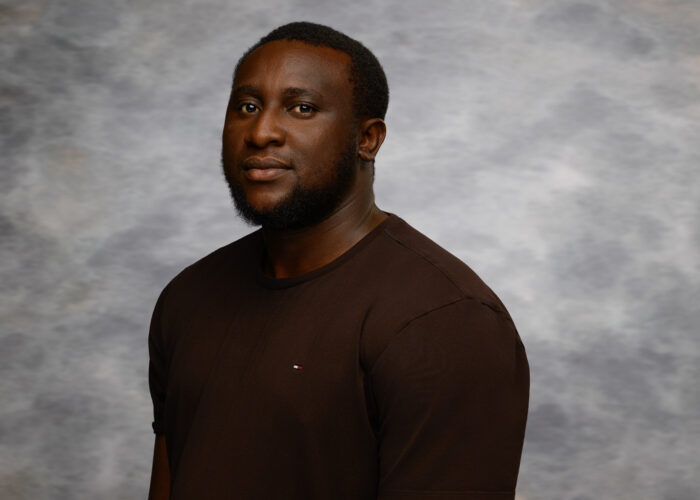
Andy Minster carries a plastic straw in his car. But it isn’t for a particular conservation effort or the result of one too many forgotten straws in fast-food orders.
The straw is a tool being used to help advance MS research.
Minster has multiple sclerosis (MS) and — thanks to a grant from SingWell Canada and additional funding from the Jimmy Heuga Legacy Foundation — he and others with MS are participating in a unique study to see if singing can improve their symptoms.
More specifically, retired exercise science faculty member Dr. Alexander Ng, Speech Pathology and Audiology Professor Dr. Jeff Berry and former Marquette faculty member and trained opera singer Evelyn Pollock, Grad ’19, are investigating if pulmonary function, speech and voice could improve with group singing.
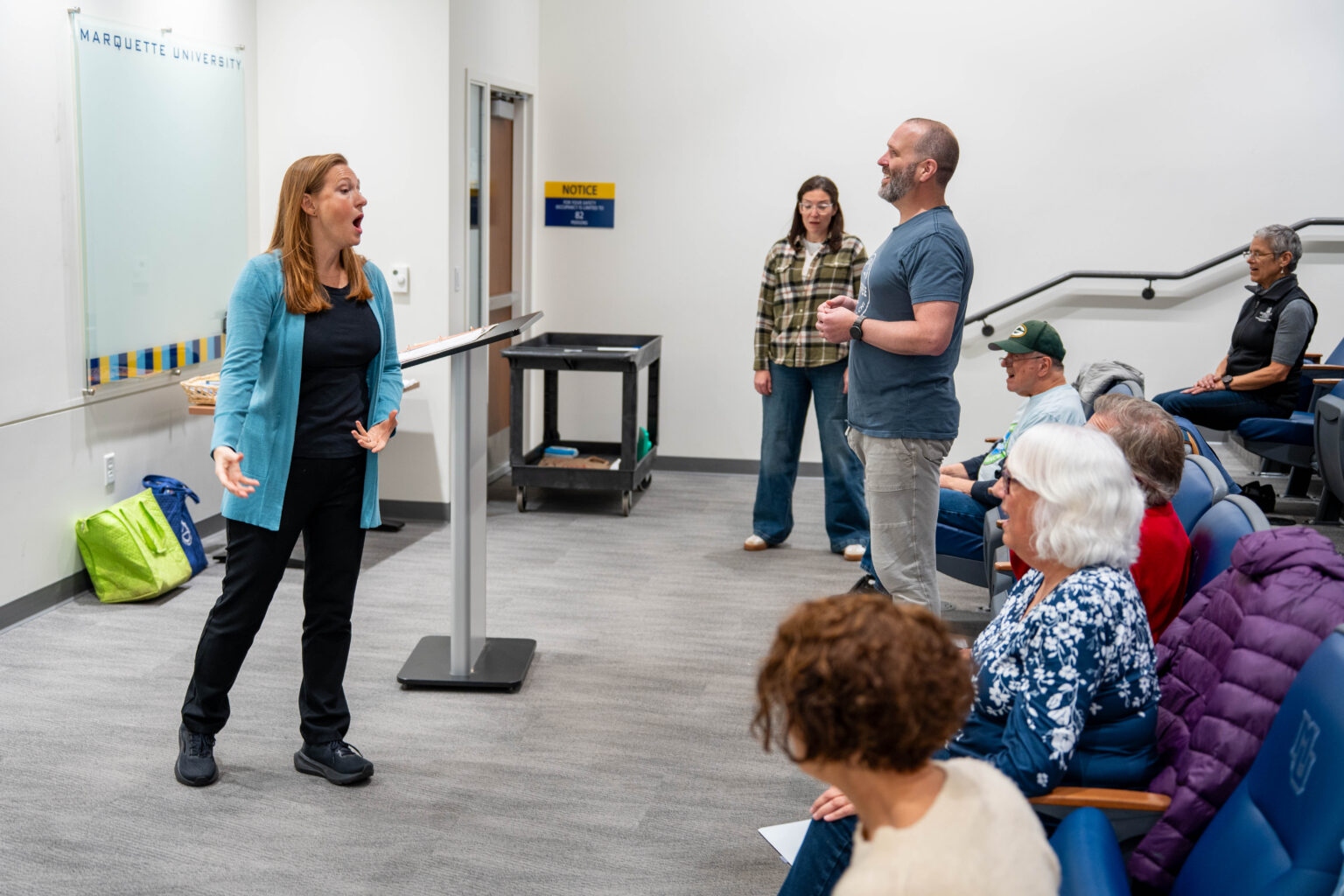
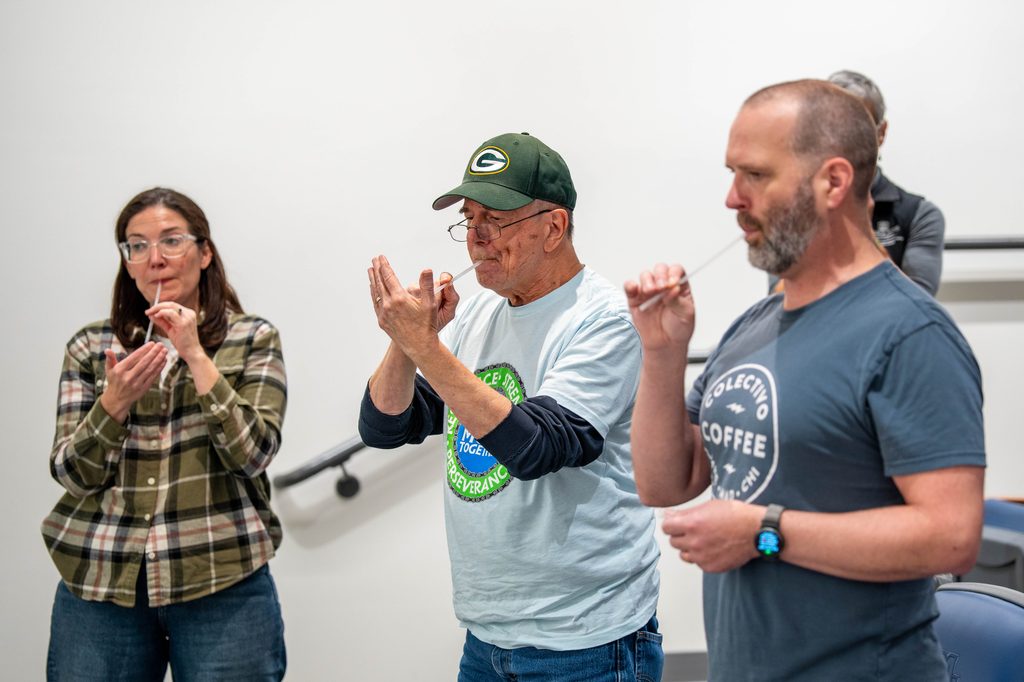
So every week this fall, the small cohort of participants gathers in the Athletic and Human Performance Research Center on Marquette’s campus to sing songs and conduct vocal exercises — including humming through a pinched straw.
“The effect is incredible,” Minster emphasizes. “People see me doing this and I’m strengthening my core and able to really project my voice so much better.”
Berry explains that MS has a significant effect on the person’s voice, and more seriously, dramatically increases the likelihood of respiratory dysfunction. According to a 2015 study, 47% of MS patients died of respiratory complications.
“My students are collecting data about breathing, voice quality and heart rate variability, which is a measure of autonomic nervous system function,” Berry says. “Our hope is that all these issues may be improved through singing as it serves as an effective form of exercise and provides a basis for positive social engagement.”
Pollock was an international opera singer before she earned her master’s in speech language pathology from Marquette. She says she’s dreamed of ways to synthesize her skills and experiences in both fields in service to others. Her group singing intervention addresses muscle weakness that affects the MS population’s breathing and voice.
“I weave in vigorous breathing exercises that encourage the use of abdominal, intercostal and diaphragmatic muscles,” Pollock explains. “These high energy exercises are meant to challenge those muscles and hopefully improve their function. I also incorporate aspects of voice therapy and phonation exercises that create high resistance in the vocal tract, thereby improving vocal efficiency.”
For Karli Larsen, participating in the study made an immediate improvement in her life as well.
“I noticed almost right away that my vocal resonance changed,” Larsen recalls. “The exercises with the straws seem a little silly, but the change was immediate for me.”
Larsen was a music teacher prior to her diagnosis and even before she was diagnosed, she advocated that music is a positive for everyone.
“It’s a full circle moment for singing to help me in this facet of my life,” she says. “I always advocate that music is good for people. It’s exciting to see that taken seriously in research and studies to support MS.”
In the past, Ng has spoken about the benefits of physical activity and exercise for people with MS. He explained that respiratory and vocal muscles are voluntary muscles like those in the arms and legs and could respond to use and workouts as well.
“Having a personal and academic interest in the importance of the arts for healing, health and wellness, it was easy to take the step to question whether more formal group singing could benefit people with MS,” Ng explains.
Ng says the group is planning on running a spring cohort of the study and hopes to expand their research into other neuro populations that have communication, speech, pulmonary function or voice impairments.
“Perhaps most importantly, we would like to find a means to incorporate and sustain what we’ve been doing into the community,” Ng says. “We’ve had so much success so far with this study, I want it to be available to more people in the MS community.”
For more information on the program, email exercisewellness@marquette.edu