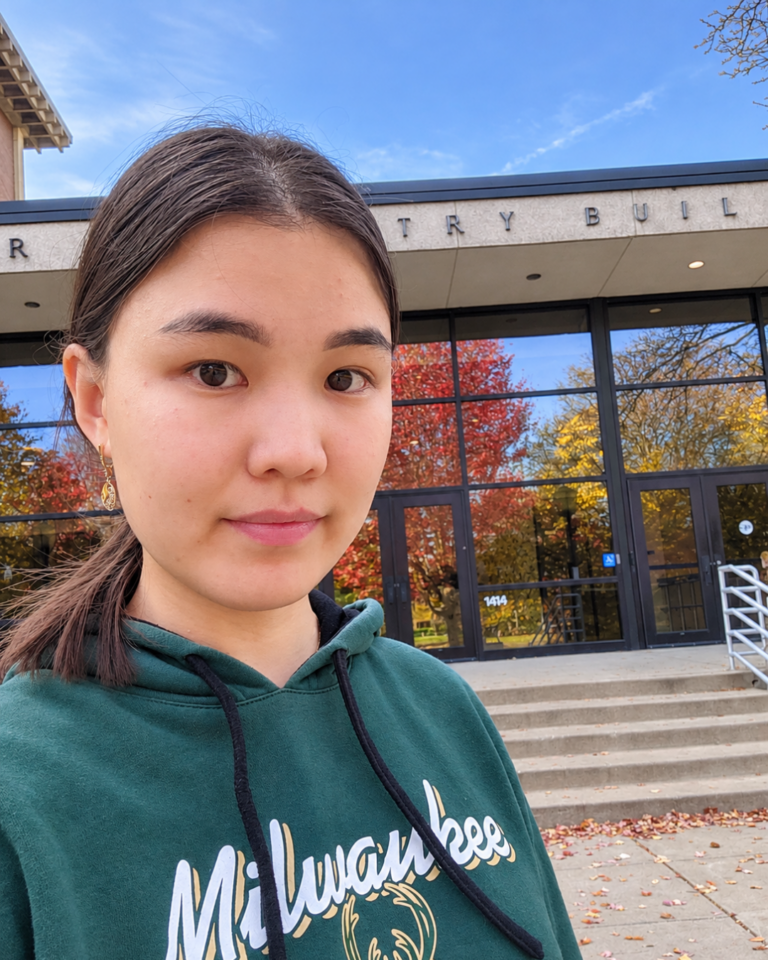
In celebration of International Education Week (IEW), Nov. 16–20, 2027, Marquette University’s Graduate School is highlighting the stories of international graduate students whose experiences, perspectives and contributions enrich the university community. Among them is Tamila Kuanysheva, a fourth-year Ph.D. candidate in chemistry whose journey from Karaganda, Kazakhstan, to Milwaukee reflects a passion for scientific discovery, a commitment to community and an appreciation for the cultural traditions that connect people across the world.
From Karaganda to Marquette
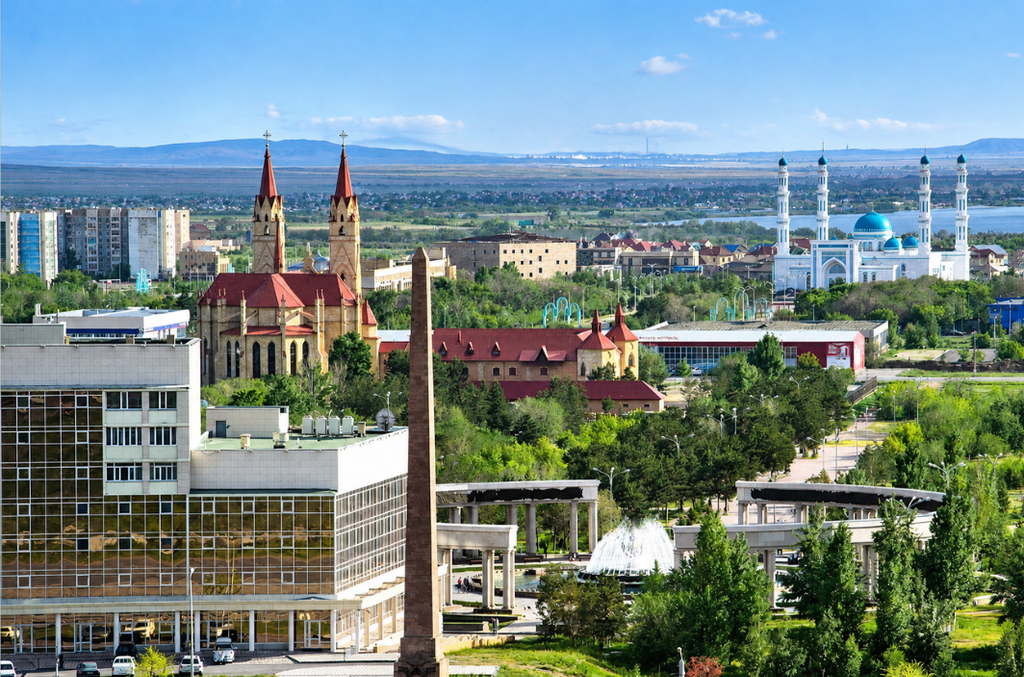
Located in central Kazakhstan, Karaganda is a mid-sized city of approximately 500,000 people. Known for its coal-mining industry, the city features a mix of Soviet-era apartment buildings, newer residential neighborhoods, wide streets, and green parks.
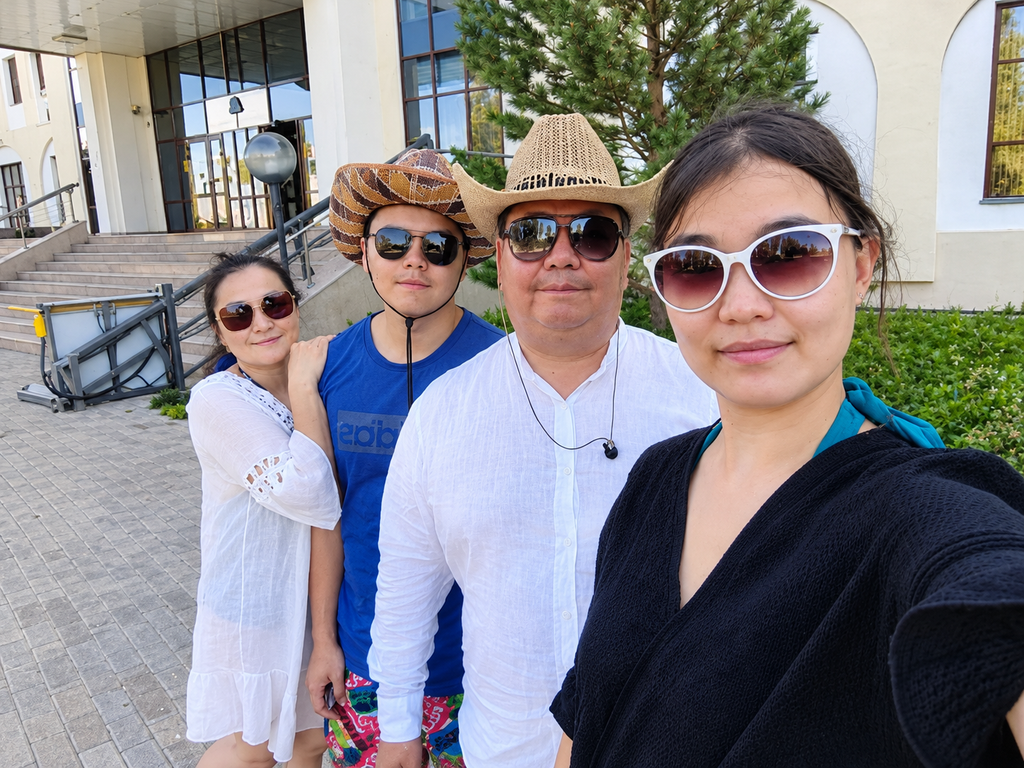
Kuanysheva grew up with her parents and younger brother, enjoying an active childhood filled with outdoor activities. She loved playing badminton, dodgeball, basketball, and volleyball with friends. Reading and solving jigsaw puzzles were also favorite pastimes, hobbies she continues to enjoy today.
Growing up in Karaganda also meant experiencing two very distinct seasons. “Winter days had their own unique atmosphere,” she said. “Most of the time, you would leave for school while it was still dark outside and come back home when it was already dark again.”
Despite the freezing temperatures and long winter days, there was no shortage of outdoor activities. She and her friends went ice skating, skiing and sliding down enormous slides made entirely of ice. Getting ready to go outside meant bundling up in several layers, including snow pants that made a distinctive swishing sound as she walked through the snow. Summer brought a completely different experience, with warm weather and long days that encouraged spending as much time outdoors as possible.
Beyond its industrial history, Kazakhstan is known for its vast steppes, diverse landscapes and nomadic cultural heritage. As the world’s largest landlocked country, it is home to everything from open grasslands and deserts to mountains and lakes. Its history is also closely connected to the Silk Road, which linked Europe and Asia through centuries of trade and cultural exchange. Hospitality is another important part of Kazakh culture, particularly the tradition of welcoming guests and sharing food.
For Kuanysheva, some of her favorite memories of that tradition began in her family’s kitchen. One of her favorite home-cooked dishes is manty, traditional steamed dumplings typically filled with finely chopped meat, onions, potatoes and seasonings and served with sour cream.
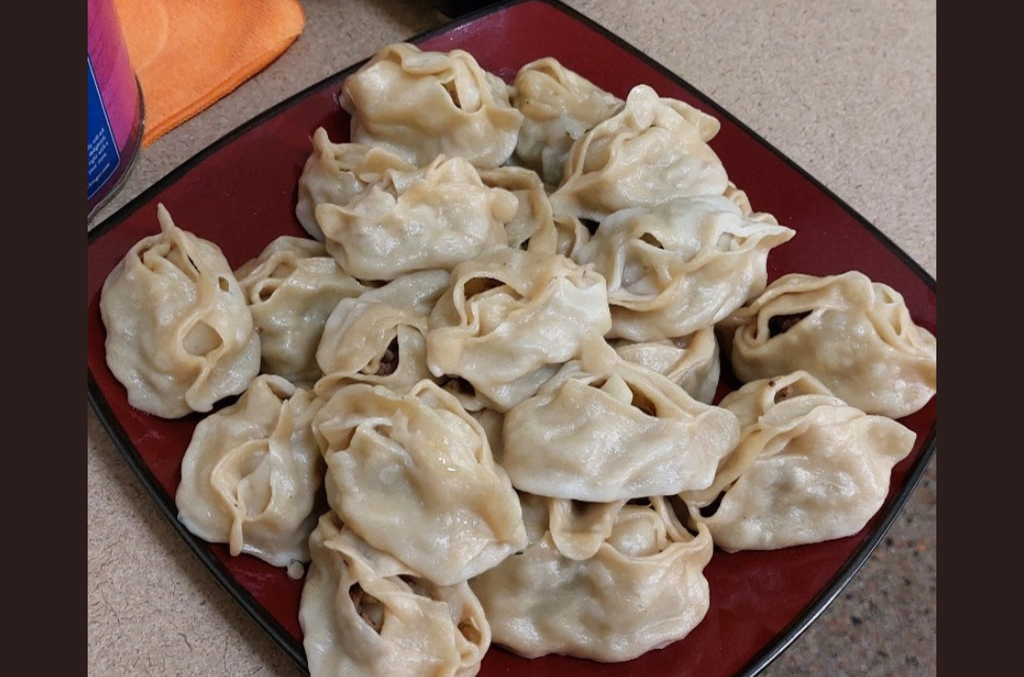
Making manty was a family activity. Her mother prepared the dough while Kuanysheva and her younger brother added the filling and shaped the dumplings. Their time together often included engaging conversations and word games, including a favorite called “Cities,” in which each person names a city beginning with the last letter of the previous city’s name.
“Making manty was about much more than just preparing food,” she said. “It was a way for us to spend quality time together, and those are some of my favorite memories from home.”
Discovering a passion for chemistry
Kuanysheva’s interest in science began taking shape during her school years at Nazarbayev Intellectual School of Chemistry and Biology in Karaganda. The school’s emphasis on science and mathematics, along with its well-equipped laboratories and supportive teachers, helped establish a strong academic foundation.
“School played a huge role in shaping who I am today,” she said. “Looking back, I’m really grateful for the opportunities and encouragement I received there, because they helped shape my interest in science and prepare me for my academic journey.”
She continued her education at Nazarbayev University in Astana, Kazakhstan’s capital, where she earned her bachelor’s degree in chemistry. It was there that she first developed an interest in scientific research and decided to pursue it further in graduate school.
Marquette entered the picture through an important academic connection. Kuanysheva’s undergraduate research advisor, Dr. Haiyan Fan-Hagenstein, had earned her doctorate in physical chemistry at Marquette more than 20 years earlier, conducting research with Dr. Scott Reid on the fine and hyperfine rovibronic structures of small radicals and carbenes relevant to interstellar and combustion chemistry. Having had a positive experience at Marquette, Dr. Fan-Hagenstein spoke highly of the university, encouraging Kuanysheva to consider it for her graduate education.
“She recommended that I apply because of Marquette’s strong research environment and welcoming, supportive community,” Kuanysheva said. “Her recommendation really encouraged me to consider Marquette, and I’m glad I followed her advice.”
This year, Kuanysheva’s hard work has paid off. She received the Denis J. O’Brien Fellowship, which was established through the generosity of the Denis J. O’Brien Fund. It is a 12-month research assistantship awarded to doctoral students who have completed their coursework and advanced to candidacy. Kuanysheva feels honored to be a recipient and is particularly grateful for the fellowship because it provides dedicated research support and allows her to focus her time and energy on her own doctoral research. She considers it a meaningful recognition of her academic progress and research efforts.
Her academic accomplishments were also recognized in September 2026, when she was inducted into Alpha Sigma Nu, the National Jesuit Honor Society. Founded at Marquette University in 1915, the society has since grown into a national organization recognizing distinguished scholarship, loyalty, and service among students at Jesuit institutions. Kuanysheva is especially proud of this recognition because it reflects not only academic achievement but also a commitment to contributing to the university community.
Researching the future of chemistry
Now in her fourth year as a Ph.D. candidate at Marquette, Kuanysheva is conducting research at the intersection of chemistry and quantum computing. Working in the theoretical chemistry research group of Dr. Dmitri Babikov at Marquette, she focuses on developing quantum algorithms to simulate molecular dynamics on quantum computers. Her research also involves collaboration with Dr. Brian Kendrick, a scientist at Los Alamos National Laboratory (LANL). Together, they develop computational approaches to studying molecular quantum dynamics and explore how quantum computing can be applied to chemical systems. In simpler terms, her work examines how quantum computers might help scientists model the ways atoms and molecules move and interact. What excites her most is the potential for this research to contribute to scientific advancements beyond the laboratory.
Kuanysheva notes that more accurate and efficient molecular simulations could eventually help accelerate drug discovery, support the development of new materials, and improve scientists’ understanding of chemical reactions. These methods may also help researchers study complex molecular systems that are difficult to simulate using conventional computers.
Although quantum computing is still an emerging technology, Kuanysheva finds it exciting to contribute to research that could have a meaningful impact on chemistry and related fields.
Finding community at Marquette
While research is an important part of her graduate experience, Kuanysheva has also made building connections and getting involved in campus life a priority. She describes the Marquette community as welcoming and supportive, something that has helped her feel at home while pursuing her degree far from Kazakhstan.
One of her favorite places on campus is the Wellness + Helfaer Recreation facility, where she enjoys participating in group fitness classes and playing sports with friends. It provides an opportunity to stay active, socialize, and take a break from her research.
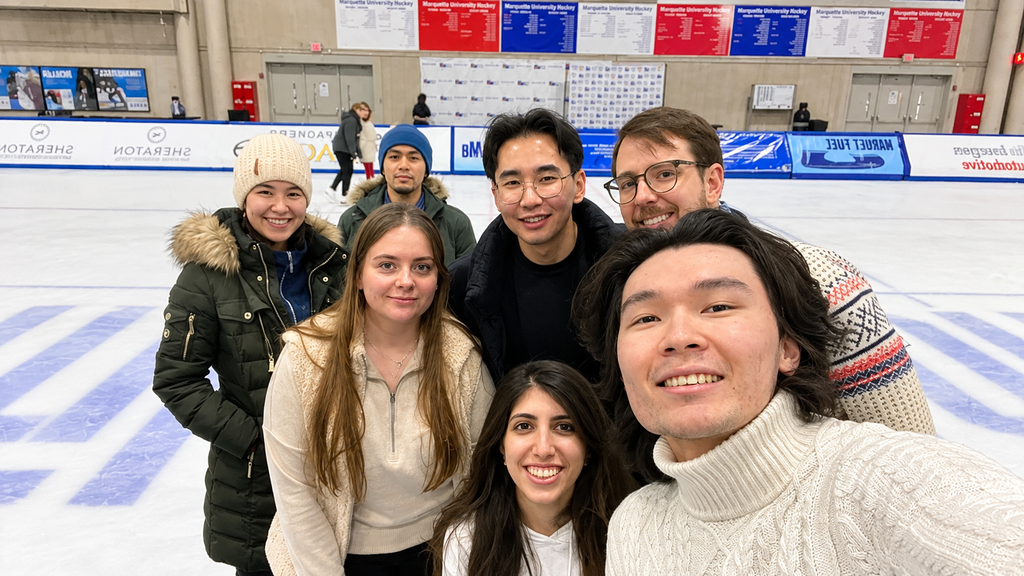
Her involvement in campus life extends far beyond recreation. Kuanysheva is currently serving her second term as vice president of the Graduate Student Organization (GSO), where she helps represent and advocate for Marquette’s graduate student community. During her time in this role, the GSO has launched an Anonymous Communication Form, giving graduate students a platform to share concerns, suggest programming ideas and raise topics for community discussion. The organization has also advocated for increased graduate assistantship stipends, hosted a cultural gala to raise funds for Iggy’s Market and the Student Emergency Fund, and organized a variety of social and service events to strengthen connections and build community among graduate students.
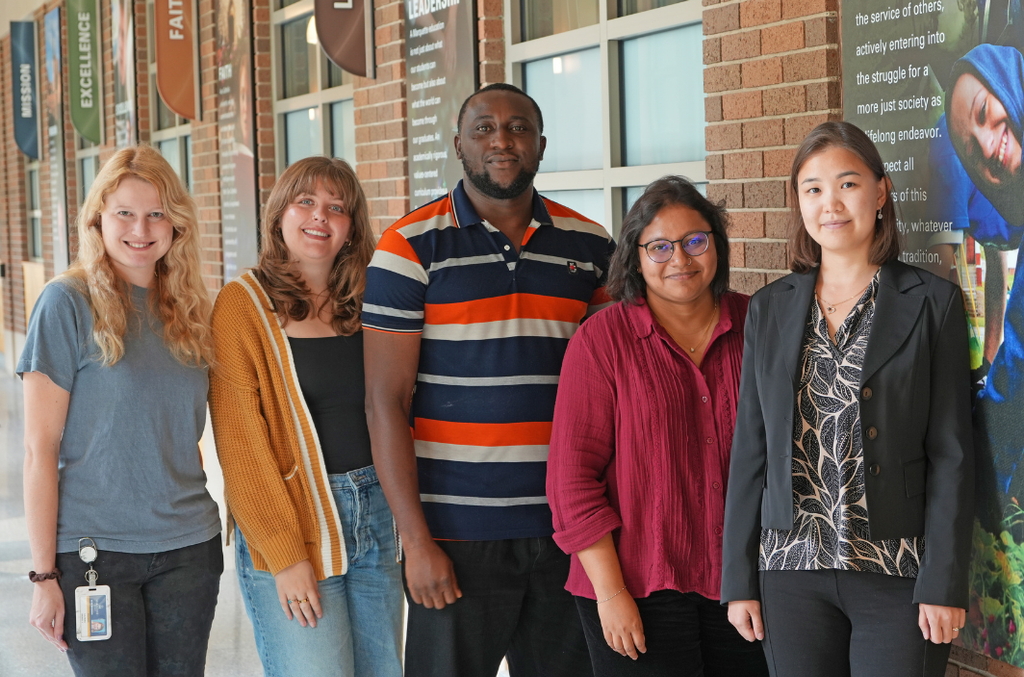
“I really enjoy being involved in the graduate student community and helping make the graduate experience better for everyone,” she said. She encourages graduate students to connect with her or any member of the GSO executive board with questions, concerns at gso@marquette.edu.
Additionally, Kuanysheva helped found the Quantum Club student organization at Marquette University and currently serves as its president. She notes, “we established the club to create a welcoming space for students interested in quantum computing and quantum science, regardless of their academic background or level of experience. We organize seminars, workshops, and community-building activities to introduce students to this rapidly growing field, encourage interdisciplinary connections, and support those interested in exploring opportunities in quantum science and technology.”
Kuanysheva has also embraced a distinctly Wisconsin food tradition since moving to the United States. “I recently tried Wisconsin’s Friday fish fry, and it’s quickly becoming one of my favorite foods in the U.S.!” she said. “I really enjoy the crispy fried fish, and I also love that it’s a local tradition.”
Building connections across cultures
For Kuanysheva, the journey from Karaganda to Milwaukee has been about more than pursuing an advanced degree. It has allowed her to explore new opportunities, develop friendships, and become part of a community that brings together people from different backgrounds and experiences. Through her research in quantum computing and her involvement in the Graduate Student Organization, she contributes to Marquette while continuing to embrace the cultural traditions that shaped her upbringing in Kazakhstan.
Her experience reflects the value of international education and the ways students enrich a university through their academic pursuits, cultural perspectives and involvement in campus life. As Marquette celebrates International Education Week, Kuanysheva’s story highlights how learning from one another and sharing experiences can create a stronger, more connected community.