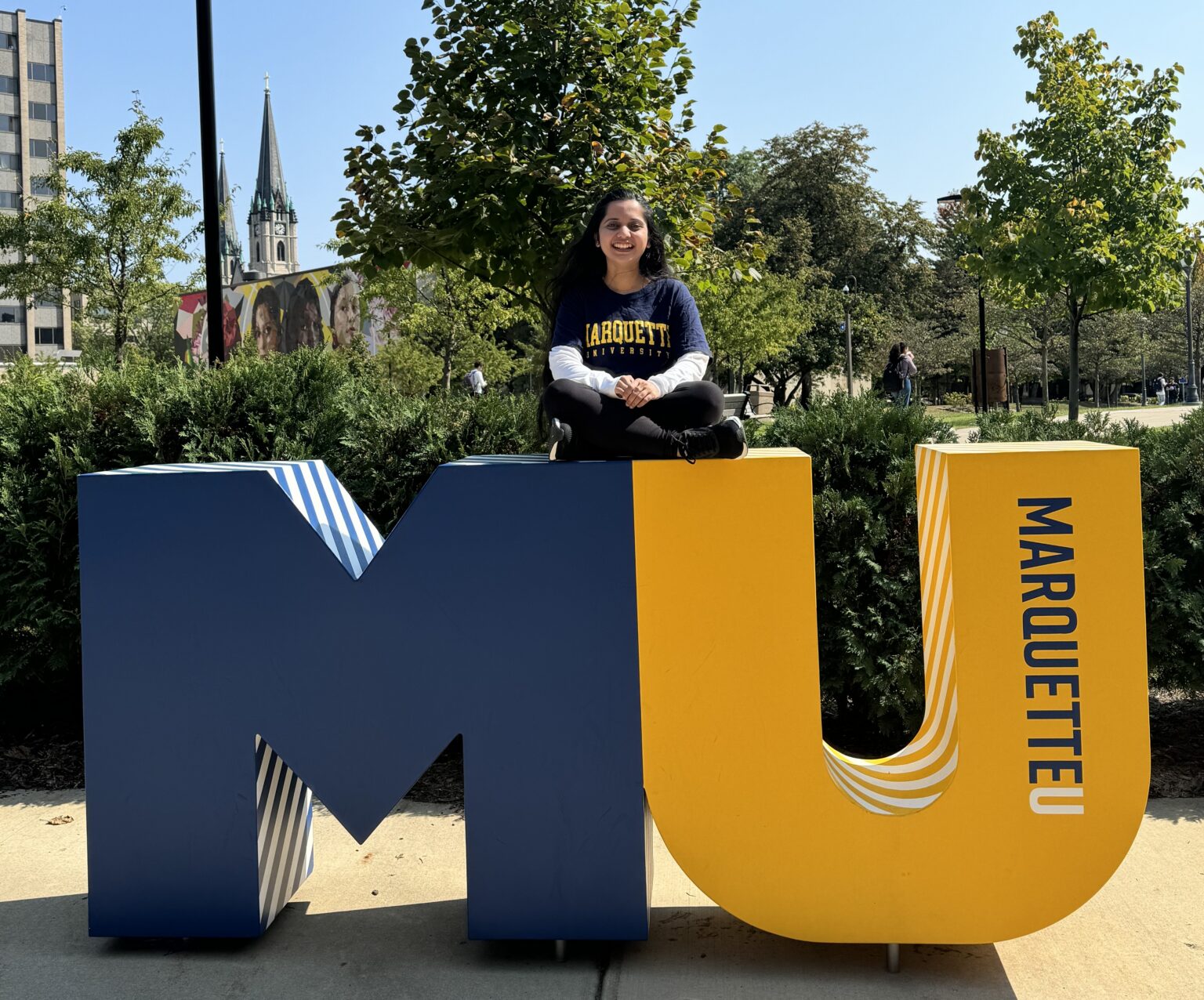
When Paramita Basak Upama first arrived at Marquette University, she was beginning a new chapter far from the family, friends and familiar surroundings she had known in Bangladesh. As the first woman in her family to study abroad—in a country where she had no family members—she faced the challenges of building a life in a new place while pursuing her doctoral degree.
Today, after four and a half years at Marquette, Upama has found a welcoming community, built friendships across cultures and languages, and pursued research that brings together computer science and healthcare. Her journey reflects the global experiences and perspectives that enrich the Marquette community.
As Marquette celebrates International Education Week (IEW) Nov. 16–20, 2026, the Graduate School is highlighting international students like Upama, whose stories demonstrate how education connects people, cultures and ideas across borders.
A childhood shaped by culture, history and curiosity
Upama was raised in Dhaka, the capital and largest city of Bangladesh, and was born in Tangail, her family’s hometown about 100 kilometers away. Growing up in a bustling metropolitan city, she experienced a distinctive mix of old and new: modern buildings, shopping malls and busy roads alongside historic architecture, traditional businesses, crowded streets filled with rickshaws and the Buriganga River running along the western outskirts of Old Dhaka.
For Upama, Dhaka was more than a busy city. Its cultural diversity, historic landmarks and vibrant festivals helped shape her curiosity about the world.
“I grew up in a multicultural city, and enjoying several festivals helped me shape into a broad-minded person,” she said. “Also, it grew my interest in history, architecture, and tradition.”
Two celebrations hold particular significance in Bangladeshi culture. Pohela Boishakh, the Bengali New Year, is celebrated each April with festivities that welcome a new year according to the Bengali calendar. International Mother Language Day, observed worldwide on Feb. 21, grew out of the 1952 Bengali Language Movement, when people in what was then East Pakistan fought for recognition of Bengali as an official state language. These traditions helped Upama develop an appreciation for cultural heritage and linguistic diversity, interests that continue to influence how she connects with people today.
Her hometown of Tangail also has a rich cultural identity. It is known for its handloom textiles and traditional sweets, and the traditional saree-weaving art of Tangail has been inscribed on UNESCO’s Representative List of the Intangible Cultural Heritage of Humanity.
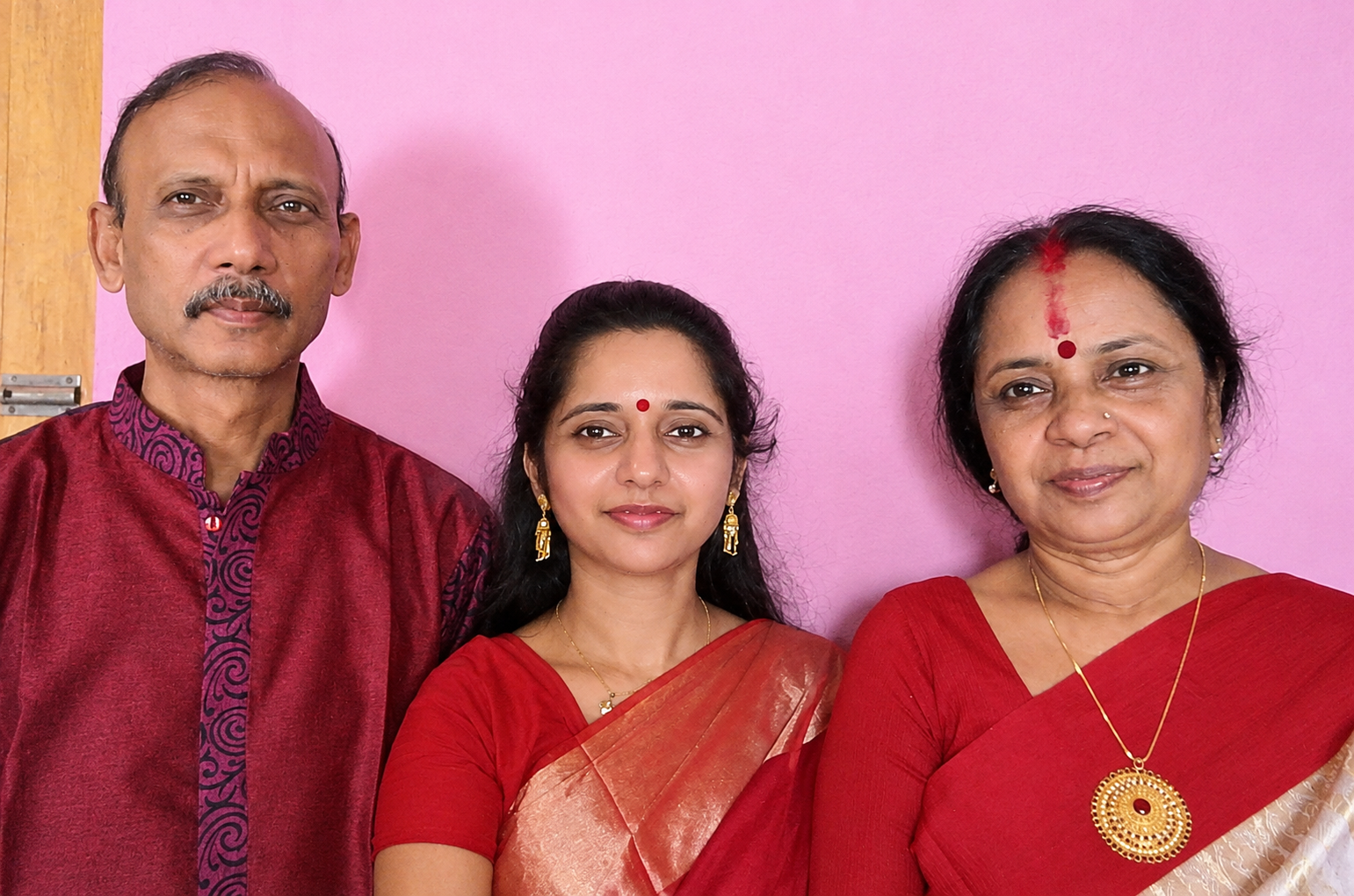
Family was another important part of Upama’s upbringing. Although she does not have siblings, her home was often filled with cousins and friends. Her parents, who enjoy spending time with loved ones and traveling, passed along their enthusiasm for exploring new places.
That spirit of discovery became one of Upama’s own defining interests. She has traveled throughout Bangladesh and the United States, including taking solo trips, and now enjoys exploring with her husband whenever they can.
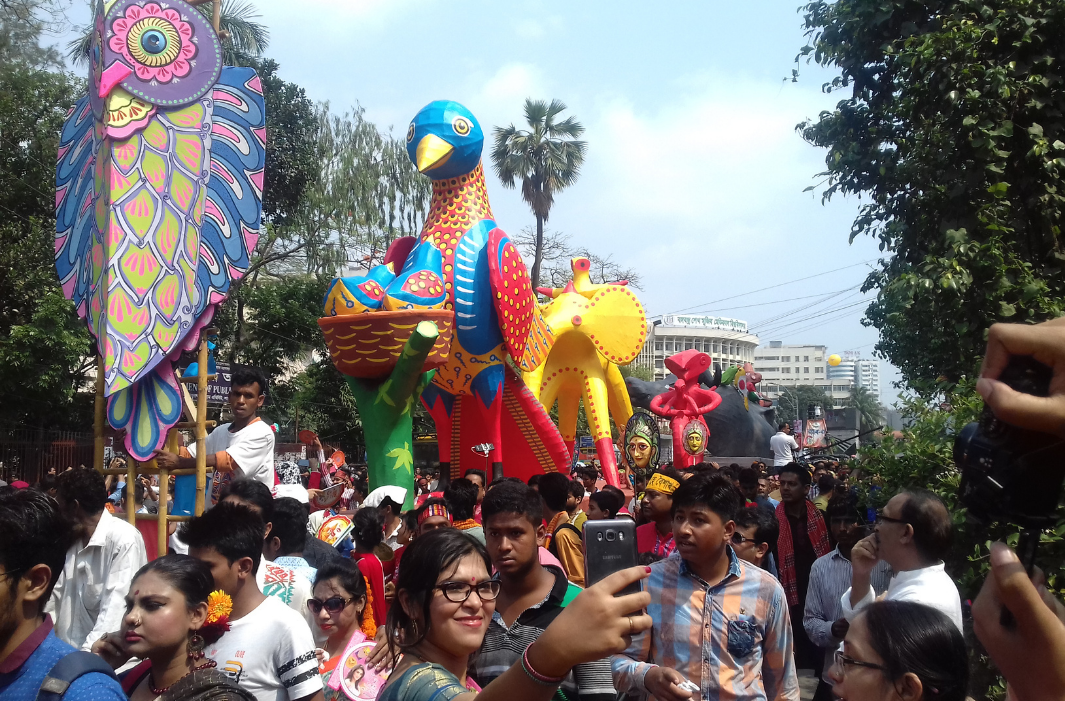 Pohela Boishak celebration in Dhaka.

A love of learning and art
“My school was my favorite place, and I rarely skipped school,” she said. “I believe that is where I learnt to study by heart and build myself as a whole person.”
Her interest in reading and painting grew during her school years. She eventually earned a formal diploma in fine arts, and her creative interests have followed her across continents. In the United States, she has continued painting, attended workshops to learn from experienced artists, and decorated her home with her own paintings and handmade artwork.
Although she is now pursuing a Ph.D. in computer science, creativity remains an important part of her life. Her interests in art, books, history and technology reflect a curiosity that extends well beyond a single academic discipline.
Upama’s educational journey began at YWCA Higher Secondary Girls’ School in Dhaka, where she studied through 10th grade. She completed her final two years of secondary education at Dhaka City College before earning her undergraduate degree in computer science and engineering from Ahsanullah University of Science and Technology. She later completed a master’s degree in information and communication technology at Bangladesh University of Engineering and Technology.
Her academic path ultimately led her to Marquette, where she found a doctoral program that aligned with her interests. She first learned about the university through its ranking in her field of interest, recommendations from friends studying in the United States and the reputations of faculty members in the computer science department.
Using artificial intelligence to support healthier lives
At Marquette, Upama is pursuing a Ph.D. in computer science and conducting research in the Ubicomp Lab, where researchers design algorithms and systems for healthcare services.
Her work focuses on developing novel algorithms that draw on quantum machine learning, natural language processing and explainable artificial intelligence. She applies these approaches to diabetes and related diseases, with the goal of improving diagnosis and early prediction.
For Upama, the long-term purpose of this research is clear: to help people live healthier lives. She hopes to delve deeper into diabetes-related research and develop approaches that can support earlier identification of disease and better-informed healthcare decisions.
Her work illustrates how computer science can contribute to challenges that affect people across countries and communities. Diabetes is not confined by national borders, and research that advances prediction and diagnosis has the potential to contribute to healthcare beyond any one region.
Upama’s experiences growing up in Bangladesh and studying in the United States give her a global perspective as she works at the intersection of technology and human well-being.
Finding a home away from home at Marquette
The transition to life in a new country was not always easy. Upama’s husband lives in Canada, while the rest of her family remains in Bangladesh. Being separated from loved ones while adjusting to a different culture and environment brought moments of loneliness, particularly during her first days in the United States.
But the Marquette community helped make that transition easier.
“The community at Marquette has always been a blessing to me,” Upama said. “Everyone I met here welcomed me wholeheartedly, despite the cultural and language differences.”
She especially enjoys spending time at her desk in the computer science department and on the grounds of St. Joan of Arc Chapel, places that offer her a sense of familiarity and belonging on campus.
Over time, the friendships she formed at Marquette became an important source of support. She said she can rely on her friends and no longer feels alone in the way she did when she first arrived.
“I am the first woman in my family to study abroad, and that too in the United States, where I had no family at all,” she said. “But I can really trust and rely on my Marquette friends and do not feel alone anymore.”
That sense of belonging has also motivated Upama to help other students navigate their own transitions. For the past several years, she has participated in the International Student Peer-Support Program (ISPS) and the Graduate Student Organization (GSO). Through these groups, she has helped new students settle into Milwaukee and adjust to life at Marquette. Some of those connections have grown into lasting friendships. Along the way, she has also learned about other cultures, histories and languages through her fellow graduate students.
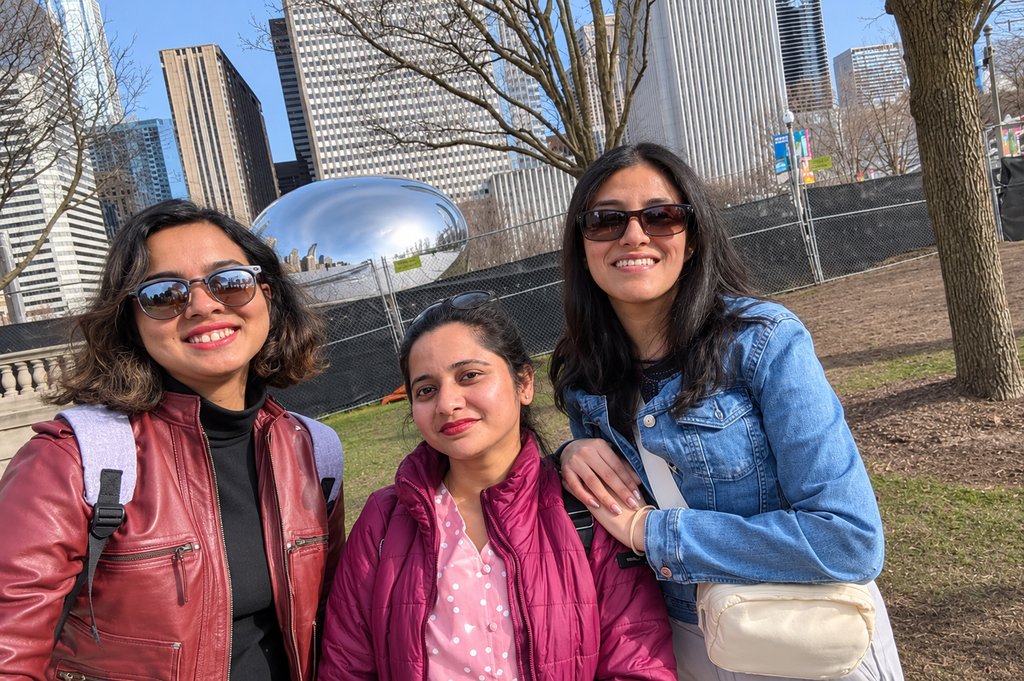
Her experience highlights the reciprocal nature of international education: students arrive ready to learn, but they also share knowledge, experiences and perspectives that strengthen the communities they join.
Exploring the world, one book and one meal at a time
Outside the lab and her involvement in student organizations, Upama enjoys exploring the world through books, films, television series, food and travel.
A self-described book person, she enjoys fiction and is interested in movies and television series from different countries and in different languages. As a multilingual person, she often uses language as a way to connect with others, discover new stories and make friends on campus.
She describes herself as an introvert who opens up once she becomes comfortable with someone. Her love of languages has helped her bridge that initial distance and connect with people from different backgrounds.
Food is another way Upama explores culture. In Bangladesh, rice and fish are staples of her family’s meals. She particularly enjoys freshwater fish, including hilsa, rohu, katla and koi, as well as seasonal vegetables and fruits. She also cherishes a Bangladeshi tradition of sending seasonal fruit to relatives as an expression of love and care.
 One of Upama’s favorite meals: Bangladeshi Biriyani and fried fish.
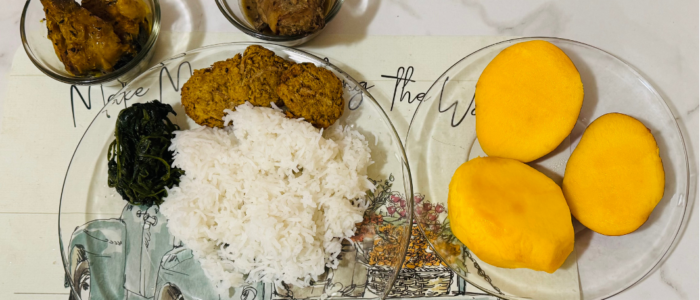
Since moving to Milwaukee, her culinary interests have expanded. A self-described foodie, Upama enjoys trying cuisines from around the world and has developed a particular appreciation for the city’s fresh seafood and ice cream. Two of her favorite ice cream destinations are Purple Door in Milwaukee and The Chocolate Chisel in Port Washington. These everyday discoveries are part of what makes living in a new place rewarding: familiar traditions remain close to heart while new experiences become part of home.
A global perspective, rooted in community
For Upama, international education is about more than earning a degree in another country. It is also about learning from people whose experiences differ from her own, sharing her culture with others and building relationships that cross linguistic and geographic boundaries.
From the historic streets and festivals of Dhaka to the research labs and welcoming spaces of Marquette, her journey has been shaped by a love of learning, a commitment to discovery and the support of a community that made a new country feel less distant.
As International Education Week approaches, Upama’s story offers a reminder that international students contribute to university life in many ways. They bring distinct histories, traditions, skills and perspectives into classrooms, research labs and student organizations, while creating friendships that connect Marquette to the wider world.
Through her research, her artistic interests and her dedication to supporting fellow graduate students, Upama continues to build those connections one discovery, one conversation and one friendship at a time.