Marquette University — and Milwaukee as a whole — have had many Native American nations call the land and waters home, including the Menominee, Potawatomi, Ho-Chunk, Fox, Mascouten, Sauk and Ojibwe. “Milwaukee” itself is generally understood to mean the “good land” or the “gathering place by the water” from Algonquian-language roots. But Marquette’s connection to Native American tribes is not a thing of the past — it lives and breathes in the city today.
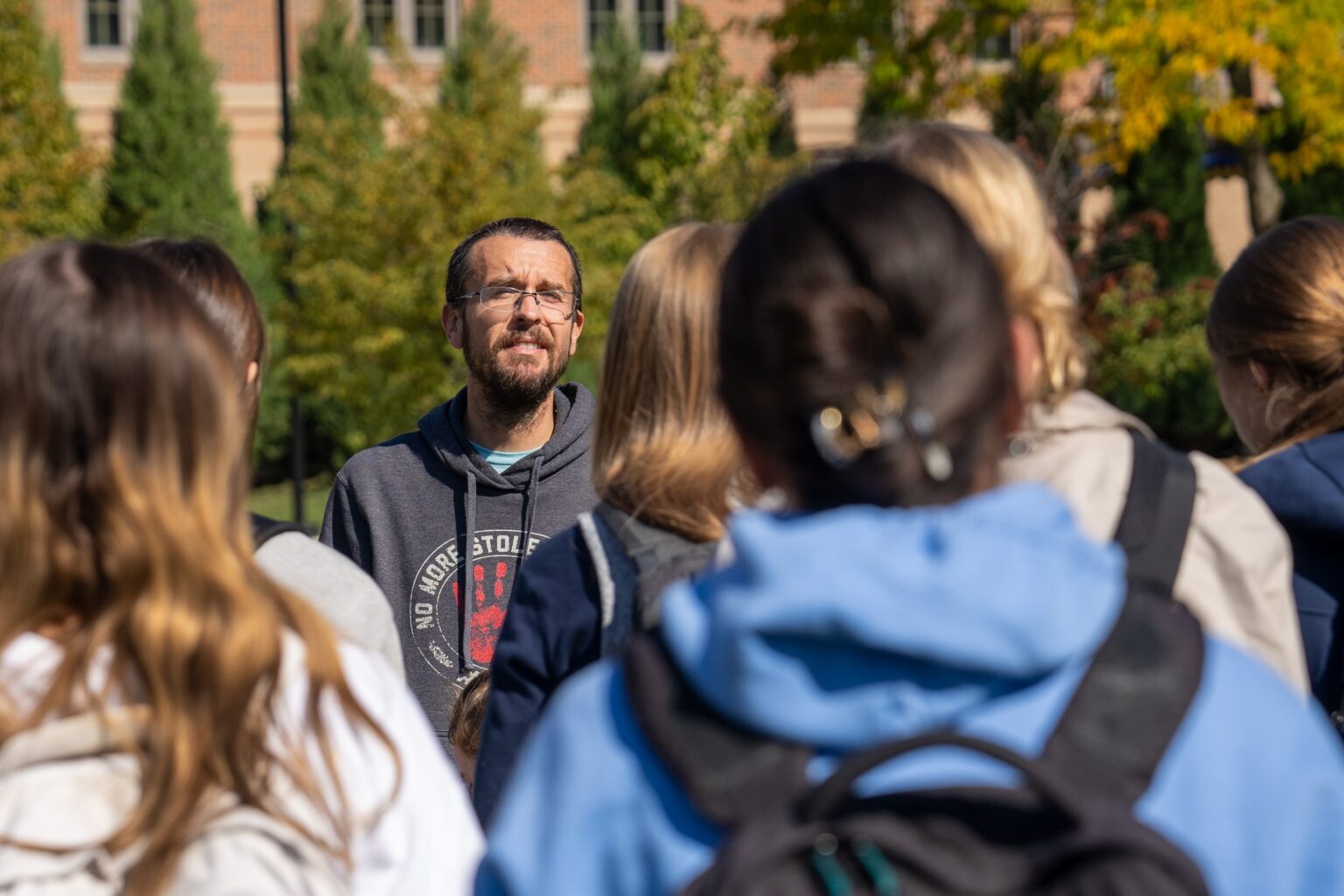
Dr. Bryan Rindfleisch, associate professor of history, helps students rediscover the Indigenous history surrounding them by exploring the city’s past and present. Through courses like HIST 4156: A History of Indigenous Wisconsin and Milwaukee and HOPR2956: Engaging the City, Rindfleisch encourages students to step out of their comfort zone and onto the good land to see history and culture come to life.
In the classroom, Rindfleisch walks students through the history of pre-Columbian America to the present day to paint a picture of how Milwaukee and Wisconsin played a pivotal role in Native American culture.
“Milwaukee has always been called the good land or the gathering place,” Rindfleisch saus. “Where the Menomonee, Milwaukee and Kinnickinnic rivers meet has been a hub for native peoples like the Ho-Chunk, the Potawatomi and the Menomonee who have called this place home for thousands of years.”
Seeing Milwaukee through the eyes of tribes from hundreds of years ago may seem like an impossibility, but Rindfleisch encourages students to look closely and see how the city around them reflects its Indigenous roots. Students are encouraged to find landmarks in the city they are familiar with and compare them with sites important to Native American tribes through digital maps such as the Indigenize Milwaukee Digital Mapping Project.
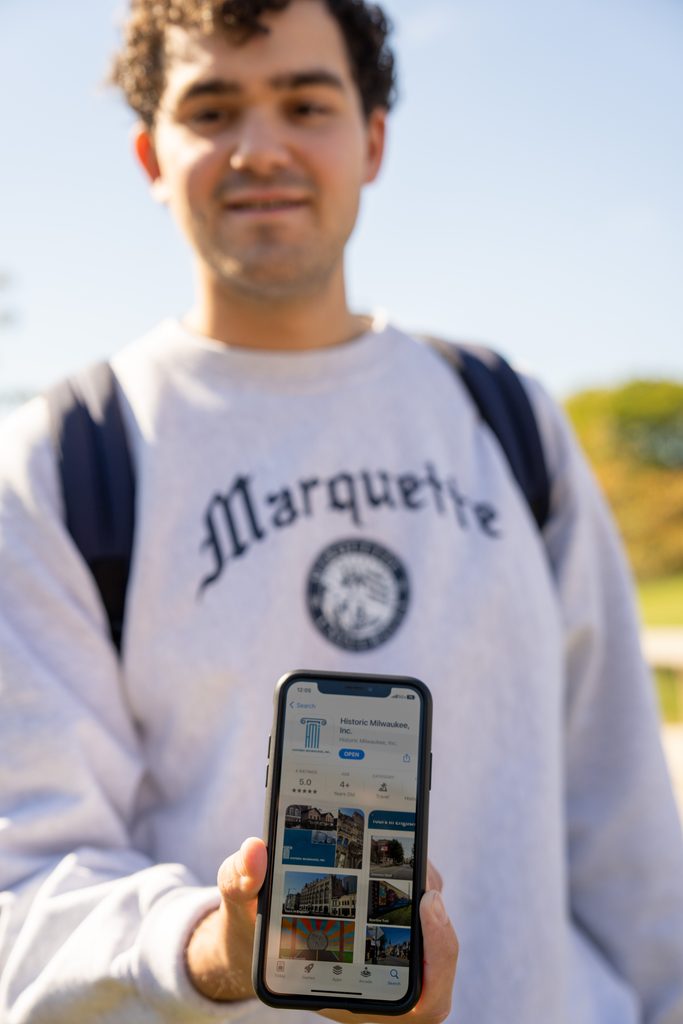
The Indigenize Milwaukee Digital Mapping Project is a resource that memorializes landmarks throughout the city that were integral to the people who lived there. Students explore many iconic places around Milwaukee, including the beaches and parks along Lake Michigan, the Milwaukee Art Museum, the Milwaukee Public Museum and the Milwaukee Public Market, all places with unique ties to Native communities past and present. Rindfleisch also encourages students to explore the natural environment shaped by Native people centuries ago through self-guided experiences like the Indigenous Milwaukee walking tour organized through Historic Milwaukee.
One landmark, Forest Home Cemetery, is home to some of Milwaukee’s most treasured Mississippian mounds built between 500 and 1200 AD. Today, the cemetery is home to some of the most notable figures of Milwaukee’s recent past, including familiar names around the city such as Fred Usinger, Byron Kilbourn or Frederick Pabst. Highlighting the differences between the past and present landmarks showcases how Native American representation has been changed, rewritten or outright replaced throughout the city – a physical marker of the struggles and the living history around the city.
“For students, it is eye opening for them to realize how rich the city is in terms of native history”
Dr. Bryan Rindfleisch
Rindfleisch ensures that learning, discovering and engaging with Indigenous culture does not stop after finals week. Interested students are able to apply to become researchers through the MU Indigeneity Lab, which Rindfleisch is a leader. First founded in 2021, the lab has connected faculty and students to cross-disciplinary research projects in both the sciences and humanities.
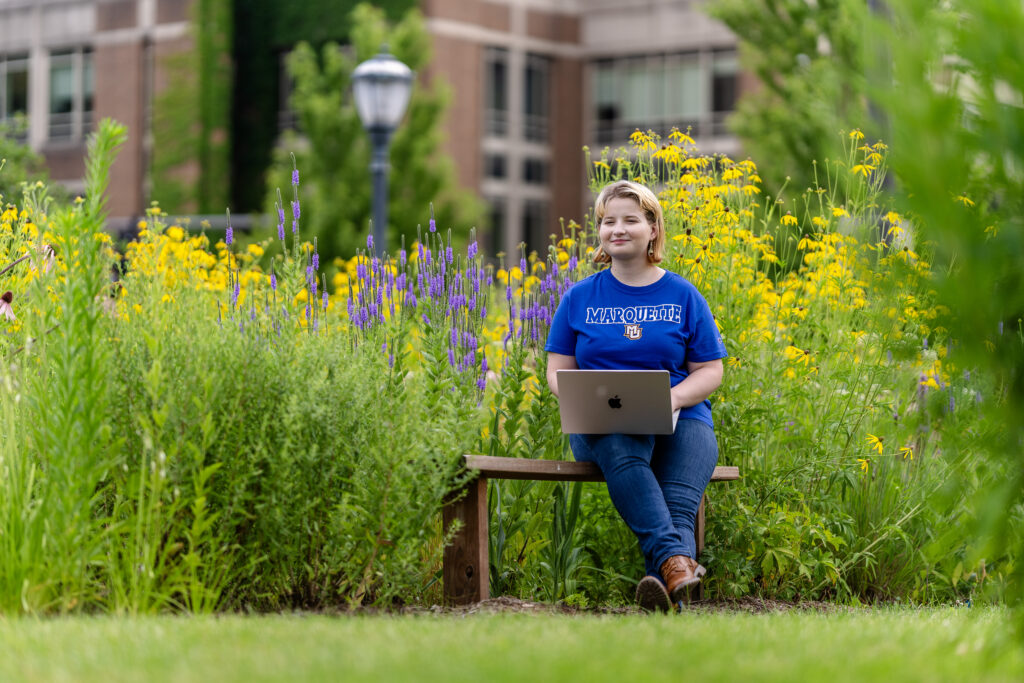
Annually, a cohort of students work on large group projects that create new pathways to learning about and understanding Indigenous culture around Milwaukee and at Marquette. The previously mentioned walking trail with Historic Milwaukee and the Indigenize Milwaukee Digital Mapping Project were both projects born from student researchers at the Indigeneity Lab. The lab also features several agricultural projects, such as the pocket prairie just south of the Alumni Memorial Union and Wild Rice grown on top of the Wehr Life Science building, both examples of continued land stewardship inspired by Indigenous traditions.
“The Indigeneity Lab was such a unique experience because it felt so close to home,” says Marshall Kopacki (Arts ‘25), a recent graduate and member of the lab‘s 2022 and 2023 cohorts. “I had been interested in Native history for a long time but had no idea I’d be able to have an impact like this.”

Between dedicated students like Kopacki and faculty like Rindfleisch, the work of the Indigeneity Lab continues to grow and welcomes new cohorts of researchers ready to support Native communities across Milwaukee. What begins as curiosity or a class assignment turns into a new way of seeing the city and campus — full of respect for the communities who once lived there and hope for a future with more representation and understanding for those with native ancestry who still live in the city and attend Marquette University.
“Through coursework and research, we don’t just look to the past, but we create a vision of a future full of respect, honor and stewardship towards the Native communities who have shaped this land for generations,” Rindfleisch says. “For anyone interested in uncovering more about Native Milwaukee or Native American history, getting paid to do it and working hands-on with a professor over the summer, the Indigeneity Lab is a truly special place for students to understand where they live by constantly engaging the world around them.”
More information on the Indigeneity Lab is available online.