Opening up the black box of childhood speech disorders
Earlier and more accurate diagnosis for CAS and dysarthria means clarity for children, their families and clinicians alike. Leading researcher Dr. Jenya Iuzzini-Seigel is creating the tools to make a real difference in children’s developmental health.
4 min. read
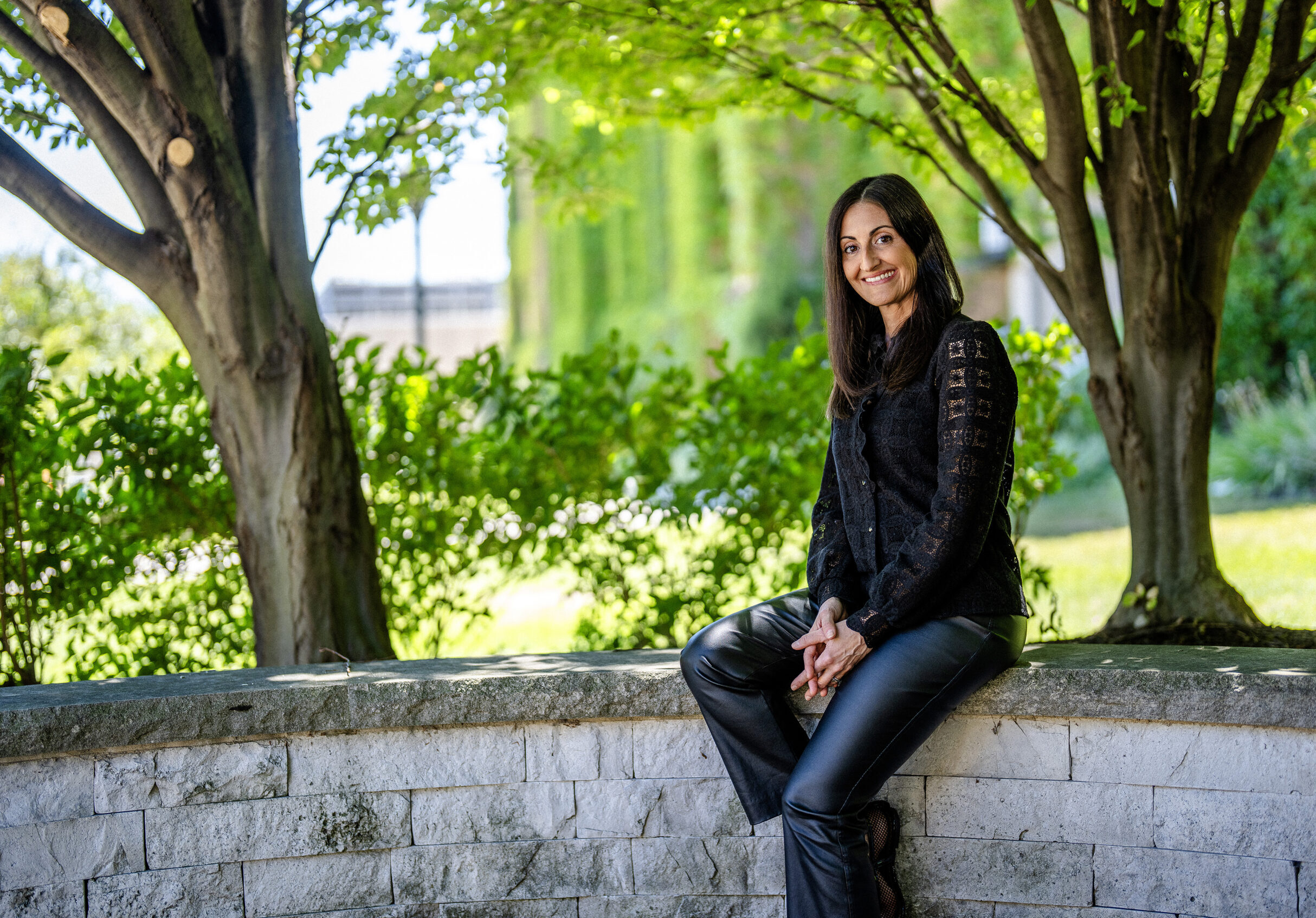
When a grant reviewer asks, “How has this not already been done before?” — that’s the mark of a good research grant, says Dr. Jenya Iuzzini-Seigel, associate professor of speech pathology and audiology, repeating the wisdom of a former mentor.
Iuzzini-Seigel had that advice in mind as she crafted the application for a National Institutes of Health grant to validate a clinical tool parents and clinicians have anxiously awaited, one that will more accurately diagnose childhood motor speech disorders. The NIH recognized the project’s urgency, too, awarding Iuzzini-Seigel and her colleague Dr. Kristen Allison of Northeastern University $3.8 million last year to carry out this work. It is a major NIH R01 award and one of many grants Iuzzini-Seigel has received during her tenure at Marquette. “This was definitely one of those grants where anybody reading it would have thought, ‘Wow, we don’t know this already? We need to know this,’” she says.
Existing techniques for differentially diagnosing two particular pediatric neurological motor speech disorders — childhood apraxia of speech, known as CAS, and dysarthria — have been something of a black box. CAS is a neurological condition in which a child has difficulty planning and programming accurate articulatory movements for speech; dysarthria is a neuromuscular disorder of motor execution in which children have impairments in the strength, tone, coordination and precision of speech movements. Both disorders can inhibit children’s intelligibility and have many overlapping speech features, but they have divergent underlying bases and require distinct treatments.
Yet diagnoses currently are often based simply on expert clinical opinion, which varies. “That is not a transparent, replicable process,” says Iuzzini-Seigel, who serves as director of Marquette’s Communication, Movement and Learning Lab. One of Iuzzini-Seigel’s studies found that 60% of hundreds of clinicians surveyed reported low or no confidence in diagnosing dysarthria, with 40% admitting they tend not to make this diagnosis as a result.
Though these disorders each impact about 1 in 1,000 children — rare, but not so rare, as Iuzzini-Seigel likes to say — many clinicians struggle to distinguish between them because of the symptom overlap. Enter Iuzzini-Seigel and Allison, who have developed a tool for more accurate diagnoses: a symptom checklist and decision guide known as the Profile for Childhood Apraxia of Speech and Dysarthria, or ProCAD.
The collaborators are now using the federal grant funding to test the tool’s clinical use and evaluate the developmental trajectory of specified speech features in both diagnosed and typically developing children. The team is collecting data from three-to-six-year-old children in Boston, Milwaukee, and Bloomington, Indiana, to determine which symptoms from the ProCAD protocol — including low or excessive volume, increased difficulty with multisyllabic words and vowel errors — best differentiate the two disorders and which are shared, so clinicians can more confidently make diagnoses.
“I want to make decision-making straightforward and clear so clinicians can do the best job with the best tools and not doubt themselves,” says Iuzzini-Seigel.
Dysarthria and CAS have established therapies that yield improvements, but they don’t work for every child. At Marquette, Iuzzini-Seigel develops tools and therapy improvements in her lab. She conducts motor testing to determine how motor deficits overlap with CAS, for example, and whether the care pathway for children with CAS should include physical and occupational therapy. (It should, she’s discovered.)
Her team is currently writing up the results of a randomized control trial examining how well intensive high-dose-frequency speech therapy compared with low-dose-frequency therapy in dozens of children with CAS. The team wanted to determine if different scheduling — four one-hour therapy sessions per week for six weeks or two one-hour sessions per week for 12 weeks — would change outcomes. Iuzzini-Seigel and her team worked with about 20 community clinicians across the nation to gather results, and they found the outcomes were relatively comparable across both groups, a helpful finding for parents who have a difficult time traveling to therapy appointments with their child multiple times a week because of distance, work or familial obligations. They also found, however, that functional communication can be improved more quickly if therapy is provided at the higher frequency.
Iuzzini-Seigel collaborates with clinicians nationwide, calling them “ambassadors of the research.” She says, “I can’t treat 60 kids with CAS by working in Milwaukee by myself, but I can see the effects of treating 60 kids with apraxia across the U.S. with these community clinicians who work with us.”
Iuzzini-Seigel also hopes to determine if more intensive intervention can increase a child’s confidence earlier and allow that child to participate in more activities throughout childhood and beyond. “I’m very interested in thinking long-term about other ways to soup up the treatment to really optimize it,” she says.
Because of Iuzzini-Seigel’s collaboration with clinicians nationwide, whom she calls “ambassadors of the research,” the results will be far reaching. “I can’t treat 60 kids with CAS by working in Milwaukee by myself, but I can see the effects of treating 60 kids with apraxia across the U.S. with these community clinicians who work with us,” she says. “I love to hear from people who are out in the field about what’s working for them, what’s not, and what has made a difference.”
The work is personal for Iuzzini-Seigel. In college, she was on a different path — studying fine art and sociocultural anthropology. Then, during her senior year, her dad suffered from a right-hemisphere stroke. In the hospital, she saw him work with a speech pathologist, a career she didn’t know much about until that point. As he recovered, she spent her first few years after graduation working for arts-adjacent nonprofits. But the idea of speech pathology stuck with her, eventually leading her to pivot.
In focusing her research on children, Iuzzini-Seigel has the potential to dramatically improve children’s entire lives, as well as the lives of those caring for them. Closer to home, she is grateful that speech therapy helped her father make a full recovery: He recently turned 88. “I always have that in the back of my mind,” she says. “Each person we treat is somebody’s family member — they are the most important individual in the world to that person. We need to make sure to treat them as such.”