Contrary to popular belief, George Washington didn’t have wooden teeth. What the first commander-in-chief’s dentures were made of is much more disturbing, though his dental history provides a look at how American dental care has advanced since the late 1700s.
Washington dealt with regular toothaches, decay and tooth loss beginning in his early 20s, according to the Mount Vernon museum. When he was inaugurated president in 1789 at age 57, only one real tooth remained in his mouth.
“There were many dentists who wanted to say that they had taken care of George Washington, and they made a variety of dentures for him,” says Dr. Peter Jacobsohn, Dent ’62, former professor and emeritus curator of the dental museum at Marquette University School of Dentistry.
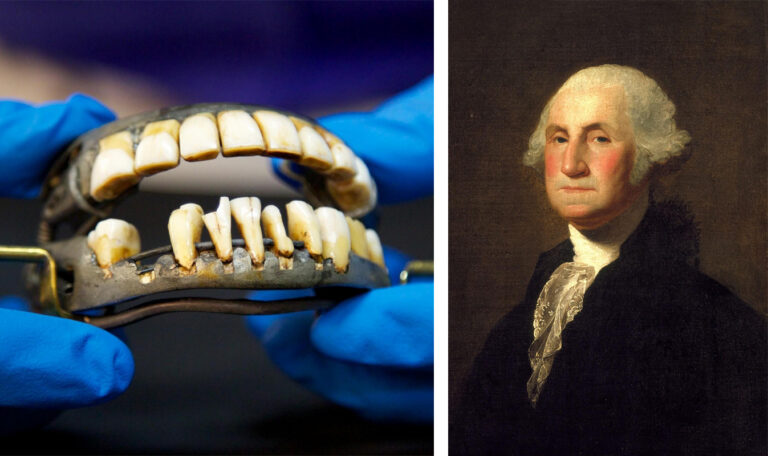
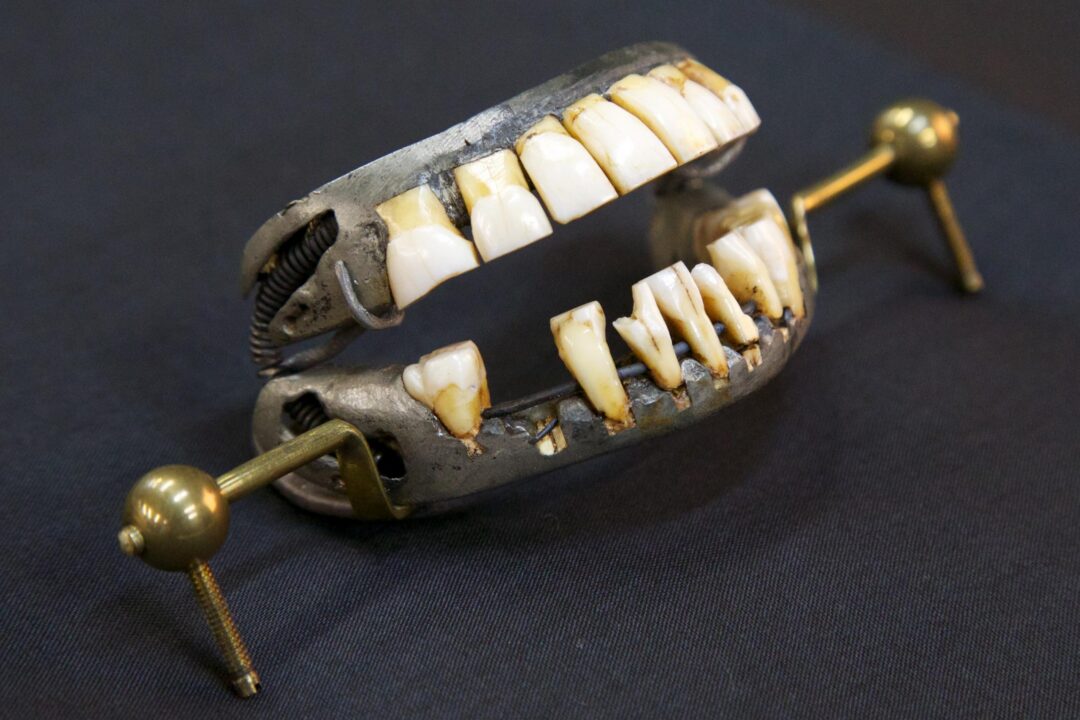
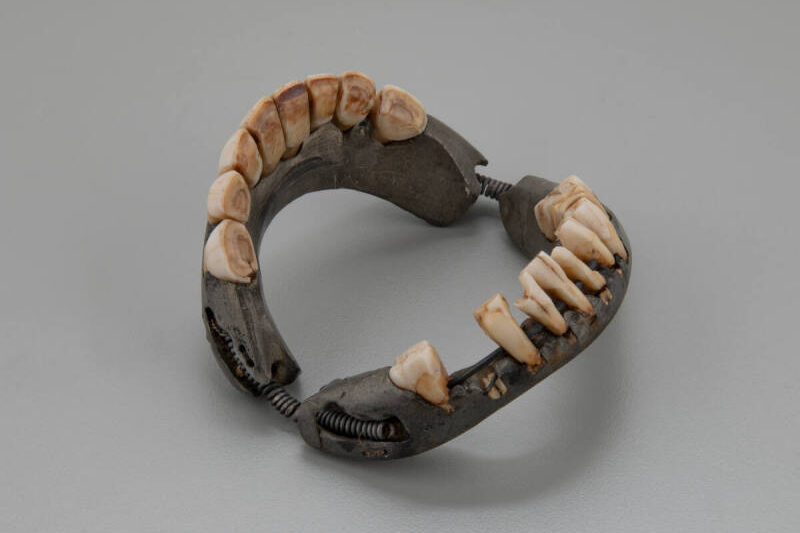
Whereas the bases of modern dentures are typically made with acrylic, Washington’s dentures were hand-carved out of bone or elephant ivory or cast out of metal such as lead (one set made with gold was stolen from the Smithsonian Institution in the 1980s, Jacobsohn recalls). A metal spring allowed the denture to open and close, so Washington would have to clench his jaw to keep it shut. The teeth in the dentures were, in fact, often real — of the human, horse, donkey and cow variety.
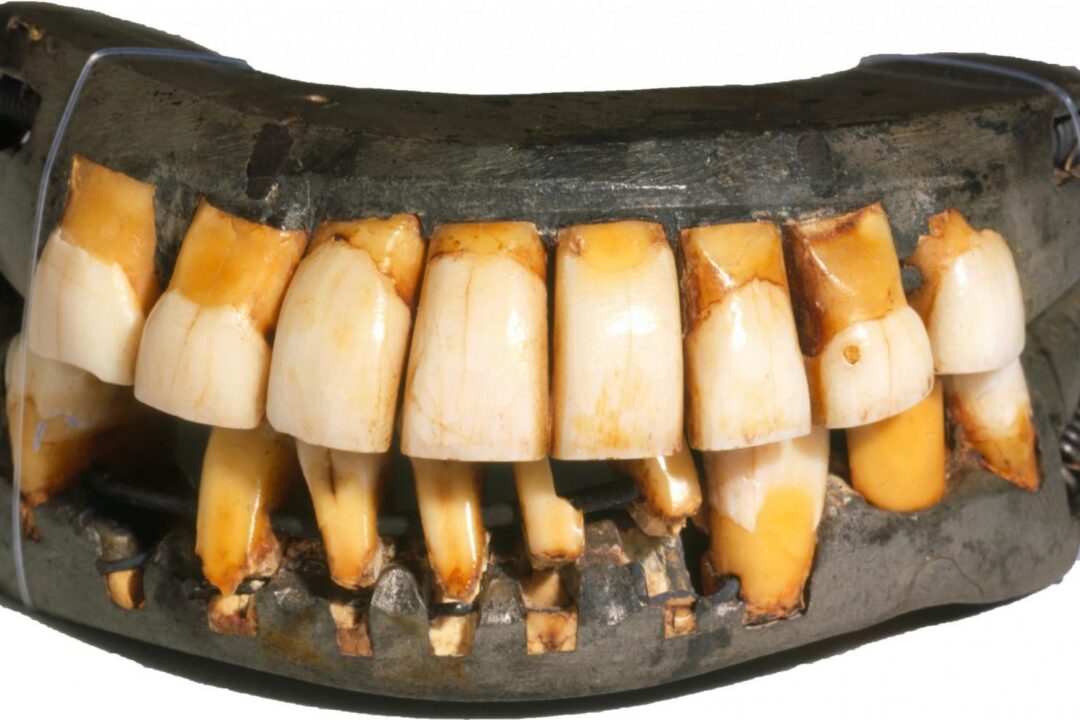 Washington’s dentures were made from metal, human teeth, cow and horse teeth, and elephant ivory.
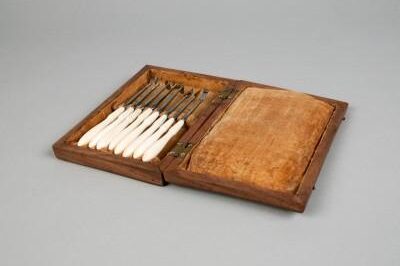
“The dental care during the days of George Washington, and even somewhat beyond, was primitive at best because there was a lack of knowledge of disease — and not just dental disease, but all types of disease,” Jacobsohn says. “Washington and those who had means could afford to get a craftsman to construct a usable dental appliance. The general public would not have that option for many years to come.”
At the time of the American Revolution and for the decades after, dentists as we know them today didn’t exist. Craftsmen and physicians came to the colonies claiming to be dentists, often traveling town to town by horse and buggy with their tools to perform tooth extractions. Some even performed tooth restorations, though it was still a new and unproven practice.
“There were a few people who did experiment with restoration, and they used materials such as gold foil or wax and some other kind of amalgam of metals to restore the tooth,” Jacobsohn says.
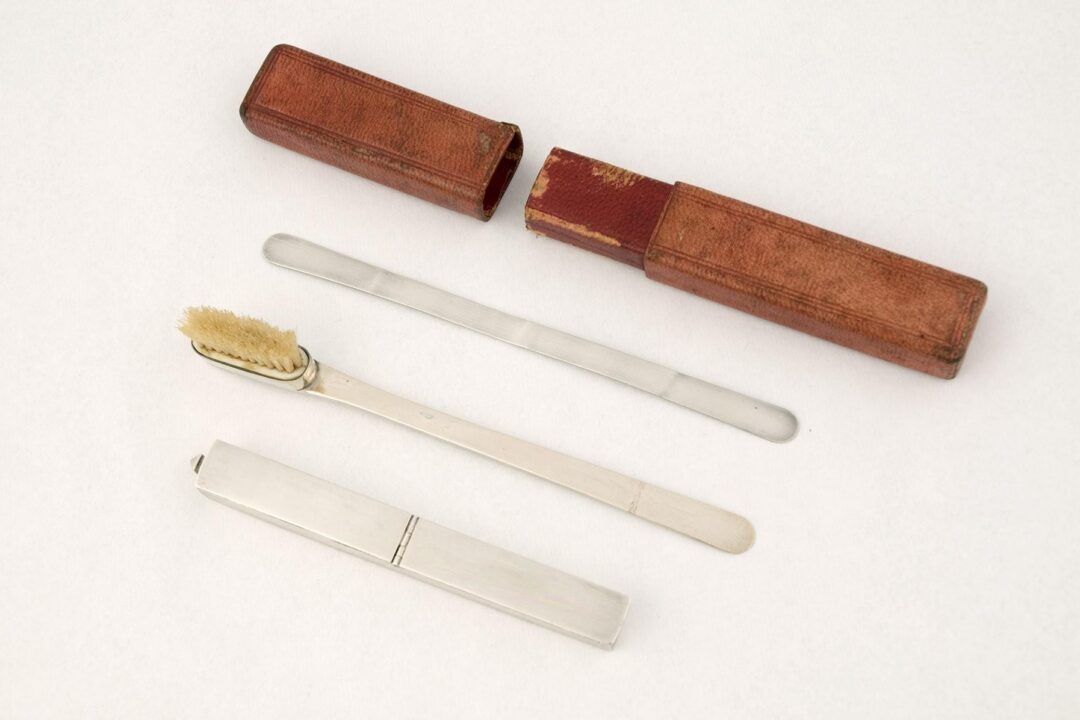
Dental hygiene was virtually nonexistent, he explains. People used toothpick-like sticks to clean their gums or bought tooth powders from the apothecary. Toothbrushes were not a regular commodity.
“They didn’t really recognize dental disease well; they didn’t recognize the infections from periodontal disease, and I don’t think they recognized that concretions formed on teeth until much later,” he says. “For the vast majority of the public, their dental care involved the removal of the teeth when they were in pain or when the teeth loosened up because of periodontal disease.”
Those removals were done without the benefit of anesthetics. People used opiates, alcohol and homemade remedies to fight the pain, Jacobsohn says; anesthetics weren’t available until the 1840s.
Around that time is when dentistry began to be considered a profession instead of a craft — to that point, any person could claim to be a dentist. The Baltimore College of Dental Surgery, the nation’s first dental school, was founded in 1840, though advancements really took shape in the post-Civil War era, when bacteria were discovered to be a root cause of disease.
For years, Jacobsohn taught this history to first-year Marquette Dental students in a lecture titled “History of Dentistry: A Brief Overview.” He also founded the museum in the atrium of Marquette’s Dental School, which contains artifacts dating back to the 19th century. Jacobsohn believes preserving the history of dentistry provides important context to the evolution of science and discovery.
“You have to know where you came from to know where you’re going,” he says. That said, he ends: “We’re lucky to be alive today and not during George Washington’s time.”