Safeguarding postpartum mental health
By Rachel Gintner Orlando
It might come as a surprise how few services have been available to help safeguard maternal mental health in Milwaukee. And unfortunately, the need is great: Close to 80 percent of new mothers develop signs of depression; one in seven progresses to postpartum depression. Depression is common during pregnancy, too — disproportionately so for women of color.
Demanding better, an experienced interdisciplinary faculty team has begun implementing targeted interventions: Dr. Lisa Edwards in counseling psychology, Dr. Kimberly D’Anna-Hernandez in psychology and Dr. Karen Robinson, Nurs ’97, Grad ’01, ’10, in nursing. Supported by a $250,000 federal grant, their prevention program has three pillars: strengthening a proven national intervention model to be more culturally responsive, training more mental health specialists, and channeling resources for more immediate access and support. Resources, including telehealth appointments, support for breastfeeding, sleep deprivation and pelvic floor issues after childbirth.
The intervention helps patients bounce less between practitioners — of pediatricians, social workers and more — in search of mental health support. Having researched depression during pregnancy extensively, D’Anna-Hernandez says, “During pregnancy, a baby’s central nervous system is developing. Continuing to improve care will have important long-term effects for the health of the mother and baby.”

Understanding protein misfolding
By Carrie Arnold
Discoveries in Brief
Improved Pediatric Speech Diagnoses: Dr. Jenya Iuzzini-Seigel, associate professor of speech pathology and audiology in the College of Health Sciences, and research partners have been awarded a $3.8 million R01 grant from the National Institutes of Health to further develop a clinical tool for the early and accurate differential diagnosis of motor speech disorders — apraxia of speech and dysarthria — in children.
Heart valve implants that can grow with young patients: Dr. Brandon Tefft, associate professor in the Marquette University and Medical College of Wisconsin Joint Department of Biomedical Engineering, is investigating living-tissue replacements that can become native to a patient’s body and even grow with them as they age. The promise of these valves is particularly valuable for pediatric patients, many of whom undergo repeat surgeries throughout childhood for replacement valves to match their latest growth stage. In a new project supported by the National Science Foundation’s (NSF) CAREER program, Tefft is developing a one-time valve implant to serve the tens of thousands of infants born each year in the United States with congenital heart disease.
How chronic sleep problems impact bone loss: Dr. Jeffrey Toth, Associate Dean for Research and Professor of Biomaterials in the Marquette School of Dentistry, is co-directing a $2.38 million NIH R01-funded research project examining the link between bone loss and chronic sleep restriction. This research aims to shed new light on this complex relationship, offering valuable insights into the cellular consequences of sleep restriction and risk of disease, including its impact on bone health. This research has significant implications for dental health, as bone healing is essential after common oral procedures and surgeries, such as tooth extractions and dental implants.
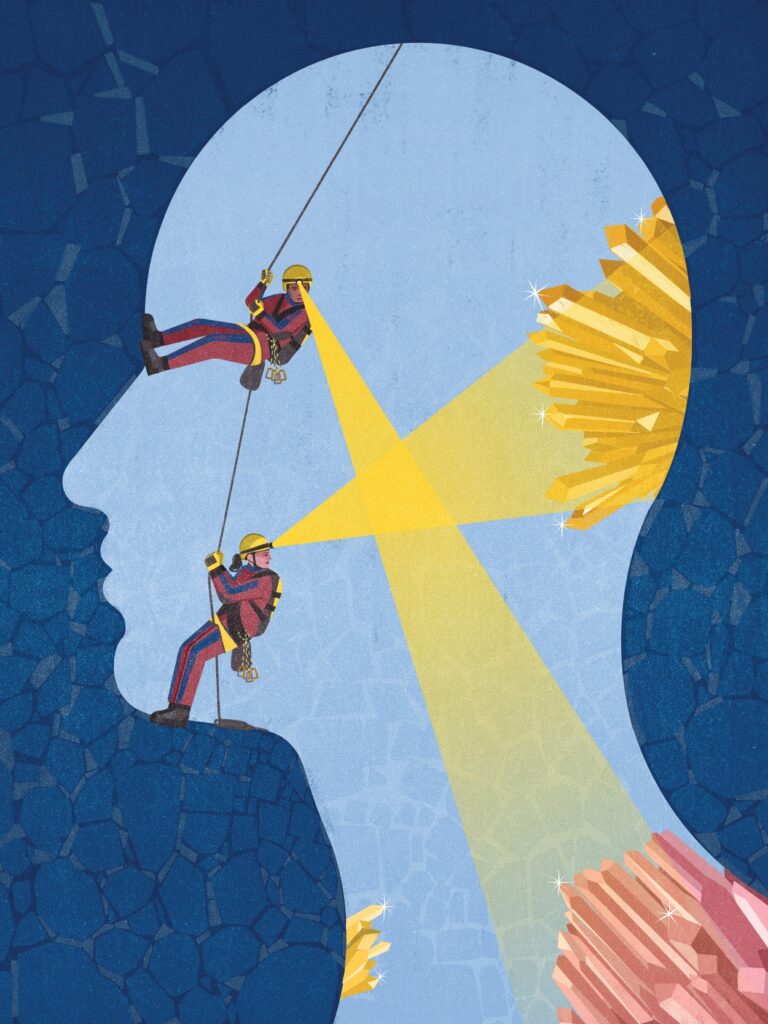
To understand how a protein functions, scientists need to understand a protein’s 3D shape. Proteins acquire their complex structure by folding, a process based on the physical laws governing interactions between a protein’s sequence of amino acid building blocks. A misfolded protein, then, can’t function properly. If lots of misfolded proteins build up in the cell, they can form large clumps called inclusions that the cell can’t break down. Dr. Emily Sontag, assistant professor of biological sciences, is studying how the cell copes with these misfolded proteins and is now working to understand whether promoting the cellular recycling of these misfolded proteins may help prevent cell death in neurodegenerative diseases such as Huntington’s, Parkinson’s and Alzheimer’s.
Consulting with colleague Dr. Anita Manogaran, associate professor of biological sciences, Grad ’03, has had “a huge benefit. It provides another expert to bounce ideas off of,” Sontag says, “and makes things more stimulating and, honestly, much more fun.”
Top triathlete aids the injury-prone
By Rachel Gintner Orlando
The second highest-ranking U.S. triathlete in his age group thinks a lot about avoiding injury. For competitor-researcher Dr. Jacob Capin, assistant professor of physical therapy, his research is personal and professional: He oversees the first major study on health challenges of former college athletes. Supported by $1.9 million through a National Institutes of Health Director’s Award, Capin says research shows former high school and college athletes are less likely to exercise later in life and are less healthy compared to their peers. As Capin points out, past studies haven’t gathered former athletes’ activity levels.
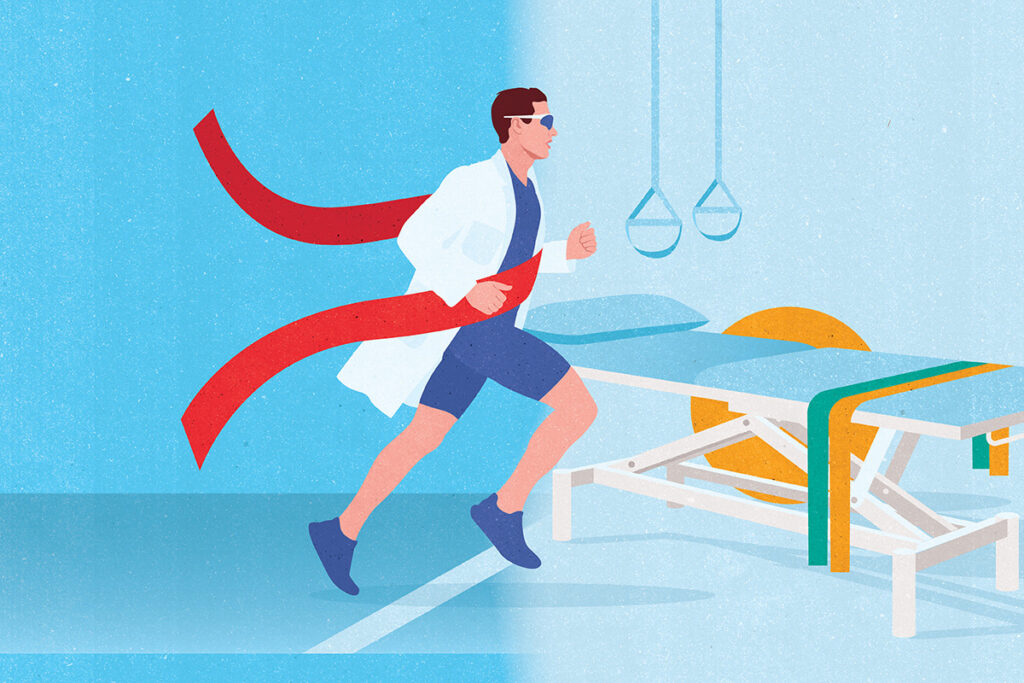
Now that, he can remedy: Capin’s study involves 200 young- and 200 mid-life adults given intensive physical workups: cardiovascular assessments, body composition scans and muscle performance reviews. Participants wear an activity monitor for several weeks and undergo extensive interviews on diet and exercise history. “From this, we design efficacious programs to better manage prior injuries,” he says.
Improving mobility after stroke
By Stephen Filmanowicz
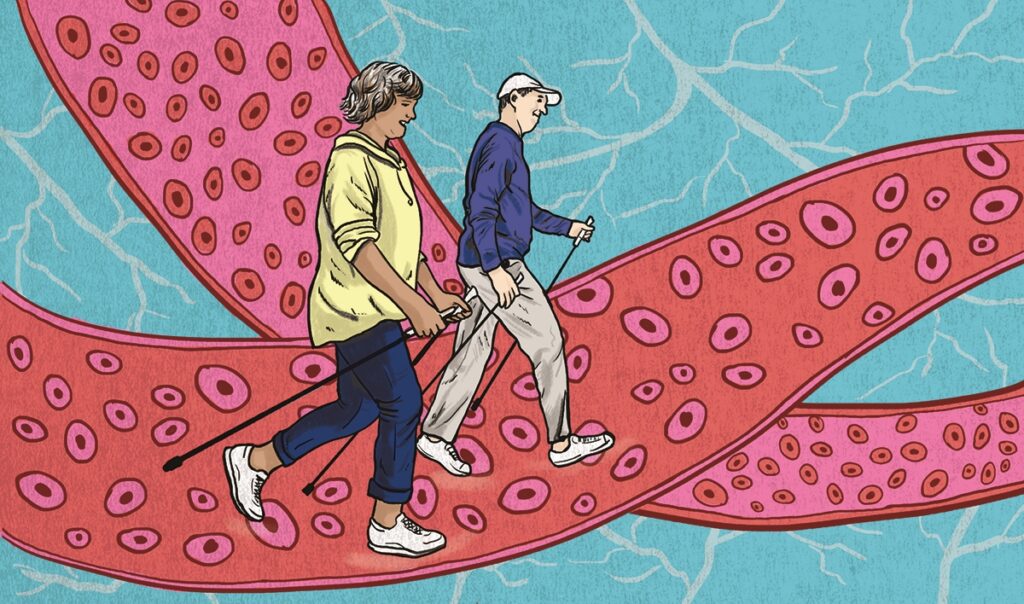
Funded by a $3.2 million NIH R01 grant, Dr. Allison Hyngstrom, professor and chair of physical therapy, targets the stubborn muscle fatigue that often limits mobility after stroke with investigations that span both the brain and the vascular system. Her team — including Dr. Brian Schmit, Eng ’88, the Hammes Family Chair of Biomedical Engineering — examines how improving blood flow could boost endurance and amplify the gains of physical therapy. Across campus, yet still collaborating with Hyngstrom, Schmit leads a $3.3 million NIH R01-funded project that combines high-intensity exercise and unpredictable balance challenges to improve walking in people with multiple sclerosis. His team aims to reduce falls while strengthening overall mobility.
“Like so much research at Marquette, these projects benefit from being multidisciplinary,” says Hyngstrom of her work, which also features close collaboration with Dr. Matthew Durand, associate professor of physical medicine and rehabilitation at the Medical College of Wisconsin. “We are shedding light on how the cardiovascular system and neuromuscular system work together during exercise, and that will open the door to more targeted therapies to improve stroke outcomes.”
A curb on cancer?
By Carrie Arnold
Last fall, Dr. Nicholas Reiter received a grant from the National Institutes of Health worth nearly $1.68 million to study how a protein known as LSD1 helps stabilize chromosome structure. Chromosome fusions have been shown to play a significant role in certain types of cancer, driving uncontrolled cell growth. Previous work in the Reiter lab showed that LSD1 may promote chromosome fusion. “If we can understand exactly how LSD1 interacts with its environment, we can develop a therapy that targets this protein and helps the cell degrade it, which seems like a very effective strategy,” Reiter says.
Reiter hopes that the study will allow him to create RNA-based therapeutics that can kill cancer cells in diseases such as Ewing’s sarcoma, a bone cancer that disproportionately affects young people.
Illustration by SHOUT