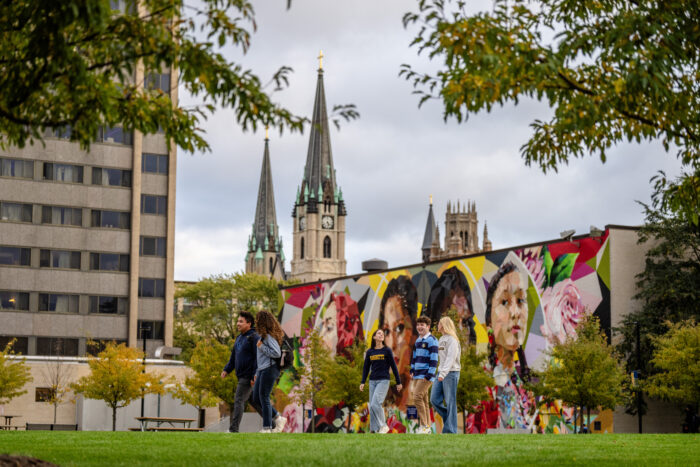
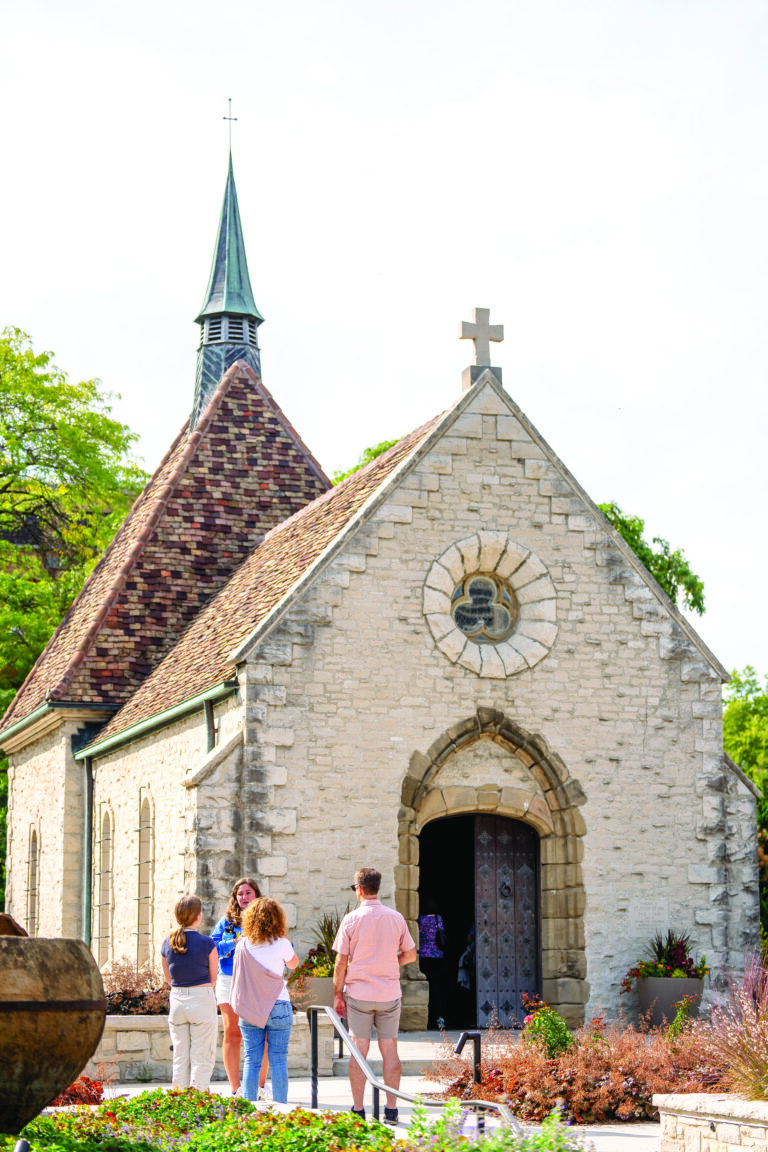
Year after year, class after class, students from Jesuit high schools across the country flock to Marquette.
A top destination in the Ignatian pipeline from secondary to higher education, Marquette consistently places in the top three (along with Boston College and Georgetown University) among the 28 institutions in the Association of Jesuit Colleges and Universities in both applications and enrollment from Jesuit high school students. In recent years, Jesuit school graduates have represented nearly 10 percent of each incoming Marquette class.
As Marquette Admissions prioritizes connecting with prospective students and building trust with counselors nationally, these high schools have been fruitful sources of future students. “This work is often anchored in places where there are students who understand the value of Jesuit education — that’s our partner Jesuit high schools coast-to-coast,” says Brian Troyer, vice president for enrollment management.
Marquette offers opportunities on campus and in Milwaukee to meet people and find activities that I didn’t see at other colleges.
Zoran Vignjevic, junior business major
When the staff of about 25 admissions “territory managers” reach out in regions across the continental U.S. and Puerto Rico — describing how Marquette’s mission and values are woven into academics and campus life — there is an element of reassurance for Jesuit-educated students. “Students and their families already know what to expect,” Troyer says. “Everything from the pedagogy in the classroom to living out cura personalis, and the way in which students from all faith traditions can see themselves in a Catholic and Jesuit educational tradition. Those things help make Marquette a natural fit for many Jesuit high school students.”
During his search, Zoran Vignjevic, a junior business major from Brophy College Preparatory, a Jesuit school in Phoenix, considered school size, academic opportunities and, especially, sense of community. He found it early: at Marquette’s summer SPARK program for incoming freshmen, where he met some of his best friends and future roommates. “Community and culture have always been big for me,” Vignjevic says. “Marquette offers opportunities on campus and in Milwaukee to meet people and find activities that I didn’t see at other colleges.”
Along with academic rigor and reputation, high schoolers often seek a sense of belonging built into the college experience, says Liz Riggs, a college counselor at Loyola Academy in Wilmette, Illinois, a top “feeder” high school to Marquette. “It’s the intentionality around everything that Marquette does to help students find a sense of belonging: O-Fest, faculty mentorship, the hands-on learning experience,” Riggs explains. “It truly is the best fit if the student wants a continuation of their time at Loyola Academy and also to push themselves out of their comfort zone.” Riggs’ own daughter, Emma, came to a similar conclusion during her college search as a transfer student; she graduates in May as a Golden Eagle.
Valeria Chavez, a junior majoring in cognitive science, left her comfort zone after graduating from Cristo Rey Jesuit High School in Chicago, choosing to attend Marquette rather than a school closer to her family. Once in Milwaukee, she was drawn to the Delta Xi Phi sorority because of its commitment to community service. “I’ve always been the type of person who wants to give back to the community,” Chavez says. “That’s what I like a lot about Marquette, that it takes service very seriously.”
As the college demographic landscape shifts and students apply to more schools than ever, Troyer believes a strong admissions foundation begins with established connections and sharing the experiences that set Marquette apart, like those of Vignjevic and Chavez. “The great thing about Marquette is that we’ve attracted students from all over — urban, rural and everywhere in between — so we can tell authentic stories of students’ familiarity with Marquette,” Troyer says. “Our admissions counselors can say, ‘This graduate of your high school came here and thrived, and now I want you to consider how you might pursue your own transformation and your own future at Marquette.’”