
What do Ben Franklin, Leonardo Da Vinci and Ada Lovelace all have in common? They all have combined multiple specialties to create something greater than the sum of their parts. Some of the greatest figures throughout history have drawn from diverse areas of study – and Marquette University hopes its students can do the same.
Many programs in the Klingler College of Arts and Sciences are intentionally interdisciplinary, moving beyond traditional department boundaries to foster new ways of thinking. By intersecting disciplines and departments, students are able to find unique ways to tackle big issues as well-rounded professionals.
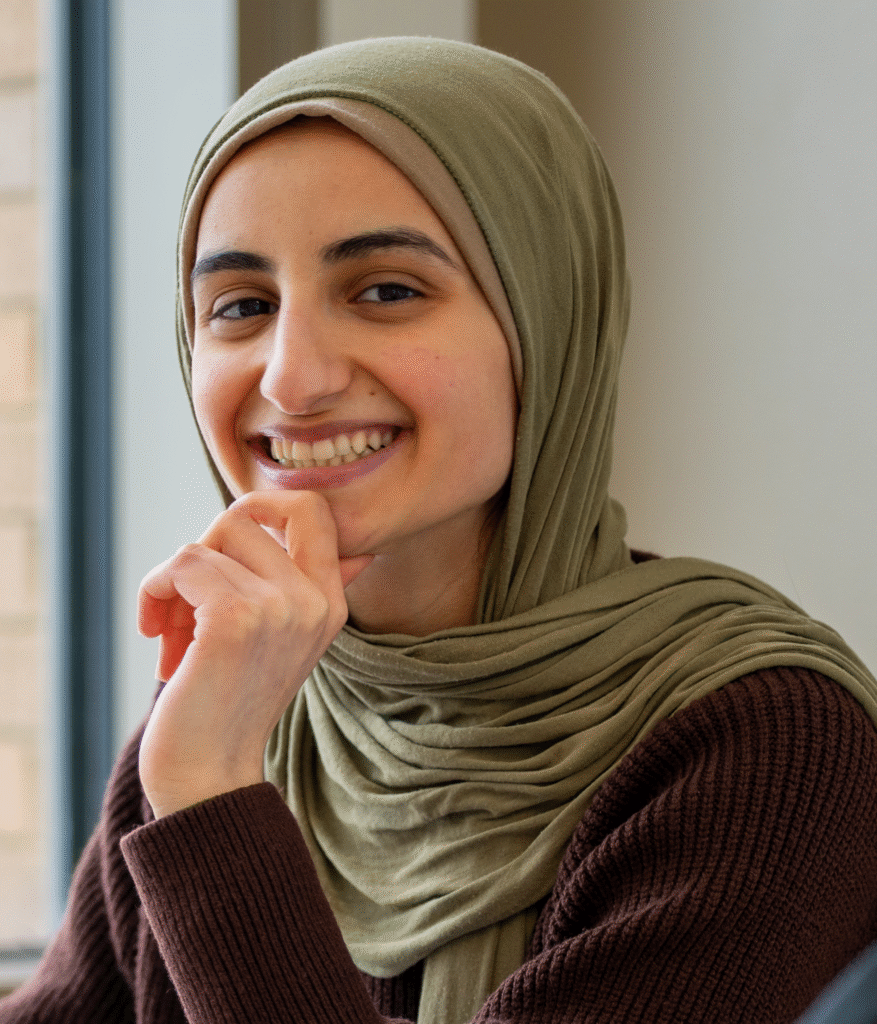
Seeing patients as well-rounded individuals with needs that go beyond the scope of medicine has always been a goal for Farah Al Saeedi, a pre-med cognitive science major. She saw the open pathways of the interdisciplinary cognitive science program with its holistic approach towards neuroscience, psychology and computer science as great preparation for the Medical College Admission Test (MCAT).
“I was inspired to be pre-med because of my early exposure to medicine,” Al Saeedi says. “When I was young, I went to appointments with my parents to translate for them. I translated for people outside of my family, too, and it led to an understanding that there were skills required to be a good physician that weren’t always directly taught in medical school. Language is just one of those skills.”
Al Saeedi knew her goal was medical school when she arrived at Marquette, but the route there was unclear. While medical schools require certain pre-requisite courses, Al Saeedi did not want to limit her studies to just one discipline. Choosing cognitive science as a major allowed Al Saeedi to think outside the traditional pre-med box and learn from experiences in many different fields.
“I think no one singular field has all the answers. Medicine requires teamwork and multiple perspectives.” Al Saeedi says.
One of the biggest questions Al Saeedi uses to guide her studies is, “just how does the mind work?” Psychology, neuroscience, computer science and medicine all give different answers to this question, but Al Saeedi believes that somewhere between all disciplines lies the answers that really make a difference in people’s lives.
For students on the pre-med route looking to start medical school, the MCAT stands as one of the toughest hurdles for entry into the field of medicine. The nearly eight-hour exam includes sections on physics, biology, behavioral sciences, and critical analysis and reasoning skills. Many students who take the MCAT point to one section of the test as the hardest: critical analysis and reasoning skills.
“So many students complain about this section because in the world of science, reading and humanities skills aren’t always emphasized,” Al Saeedi says. “But future doctors need those skills. They need to be able to understand, evaluate and apply information from places like philosophy or rhetoric. My own reasoning skills grew from taking courses across disciplines that other majors don’t always have room for in just four years.”
Beyond MCAT preparation, Al Saeedi values how her interdisciplinary major encourages reflection and discernment on the practice of medicine itself. In a fast-paced world, it can be hard to take a step back, carefully analyze how a situation is unfolding and make a decision for the future. But through studying in an interdisciplinary program, Al Saeedi is able to take in all of these different perspectives to make better-informed decisions that help people on all levels – not just physiological.
“Neural circuits, mental models and social environments all shape the mind in intersecting ways,” she says. “Understanding how these perspectives meet allows me to be a more reflective physician in the future.”
Looking ahead 10 years, Al Saeedi sees herself practicing medicine in a way that not only treats illness, but also understands that patients’ thoughts, emotions and behaviors influence their overall health. “People are not just systems,” she says. “They’re complex, with minds shaped by experience, culture, perception and so much more we have to discover.”