An obscure video store called Alphaville in Albuquerque, New Mexico, fostered Dinesh Sabu’s love for film by showing him a world beyond whatever A-list movies were in Blockbuster at a given time.
“I would go to Alphaville and load up on VHS tapes every week,” says Sabu, an assistant professor of digital media and performing arts. “Renting obscure films, foreign films, art house films — it was all a way of providing my brain with some kind of nourishment.”
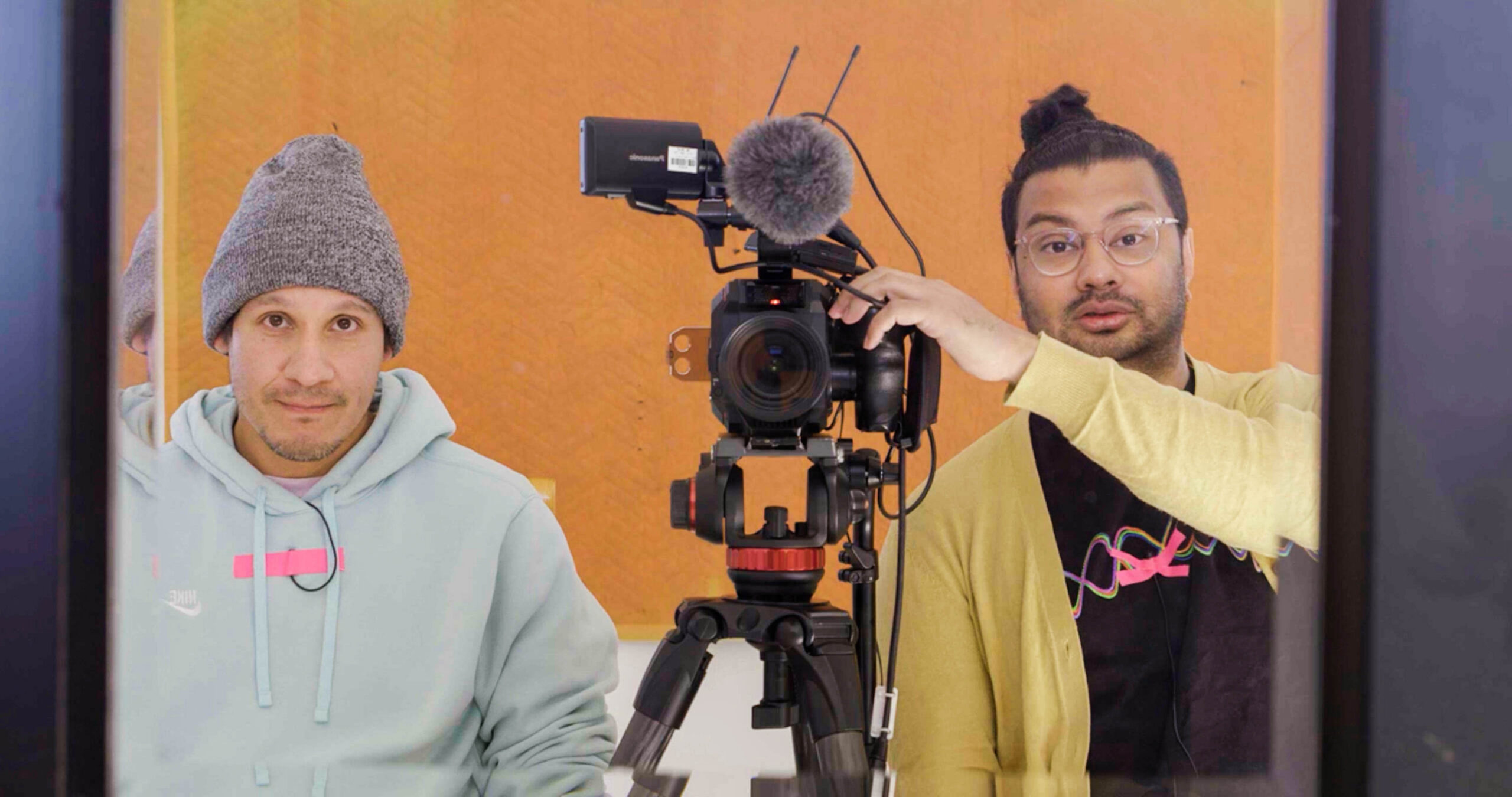
When he’s not teaching Marquette digital media students, Sabu is a filmmaker. His most recent film, “Magic Brown Artist,” is a hybrid documentary about racial representation on screen that he co-created with visual artist Victor Yañez-Lascano. The documentary was accepted into Cucalorus, a well-respected independent film festival.
You started college at University of Chicago as a physics student. How does one get from physics to film?
I fell asleep in class every day taking physics. Then one day, my lab partner asked me what I was majoring in and I told him physics. He then informed me that we were sitting in a physics class for non-majors. At that point, I decided I would drop physics and go all-in on cinema.
What was your career path like before becoming a Marquette professor?
I spent a decade making conventional social issue documentaries, the kind of stuff that you would see on PBS. I sort of did my career out of order where I worked in industry for 10 years, then I went to graduate school, and now I’m in academia.
How did the idea for “Magic Brown Artist” come about? What are you hoping the audience takes away from it?
I started making it during the pandemic. I think I was trying to actively deconstruct a lot of the conventions around documentary filmmaking. When you’re a person of color making art for an audience, there’s this weird performativity that happens where you have to be who an audience expects you to be. So we were hoping to subvert that with this film.
The meaning of this film is going to change based on the identity of the viewer. We’re really just trying to question the conventions of documentary authenticity and people are going to respond to that in different ways.
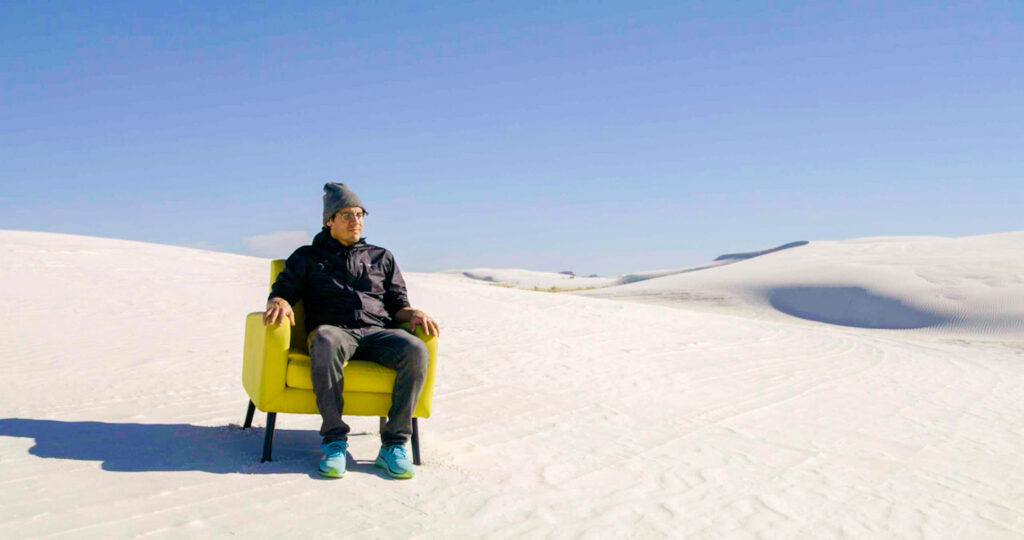
You shot some of the documentary’s most important scenes in White Sands National Park in New Mexico, and the desert imagery shows up on camera in a really striking way. What was that meant to convey?
The desert became a place where we could basically have a conversation within the head of my filmmaking partner, Victor. In the film, he walks off screen and then we enter this totally surreal space of the desert where we’re able to have this very honest conversation. Then we come back to the world of the film and things have changed.
When you go to a film festival, or any situation where your work is playing in a public setting, are you primarily watching the screen or watching the audience?
You’re attuned to the room and you’re trying to pick up on the vibe of it all. You’re watching the screen, but sometimes watching something with an audience provides a lot of feedback. You get to look at things through the collective eyes of the audience and say oh, that shot is too long, that’s a weird tone in that scene, etc. You just see everything with fresh eyes.
What kind of feedback have you gotten on the film?
The most meaningful feedback was after the first screening at Cucalorus, when two young filmmakers came up to us. One was Black and one was South Asian. These guys really connected with the theme of performativity and gaze that we were getting at. We talked for probably half an hour in the hallway after the screening. It was a really meaningful conversation.
We have access to more non-mainstream films than ever before in today’s world, and yet our relationship with cinema is often mediated by platforms that control what viewers see. To what extent does that worry you?
There’s this illusion of omniscience, right? We think we can see everything, but these platforms actually have all these restrictions to where you might be able to see a Kurosawa film, for instance, and then two weeks later you go back and it’s gone. We’re spoiled by the idea that we can see everything when, in reality, that library is fragile. Cultivating an open, shareable library is so important in education and in art making.