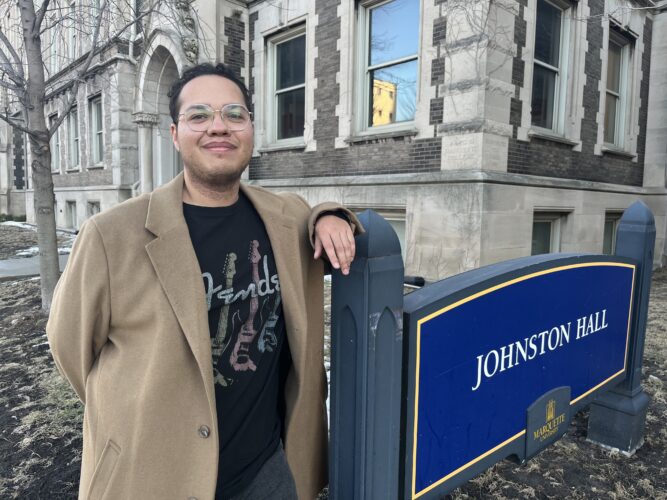

At Marquette, Patrick Thomas, Comm ’18, made a name for himself as executive director of the Marquette Wire. He led the organization from 2016 to 2018, steering it through a major transition involving expanded digital and scaled-back print offerings, while the student team racked up dozens of awards for TV, radio and print journalism projects.
Then, a few months before graduation, Thomas threw his hat in the ring for an internship at The Wall Street Journal. He landed the position and moved to New York City in summer 2018. “I must have been doing something right — or probably got a little bit lucky — to have my resume pulled from the stack of thousands from people that apply,” Thomas says. “But sometimes that luck goes a long way.”
Eight years later, Thomas is proud to be the paper’s lead agriculture reporter. He rose through several positions and now finds himself uncovering how important topics of the day — including immigration policy, tariffs and advancing technology — impact the food supply. He credits his time on the Wire as a formative experience that built a foundation for him to thrive in a competitive national newsroom.
Your internship at the Wall Street Journal started right after graduation. What was it like moving from the Wire to a high-pressure newsroom?
During college, I had internships at the Milwaukee Journal Sentinel and the Minneapolis Star Tribune. And I spent two years running the Wire, leading that group of dozens and dozens of students, which gets you mentally prepared for a high-stress environment. But it was still quite an adjustment.
The first time I went to New York City was the day I moved there for the internship. That first day, you’relearning the subway system and trying to get to work. It’s a lot different than being in a newsroom in Milwaukee. I felt like I adjusted pretty quickly. And a lot of that I owe to the trials and hard work that happened at Marquette. It gave me the right attitude and work ethic to do a good job in the internship.
How did you make the jump from the internship to a full-time job?
I did enough good work at the internship to get noticed, and then I put my hand up for an open role. It was a corporate breaking-news reporter position for our Dow Jones news wires, covering when companies report earnings, fire their CEOs, complete mergers and acquisitions — big business news that breaks in real time.
I was actually all set to take a job at a newspaper in Memphis, and at the last minute, I interviewed and got the offer from the Journal to stay.
Your current beat, agriculture, intersects with so many topics. How do you find story ideas that help people understand why our food supply is so important to the economy and everyday life?
I get ideas through sources — talking to people in the industry so I can write about things people are missing or not understanding fully. There’s a lot of misinformation out there and plenty of stories that people don’treally grasp. It’s my job to take them behind the scenes and explain how things work.
We also want to take big-picture topics and move the ball forward. How can we take something like the trade war or immigration policies and explain to readers how they are impacting individuals or companies through specific characters or places in the U.S.? We show our readers how these big policies are manifesting themselves in small towns or with individual people. This beat is really broad, so there’s a lot of things to write about and no shortage of news these days.
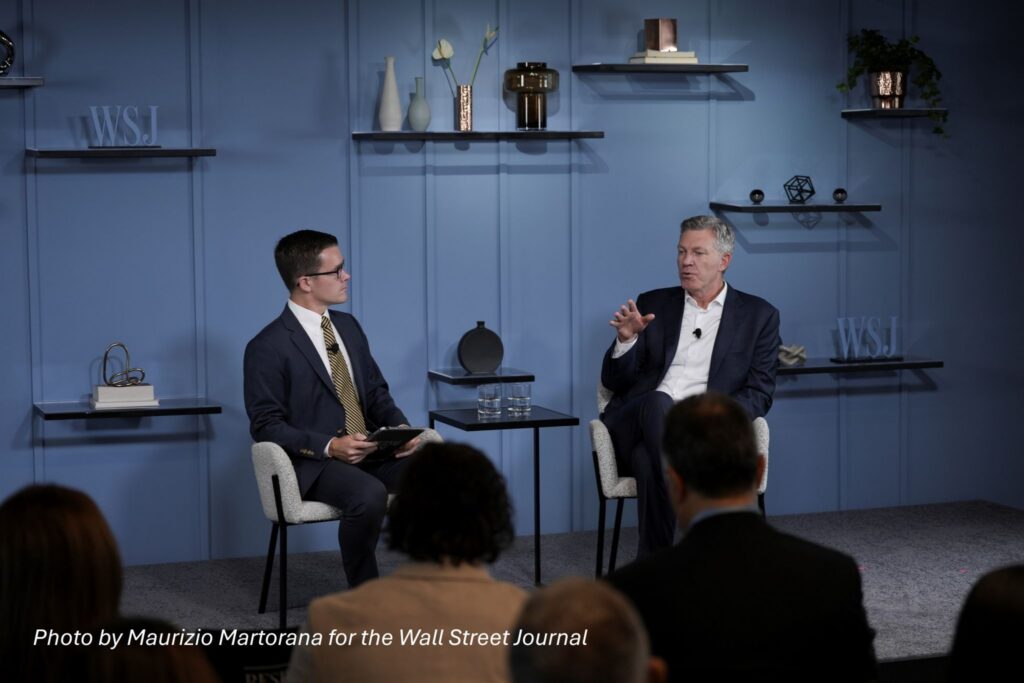
What’s a story of yours that’s generated a strong reaction or had an impact on public discourse or policy? How did you shape the story so that it resonated with people?
I wrote a story in 2024 about Haitian immigrants who were being recruited for jobs by a middleman on TikTok. They were paying exorbitant fees to this guy with what money they had. They ended up in overcrowded motel rooms and houses, sleeping on floors with their families in terrible conditions.
We wrote about how they were getting recruited to a meatpacking facility and about their living conditions. It led to HR officials getting fired for what was going on, and it generated some national interest as well. That one is near and dear to my heart because I thought it was an important story that directly impacted people’s lives. It changed living conditions in this town and led to change at the company.
What’s the most rewarding part of your job, and why?
This is a people business. So the most rewarding part is the people, whether it’s telling the story of something remarkable that impacts people, showing how policy impacts people, or holding powerful people accountable.
It’s always rewarding when you can see a real impact from a story, whether it’s being talked about at a policy level, or having a direct impact on a group of people, as happened with the story on the Haitian workforce. Stories like that are the most rewarding, and they always take a lot of work.
What’s the most challenging part of your job?
These days, there are many obstacles. There’s a lot of noise in the media. It’s a tough environment to break through. It’s been harder to get companies and people to talk to us. So that makes our lives more difficult, but ultimately, we hope people out there do have trust in our process at the Journal.
There are a lot of demands these days in journalism. We fact-check and we have to adhere to our standards, while at the same time pushing forward in a difficult media landscape and writing the best stories we can.
How did the lessons you learned at Marquette prepare you for the situations you experience now?
The best experience was working for the Wire and being involved in student media. Seeing examples of ethics and law play out in real time while working for a college publication helped me understand more challenging situations. Even when I was a senior working with younger reporters and making sure they did their due diligence, it really hit home that these important processes prepare you for the real world.
Especially at Marquette, being able to get involved in news organizations as a freshman was absolutely critical. I mean, that’s four years of experience versus two as a student journalist, as is often the case. It gives you a head start on internships. The most helpful thing is you get those extra years of experience that you wouldn’t have had otherwise, and it gives you a leg up in starting your career.
What advice would you give to journalism students who are interested in a career in reporting at a major media outlet?
Well, I’ll be honest: It’s not for the faint of heart. You’ve got to love it.
There are fewer and fewer jobs out there, but it is still absolutely worth it. It is a rewarding profession that does make a difference in people’s lives. But you’ve got to be willing to put in the work, and sometimes just let the chips fall where they may because it’s a tough business. And sometimes it just doesn’t work out even for those who put in a lot of work and are really talented.
I would still encourage them to pursue journalism if they’re passionate about it, because we need good journalists in this world.