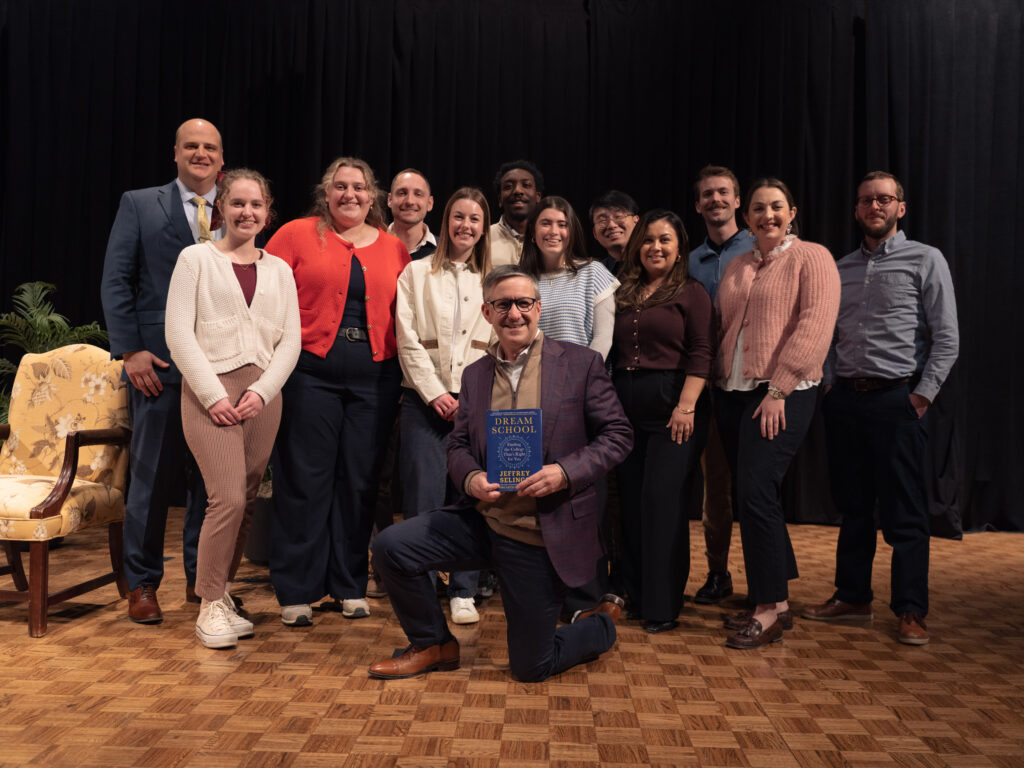
New York Times bestseller and higher education journalist Jeff Selingo has spent over 25 years covering college admissions and visiting hundreds of campuses across the U.S. On Wednesday, Feb. 11, he made his first trip to Marquette and left with some standout impressions.
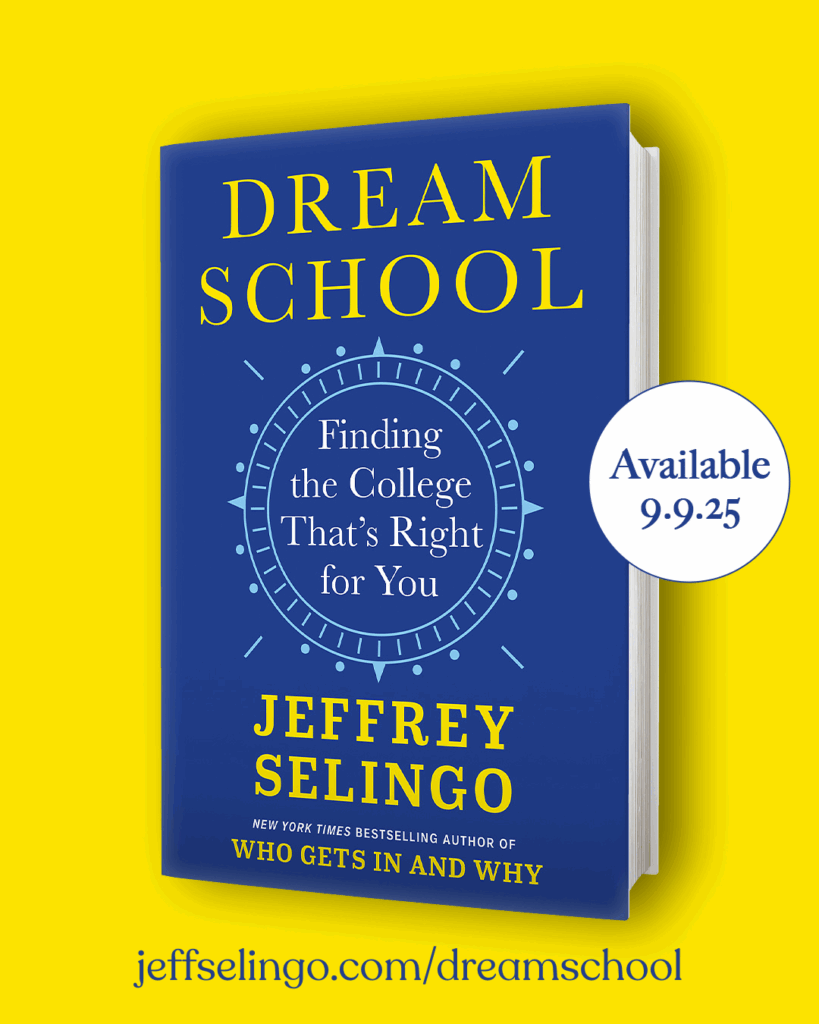
Marquette is one of 75 schools spotlighted in Selingo’s latest book, “Dream School: Finding the College That’s Right for You,” which shifts the focus from how colleges pick students to how students can better pick colleges. Based on more than two years of research and a survey of some 3,000 parents, the book gives families permission to think more broadly about what signals a “good” college and provides tools to discover their dream school.
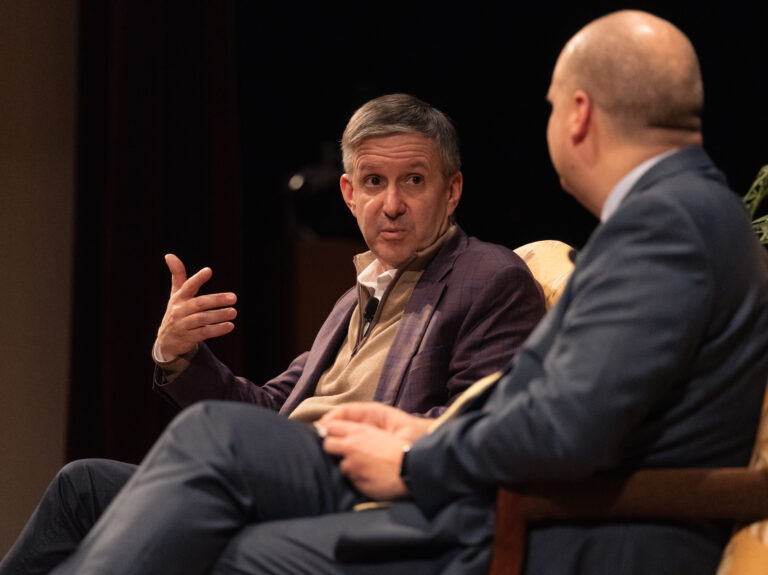
Selingo’s visit included a campus tour, a discussion with the University Leadership Council and a lively conversation and audience-driven Q&A moderated by Brian Troyer, vice president for enrollment management. The wide-ranging dialogue highlighted elements of “Dream School” while examining the college enrollment landscape at large, including job outcomes, location and value. Here are five key takeaways from Selingo’s on-campus conversation:
Takeaway No. 1: Marquette “punches above its weight”
Selingo formulated the list of 75 “dream schools” through a mix of data and anecdotes from conversations he’s had with students, instructors and families over the years. From the elite, brand name colleges to the small, lesser-known institutions, he set out to answer the question: “What are you looking for in a good college?” Much of that answer came down to undergraduate outcomes.
“I always say it’s incredibly easy to be Harvard. You basically take ‘the best students out there,’ and you get them to graduation,” he said. “It’s much harder when you enroll an array of students and get them to graduation, and you get them earnings in the job market. I really wanted to feature those places, like Marquette, that had a better-than-expected graduation rate and earnings.”
Takeaway No. 2: Experiential learning and access to professors are critical to student success
From his dialogues on campuses across the country — including Marquette — Selingo found a common thread: that students desire opportunities outside the classroom.
“We know that students who have an experience — that could be undergraduate research, a job, a co-op, an internship, a long-term project within a class — are more likely to have success in the job market,” he said. “They’re less likely to be underemployed, meaning they’re more likely to be in a job that requires a bachelor’s degree … The fact that you can integrate into your local environment is critical.”
Selingo said students seek a sense of belonging at places like Marquette. He also emphasized the importance of having faculty and staff who are accessible to students, which he validated in conversation with his student tour guides, Hannah Zuniga and Jacob Millman.
“One of the things I talk about in ‘Dream School’ is that undergraduate education is about mentorship,” he said. “Faculty are often one of the first people you meet when you arrive on a college campus, and the fact that Hannah and Jacob talked about the work that their professors did to help them, I thought was pretty special.”
Takeaway No. 3: Urban universities are hot right now
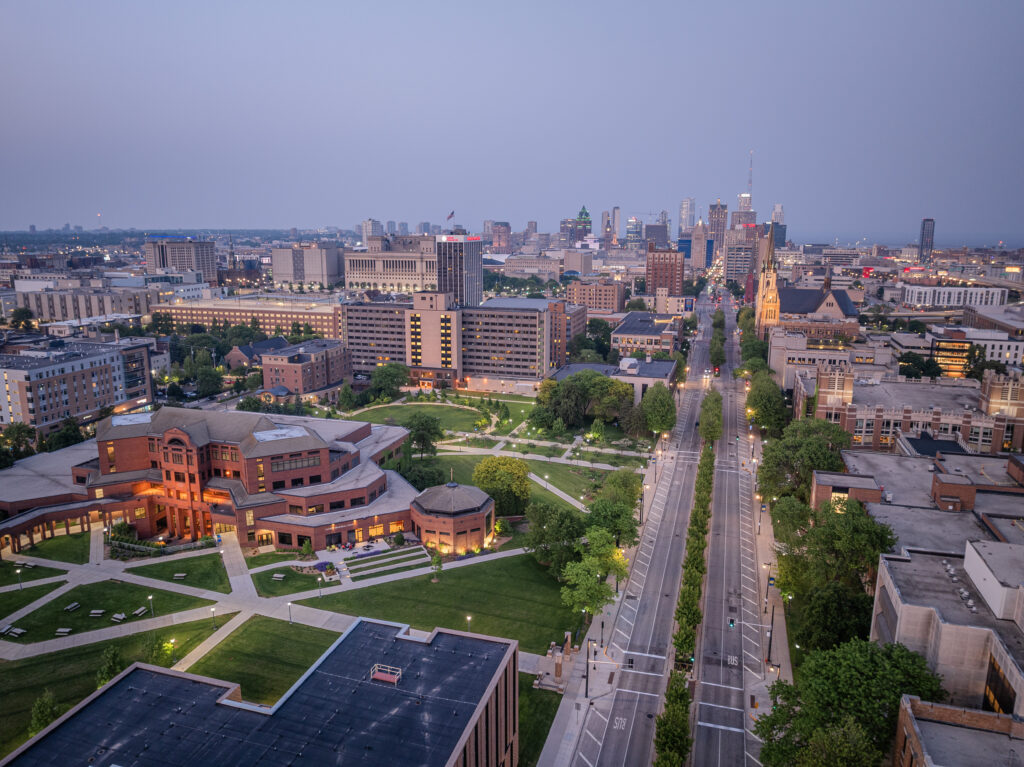
Proximity to those experiential and extracurricular opportunities is important, Selingo noted. That’s why city-situated colleges have gained steam over the last 20 years. Marquette, for example, is located within walking distance to arts and theater districts, the Deer District, abundant shopping and restaurants, and national companies headquartered downtown.
Not all urban campuses are equal, Selingo said. On many of them, it’s hard to tell the difference between an office building and a campus residence hall or academic building. That was not his experience at Marquette, however.
“Here, I was kind of surprised,” he admitted. “You’re integrated into the city, but you have a lot of green space. You’re kind of getting the best of both worlds, which is very unusual for a lot of urban universities that I’ve been to.”
Takeaway No. 4: Outcomes and ROI are the “front door”
Selingo acknowledged that although there’s more to the college decision process than finding a job afterward, data shows students and families are more often picking colleges based on the return on investment.
“Outcomes data is a door opener,” he told the audience of many Marquette faculty and staff. “If you can show that your outcomes are really good, that then opens the door to talk about what else they’ll get while they’re here. They can’t get to all the other great things that you offer as an institution if they can’t get over that first hurdle, which is outcomes.”
A recent report from the U.S. Department of Education found Marquette ranks among the top institutions in the country for graduate outcomes, with undergraduates reporting median earnings of nearly $80,000 four years after graduation. The ranking places Marquette in the top 5% of reported schools nationally and No. 2 among more than 70 colleges and universities in Wisconsin.
“The more that you can talk about your graduates — not just the super successful ones — about the day in, day out careers that your graduates have … that gives a lot of confidence to a market that does not have a lot of signals of success otherwise,” Selingo said.
Takeaway No. 5: The Midwest is “poised to take the mantle” from Southern schools
While urban campuses continue to gain traction, it’s no secret that large, Southern public schools have also been a popular destination in recent years. However, Selingo noted that the rising cost of living and overly saturated job market in the South may lead students to enroll elsewhere in the near future. His prediction: the Midwest.
“The job market in particular is highly regionalized, even among graduates of highly selective colleges, and the job market is resilient right now in the Midwest,” he said, citing data from the Federal Reserve. “I’d want to go to a college where there are going to be jobs afterward, and if I’m in a region where employers are hiring, I want to go there for college. Between affordability and outcomes — which are basically the two buzzwords right now when it comes to college — to me, the Midwest is where we’re going to be writing about in five years.”