Marquette University’s application for reclassification in the 2026 Carnegie Community Engagement Classification has been accepted, affirming the university’s deep and sustained commitment to meaningful partnerships that enrich student learning and benefit communities.
This prestigious elective designation — awarded through a rigorous institutional self-study and review process — places Marquette among the nation’s leading colleges and universities recognized for exemplary engagement with their local, regional and broader communities.
“The Carnegie Classification for Community Engagement affirms Marquette University’s unique duty to the world around us and our commitment to meaningful partnerships that enrich student learning, advance knowledge and benefit local and global communities,” President Kimo Ah Yun said. “I am proud that our students, faculty and staff collaborate with our partners to address challenges that affect our city and our world. Earning the reclassification was a priority in the university’s 2031 Strategic Plan: Guided by Mission, Inspired to Change. We now have a framework to assess and benchmark the vast array of engagement activities our students, faculty and staff participate in.”
The university successfully earned this classification during its last application cycle in 2015. Marquette is one of more than 230 U.S. colleges and universities which received the 2026 Carnegie Community Engagement Classification.
“Higher education is a vital economic engine for us all. Our colleges and universities not only fuel science and innovation, they build prosperity in rural, urban and suburban communities nationwide,” said Timothy F.C. Knowles, president of the Carnegie Foundation. “We celebrate each of these institutions, particularly their dedication to partnering with their neighbors — fostering civic engagement, building useable knowledge, and catalyzing real world learning experiences for students.”
A team of nine people from across Marquette have been working since August of 2024 to gather data on the university’s community engagement footprint and quantify the university’s impact:
- Rana Altenburg, retired associate vice president for public affairs, Office of University Relations
- Kim Bohat, director of service learning, Center for Teaching and Learning
- Dr. Carie Hertzberg, assistant vice president of belonging and student affairs, Division of Belonging and Student Affairs
- Dr. Lizzie Kerrick, director of Graduate School operations, Graduate School
- Dr. Linda Olszewski, director of academic assessment and program review, Office of the Provost
- Kelsey Otero, senior director of community engagement, Office of University Relations
- Dr. Robert Smith, Harry G. John Professor of History and director of the Center for Urban Research, Teaching and Outreach; Klingler College of Arts and Sciences
- Kasie Van Sistine, project manager, Office of Marketing and Communication
- Dr. Gabriel Velez, associate professor of educational policy and leadership, College of Education
The group’s work paints a more complete picture of the current state of community engagement, which will help the university continue to advance mutually beneficial partnerships that prepare students, strengthen scholarship and contribute to the public good.
“This recognition reflects Marquette’s longstanding commitment to service and highlights how fortunate we are to work alongside our community,” said Kelsey Otero, senior director of community engagement in the Office of University Relations. “We’re grateful to the partner organizations and the task force members whose shared work helped shape the programs and stories at the heart of our Carnegie Classification application.”
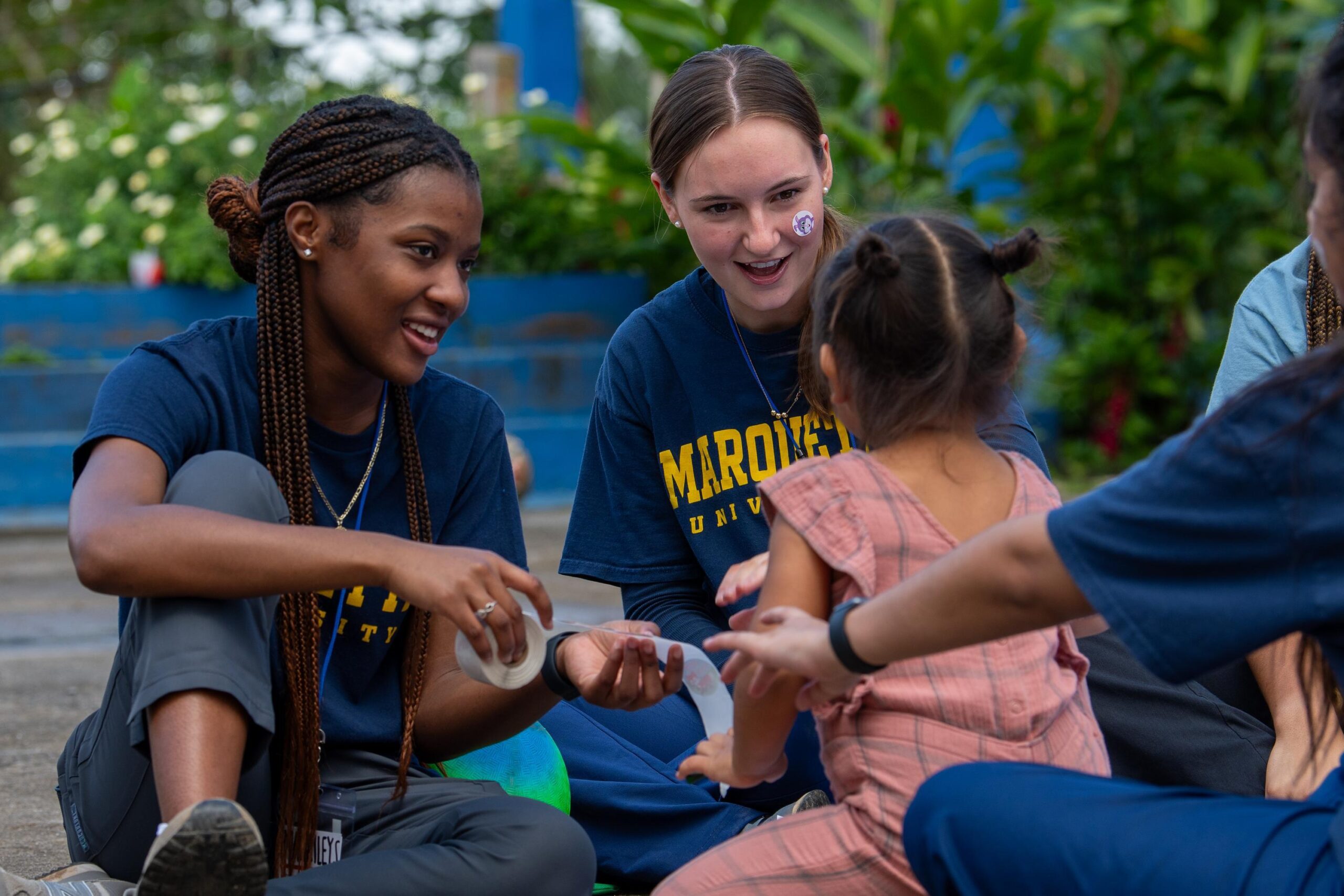
Partnerships across Milwaukee are a defining aspect of a Marquette education. The Princeton Review has ranked Marquette No. 1 in the country for community service in each of the last two years. Approximately 80 percent of undergraduate students participate in a service initiative over their time at the university.