Two Marquette alumni, one working in Marquette’s Opus College of Engineering and another at Penfield Children’s Center, are proving that collaboration, shared purpose and a healthy dose of fun are the building blocks to leading meaningful change.
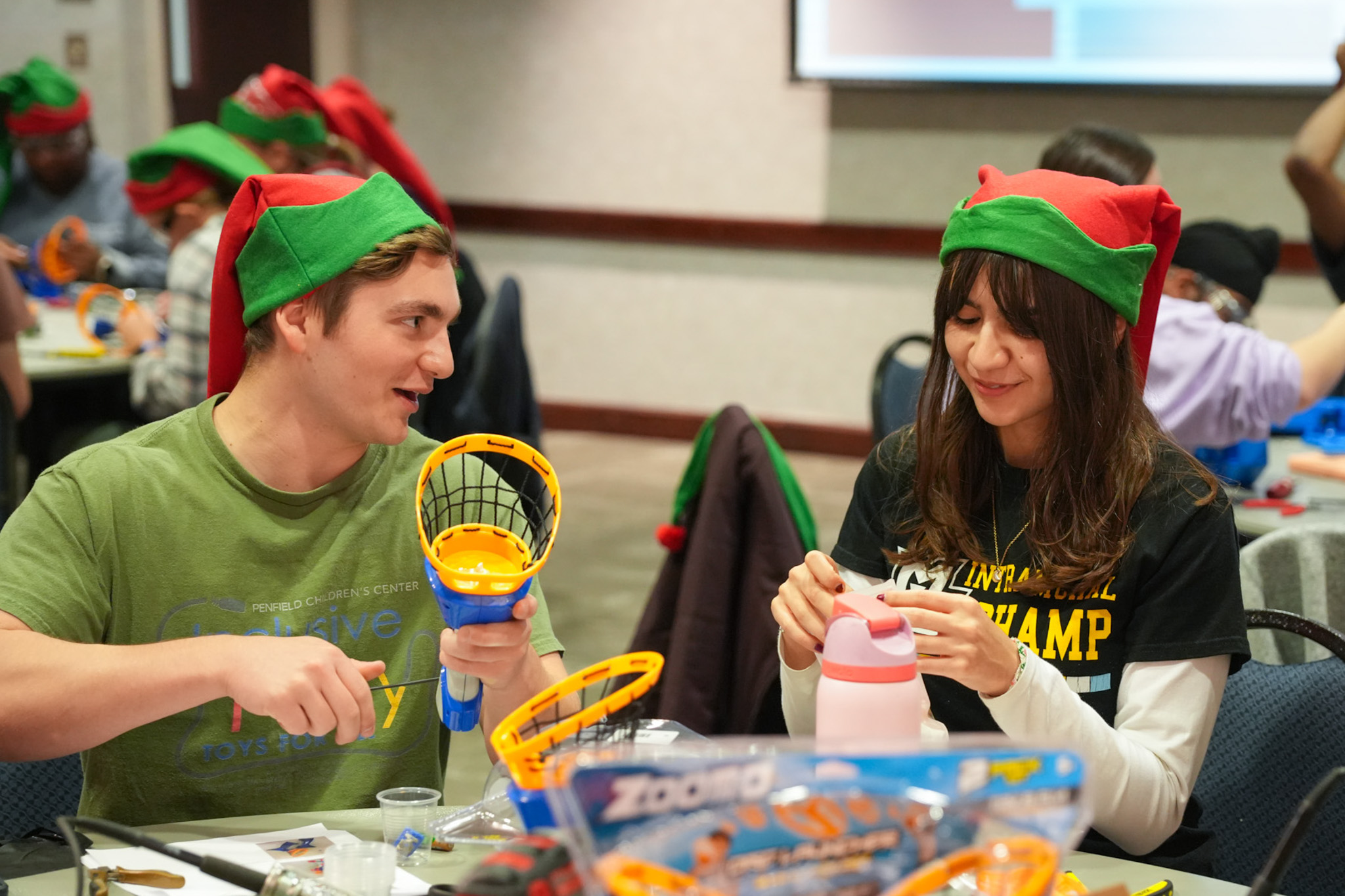
Molly Erickson, Eng ’18, co-director of Marquette’s Adaptive GEARR Lab, and Vladimir Bjelic, H Sci ’11, a speech language pathologist at Penfield Children’s Center, brought their very own Santa’s workshop back to campus this November to adapt accessible toys for children. With elf hats ready, the pair lead a cohort of helpers made up of engineering and occupational therapy students, local high schoolers and community volunteers.

These build days power the Inclusive Play: Toys for All collaboration between Marquette and Penfield, which is now in its fourth year of providing adapted toys to children with varying abilities. During the build days, volunteers rewire hundreds of off-the-shelf toys to allow for added therapy switches.
According to Bjelic, these simple toy transformations can unlock learning, development and play in children, especially for those with developmental delays or limited dexterity.
“If a child can activate a toy to light up, sing a song or blows bubbles, they are actually exploring communication concepts like cause and effect,” Bjelic says. “And the magic comes when we see the twinkle in their eyes or watch them share a feeling with their parents for potentially the first time.”
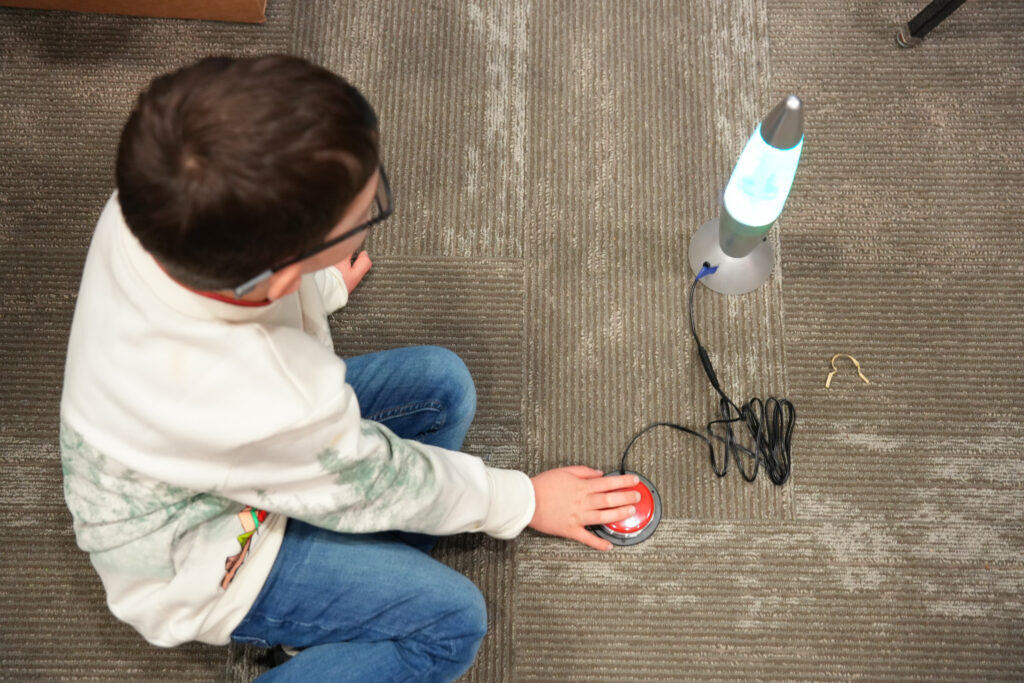
Unfortunately, the standard switches on off-the-shelf toys are often small and difficult to press, leaving some children out of the fun. That is where simple electrical modifications recommended by Erickson come in.
By carefully rewiring the inner workings of a toy, an auxiliary therapy switch can be added in place of a toy’s original switch design. Therapists and families choose from a variety of switches to fit a child’s needs — from large, red buttons to bite-activated options.
More hands, more toys, more learning
Since the beginning, Erickson and Bjelic knew they had an opportunity to multiply their toy output while also multiplying the value of the collaboration by bringing on more partners.
“We recognized the toy adaptations could be a great learning experience for a variety of students at Marquette and in Milwaukee,” Erickson says. “It has been a win-win service opportunity to bring in talented, enthusiastic students who get a chance to learn new skills while in turn making a difference for our toy production for families.”
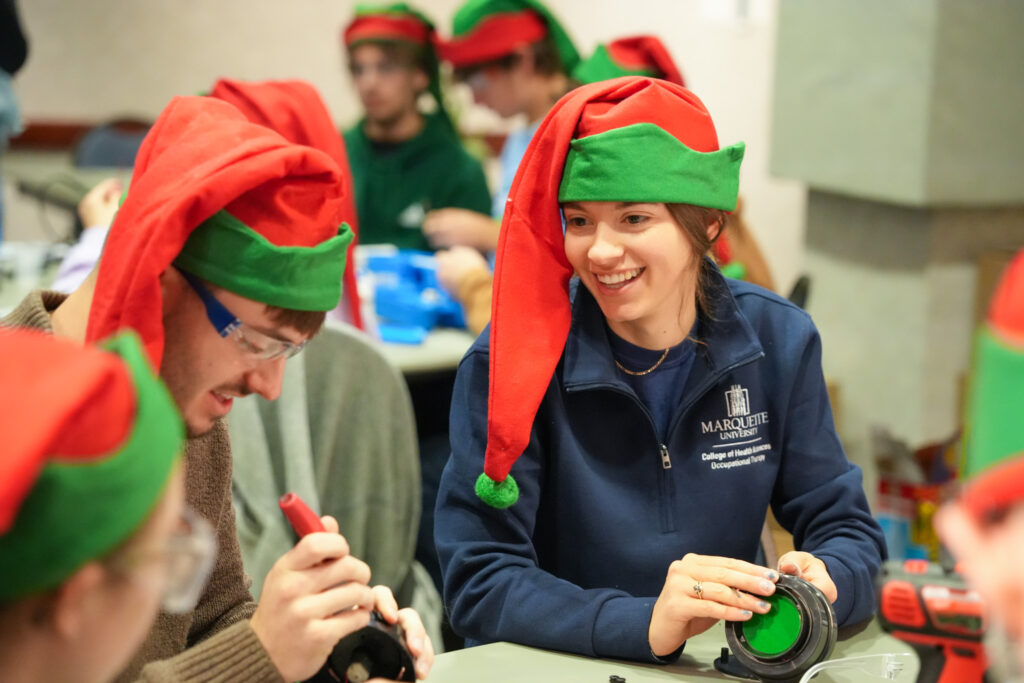
The volunteer build day model supercharges the collaboration, resulting in students across ages and interests adapting hundreds of toys in hours and each walking away with new experiences and learnings.
“Between the high school students and college students, I never struggle to fill the room and hit our target number of toys adapted,” Erickson says.
Pairing engineering and occupational therapy students for impact
In the first year of the project, Erickson primarily recruited undergraduate engineering students, knowing they would quickly jump at the hands-on tool and electronics experience in a community service environment. Beginning in 2023 though, Erickson expanded to another talented group of Marquette students who were eager to lend their expertise and grow the total number of adapted toys.
With support and partnership from leaders like Dr. Ann Millard, associate chair of occupational therapy, graduate students in Marquette’s clinical occupational therapy doctorate (OTD) program now drive the build days alongside the engineering students.
For Millard, getting involved with adaptive toys is a perfect fit for what the OTD program hopes to develop in students. “We focus on developing well-rounded practitioners who think outside the box. Adapting equipment is a skill that every OT should know and adapting these toys safely and inexpensively is a unique skill that students can share in their future work,” she says.
The collaboration between engineering and the OTD program extends beyond the festive build days: Erickson also guest lectures for occupational therapy courses and teaches basic tool skills and electrical knowledge to every student in the program.
For occupational therapy student Andreas Mawby, this element of Marquette’s OTD program experience became an immediate draw when he first heard about it during his campus tour. “It was that moment when I decided on Marquette, because I saw that I could make a difference, not just once I graduate, but while learning in the program,” he says.
Mawby, whose undergraduate degree was in engineering, explains that he especially enjoys the opportunity to bridge his prior experience with the new OT practices he is learning, something he feels is uniquely offered at Marquette.
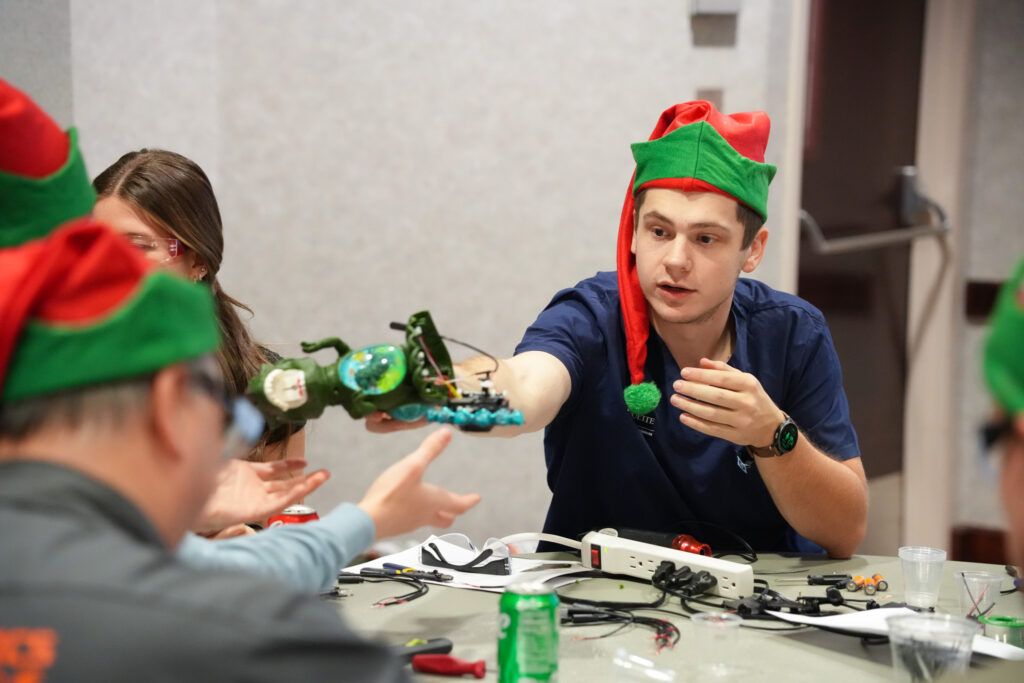
The benefits of the student pairing truly go both ways. Beyond helping Erickson and Bjelic reach a higher target of toys, OT students like Mawby bring valuable clinical and interdisciplinary insights to the undergraduate engineering students, who attended this year from both Marquette and Concordia University.
High school students bring talent and energy
Working alongside the college students at each build day are dozens of high school students from around the Milwaukee community, typically connected to FIRST Robotics teams. Erickson, who mentors a Milwaukee Public Schools robotics team, sees these students as a key partner.
“The high school students come in very driven and almost competitive to make an impact, and they often already have tool skills,” Erickson says. “We’re giving them an outlet to do what they love to do while showing how their passions can serve others.”
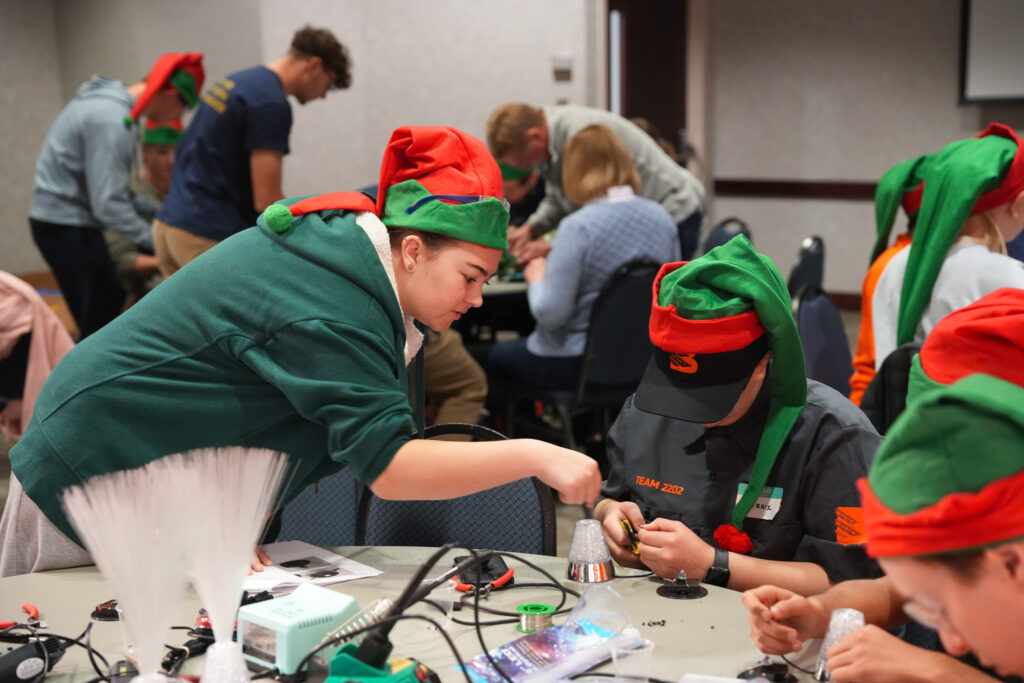
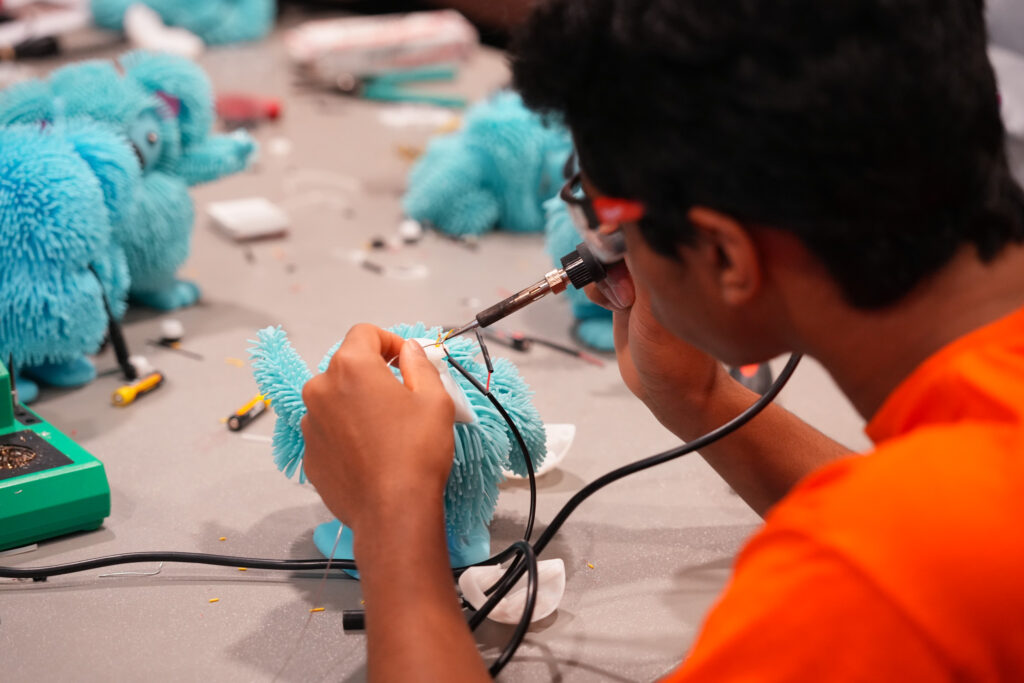
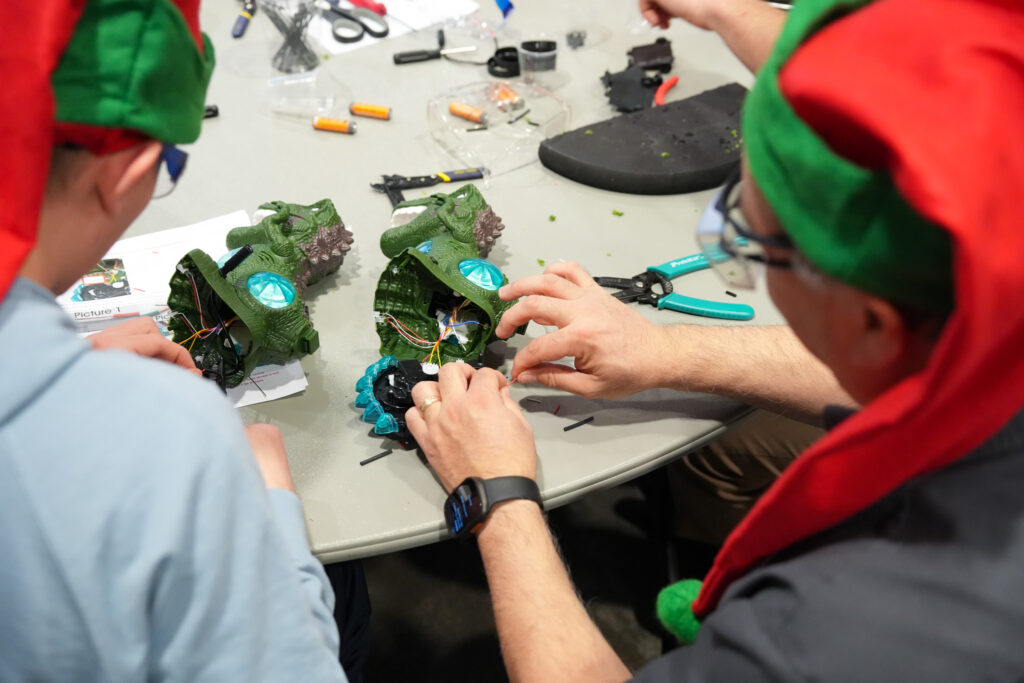
Erickson explains that the high school students come in eager for extra training and fun before peak robotics competition season. Plus, they get to rub elbows with college students and explore future possibilities in a casual, fun environment.
Expanding access to play
This year’s Inclusive Play build days resulted in 262 new toys, which are now being tested and reviewed before Bjelic shares them with therapists and families in need. In total, the Inclusive Play: Toys for All collaboration has adapted 926 toys. As the numbers keep rising and the impact expands, Erickson and Bjelic know that it’s all made possible by their community of collaborators. In fact, they have even begun offering workshops to train organizations and groups to develop their own adaptive toy initiatives, building on insights and learnings from Penfield and Marquette.
Individuals and organizations interested in getting involved are encouraged to contact Molly Erickson or Vladimir Bjelic via email. Discover more work from Marquette’s Adaptive GEARR Lab online.