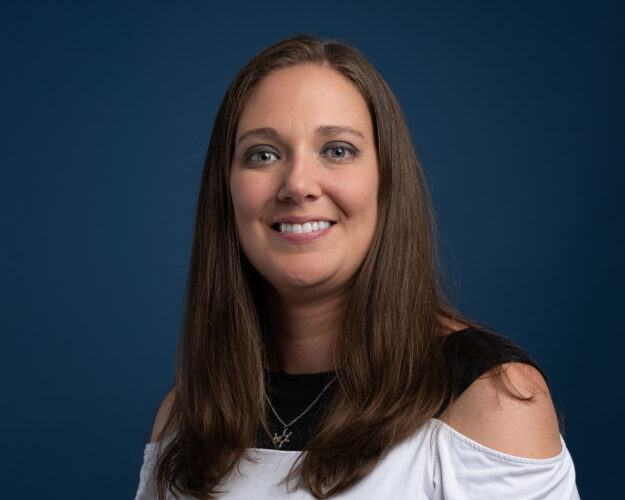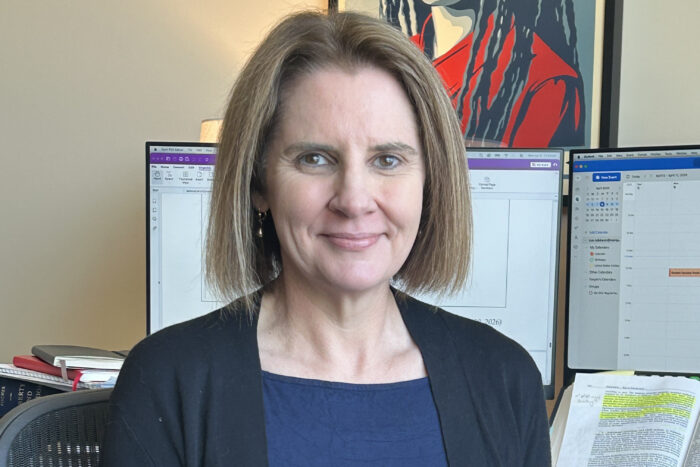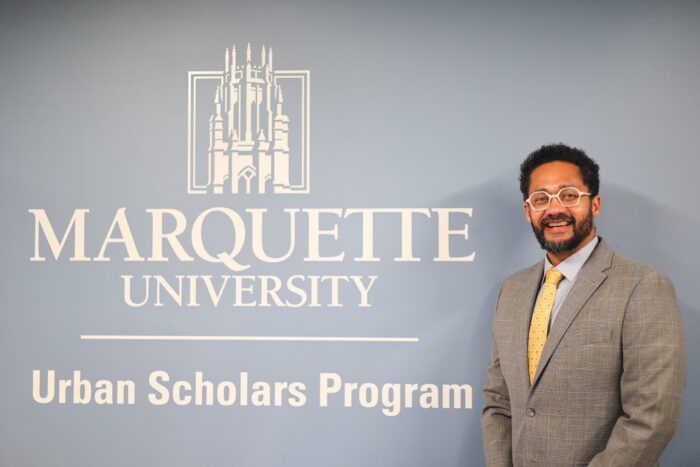

After members of the Society of Jesus joined in discernment with lay partners to renew and refocus the society’s mission priorities, they identified Walking With the Excluded as one of four core Universal Apostolic Preferences for 2019-2029, along with Showing the Way to God, Journeying With Youth and Caring for Our Common Home. This preference calls Jesuit-led communities everywhere to move with “the poor, the outcasts of the world, those whose dignity has been violated, in a mission of reconciliation and justice,” at a time when faculty members have come together to form the Poverty Research Initiative. In this conversation, a campus Jesuit leader and two faculty members discuss this alignment of mission and research.
Why did the Society of Jesus make Walking With the Excluded a priority? What message does this send to communities like ours at Marquette?
Father Pribek: This is coming from a reflection on the role of the Jesuits and contemporary society that became acute in the early 1970s when one of our general congregations framed our mission as “the service of faith” and “the promotion of justice.” That was a difficult formulation for some people, especially in North America. By the mid-20th century, we had gotten so into education, that it became almost problematic to talk about direct service to the poor. Those who were in education asked, “Are we all supposed to become social workers? Is that what is being asked of us?” And no, it was more about upholding this important part of our identity and our mission that was always part of who we are.
Fortunately, we kept the discussion going from general congregation to general congregation. And Walking With the Excluded is the best articulation of this idea yet. It describes very well what the early Jesuits did. Before the Society of Jesus was invited to take over colleges and universities, we did a variety of social works that addressed poverty and concerns about the perpetual underclass in Renaissance society. Then we got into to education and found that that was a very effective way to advocate for the concerns of the poor. … So, I think this is a felicitous expression of an impulse we’ve had from day one. It’s saying: This is one of the four essential things we do. And, of course, education is woven all through them. How could we do these apostolic preferences without education?
How are you as Marquette faculty coming together around poverty research? How does it resonate with the idea of Walking With the Excluded?
Dr. Jessica Zemlak: The Poverty Research Initiative has created this really unique space for faculty across disciplines to come together around issues related to poverty. In academia generally — and Marquette is not alone in this — we often work in silos. So, nursing faculty, social scientists, economists and others aren’t usually working together. But this initiative has allowed us all to be sitting at the table with each other and with community partners —to think about how our research can be actionable and responsive to what the community needs.
For me, I’m a nurse and a researcher, and my work specifically centers on women who are at the margins of health care. These are individuals whose health is often overlooked or who feel stigmatized. By being part of the Poverty Research Initiative, I can connect the work I do to broader conversations, outside of exclusively the health disciplines, around poverty and issues of structural inequity. It lets me learn from colleagues and approach it from different perspectives. And I think this collaborative approach really resonates with me in what I understand Walking With the Excluded means as a mission. It’s about listening and being close.
Dr. Lucas Torres: I want to build on what Jessica said because that was so well put. I have enjoyed having the Poverty Research Initiative as a network for a lot of reasons. One that was evident to me really early on is that the group of scholars and researchers who came together really had shared values. When we got together, we came up with this vision that said: We’re working together because we believe that all people deserve the opportunity to live in healthy and thriving communities. That communicates what we’re all striving for.
I also want to highlight something Jessica said — the structural inequities part. As part of our mission, we want to bring people together and to partner with communities in a way that highlights their strengths and lifts up their voices. But we also highlight the structural inequities that serve as barriers to health and success. So, in essence, we want to partner with our communities to be able to work together, give them the tools to manage these systems, to make changes in policy so that we can really not just walk with the excluded, as I said, but also make changes to society or make changes to the world around us, so that we can all thrive and be healthy.
What draws you to poverty research personally, and what can you hope to achieve with your research? What kind of impact?
Torres: Even before the Poverty Research Initiative, I really aimed my program of research to center and uplift the voices of the community that are often ignored or undervalued, particularly in certain areas of research and scholarship. For example, being here in Milwaukee, we know that this city is facing some difficult and poor health outcomes. What I realized along the road is that we need collaborative partners to make systemic changes — and make them sustainable.
We’re talking about access, equitable access to health care. We’re talking about policies and systemic inequities, policies that may get at the root cause of the disparities we see in our own city.
So, for me, that part of community engagement — of really meeting our community members where they are and understanding what they’re going through and being able to tell their stories — that’s vital. If we don’t know what’s happening, then we won’t know how to address it. We won’t know how to make change. Going back to the idea that the community has so many strengths, we want to help the community continue to build those connections and to uplift those voices.
Zemlak: A lot of the health challenges that I see in my research involve people who are experiencing significant social and structural inequities. And poverty underpins a lot of that. In my research, I partner with my community partners and people with that lived experience. They’re with me through the whole research process, from identifying the research questions and problems to designing the studies to helping me understand what the results mean.
And through this work over the last several years, we’ve worked together in lockstep understanding challenges and using the understanding that we’ve developed to start to think about pragmatic and realistic solutions that we can implement to improve the health and well-being of women. So, it’s not for them, it’s with them in collaboration.
And the goal is to have a partnership in understanding the challenges and the resilience and strength of the populations we work with, which is immense. And then the other part is using those strengths and what we learned through research to come up with solutions that are sustainable — solutions that the communities we partner with have co-designed with us through the research process.
When we think of the readers of this article, other members of the Marquette community, if you have ideas for how these people can relate and respond to this call to Walk With the Excluded, please share them.
Torres: That’s a great point. For all audiences, how do you go about doing this work? I think one of the common themes that I’m hearing among the three of us is the importance of developing meaningful and equitable relationships with communities and community members, however you want to do that. For Jessica, me and others, it’s taken the form of this research that develops these partnerships — of developing a program of research that moves other forms of change.
But it doesn’t have to be only in the scholarship. The way that we develop these meaningful and equitable relationships — that “walking with” part — involves co-designing. That’s the word Jessica said, which I love. You co-design something together, whatever that may be. You are equitable partners in this, and you’re equally invested in the outcome of that project or initiative. That is one of the lessons I hope people get out of this: the importance of having those meaningful and equitable relationships that can last for a significant amount of time. And that’s when — as Father Pribek was talking about — the meaningfulness in those relationships really comes through, by trusting in one another and getting to know one another. That happens across time; it doesn’t happen overnight.
Zemlak: I think that’s really great, Lucas. You’re leaving me with little to add, but I’ll try. I think about the divisive world that it seems we live in right now, and I think all of us have different roles and different spaces we occupy professionally and personally. But I always try to center the idea of being curious, empathetic and kind. And I think we can all take that into whatever space we’re moving in.
And for those of us who have positions that might be in structures that have some power, we can think about our role and how we can apply those principles of Walking With the Excluded. How you can make it better for someone else in whatever way that is, whether it’s through research, whether it’s through teaching, or for me as a clinician sometimes. I think there’s a way you can do that regardless of your role.
Father Pribek: Well, some of the language that the Society of Jesus puts out around this can be helpful. Many contemplations or exercises ask questions such as, “When have you been excluded? How did that feel? How did that maybe make you smarter? How did that shape the kind of relationships you have?” And again, it’s getting at the unbelievable resources of people who’ve been excluded. Again, we want to reverse that. Exclusion is in all cases a bad thing, but there’s something here that we won’t be ourselves unless we work with them, unless we accompany them. We’re not going to have an authentic Gospel mission or an authentic Marquette mission if we don’t do this. So yeah, there’s something really important there.
I like how it’s talked about — the value of the excluded, not simply again reversing their negative circumstances. But why did Jesus do this? Why was the kingdom not complete without the excluded? Certainly, it’s about time we start asking ourselves that question in a very direct way, rather than simply reversing measurable economic outcomes or something like that. Spiritually, this is good for everybody and it makes us who we are. So yeah, I’ve loved our discussion.
Father Pribek, what do you think as you reflect on what you’re hearing from faculty members in light of the apostolic preference?
Father Pribek: I really delight in hearing from the others here that this is an attractive and unifying mission. As I’ve said, this is getting back to the essentials of our mission as a religious order and as a church. It’s asking ourselves: What do we lose when we don’t hear from and don’t share the life of people who have been excluded? We’re missing something that Jesus Christ thought was awfully important.
And, yes, to talk about valuing the excluded, the language again was deliberately chosen, walking with them. We’re not coming as problem solvers or people who have all the answers. We’re going to try to live with and listen to them and accompany them. The verbs chosen for the apostolic preferences were very deliberate.
This is a very exciting preference for us because it has that real personal element. We’re not talking about crunching numbers. We’re talking about getting to know people and sharing our lives with them. That’s put in the context of relationship as well as simply service. … The language and spirit of this UAP is bringing reconciliation and unity and energy to us Jesuits and the people we work with.