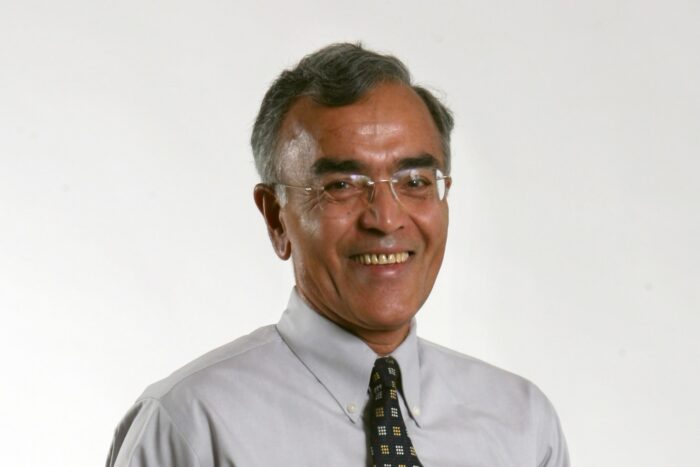

Jordan Marsh, a second-year Master of Arts student in the Department of Political Science, was recently awarded the Best Graduate Paper Award by the Ohio Association of Economists and Political Scientists (OAEPS). Marsh earned statewide recognition for his groundbreaking research that challenges how we think about political representation. The award is presented annually to one outstanding political science paper and one economics paper delivered at the organization’s conference.
Marsh’s paper, titled “Politics and Chronopolitans: Temporal Representation for the Future and Past,” explores how political actors can, and often do, represent not only present-day constituents but also individuals from the past and future. In the paper, he introduces the concept of “chronopolitans,” a term he uses to describe constituents situated in distant times who are nonetheless affected by today’s politics.
“Think of climate activists,” Marsh explained. “They are advocating for themselves, but they are also speaking on behalf of individuals who may not yet exist—people who won’t live concurrently with them but whose lives will be shaped by today’s decisions.” Marsh argues that these temporal constituents exert political power, have distinct identities, and often compete with one another for representative claims. His work invites scholars to rethink the dimensions of political representation and to include time as a critical factor in evaluating how and whom political actors serve.
Originally from central California and raised in Eaton, Ohio, Marsh completed his undergraduate studies at the University of Dayton, where he double majored in political science and criminal justice studies. His academic interest in representation theory began during that time, when he noticed how rarely political theorists addressed institutions like the Electoral College despite their central role in democratic processes.
Marsh was motivated by the realization that a key aspect of presidential elections had been largely neglected in political theory. This insight led him to focus his research on identifying gaps in literature, particularly where underrepresented groups such as future generations are excluded from political consideration.
Marsh attributes much of his academic growth to the supportive community at Marquette. When deciding whether to attend, he was impressed by the faculty’s expertise and their collaborative approach. He credits Dr. Ericka Tucker from the Philosophy Department and Dr. Philip Rocco from the Political Science Department. “Dr. Tucker reviewed the earliest version of my paper on temporal representation and provided much-needed feedback,” Marsh said. “And Dr. Rocco has been an incredible mentor and advisor, offering careful reading and support throughout the writing process.”
For Marsh, the OAEPS award has provided more than just recognition, it has offered a sense of vocational affirmation. “It reinforced that I’m on the right path,” he said. “And the financial support will help cover the cost of doctoral program application fees.”
He encourages other graduate students, especially those with ties to Ohio, to consider participating in the OAEPS conference. Students interested in learning more can visit www.oaeps.org.
As Marsh explores new ways to improve political representation in a changing world, his work reflects thoughtful, people-focused research. By asking tough questions and creating original theories, he’s helping to shape the future of political science—and the next generation.
Want to read similar stories or have a success story to share? Visit Stories of Graduate Student Success to learn more.